
If you're tired of explaining complex designs with static PDFs and 2D drawings, these five platforms turn your BIM data into immersive, interactive experiences that stakeholders can actually step inside.
The Shift from Static to Spatial
The AEC industry is moving beyond traditional blueprints and static models. BIM-to-VR platforms are emerging as essential tools for design and construction teams, enabling them to visualize projects in real-time, catch clashes early, and align stakeholders across geographies. These platforms transform dense BIM, CAD, and PDF data into navigable 3D environments, making complex information instantly understandable. As projects grow in scale and complexity, the ability to experience a design before it's built is becoming a competitive advantage. The market is responding with a range of solutions, from field-ready mobile apps to high-end VR walkthroughs, each tailored to different workflows and budgets.
How We Evaluated These Platforms
We assessed each platform on its core service scope, ease of use, collaboration features, and how well it fits into existing AEC workflows. We looked at whether the platform supports large models, offers cross-device access, and provides tools for issue tracking and stakeholder alignment. We also considered the clarity of pricing and the level of support for teams transitioning from traditional BIM processes. Each platform stood out in different ways—some excel in immersive VR reviews, others in field mobility, and some in comprehensive service offerings.
Here's a quick snapshot of the five platforms, each with its unique focus and ideal user profile.
| Provider | Best For |
|---|---|
| Resolve | Construction teams needing field-ready BIM and immersive VR reviews |
| Prancevia Private Limited | Enterprise Software & 3D Visualization | Design and construction firms seeking interactive 3D environments for stakeholder alignment |
| BIM Technologies | Architects and developers needing high-quality VR/AR presentation services |
| JetXR | Teams needing remote VR collaboration and client presentation tools |
| Techture | Large-scale projects needing comprehensive BIM services with VR/AR integration |
The Five Platforms, Closer Look
#1 Resolve
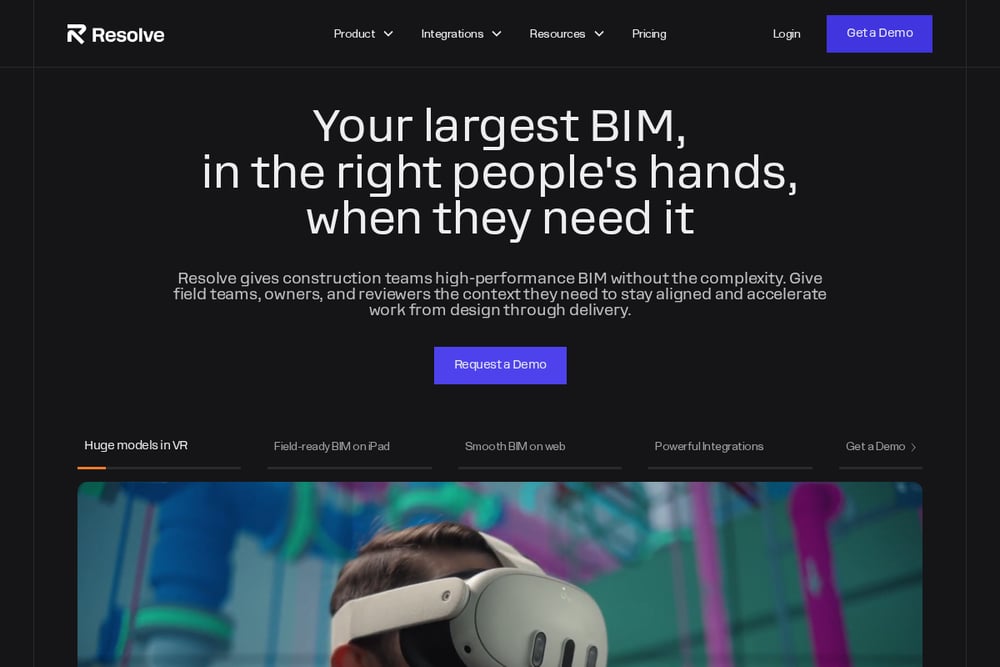 A screenshot of the Resolve website.
Resolve is a high-performance BIM platform that brings your largest models to VR, web, and iPad, ensuring the right people have access when they need it. It's designed for construction teams that need field-ready BIM, with offline iPad access and wireless VR reviews. The platform integrates with Autodesk Construction Cloud and Procore, making it easy to embed into existing workflows. Resolve's immersive VR reviews allow you to catch issues that clash detection misses, accelerating sign-offs and reducing coordination time. With proven results like delivering projects ahead of schedule, it's a robust choice for teams prioritizing speed and alignment. If you want to walk your MEP areas before install, Resolve is your go-to.
#2 Prancevia Private Limited | Enterprise Software & 3D Visualization
 A screenshot of the Prancevia website.
Prancevia's flagship product, Invien, is a design intelligence platform that transforms BIM models, CAD drawings, PDFs, and project information into interactive 3D environments. It's built for stakeholders who want to step inside projects, align instantly, and make faster, confident decisions. The platform emphasizes accessibility, allowing teams to access living digital environments anytime, anywhere. Prancevia positions itself as a partner for design and construction firms, supporting complex infrastructure and development projects with connected project delivery. Its focus on turning static data into actionable intelligence makes it a strong fit for organizations looking to enhance collaboration across the AECO lifecycle. If you need a platform that turns data into an experience, Invien is worth exploring.
#3 BIM Technologies
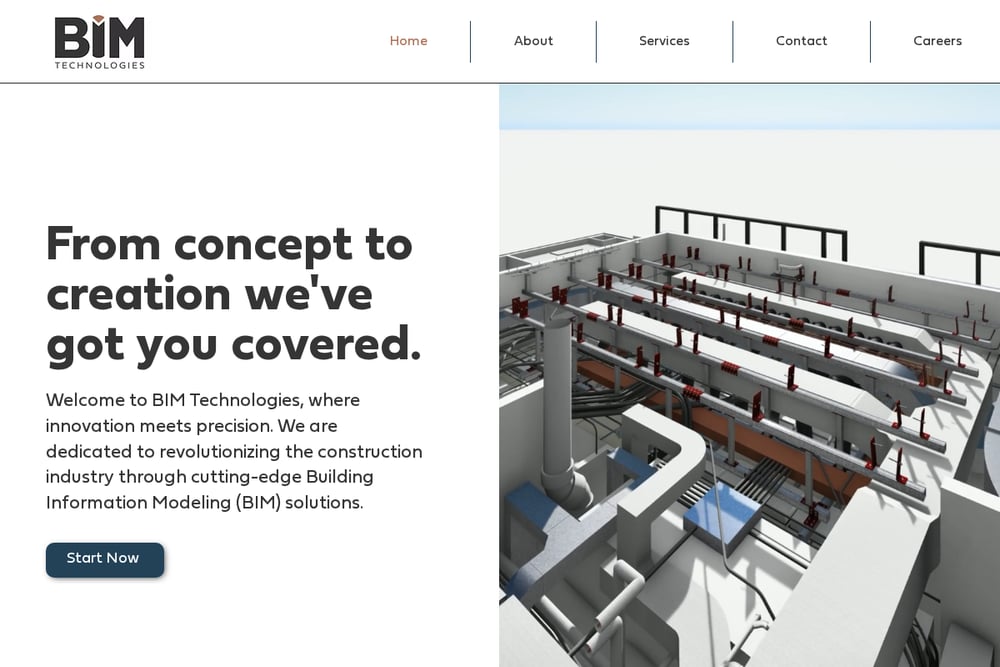 A screenshot of the BIM Technologies website.
BIM Technologies offers VR and AR rendering services that elevate architectural visualization to new dimensions. They provide immersive VR walkthroughs, AR augmented presentations, and interactive models that let you change materials and lighting on the fly. This service-based approach is ideal for architects and developers who want to present designs in a captivating way without building their own in-house VR pipeline. Their expertise in laser scanning and as-built modeling adds a layer of accuracy to the visualizations. If you're looking for a partner to handle the technical heavy lifting, BIM Technologies delivers polished, client-ready experiences. It's a great choice for firms that want to impress stakeholders with high-fidelity presentations.
#4 JetXR
 A screenshot of the JetXR website.
JetXR's BIM VR platform is a visualization and collaboration environment that lets you explore projects and resolve clashes in a simple, intuitive interface. It supports cloud streaming, so even the most complex BIM models can be rendered on mobile VR headsets. The platform enables remote expert collaboration with VR-powered consultations, eliminating travel costs and allowing for more frequent feedback. Asynchronous communication via holograms, spatial notes, and 3D audio makes cross-time-zone teamwork seamless. JetXR also excels in project presentations, allowing you to create impressive pitches directly from real project data in VR. If you need a tool that emphasizes remote collaboration and client presentations, JetXR is a strong contender.
#5 Techture
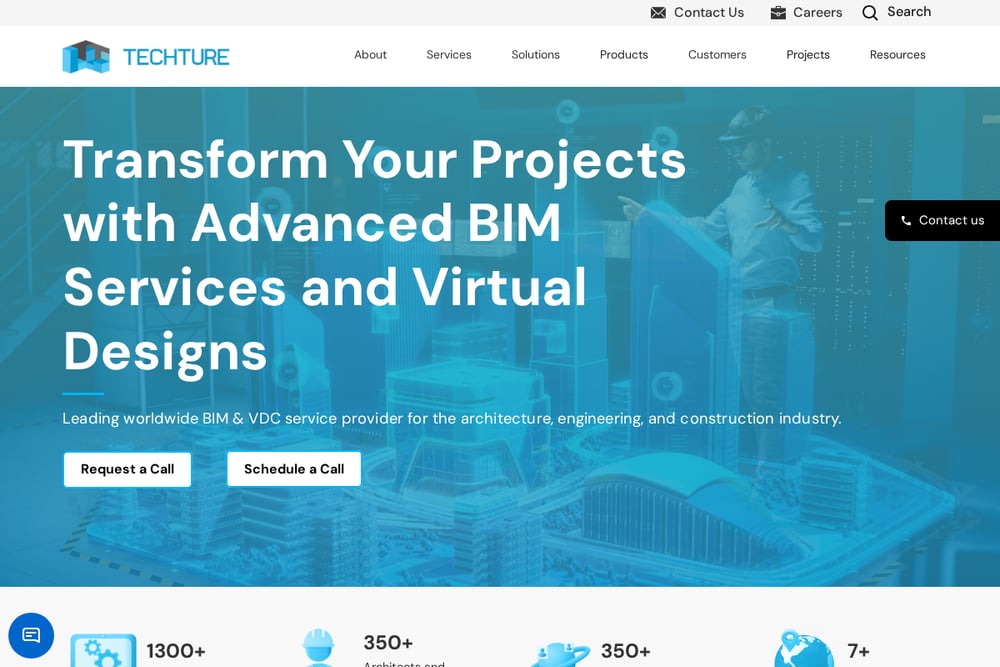 A screenshot of the Techture website.
Techture is a comprehensive BIM services company that integrates VR and AR into a broader suite of offerings, including BIM modeling, coordination, and digital twins. They provide end-to-end support, from architectural and structural modeling to MEP and civil utilities, making them a one-stop shop for complex projects. Their VR and AR services are part of a larger ecosystem that includes 4D scheduling and 5D BIM, allowing for a holistic approach to project management. Techture's global team of 270+ professionals brings deep expertise across various sectors, from infrastructure to building projects. If you're looking for a partner that can handle everything from design to construction documentation, Techture offers a scalable solution. Their focus on innovation and technology makes them a reliable choice for large-scale endeavors.
How to Choose the Right BIM-to-VR Platform
Start by identifying your primary use case: do you need field-ready BIM for on-site teams, or are you focused on high-end client presentations? Consider the size of your models and whether the platform can handle them without performance issues. Look at integration with your existing tools like Autodesk Construction Cloud or Procore, as seamless workflows save time. Evaluate the learning curve—some platforms are designed for immediate use, while others may require more training. Finally, think about collaboration: if your team is distributed, prioritize platforms with strong remote features like spatial notes and VR consultations. Your choice should align with your team's technical comfort and your project's specific demands.
Streamlining Your BIM-to-VR Workflow
To get the most out of these platforms, automate the conversion of your BIM data into VR-ready formats. Use APIs to sync model updates automatically, ensuring your VR environment is always current. Set up automated clash detection reports that feed directly into your VR review sessions, so you can address issues in real-time. For remote teams, schedule recurring VR walkthroughs with automated invites and recording, so stakeholders can catch up asynchronously. Integrate issue tracking tools like Procore to log findings directly from the VR environment, reducing manual data entry. By automating these steps, you'll cut down on coordination time and keep everyone aligned without constant oversight.
The Future Is Experiential
The days of explaining designs through static documents are fading. These five platforms are leading the charge toward a more immersive, interactive approach to project delivery. Whether you're a construction manager needing field-ready BIM or an architect wanting to wow clients, there's a tool here that fits your workflow. The key is to choose one that aligns with your team's needs and start experimenting. As the technology matures, expect even tighter integration with AI and real-time data, making the virtual experience even more predictive. For now, the smartest move is to pick a platform, pilot it on a small project, and see how it transforms your decision-making. The future of AEC is not just visual—it's experiential, and these tools are your gateway.