Beyond the Prompt: Sai Teja Ranga on Why AI Assistants Still Get Company Documents Wrong
When an AI assistant answers a question about a company's own documents incorrectly, the reflex is often to rewrite the prompt. Sai Teja Ranga, whose work is profiled on his site, argues that this instinct misses the real problem more often than not. In a written interview, he walked through what he has seen while working with AI assistants and what teams tend to overlook.
When the right document is there but the answer is still wrong
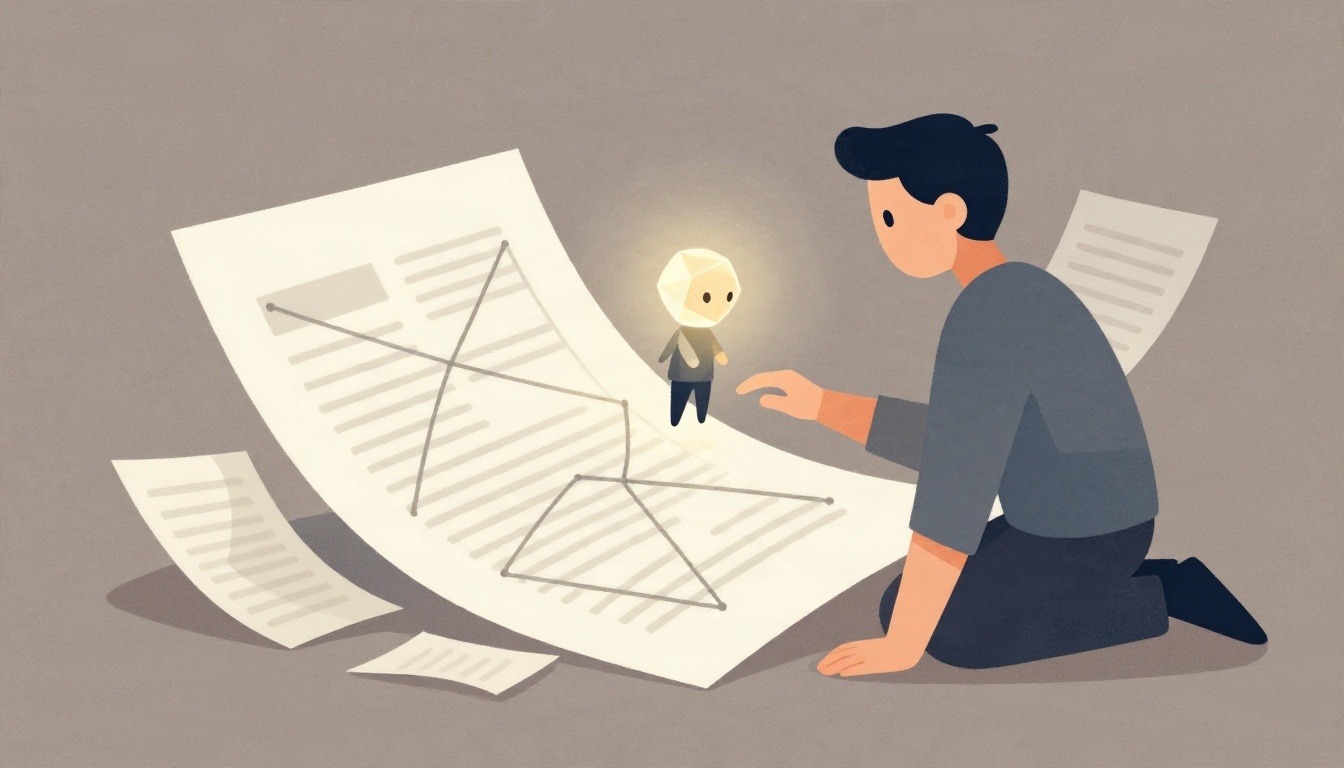
The first question asked when the usual advice for stopping wrong answers has not held up. Ranga described a specific pattern: the correct source material was present, yet the assistant still produced an incorrect response.
"I've seen cases where the right document was available, but the assistant still gave the wrong answer. Changing the prompt didn't really fix it."
Rather than continuing to iterate on wording, he shifted attention to what the system was actually doing with the information. "I found it more useful to check which information the system was pulling and whether it was missing something important. Sometimes fixing that made a bigger difference than changing the model."
That distinction matters for anyone building retrieval-augmented generation systems, where the quality of what gets retrieved can matter as much as the language model generating the final answer. The takeaway is practical: before swapping models or rewriting instructions, trace what the system is retrieving and whether the needed detail is reaching it at all.
The documents are often the real obstacle
The second question asked what keeps coming up that online advice leaves out. Ranga pointed to the source material itself.
"The documents themselves are often the biggest challenge. You might have two versions of the same policy, outdated information, or details scattered across different files."
This is a familiar problem for any organization with a long history of shared drives and wikis. Duplicate policies, stale pages, and fragmented details create ambiguity that no amount of model tuning can resolve. As Ranga put it: "The AI can only work with what it's given. I've learned that keeping the information reliable matters just as much as the technology behind it."
For teams, that reframes the work. Cleaning up and consolidating internal documentation is not a preliminary chore to get out of the way before the interesting technical work begins. It is part of the technical work. Resources on information governance and data quality offer useful framing for treating internal content as infrastructure rather than background noise.
A good demo is not a readiness test
The third question asked what teams decide too quickly when they first put an assistant on their own documents. Ranga's answer focused on the gap between a controlled demonstration and real-world use.
"I think teams trust a successful demo too quickly. Answering ten questions correctly doesn't mean the assistant is ready for hundreds of real users."
His preferred approach is to stress the system where it is most likely to fail. "I'd rather test how it handles difficult questions, missing information, and situations where it should simply say it doesn't know."
That last point is worth dwelling on. An assistant that confidently fabricates an answer is more damaging than one that admits uncertainty, particularly when the subject is internal policy or company procedure. Designing for graceful refusal, and testing for it explicitly, is a decision teams can make early rather than discovering the need after launch.
What teams can take away
Three practical threads run through Ranga's answers. First, when answers go wrong, inspect retrieval before rewriting prompts or replacing models. Second, treat document hygiene as a core part of the system, not an afterthought. Third, evaluate assistants against hard cases and missing information, not just a clean demo script.
None of these are exotic techniques. They are the less glamorous parts of building with AI, and according to Ranga, they are frequently where the difference lies.
About Sai Teja Ranga
Sai Teja Ranga is an applied AI engineer and researcher based in New Jersey, working on generative AI, enterprise software, and public-sector information systems. He consults on intelligent assistants, environmental intelligence, and responsible automation, and is pursuing a doctoral degree in AI.