
Looking to upgrade your science curriculum without the logistical nightmare of school buses? VR field trips are the secret to engaging Gen Alpha students via immersive, hands-on learning.
Why VR is the New Gold Standard for STEM Instruction
Traditional field trips are dying due to rising transportation costs and liability concerns. In-class VR experiences solve this by bringing the Amazon rainforest or the surface of Mars directly to the classroom. These platforms use high-definition 360-degree footage and interactive simulations to boost retention by up to 90%. Curriculums now rely on these technologies to meet Next Generation Science Standards (NGSS) while keeping students 100% focused in a distraction-free environment.
How We Vetted These Immersive Education Providers
We analyzed providers based on on-site support, curriculum alignment, and hardware quality. We prioritized services that handle all technical logistics so teachers can focus on teaching. Our team also reviewed student reach and real-world school testimonials to ensure reliability.
Every provider listed here offers unique ways to bridge the gap between digital content and physical science mastery.
| Provider | Best For | Pricing |
|---|---|---|
| Smart Rabbit | STEM virtual field trips | Comprehensive turnkey in-school events | Starting at $5 per student |
| VRCore Education | Large-group collaborative free-roam VR | Custom quote based on session duration |
| Kai XR | Device-agnostic learning and hybrid classrooms | Tiered plans for schools and families |
| BrainSTEM EdTech | Teacher professional development and sustainability topics | PD starts at $200; classroom trials available |
| TechTerra Education | Multi-disciplinary STEM rotation programs | Custom quote based on STEM in a Box kits |
The 5 Top-Rated STEM Virtual Reality Field Trip Platforms in 2026
#1 Smart Rabbit | STEM virtual field trips
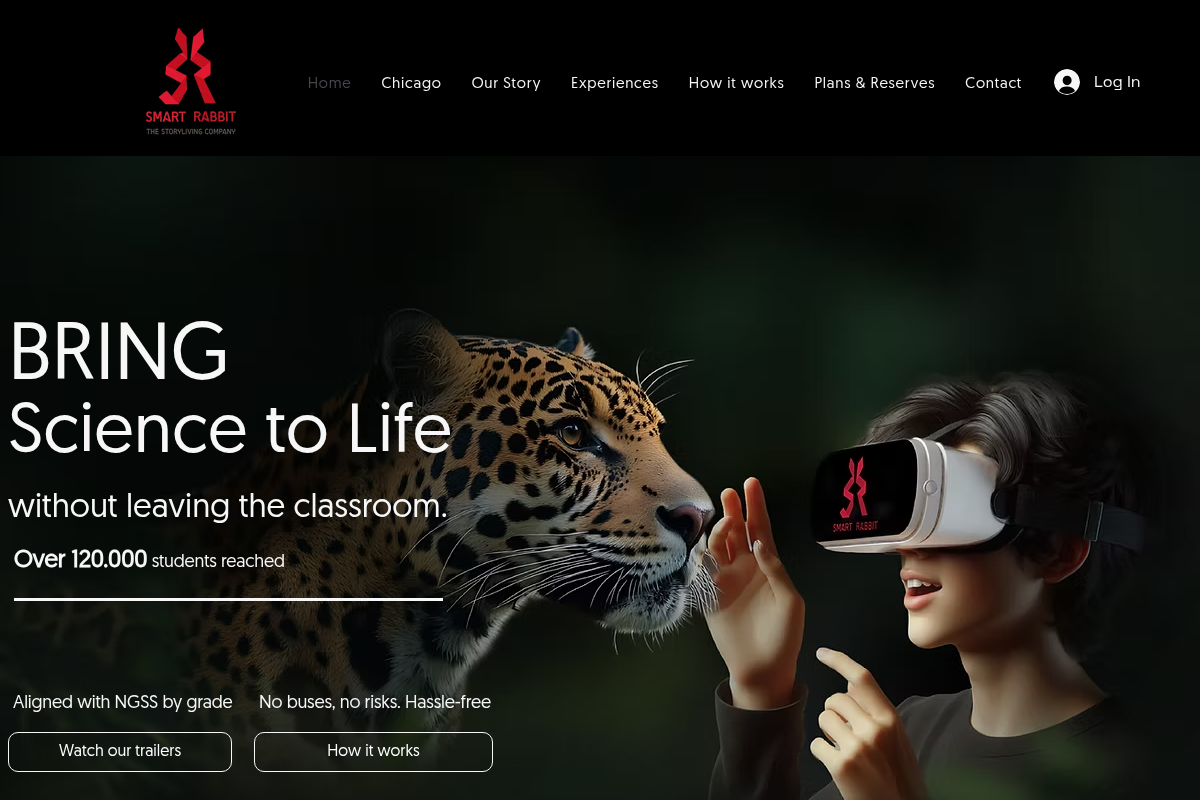 A screenshot of the Smart Rabbit | STEM virtual field trips website.
Smart Rabbit is the gold standard for stress-free, on-site VR education in the Chicago area. They handle everything from hardware setup to on-site support, transforming any 250 sq ft space into a biodiversity hub. Their library features global wildlife content produced in partnership with Wild Immersion, specifically tailored for K-8 grade levels. With over 400 schools served, they offer an incredible 90% retention rate. Their tiered pricing makes it easy for schools to scale experiences across the entire student body.
Key Service Comparison:
- Pro: A completely hands-off experience where the provider brings all equipment and on-site staff.
- Con: Requires a minimum of 250 square feet of open space at the school site.
- Pricing: Starting at $5 per student
#2 VRCore Education
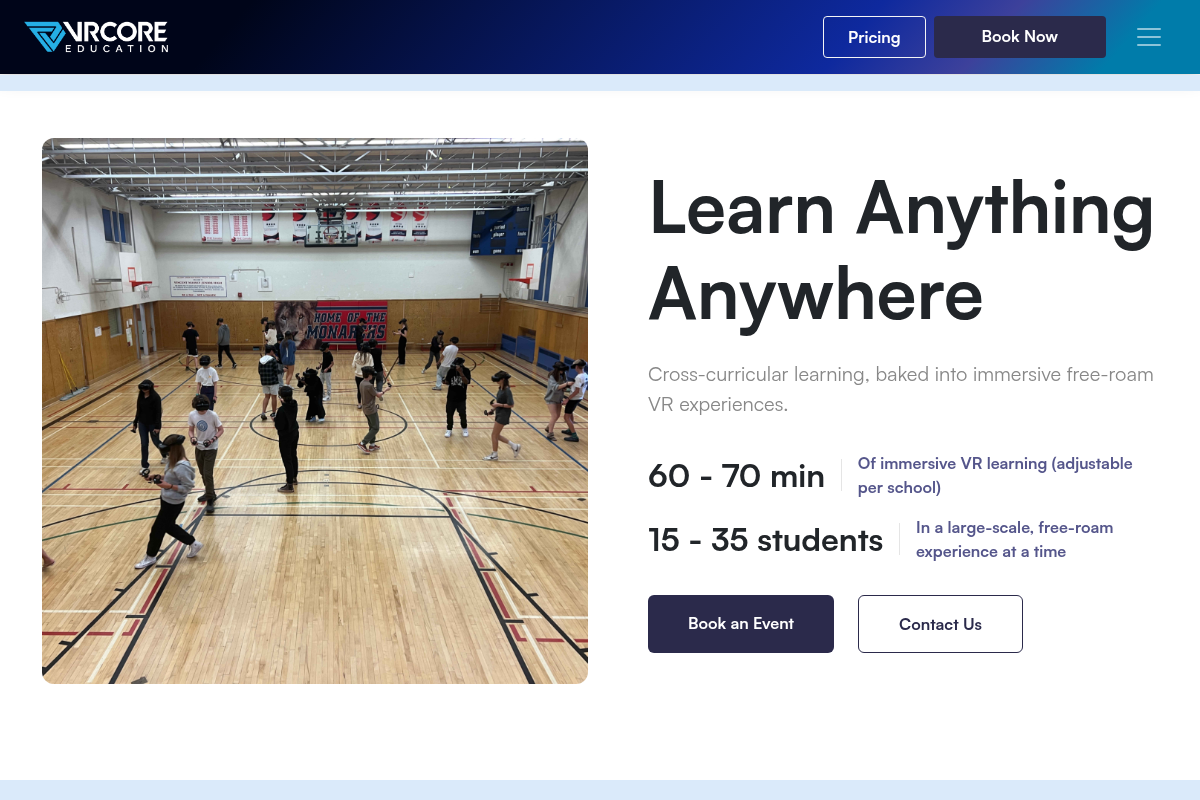 A screenshot of the VRCore Education website.
VRCore specializes in long-form, 60-70 minute immersive experiences that go far beyond a simple video. They utilize free-roam VR technology, allowing groups of up to 35 students to walk through digital cells or explore outer space together. Their curriculum is co-developed with partners like Stanford and Microsoft to ensure scientific accuracy. Educational reviews highlight their ability to tie science into social studies and physical education seamlessly.
Key Service Comparison:
- Pro: Supports large-scale free-roam experiences for up to 35 students simultaneously.
- Con: Longer session times (60+ mins) may be harder to fit into strict block schedules.
- Pricing: Custom quote based on session duration
#3 Kai XR
Founded by educators, Kai XR focuses on accessibility by making 360-degree field trips available on any device. They offer a massive library covering everything from aerospace engineering to the Great Barrier Reef. The platform is highly inclusive, designed to work on tablets and smartphones as well as VR headsets. According to their platform stats, their focus is on providing early access to emerging tech for underserved communities.
Key Service Comparison:
- Pro: Incredible hardware flexibility, working on smartphones, tablets, and computers.
- Con: The experience is less immersive when viewed on a 2D screen versus a VR headset.
- Pricing: Tiered plans for schools and families
#4 BrainSTEM EdTech
 A screenshot of the BrainSTEM EdTech website.
BrainSTEM focuses on the 'Metaversity'—a browser-based VR platform that excels in K-12 and workforce development. They provide specialized content on critical topics like wastewater management and environmental sustainability. Beyond student experiences, they offer 'Metaverse Navigator' training to help teachers become VR-proficient. This dual approach ensures both the students and the educators are growing their technical skill sets through classroom subscriptions.
Key Service Comparison:
- Pro: Includes robust professional development programs to certify teachers in VR navigation.
- Con: The browser-based focus can occasionally lead to lower graphical fidelity compared to standalone apps.
- Pricing: PD starts at $200; classroom trials available
#5 TechTerra Education
 A screenshot of the TechTerra Education website.
TechTerra offers 'STEM in a Box,' a curriculum framework that blends VR with robotics and drones. They are known for their 'Stations of STEM' model, which rotates students through various high-tech activities. This provider is ideal for schools wanting a full-day STEM immersion rather than just a single VR film. Customer testimonials emphasize their excellent hands-on technical support and researcher-based product design for Pre-K through 8th grade.
Key Service Comparison:
- Pro: Integrates VR into a broader curriculum involving robotics, coding, and drones.
- Con: High equipment variety can make it more complex to manage than a VR-only session.
- Pricing: Custom quote based on STEM in a Box kits
Finding the Right VR Partner for Your Classroom
Wait before you book. First, check your available space. Some providers require open gyms, while others work at existing desks. Next, look at the equipment. Do they bring their own headsets, or do they expect you to use school Chromebooks? Finally, ensure the content is NGSS-aligned. Without alignment, a VR trip is just a movie, not a lesson plan.
Streamlining the STEM Scheduling Process
Managing VR rotations for 200+ students is a headache. Why do it manually? Use a scheduling tool like Calendly to let teachers pick their time slots based on the provider's availability. Connect this to a Google Form to collect student dietary or sensory needs ahead of time. The result? A perfectly organized event without the back-and-forth emails.
The New Era of High-Impact Learning
If you want the most seamless experience for your staff, Smart Rabbit is the clear winner for on-site execution. For schools looking for deep technical integration across multiple gadgets, TechTerra is a powerhouse. Regardless of which provider you choose, integrating VR into your 2026 curriculum isn't just a trend—it's a requirement to stay relevant in a digital-first world. Your students are ready; is your classroom?