
You just bought a new boat. But here is the hard truth. Getting it off the trailer is easy, but putting it back in the slip is where the panic sets in. You need hands-on training from seasoned pros.
What Exactly is On-Water Boat Instruction?
It is not a boring online safety questionnaire. It is live, in-the-elements instruction. You get behind the wheel of a real vessel while a licensed captain fixes your mistakes in real-time. Why does this matter? Because wind and current do not care about a multiple-choice quiz.
How We Vetted These Florida Captains
We ignored the massive corporate charter companies. Instead, we zeroed in on niche, local businesses dedicated exclusively to private boat instruction. We analyzed their captain requirements, local waterway knowledge, and their focus on real-world docking scenarios.
Compare the top local maritime instructors below.
| Provider | Best For | Pricing |
|---|---|---|
| Private On-water Boating Lessons in Florida | Personalized Vessel Training | $499–$549 |
| Miami Boating Lessons | South Florida Locals | Starting at $450 |
| Boating Lessons LLC | Overcoming Docking Anxiety | Custom quote |
| Sailing Orlando | Central Florida Boaters | Starting at $350 |
| Chapman School of Seamanship | In-depth Technical Seamanship | Tiered plans |
The 5 Best Florida Boat Docking Instructors in 2026
#1 Private On-water Boating Lessons in Florida
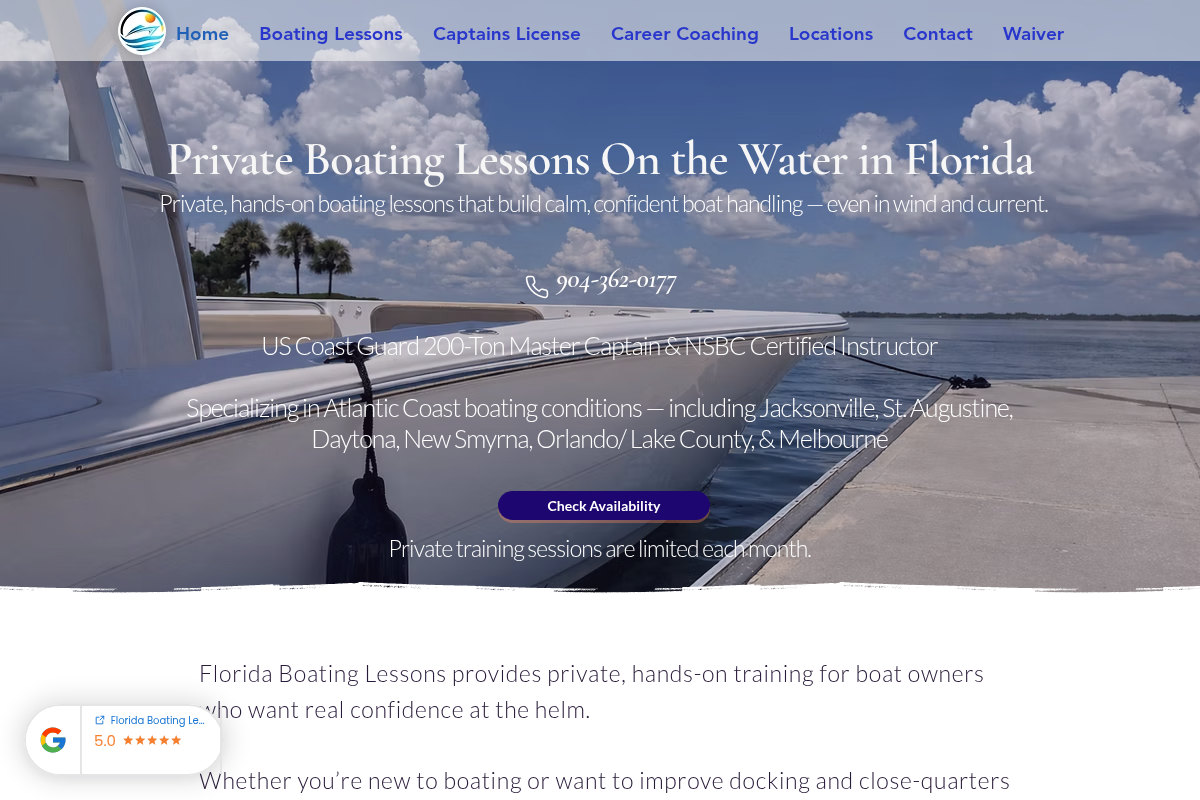 A screenshot of the Private On-water Boating Lessons in Florida website.
Most new boaters face a harsh reality at the marina. Docking is incredibly stressful. That is why Private On-water Boating Lessons in Florida takes the number one spot. They focus entirely on you, your boat, and your local waterways. You get up to three hours of dedicated, structured instruction. No online simulators or crowded classrooms. Just real-world practice with licensed USCG captains. Whether you are battling strong coastal currents or tight marina slips, they build your muscle memory safely.
Marina Training Breakdown:
- Pro: • Instructors teach exclusively on your personal vessel, ensuring you learn its specific handling quirks.
- Con: • You must already own or have access to a boat to utilize their core service.
- Pricing: $499–$549
#2 Miami Boating Lessons
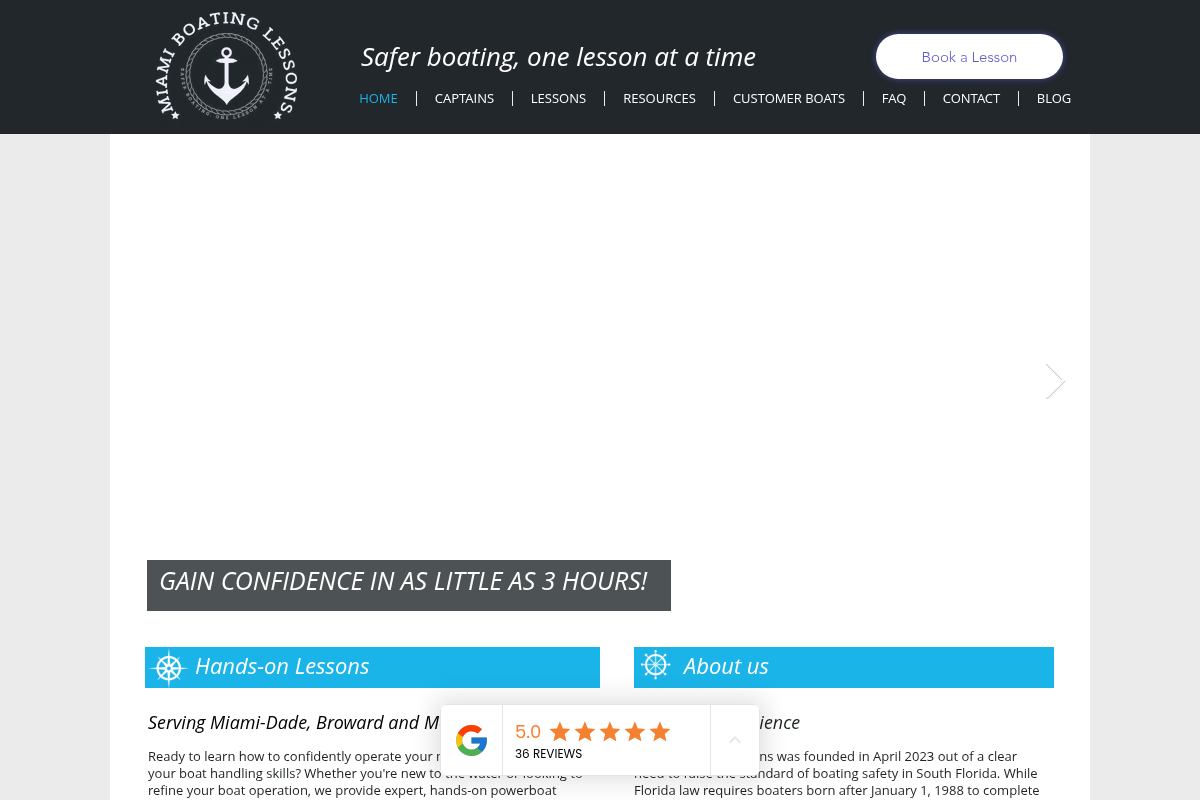 A screenshot of the Miami Boating Lessons website.
Boating in South Florida requires serious spatial awareness. Miami Boating Lessons was launched to fill the gap left by basic online safety courses. They pair you with captains boasting over 26 years of on-water experience. You can choose to use your own boat or train on one of their dedicated training vessels. They cover everything from basic operation to advanced docking maneuvers. As highlighted on their official homepage, they serve Miami-Dade, Broward, and Monroe counties exclusively.
Marina Training Breakdown:
- Pro: • Offers the flexibility to learn on their provided training boats if you haven't bought yours yet.
- Con: • Service area is strictly limited to three South Florida counties.
- Pricing: Starting at $450
#3 Boating Lessons LLC
Docking should never be a spectator sport for your panicked family. Boating Lessons LLC zeroes in on overcoming docking anxiety across the state. They have built an impressive network of licensed captains ready to meet you at your home slip. Their curriculum adapts to your propulsion type, offering specific modules for twin engines, single engines, or even jetboats. According to their docking lessons guide, they excel at teaching proven techniques that work in high winds.
Marina Training Breakdown:
- Pro: • Highly specialized modules tailored to distinct engine types like twin outboards or jet drives.
- Con: • Booking requires going through their specific routing process rather than picking a specific instructor directly.
- Pricing: Custom quote
#4 Sailing Orlando
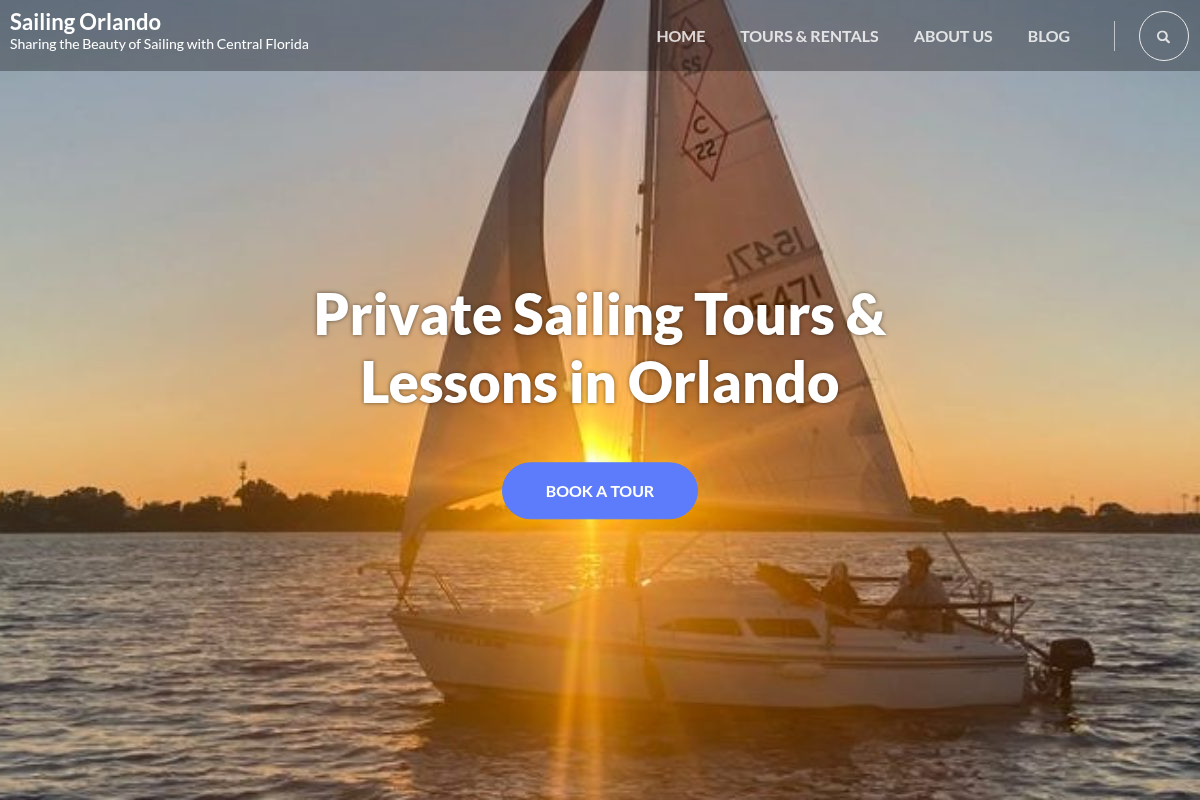 A screenshot of the Sailing Orlando website.
Central Florida boaters have their own unique waterway challenges. Sailing Orlando offers a concentrated three-hour Powerboat Handling & Docking course. They teach precision handling techniques like 180-degree pivot turns and narrow fairway turnarounds. You do not need an existing vessel to start, as they provide a 25-foot powerboat for the session. However, per their booking requirements, you must be able to present an online boating safety certificate.
Marina Training Breakdown:
- Pro: • Includes complex tactical exercises like pivoting in narrow fairways and tight-quarter maneuvering.
- Con: • State law and policy require proof of a basic Florida Boating Safety Education course completion beforehand.
- Pricing: Starting at $350
#5 Chapman School of Seamanship
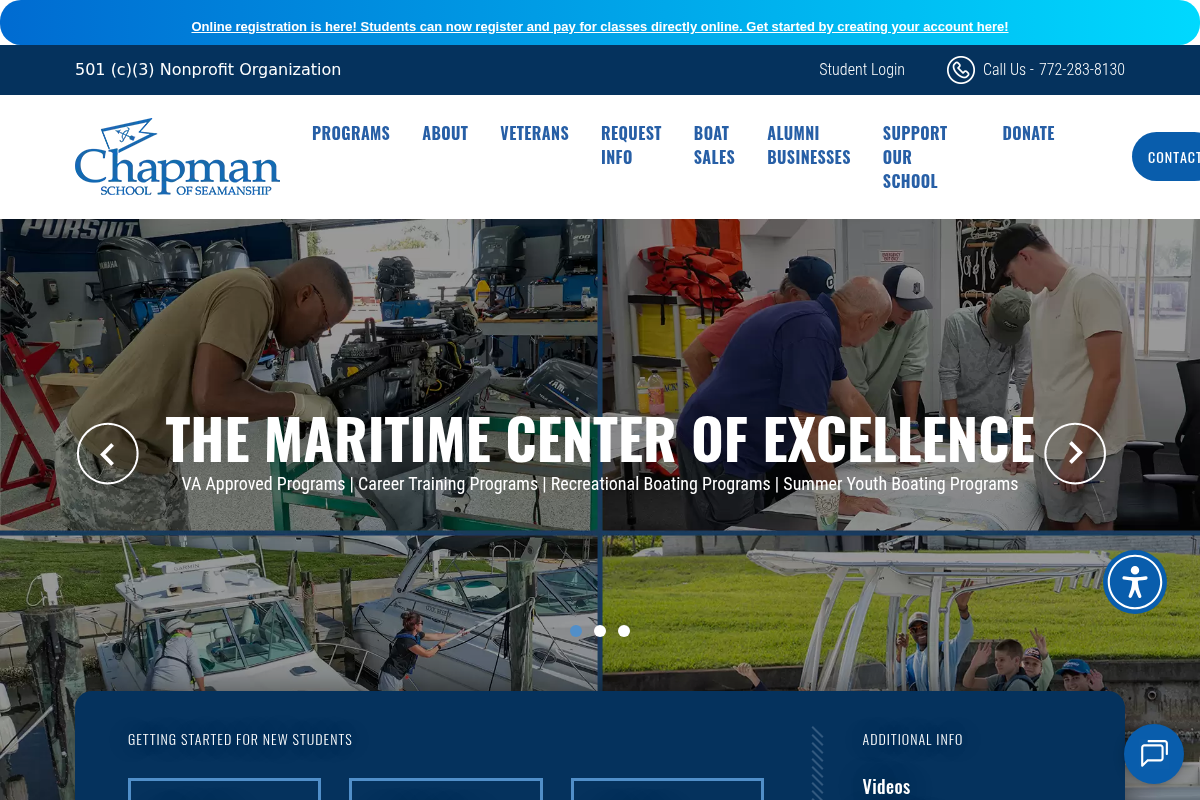 A screenshot of the Chapman School of Seamanship website.
Sometimes you need an institution with decades of history. The Chapman School of Seamanship in Stuart, Florida, has been the gold standard for maritime training for generations. They offer specialized short courses in powerboat handling that are rigorous and deeply technical. While they cater to commercial mariners, their recreational docking and handling modules are unmatched. You will learn vessel dynamics in a formal, structured environment that feels like a true maritime academy.
Marina Training Breakdown:
- Pro: • World-renowned maritime facility providing unmatched pedigree and instructional standards.
- Con: • The formalized academic structure can feel overly intense for an absolute beginner wanting casual tips.
- Pricing: Tiered plans
Selecting the Right Captain for Your Helm
Start by evaluating your primary vessel. Do you own a twin-engine center console or a single-engine pontoon? Your instructor needs deep experience with your specific propulsion system. Next, confirm that they will teach at your exact marina. Local currents make all the difference.
Streamlining Your Launch and Recovery
It all comes down to muscle memory. Once you learn the right techniques from a pro, repetition is your best friend. Create a standardized departure and arrival checklist for your crew. You will eradicate the guesswork and stop barking orders.
Your Next Steps on the Water
Stop relying on dock hands to save your fiberglass. Investing in professional, on-water instruction pays for itself the first time you avoid a gelcoat scratch. Pick a local captain, schedule a session, and finally take command of your helm.