
You have a killer Figma design, but turning it into production-ready code is a bottleneck. Whether you are a founder, a startup, or a growing team, the right service can save you weeks of development time. We tested and ranked
The Figma-to-Code Landscape in 2026
The demand for converting Figma designs into clean, responsive code has exploded as more teams adopt design-first workflows. AI tools now promise one-click conversions, while human-led services offer pixel-perfect accuracy and custom logic. The market splits between automated plugins (like Builder.io and Locofy) and subscription-based agencies (like Pixel to Code and Figtowp). Each approach has trade-offs in speed, cost, and control. Understanding these nuances helps you pick the right partner for your project.
How We Ranked These Services
We evaluated each service on four criteria: code quality (pixel accuracy and production readiness), speed (average turnaround time), flexibility (support for frameworks like React, Next.js, or Shopify), and value (pricing relative to features). We also considered user testimonials and scalability for growing teams. The result is a balanced list that covers both AI-driven automation and human-crafted code.
Here is a quick look at the top five Figma-to-code services, ranked from best overall to niche specialist. Each excels in a different area, so you can match the tool to your specific needs.
| Provider | Best For |
|---|---|
| Builder.io | AI-driven, multi-framework code generation |
| Locofy | Enterprise-grade React code with real-time preview |
| Anima | Designer-friendly code handoff and vibe coding |
| Pixel to Code | Hands-on, subscription-based frontend development |
| Figtowp | Figma-to-React conversion with WordPress focus |
Detailed Reviews of the Top 5 Figma-to-Code Services
#1 Builder.io
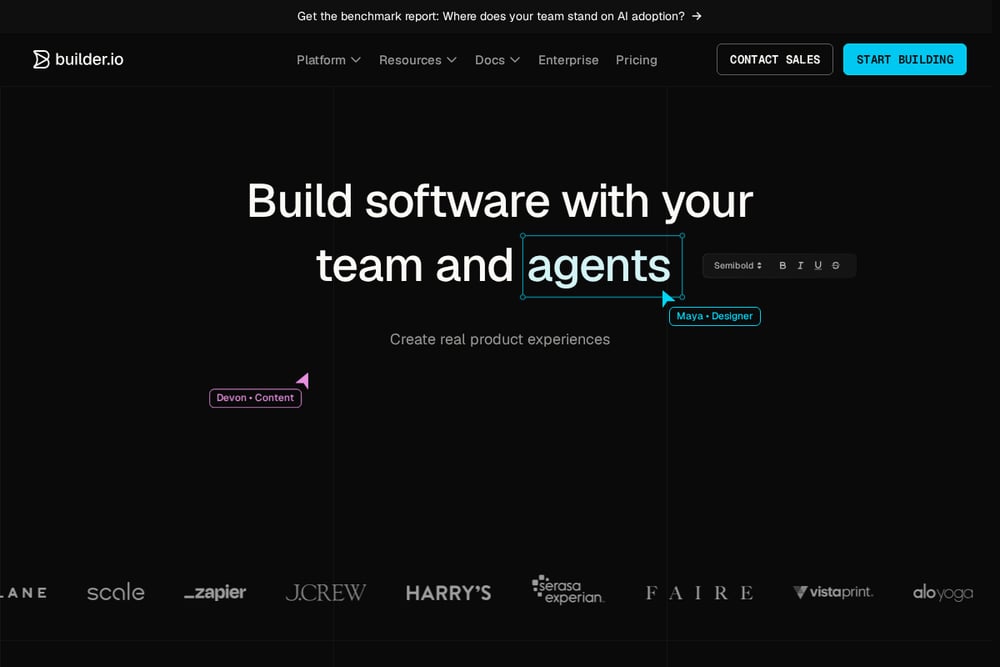 A screenshot of the Builder.io website.
Builder.io leads the pack with its AI-powered Visual Copilot that converts Figma designs to clean, responsive code in one click. It supports multiple frameworks including React, Qwik, Angular, and even mobile frameworks like Kotlin and Flutter. The platform claims to reduce development timelines by 50-80%, making it ideal for teams that need speed without sacrificing quality. Builder.io also offers custom component mapping and auto-layout export, which helps maintain design consistency. For engineering leaders looking to automate design-to-code workflows, this is the most comprehensive solution available.
#2 Locofy
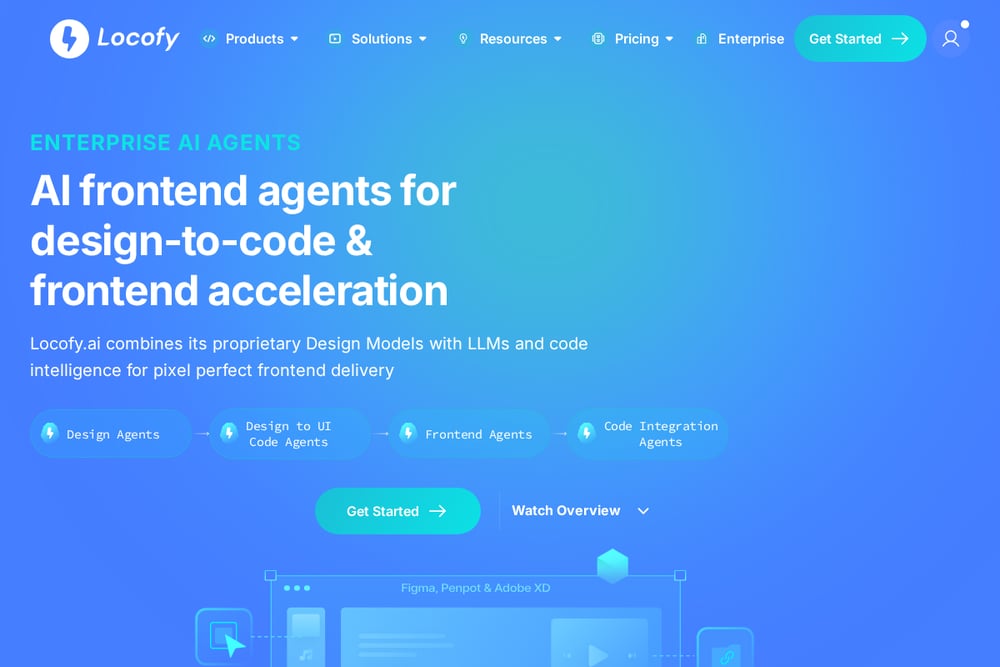 A screenshot of the Locofy website.
Locofy uses in-house Large Design Models to convert Figma designs into pixel-perfect, component-based React code. The process is simple: design in Figma, preview the code in real time, and export clean React components with data binding for backend integration. Locofy is trusted by global brands and offers enterprise-grade security with SOC 2 certification. It is particularly strong for teams that want to keep their Figma workflow intact while accelerating development. The real-time preview feature lets you fine-tune the AI's decisions before finalizing the code.
#3 Anima
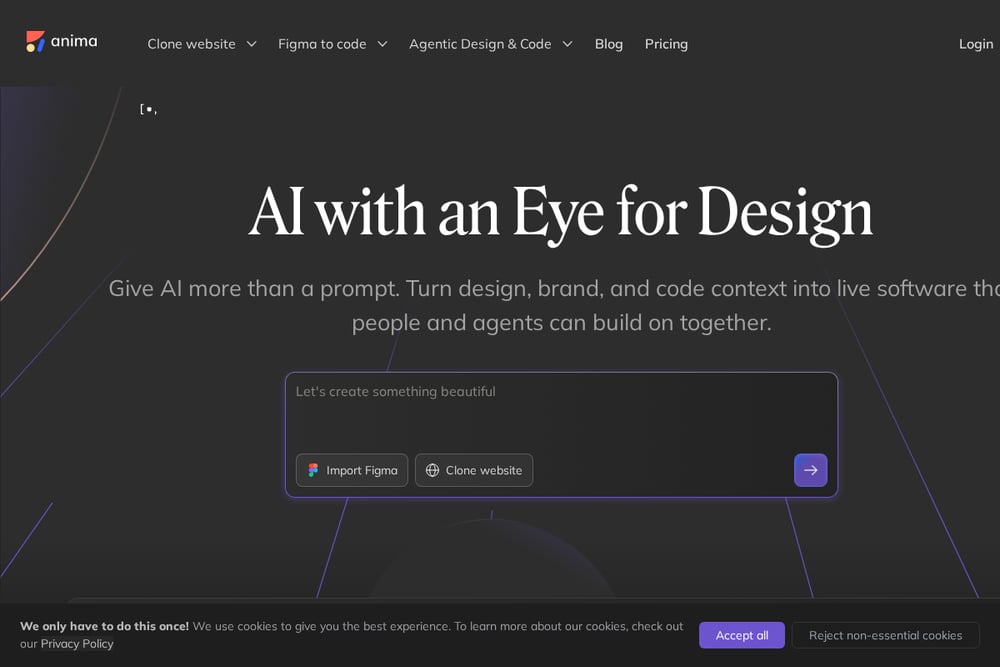 A screenshot of the Anima website.
Anima turns Figma designs into clean code for React, HTML, Vue, and Tailwind, and it also supports vibe coding by letting you paste a Figma link and start coding from branded components. Trusted by over 1.8 million users, Anima offers a playground where non-Figma users can preview and edit code instantly. It also enables designers to launch live websites directly from Figma without coding. For teams that want a balance between AI automation and creative control, Anima provides a flexible handoff with code packages or snippets.
#4 Pixel to Code
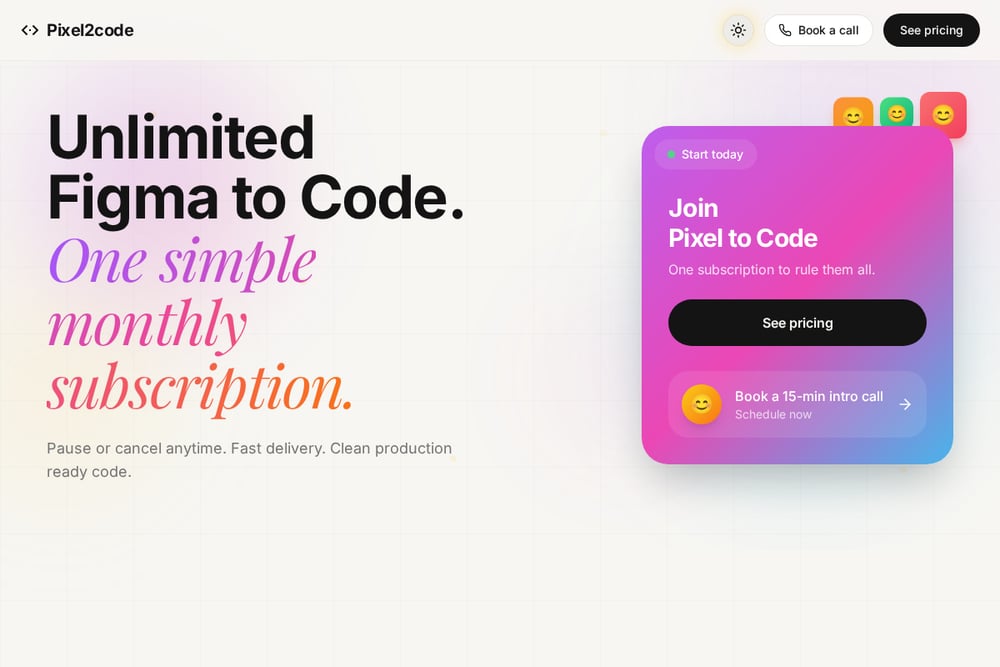 A screenshot of the Pixel to Code website.
Pixel to Code is a subscription-based service where the founder personally converts your Figma designs into production-ready code. Plans start at $59/month for basic HTML or React, with delivery in 3-5 business days, while the Pro plan at $149/month offers Next.js, Tailwind, and Framer Motion animations with 1-3 day turnaround. Unlike AI tools, you get unlimited revisions and direct communication via Trello, email, or WhatsApp. This service is ideal for founders and startups who want a fixed monthly rate and senior-level code without managing freelancers. Testimonials from SaaS founders and product managers highlight its reliability and speed.
#5 Figtowp
Figtowp specializes in converting Figma designs into React code with a focus on WordPress integration, making it a niche choice for teams that need dynamic, component-based code for WordPress sites. Their experienced developers work closely with you to ensure pixel-perfect accuracy and performance optimization. They also offer a wide range of conversion services, including Figma to Elementor, WPBakery, and other page builders. If your stack revolves around WordPress and you need custom React components, Figtowp provides a reliable, human-driven alternative to automated plugins.
How to Choose the Right Figma-to-Code Service
Start by defining your priorities. If you need speed and automation for multiple frameworks, Builder.io or Locofy are your best bets. For a designer-friendly workflow with live previews, Anima shines. If you prefer a human touch with unlimited revisions and a fixed monthly rate, Pixel to Code offers a personal, subscription-based model. And if your project is deeply tied to WordPress, Figtowp provides specialized expertise. Consider your budget, timeline, and whether you value AI speed or human precision.
Automating Your Design-to-Code Workflow
To streamline your process, start by exporting your Figma design layers and components. For AI tools like Builder.io or Locofy, install their Figma plugin and run the conversion to generate initial code. Review the output in a real-time preview, then fine-tune components and styling. For subscription services like Pixel to Code, submit your Figma file via Trello and receive code within 1-5 days. Finally, integrate the code into your project using Git or a CMS, and test for responsiveness and performance.
The Bottom Line on Figma-to-Code Services
The best Figma-to-code service depends on your team's size, technical depth, and project complexity. AI-powered tools like Builder.io and Locofy excel at rapid prototyping and multi-framework support, while human-led services like Pixel to Code and Figtowp deliver pixel-perfect accuracy and personalized support. Anima bridges the gap with a hybrid approach. Whichever you choose, these services eliminate the bottleneck of manual coding, letting you focus on building great products.