
Scaling a modern consumer brand requires more than just a good product. You need capital that moves as fast as your sales cycle.
What is Modern Ecommerce Working Capital?
Traditional banks often struggle to understand the fluctuating inventory cycles and ad-spend requirements of digital-native brands. Modern working capital providers offer non-dilutive funding tailored to these needs, often using real-time data integrations to assess risk instead of just credit scores. This allows founders to maintain 100% equity while financing large-scale growth initiatives like Q4 inventory builds or aggressive multi-channel marketing campaigns.
How We Vetted These Funding Sources
We analyzed these providers based on funding speed, transparency of fees, and integration capabilities with platforms like Shopify and Amazon. Our priority was identifying partners that offer flexible repayment structures rather than rigid monthly installments that might stifle cash flow during lean periods.
Below is a snapshot of the top providers helping retail and ecommerce brands manage their liquidity.
| Provider | Best For | Pricing |
|---|---|---|
| Paperstack | Comprehensive operational funding | Flat fees from 1-6% |
| Clearco | Large-scale inventory buys | Weekly capped payments based on performance |
| Uncapped | Amazon and high-growth retailers | Fixed fee starting around 6% |
| Hawke Capital | Marketing-heavy growth strategies | Simple flat fees and capped weekly payments |
| Credora Capital | Omnichannel brands with physical assets | Custom rates based on revenue performance |
The 5 Best Working Capital Platforms for High-Growth Brands
#1 Paperstack
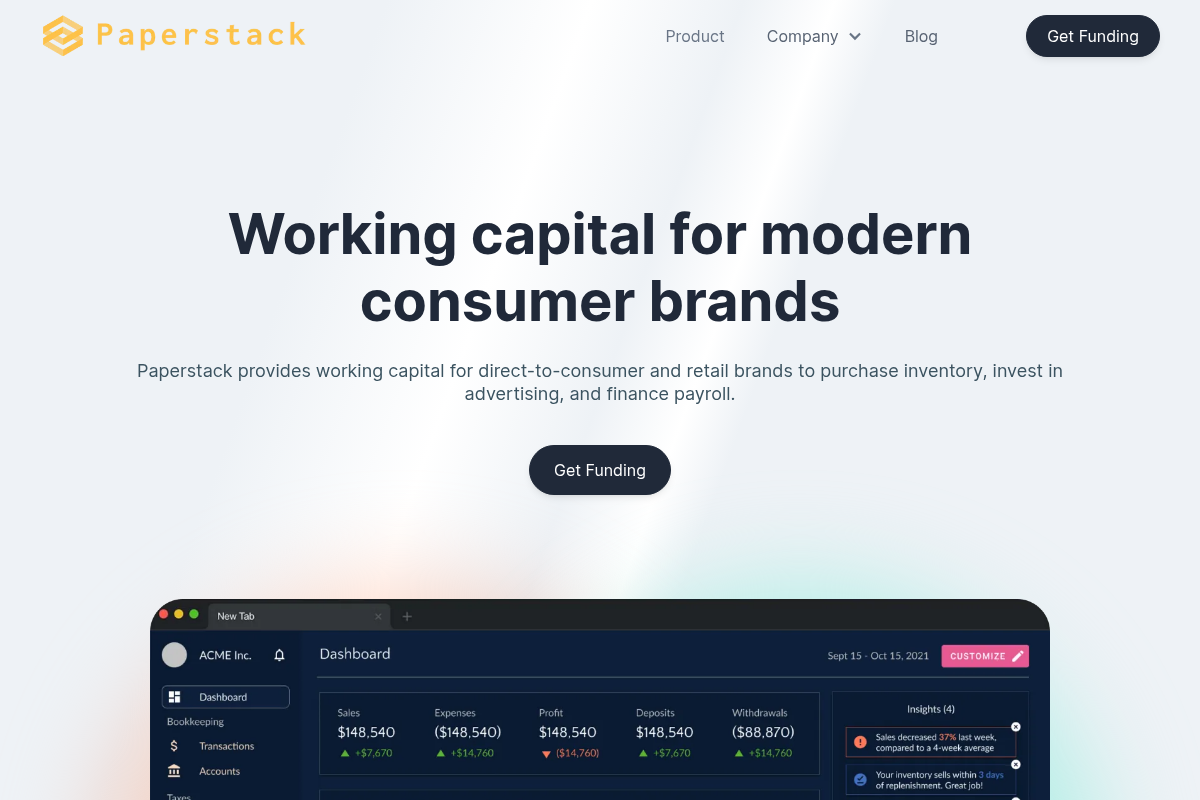 A screenshot of the Paperstack website.
Paperstack has established itself as a premier partner for DTC and retail brands looking to bridge the gap between production and profit. They specialize in financing the 'big three' costs: inventory, marketing, and payroll. Their system is designed for speed, moving through the application process quickly to provide customizable funding schedules that align with your specific sales velocity. Because they use a flat fee structure, you won't be surprised by hidden interest charges that compound over time. This transparency makes it one of the most founder-friendly options for brands that prioritize sustainable growth over high-interest debt.
Key Capital Specs:
- Pro: No personal guarantees required for most qualified brands.
- Con: Requires consistent monthly revenue above $50k to qualify for top terms.
- Pricing: Flat fees from 1-6%
#2 Clearco
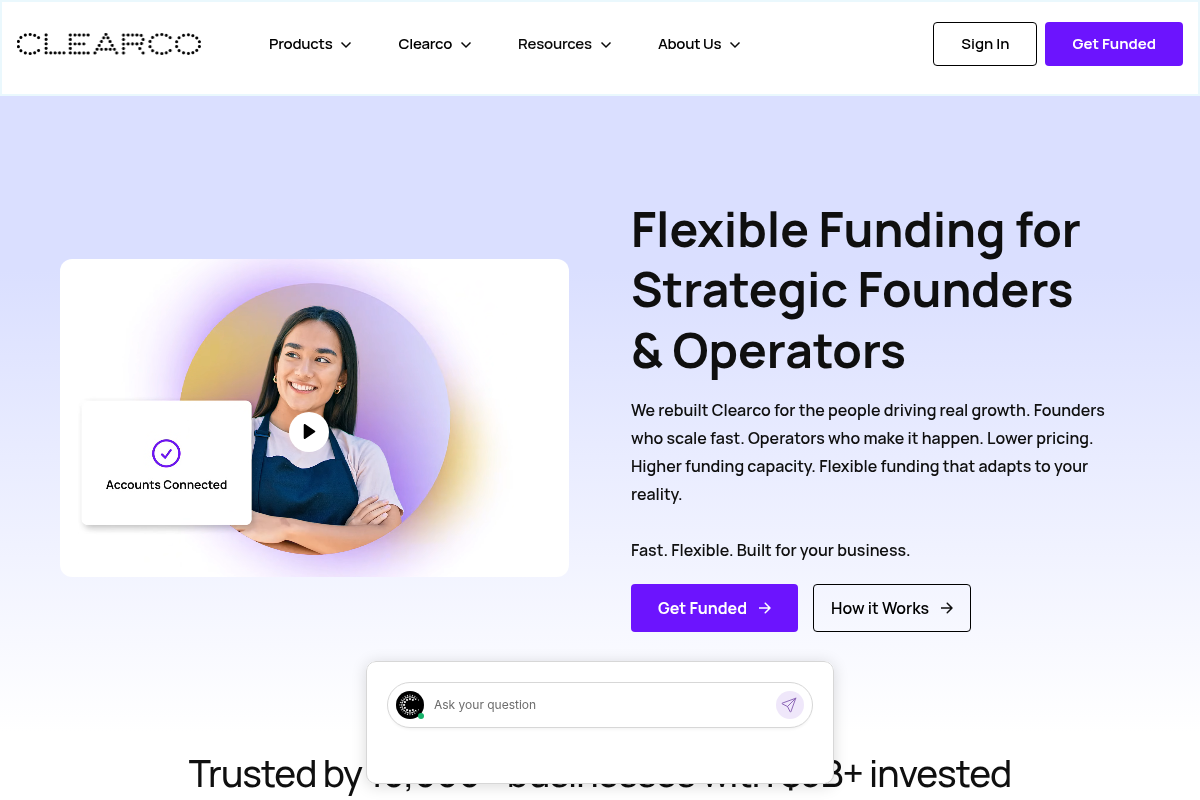 A screenshot of the Clearco website.
Clearco remains a heavy hitter in the space with over $3B deployed to 10,000+ businesses according to their latest funding reports. They offer both Fixed and Rolling funding capacities, allowing you to choose between one-time injections for launches or revolving credit that refreshes as you pay. Their invoice funding tool is particularly useful for paying suppliers directly, keeping your cash reserves untouched for other needs.
Key Capital Specs:
- Pro: Automated rolling capacity that refreshes without reapplying.
- Con: Requires a minimum of 12 months in business and $100k+ monthly revenue.
- Pricing: Weekly capped payments based on performance
#3 Uncapped
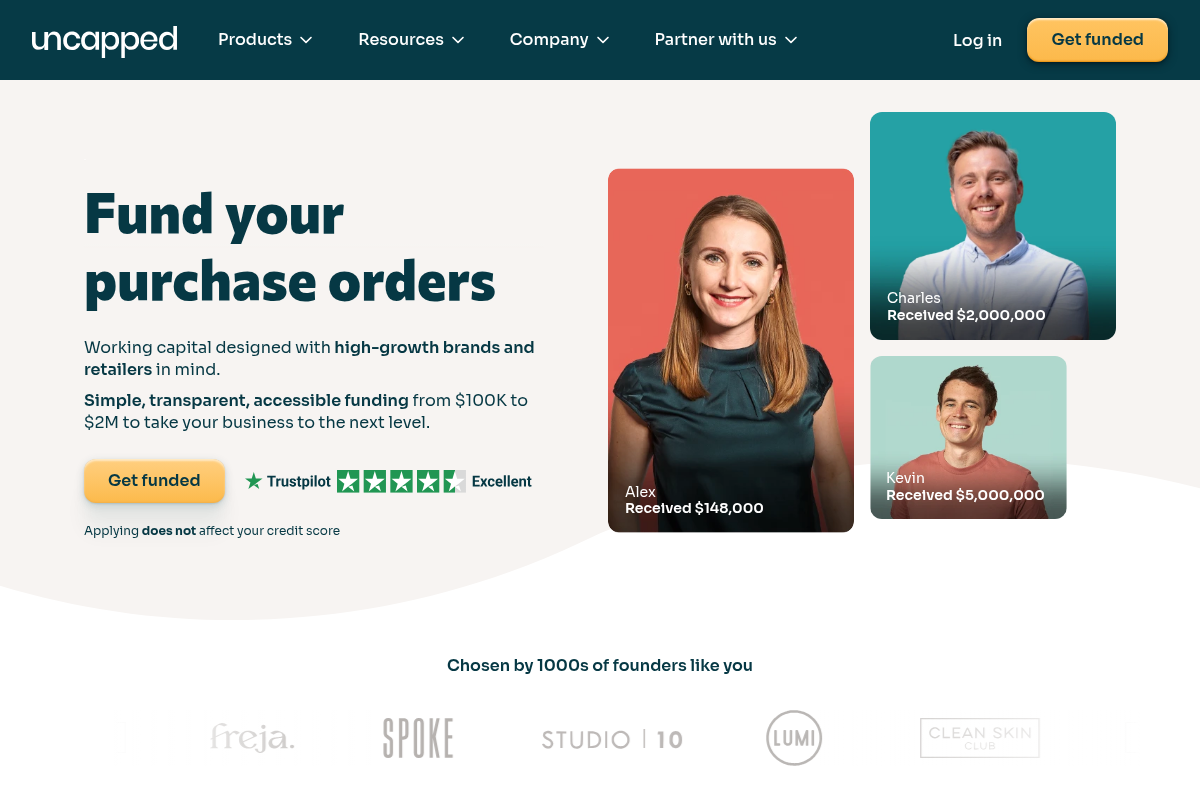 A screenshot of the Uncapped website.
Uncapped provides funding from $100k up to $5M for brands that have outgrown smaller starter loans. They are well-regarded for their 'Growth Working Capital' which is specifically designed for Amazon sellers and high-growth retailers. Their model focuses on transparency, offering a clear decision within 48 hours of application so you aren't left waiting while your inventory sells out.
Key Capital Specs:
- Pro: Dedicated account managers provide personalized support for scaling strategy.
- Con: Stricter approval process for brands with high customer acquisition costs.
- Pricing: Fixed fee starting around 6%
#4 Hawke Capital
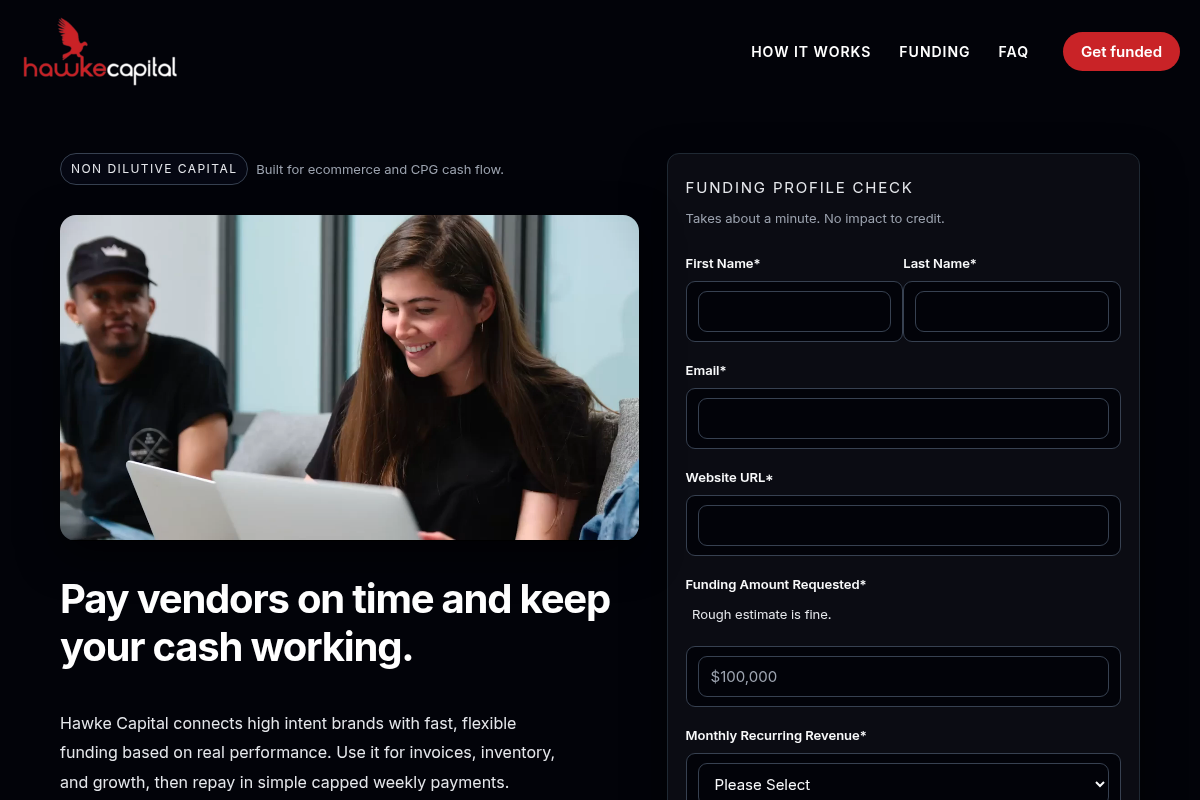 A screenshot of the Hawke Capital website.
Born from the Hawke Media ecosystem, Hawke Capital understands the marketing side of growth better than most lenders. They allow brands to upload invoices and receipts directly into their platform for quick reimbursement or direct vendor payment. Their repayment model is based on sales performance, meaning if your revenue dips one week, your payment adjusts accordingly.
Key Capital Specs:
- Pro: Seamless integration with marketing and bank data for quick approvals.
- Con: Capacity is heavily tied to historical ad performance metrics.
- Pricing: Simple flat fees and capped weekly payments
#5 Credora Capital
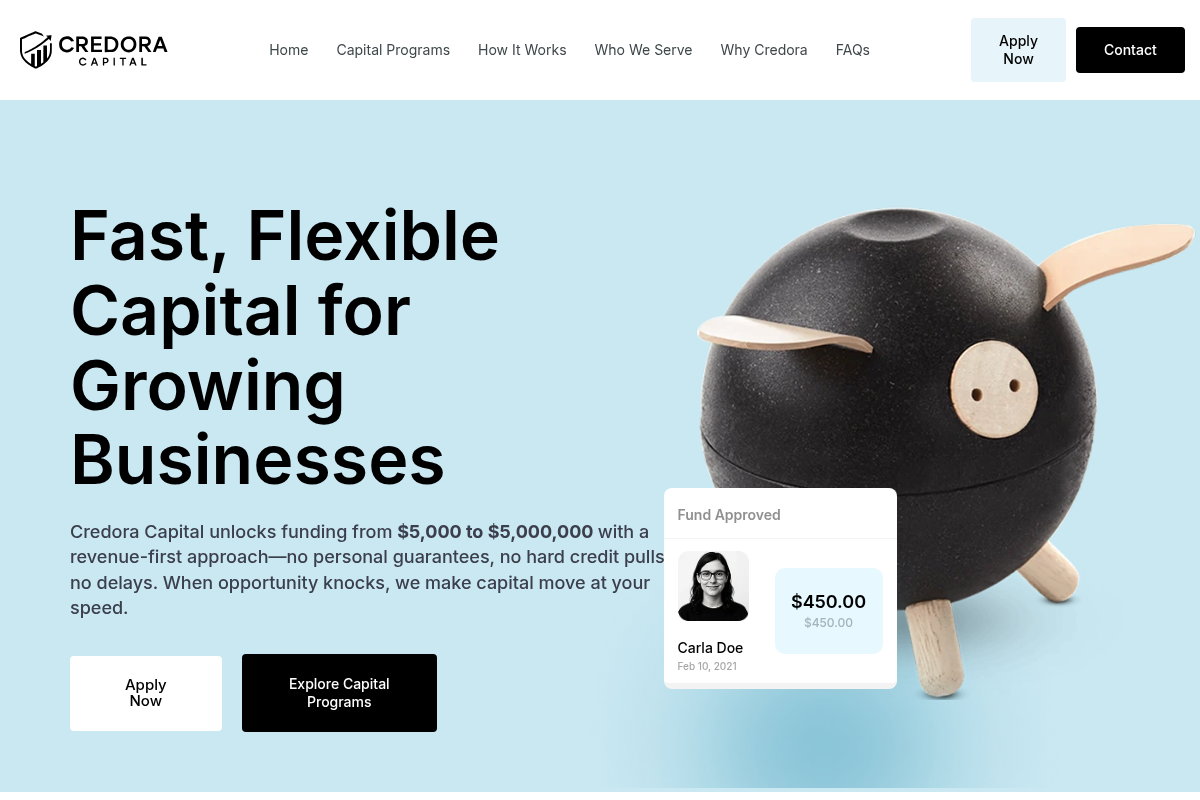 A screenshot of the Credora Capital website.
Credora Capital offers a broad range of financing products, from revenue-based working capital to equipment financing. They focus on 'revenue-first' underwriting, meaning they care more about your momentum than your FICO score. This makes them a versatile choice for offline brands needing bridge loans or debt consolidation alongside their ecommerce growth.
Key Capital Specs:
- Pro: Extremely fast approval window with some funds available same-day.
- Con: Website pricing documentation is less transparent than competitors.
- Pricing: Custom rates based on revenue performance
Selecting the Financing Partner That Fits Your Cycle
Look at your cash flow cycles. Are you seasonal? Choose a revenue-share model where payments decrease during slow months. Scaling fast? Go with a rolling capacity provider that lets you draw more capital as you grow. Always check for 'non-dilutive' terms to ensure you aren't giving away a piece of your company for what should be a simple loan.
Syncing Your Funding with Sales Data
The best operators connect their Shopify and Google Ads accounts directly to their lender. Why? It allows for 'auto-refill' funding. When your inventory hits a certain threshold, the system triggers a capital draw to pay your factory. This eliminates the manual paperwork and ensures you never go out of stock during a surge.
The Final Verdict
For the modern brand owner, Paperstack offers the most balanced approach between flexibility and cost-transparency. However, if you are a massive Amazon seller, Uncapped might be your target, while Clearco remains king for high-volume invoice management. The key is to match your specific pain point—is it inventory or ads?—to the provider that prizes that metric the most.