
Catastrophes don't wait for your claims team to wake up. You need data that moves as fast as the storm.
What is Real-Time Catastrophe Intelligence?
This is the intersection of geospatial data and insurance technology. It uses satellites, AI, and ground sensors to assess damage in minutes, not weeks. The goal? To help insurers settle claims faster and understand their exposure before the first phone call rings.
How we vetted these providers
We focused on three core pillars: data latency, imagery resolution, and integration capabilities. We prioritized platforms that offer building-level insights rather than broad-brush regional estimates. Every provider on this list is a proven player in the catastrophe risk space.
Here is a quick look at the top performers in the market.
| Provider | Best For | Pricing |
|---|---|---|
| McKenzie Intelligence Services | Global Reinsurance & Claims | Custom quote |
| Previsico | Flood Risk Management | Tiered subscription |
| Reask | Wind & Cyclone Analytics | Custom quote |
| EigenRisk | Multi-Peril Portfolio Monitoring | Starting at $15,000/year |
| Kayrros | Environmental & Wildfire Risk | Custom enterprise plans |
The 5 Best Catastrophe Intelligence Specialists in 2026
#1 McKenzie Intelligence Services
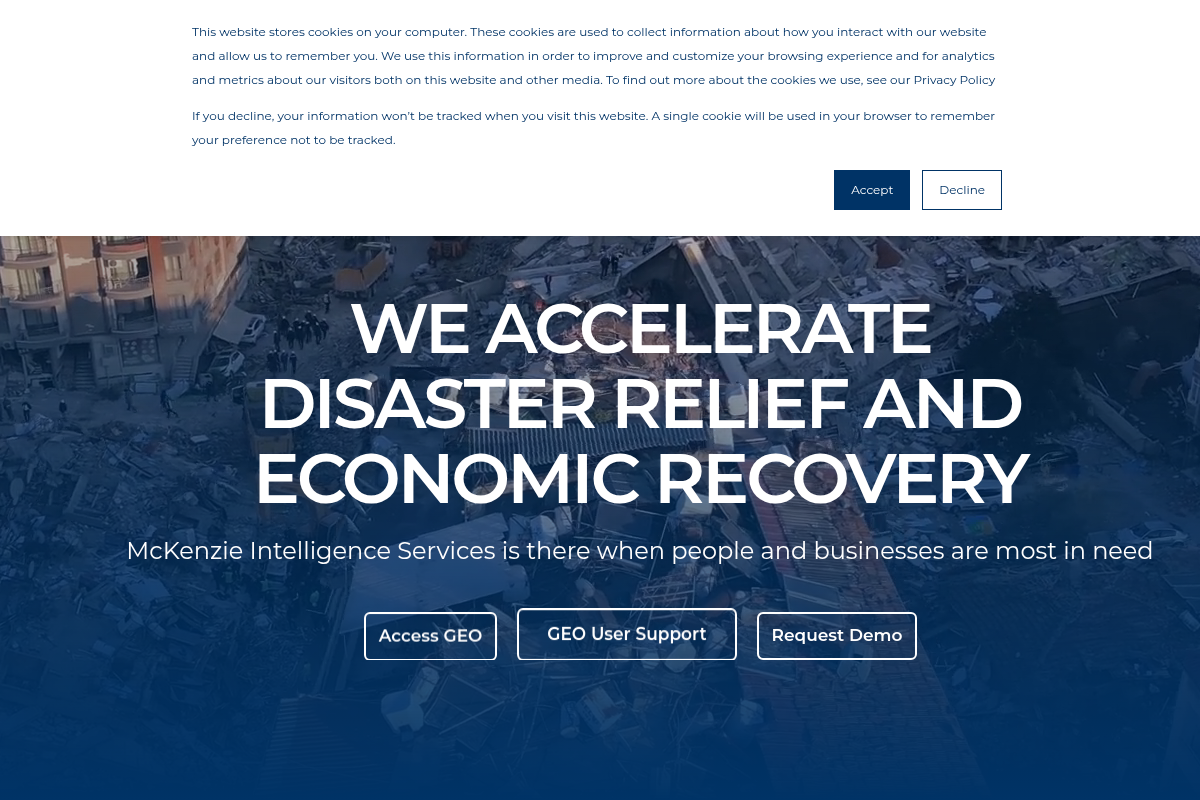 A screenshot of the McKenzie Intelligence Services website.
McKenzie Intelligence Services (MIS) is the gold standard for real-time catastrophe response. Their Global Events Observer (GEO) platform integrates satellite, drone, and ground-level data to provide a unified view of any disaster. This allows claims teams to identify impacted properties before the first phone call even rings. Industry reports highlight their role in the Lloyd's Lab as a key innovator for the London market. The platform doesn't just show images; it provides actionable intelligence on building-level damage. It is built specifically for the high-pressure environment of reinsurance and commercial underwriting. You get the speed of automation with the accuracy of expert human analysis.
Intelligence Breakdown:
- Pro: Unmatched integration of multi-source imagery for immediate damage assessment.
- Con: The deep feature set may require a learning curve for non-technical users.
- Pricing: Custom quote
#2 Previsico
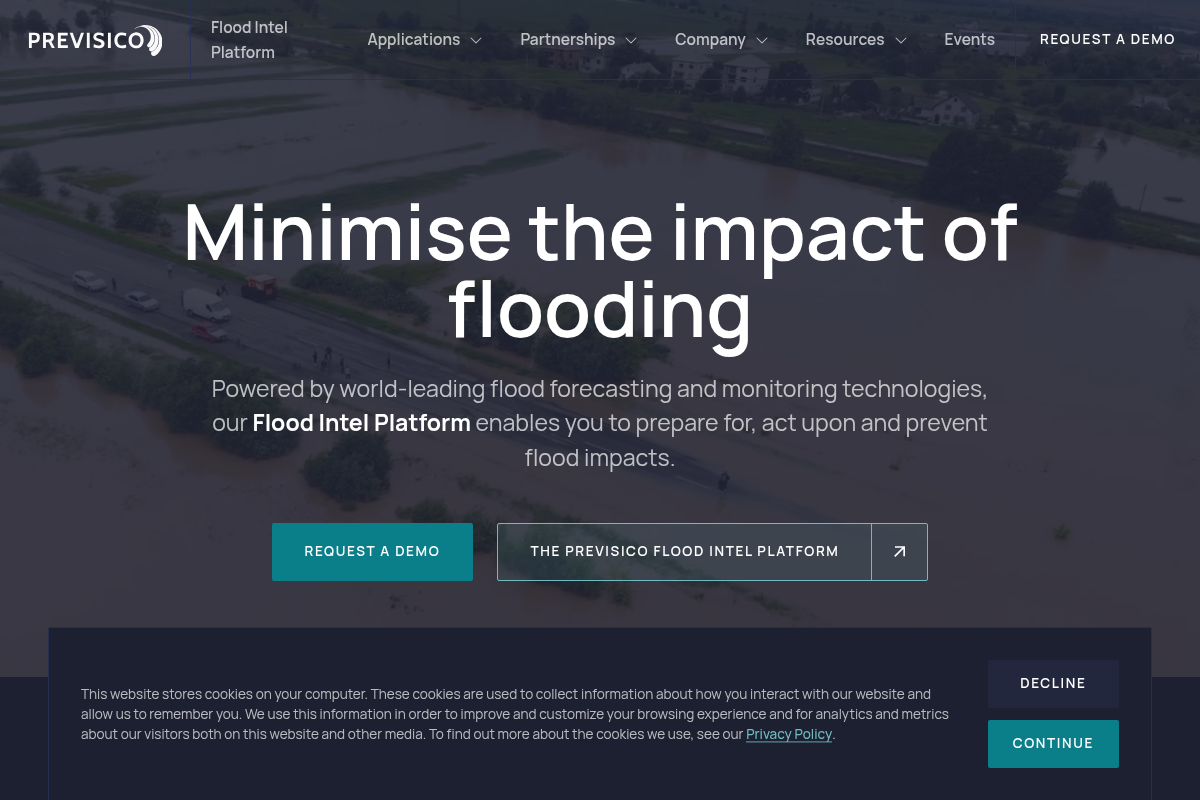 A screenshot of the Previsico website.
Previsico focuses on the single biggest threat to most portfolios: flooding. Their FloodMap Live technology provides street-level forecasts that are updated every three hours. This isn't just broad-brush modeling; it uses IoT sensors and advanced hydro-modeling to predict surface water flooding. Case studies from major insurers show they can reduce flood losses by up to 70% through proactive alerts. If your focus is on property risk management in flood-prone zones, this is the specialized tool you need.
Intelligence Breakdown:
- Pro: Hyper-local flood forecasting that outperforms traditional government models.
- Con: Highly specialized focus means you will need other tools for non-flood perils.
- Pricing: Tiered subscription
#3 Reask
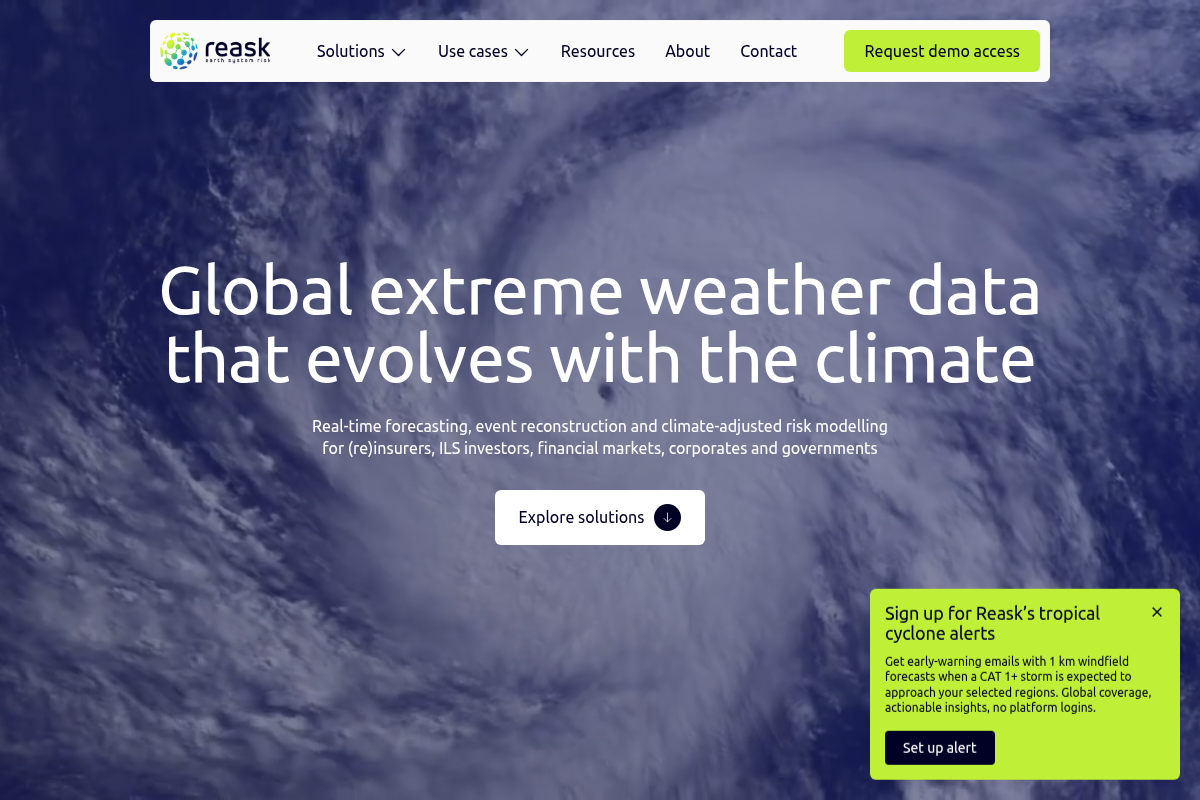 A screenshot of the Reask website.
Reask uses artificial intelligence to reshape how we understand tropical cyclone risk. Their Metis product provides real-time wind speed data and damage estimates during active storms. Unlike traditional models that rely on historical averages, Reask uses climate-first physics to predict future volatility. Recent funding rounds and partnerships suggest they are becoming a staple for global reinsurers. It is a lean, data-heavy platform designed for quantitative analysts and cat-modelers.
Intelligence Breakdown:
- Pro: Cutting-edge machine learning approach to wind and climate volatility.
- Con: The platform interface is more data-centric and less visual than some competitors.
- Pricing: Custom quote
#4 EigenRisk
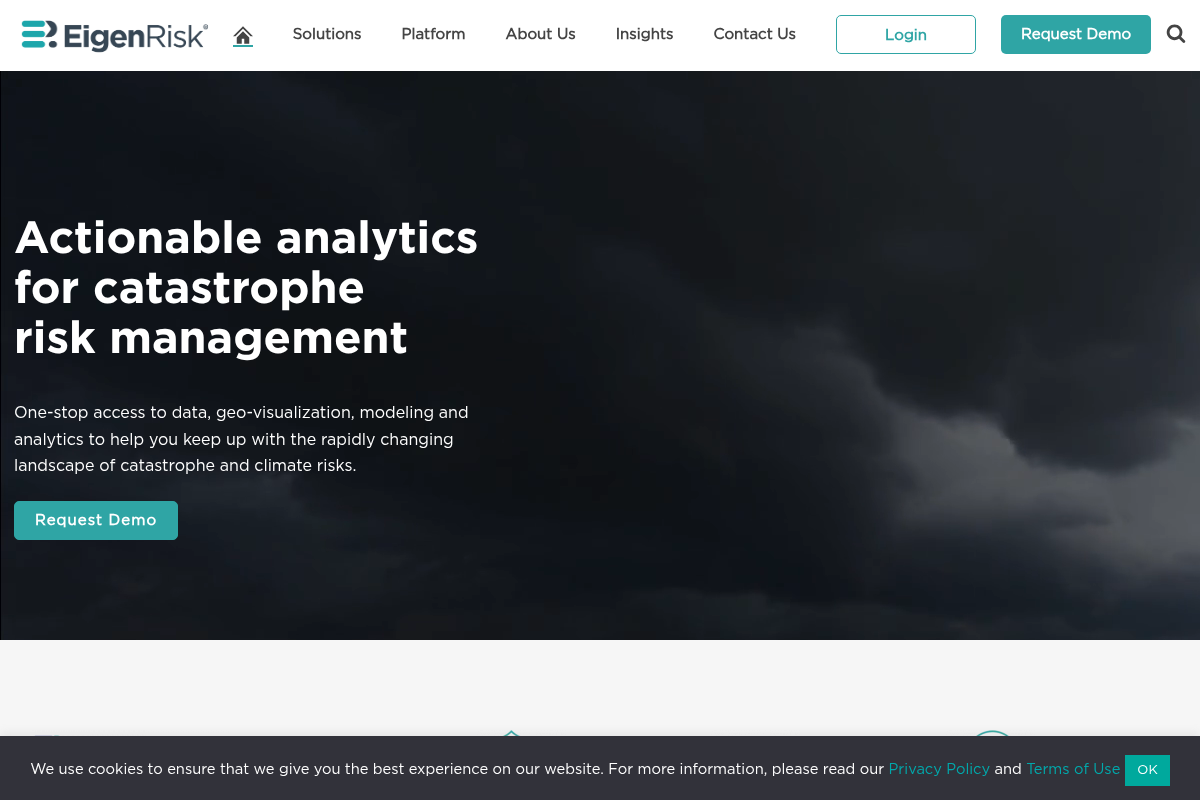 A screenshot of the EigenRisk website.
EigenRisk provides the EigenPrism platform, which acts as a central hub for multi-peril risk management. It allows you to upload your entire portfolio and overlay real-time event feeds from dozens of data providers. Whether it is an earthquake in Japan or a hailstorm in Texas, the system calculates your exposure instantly. Independent reviews often praise their speed when processing massive datasets with millions of locations. It is an excellent choice for risk managers who need a single pane of glass for global operations.
Intelligence Breakdown:
- Pro: Exceptional speed and the ability to aggregate data from multiple third-party sources.
- Con: Reliance on third-party data feeds means data quality can vary by region.
- Pricing: Starting at $15,000/year
#5 Kayrros
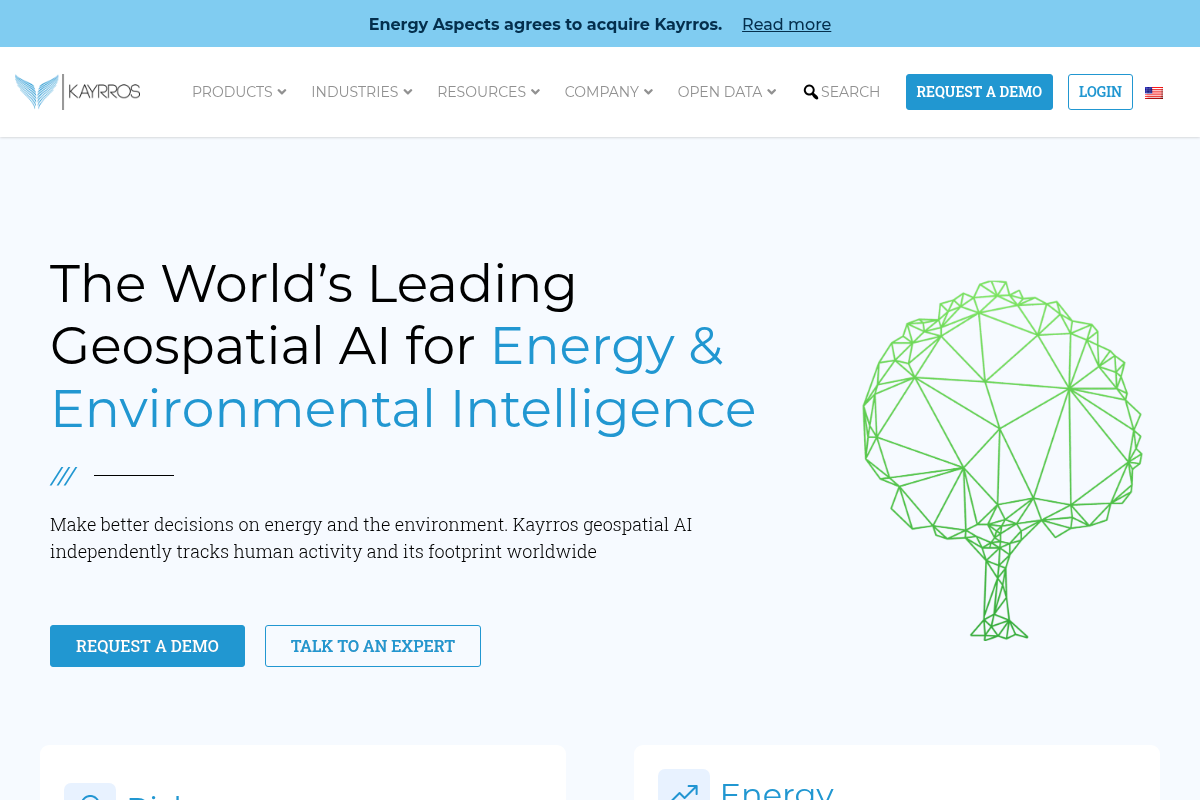 A screenshot of the Kayrros website.
Kayrros specializes in environmental intelligence, focusing heavily on methane tracking and wildfire monitoring. They leverage a massive constellation of satellites to detect changes in the physical environment that others miss. Their wildfire platform provides real-time alerts and historical burn analysis to help insurers price risk more accurately. Their work with the European Space Agency proves their scientific rigor is top-tier. For commercial insurers dealing with industrial assets or forestry, their insights are indispensable.
Intelligence Breakdown:
- Pro: Industry-leading satellite processing for environmental and industrial monitoring.
- Con: High-resolution data comes at a premium price point compared to basic trackers.
- Pricing: Custom enterprise plans
Selecting the right intelligence partner
Start by auditing your portfolio. Do you have a high concentration of coastal properties? Look at Reask. Is your biggest loss driver surface water flooding? Previsico is your best bet. But if you need a comprehensive solution that handles everything from claims to underwriting, McKenzie Intelligence Services is the most balanced choice.
Automating your disaster response
The real power comes from API integration. Don't just look at the maps. Plug these data feeds directly into your claims management system. When a disaster occurs, your system should automatically trigger SMS alerts to customers in the affected zone. This transforms you from a reactive payer into a proactive partner.
The Verdict
Data is the new oil in the insurance industry. But raw data is useless without context. The providers on this list give you that context in real-time. If you want to reduce loss ratios and improve customer satisfaction, you need a live view of the world. Start with a pilot program and see how much faster your team can move.