
Everyone is talking about AI. But very few teams actually know how to build with it.
The Reality of the AI Skills Gap
Most corporate training is just 'death by powerpoint.' You sit in a room, watch a demo, and forget everything by Monday. Modern teams need more. They need hands-on labs, custom workflows, and instructors who have actually touched a production codebase. This niche focuses on bridging that gap between conceptual awareness and functional engineering.
How We Vetted These AI Training Partners
We looked for providers that prioritize 'artifacts over theory.' We ranked these based on their curriculum depth, the quality of their hands-on labs, and their ability to customize training to specific industry data. We ignored the massive generic platforms to find boutique providers who offer direct access to experts.
Here is a quick breakdown of how the top providers stack up for your team.
| Provider | Best For | Pricing |
|---|---|---|
| Kahoa | Software Engineering Teams | Custom quote based on team size |
| Real Minds AI | Government and Education Sectors | Starting at $3,500 per half-day |
| AI Makerspace | Enterprise AI Engineering | Starting at $60,000 |
| Velocity Knowledge | General Workforce Upskilling | Custom quote |
| Vjal Institute | Executives and Board Members | Tiered certification plans |
The Top 5 AI Capability Building Partners for 2026
#1 Kahoa
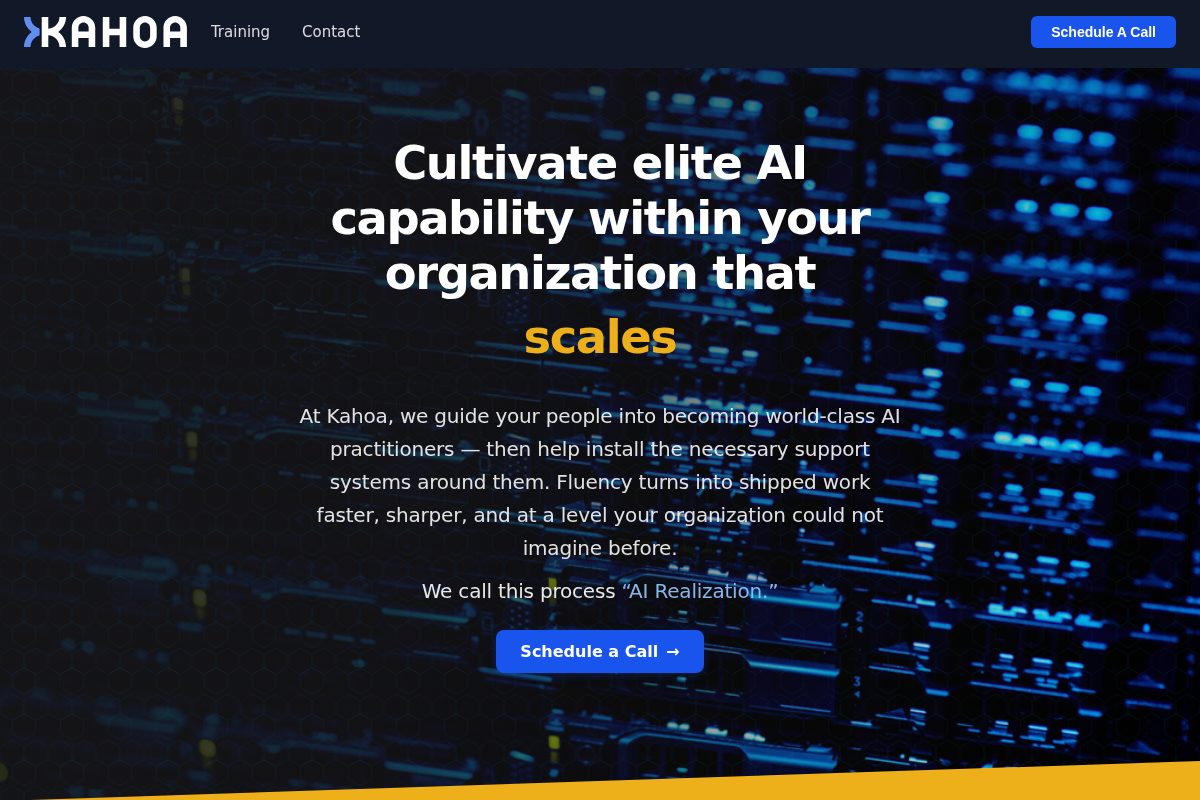 A screenshot of the Kahoa website.
Kahoa is built for high-performance engineering teams that cannot afford to waste time on basics. Their 'Intelligent Engineer' program is highly regarded for its focus on LLM integration and RAG patterns. They move fast and expect your team to do the same. This isn't just about using ChatGPT; it is about building AI-native system architectures.
Training Methodology:
- Pro: Deep technical focus on AI architecture and autonomous agents.
- Con: Might be too advanced for non-technical business departments.
- Pricing: Custom quote based on team size
#2 Real Minds AI
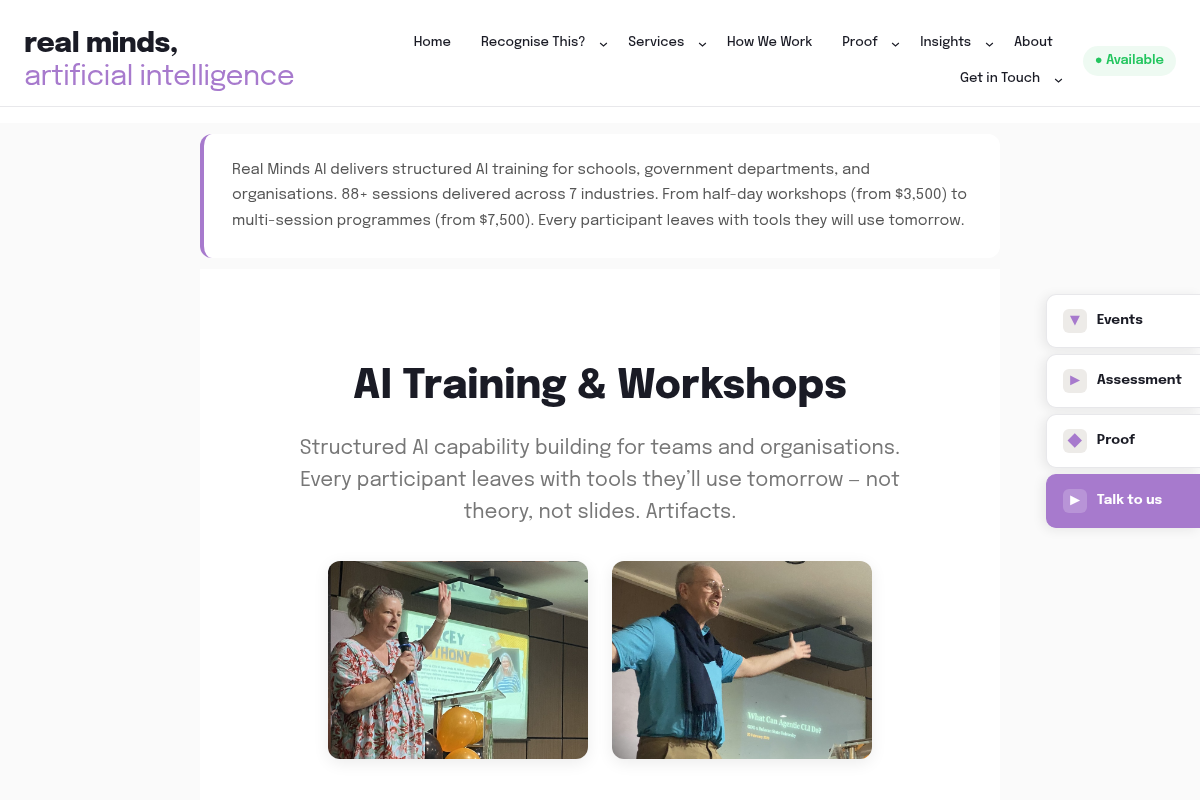 A screenshot of the Real Minds AI website.
Real Minds AI focuses on 'tools you will use tomorrow.' They specialize in structured capability building for schools, government, and mid-sized organisations. Their workshops are strictly hands-on. Every participant walks away with a tangible artifact they built during the session.
Training Methodology:
- Pro: Excellent at translating complex AI risks into safe, guardrailed adoption.
- Con: Limited availability for long-term embedded engineering residencies.
- Pricing: Starting at $3,500 per half-day
#3 AI Makerspace
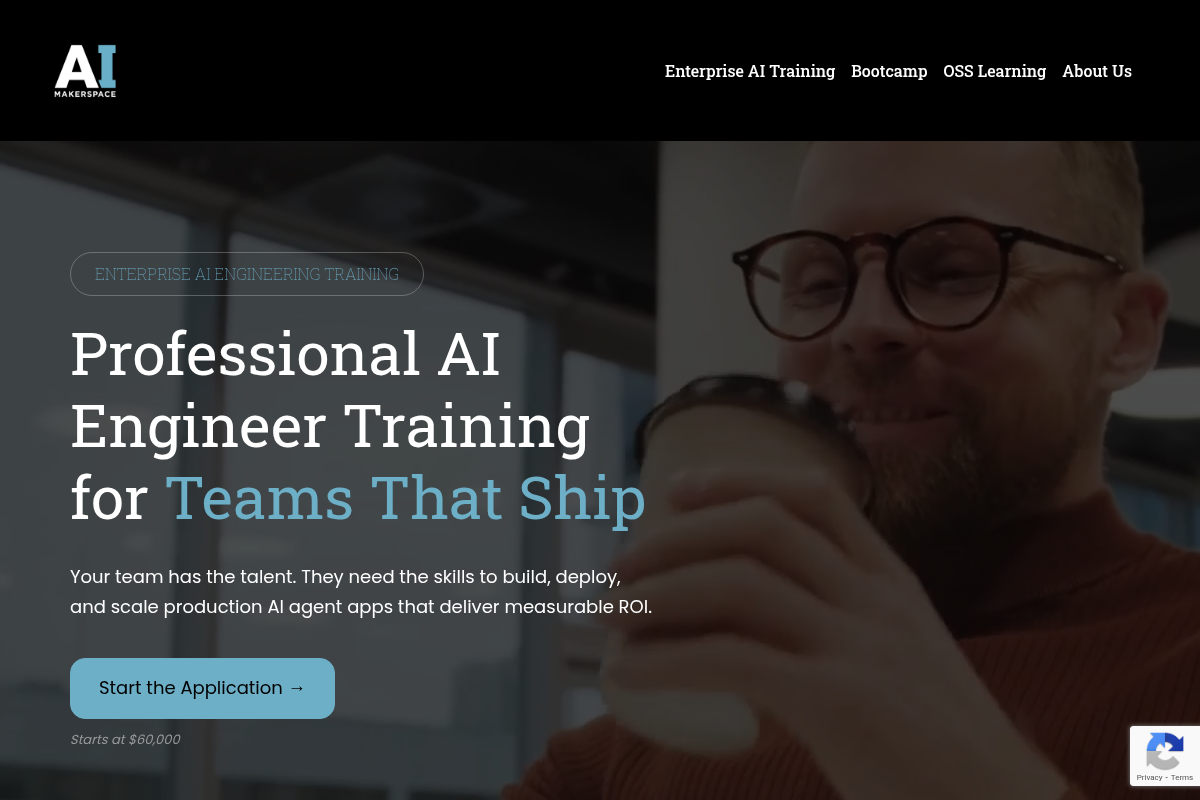 A screenshot of the AI Makerspace website.
This provider is for those who need to get into production immediately. They utilize a 'STRIKE team' model where they train your best leads to become internal champions. They don't just teach; they embed with your team to ship real apps. It is high-intensity and results-driven.
Training Methodology:
- Pro: Focuses on shipping actual production applications during the training.
- Con: The high entry price point is prohibitive for smaller startups.
- Pricing: Starting at $60,000
#4 Velocity Knowledge
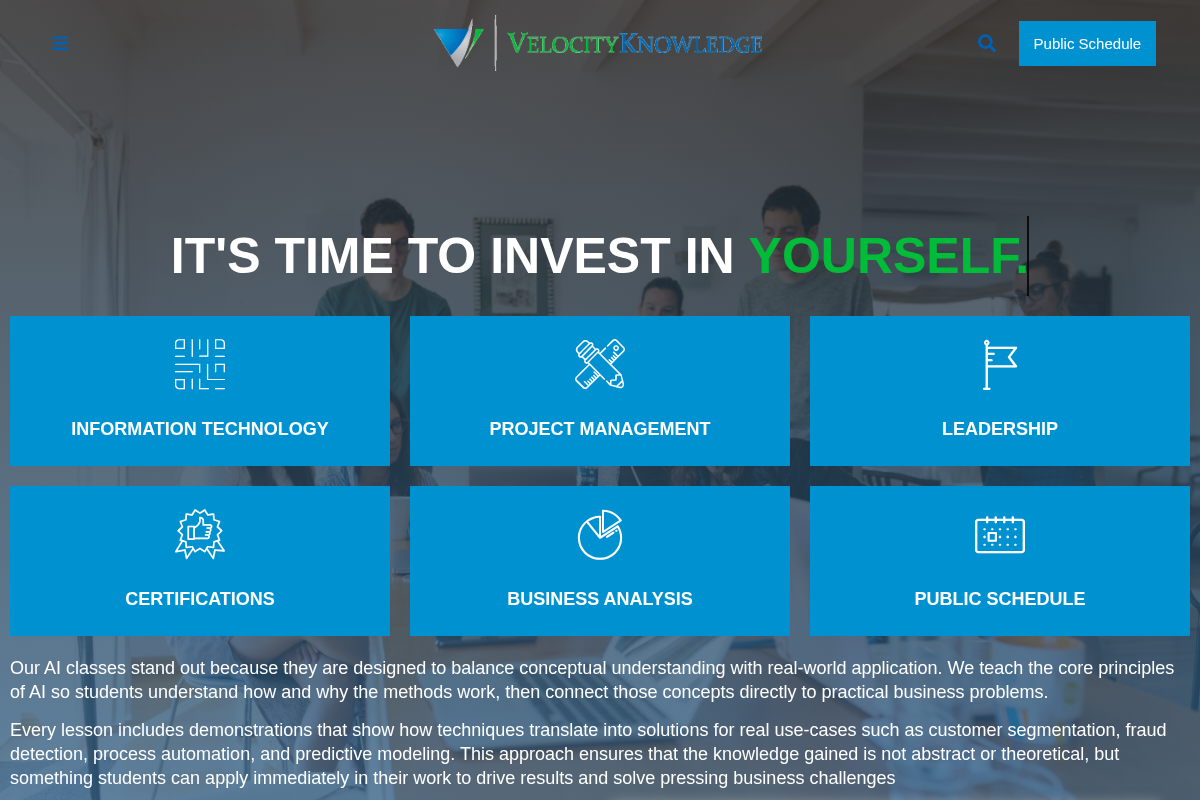 A screenshot of the Velocity Knowledge website.
Velocity Knowledge excels by finding the middle ground between high-level strategy and technical execution. Their AI classes stand out because they are specifically designed to balance conceptual understanding with application. You won't just learn what a transformer is; you will learn how to apply it to your specific project management or IT workflow. They offer a flexible hybrid of virtual and on-site instruction that many mid-sized firms find more accessible than high-end engineering bootcamps. It is a pragmatic choice for companies that need to upskill an entire department quickly.
Training Methodology:
- Pro: Highly flexible delivery formats including locally-tailored on-site training.
- Con: Website lacks the deep technical blog content found on engineering-heavy competitor sites.
- Pricing: Custom quote
#5 Vjal Institute
Vjal is focused on the leadership side of the AI equation. They aim to empower 1 million leaders with practical AI certifications. Their programs turn AI from a 'scary' buzzword into a clear board-level agenda. It is less about coding and more about strategic, risk-balanced roadmaps.
Training Methodology:
- Pro: Superior at helping leadership teams sign off on AI investment strategies.
- Con: Does not provide the deep-level coding labs that engineers require.
- Pricing: Tiered certification plans
Selecting the Right Partner
Stop looking at the brand name and look at the curriculum. Ask for a sample syllabus. Does it include your specific tech stack? If they give you a generic list of 'AI Fundamentals,' keep looking. You want a partner who asks about your data privacy and your current DevOps pipeline before they quote you a price.
Leveling Up Your Workflow
Training is the first step toward true automation. Once your team understands how to prompt and build with LLMs, you can move toward 'Agentic Workflows.' This is where AI doesn't just answer questions—it executes tasks. The right training provider should be showing you how to build these autonomous loops to save hundreds of hours.
The Bottom Line for 2026
The gap between 'AI-aware' and 'AI-capable' is widening. If you need deep engineering, go with Kahoa or AI Makerspace. If you need to mobilize a broad workforce with a mix of IT and management skills, Velocity Knowledge is a reliable, balanced option. Either way, stop reading and start shipping.