
Finding the right digital tools to support a child with autism can feel overwhelming. You need apps that are not only effective but also engaging, safe, and easy for both kids and caregivers to use. We've tested and ranked the
The Growing Need for Digital Tools in Autism Support
The market for autism support apps has exploded in recent years, driven by the increasing recognition of AAC as a fundamental communication right. Parents and therapists are moving away from one-size-fits-all solutions toward apps that offer personalization, engagement, and data tracking. The best tools now blend communication aids with daily living supports like visual schedules and social stories, creating a more cohesive experience for the child. Community features are also becoming a key differentiator, as caregivers seek connection and shared advice. This shift reflects a broader understanding that effective support must address the whole child, not just one skill.
How We Ranked These Apps
We evaluated each app based on five key criteria: communication functionality (AAC quality and customization), ease of use for both children and adults, engagement features (gamification, rewards), breadth of support (routines, stories, community), and data privacy and safety. Apps that offered a comprehensive suite of tools scored higher, as did those with strong user reviews and transparent privacy policies. We also prioritized solutions that are accessible to families without requiring a therapist, while still being robust enough for clinical use.
Here's a quick comparison of the top five apps to help you see which one fits your needs best.
| Provider | Best For |
|---|---|
| Proloquo2Go | Comprehensive AAC communication |
| Leeloo AAC | Simple, picture-based AAC for non-verbal kids |
| MyVisualRoutine | Visual schedules and routines |
| Caju | All-in-one AAC, routines, and community support |
| Speech Assistant AAC | Customizable text-to-speech communication |
Detailed Reviews of the Top 5 Apps
#1 Proloquo2Go
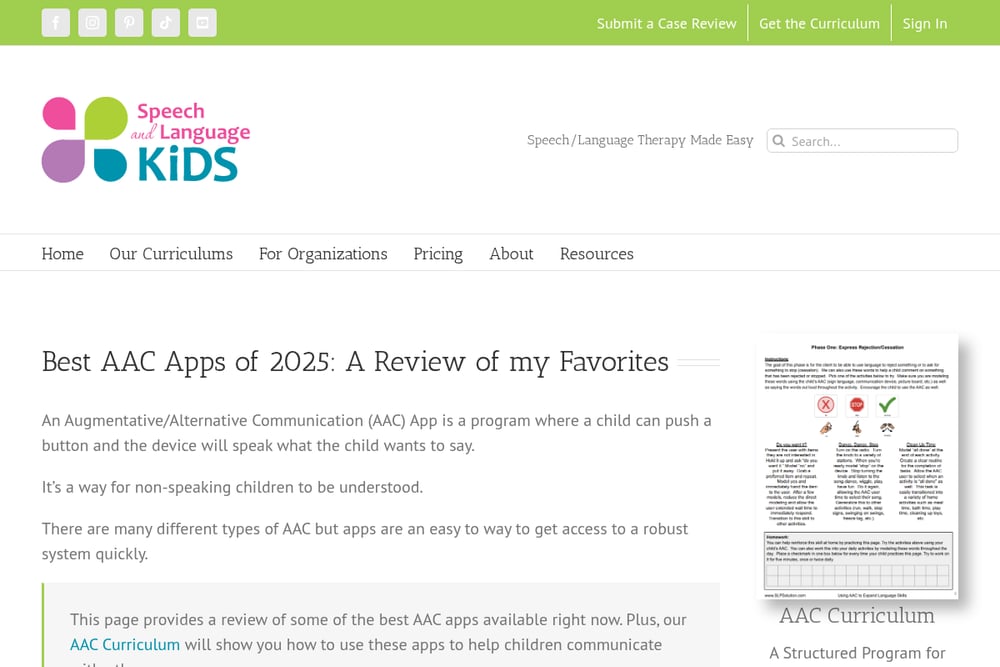 A screenshot of the Proloquo2Go website.
Proloquo2Go is a leading AAC app that uses text-to-speech technology to help non-speaking children communicate. It allows users to arrange pictures into sentences, which the device then speaks aloud. This app is widely used in clinical settings and is considered a gold standard for robust AAC. As noted by Speech and Language Kids, it supports a range of complexities from single-word requests to full sentence strips. It's a powerful tool, but its complexity can be a barrier for some families.
#2 Leeloo AAC
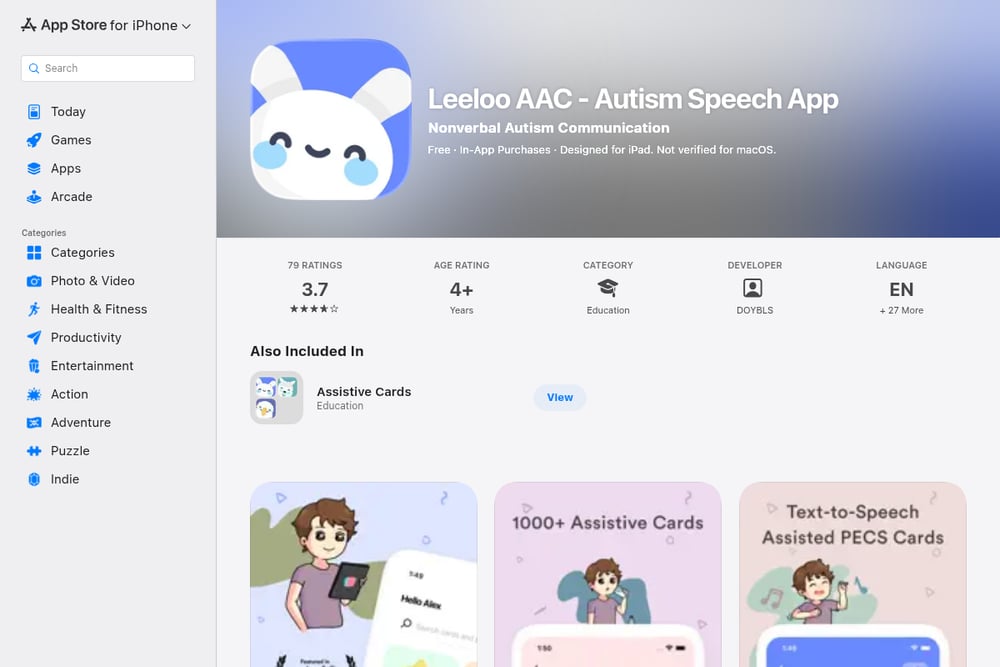 A screenshot of the Leeloo AAC website.
Leeloo AAC is designed specifically for non-verbal kids, using AAC and PECS principles to aid communication. Each word is paired with a clear vector image, and pressing a card reveals phrase options that are read aloud by a text-to-speech voice. The app is free to download and offers in-app purchases, making it accessible for many families. According to its App Store listing, it's suitable for children with autism, Asperger's, Down syndrome, and other conditions. It's a solid choice for basic communication needs, though it lacks the advanced customization of some competitors.
#3 MyVisualRoutine
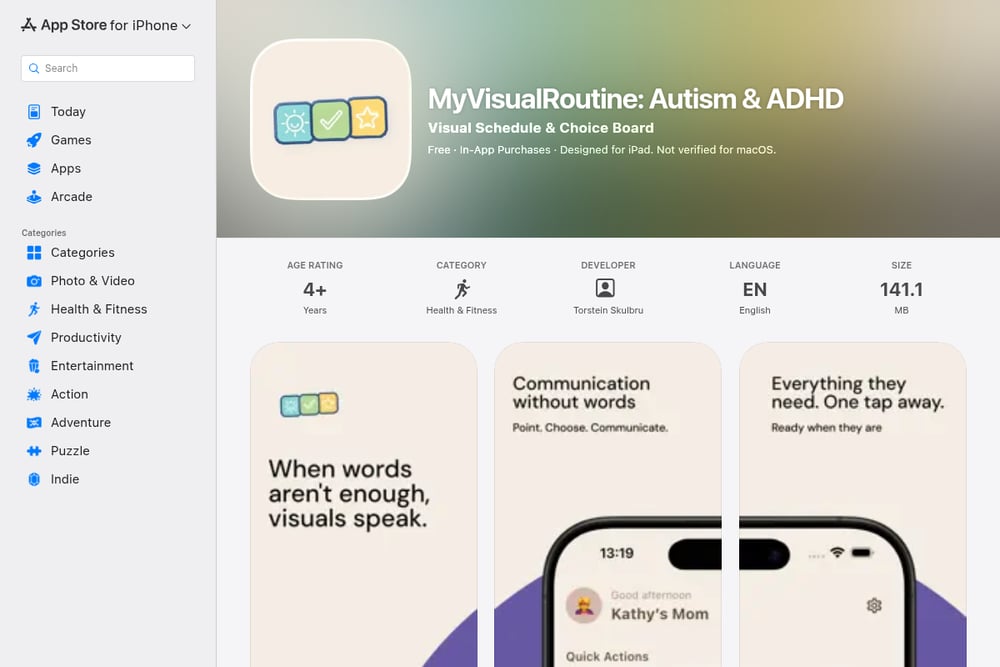 A screenshot of the MyVisualRoutine website.
MyVisualRoutine focuses on visual schedules, choice boards, and First/Then boards for individuals with autism and ADHD. It features a new Kids Mode with a child-friendly interface, hand-drawn visuals, and large touch targets for independent use. The app is designed for real families and requires no account or complicated setup, as highlighted on its App Store page. It offers a free 14-day trial, making it easy to test. While excellent for routines, it does not include AAC communication features.
#4 Caju
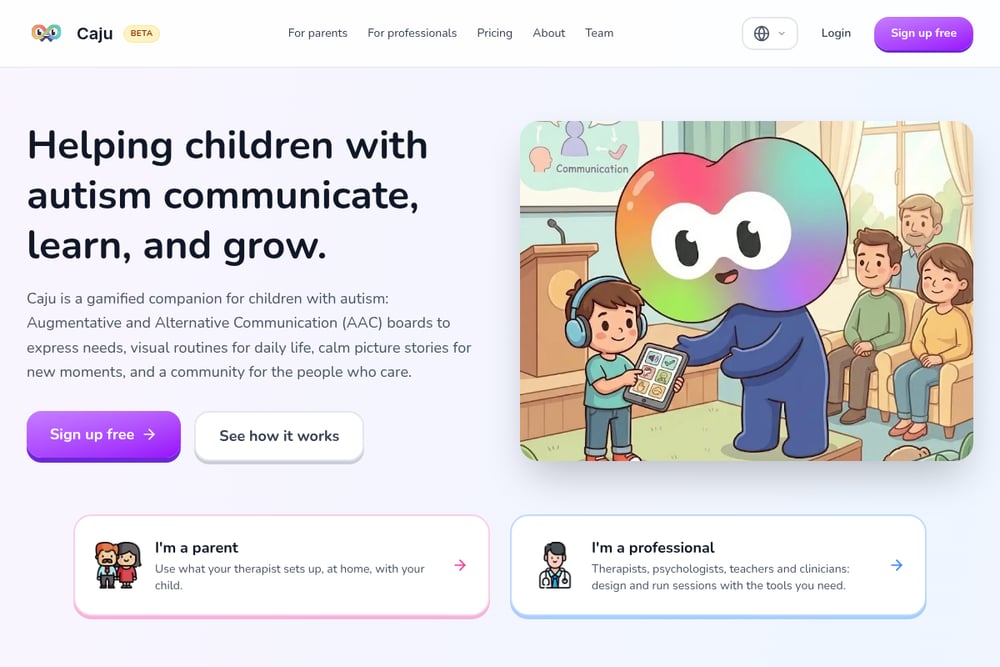 A screenshot of the Caju website.
Caju is a gamified companion app that uniquely combines AAC boards, visual routines, and calm picture stories in one platform. Children can tap tiles to hear words spoken aloud, follow step-by-step visual schedules, and explore personalized stories for new experiences like dentist visits. It also includes a supportive community for families and professionals to share tips and celebrate progress. As noted on its website, it's currently free during early access and offers a warm, jargon-free progress tracking system. This all-in-one approach makes it a standout for holistic support.
#5 Speech Assistant AAC
 A screenshot of the Speech Assistant AAC website.
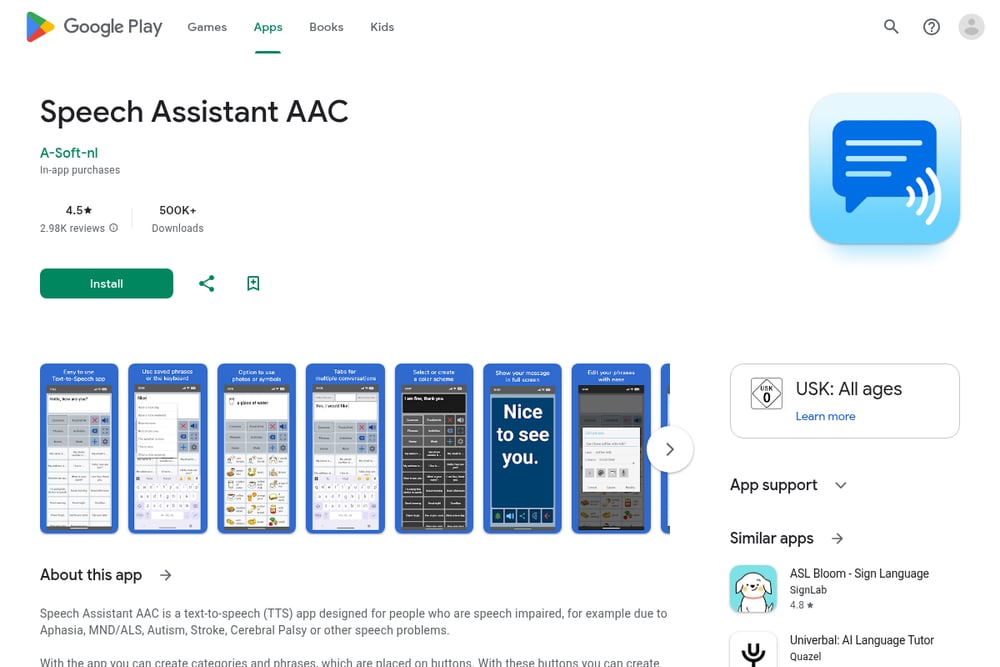
Speech Assistant AAC is a text-to-speech app for people with speech impairments due to autism, aphasia, or other conditions. It allows you to create customizable categories and phrases placed on buttons, which can be spoken or shown on screen. The app includes features like history, photo support, and auto-complete, as described on its Google Play listing. It's highly customizable and works on both smartphones and tablets. However, it lacks the visual routine and community features found in more integrated solutions.
How to Choose the Right App for Your Child
Start by identifying your child's primary need: is it communication, daily routines, or both? If AAC is the priority, apps like Proloquo2Go or Leeloo AAC are strong choices. For routines, MyVisualRoutine excels. If you want an all-in-one solution that also includes a community, Caju is a standout. Consider the learning curve: some apps require more setup and customization, while others are ready to use out of the box. Finally, check the pricing model and whether the app offers a free trial or early access period to test it before committing.
Streamlining Your Child's Day with Automation
You can create a powerful daily workflow by combining Caju's visual routines with its AAC boards. Start the morning by opening the 'Morning Routine' schedule in Caju, which guides your child step-by-step through brushing teeth, getting dressed, and eating breakfast. As they complete each step, they earn stars and badges, which are automatically tracked in the app. If your child needs to communicate a need during the routine, they can tap the AAC board to say 'I'm hungry' or 'I need help.' At the end of the day, Caju generates a warm, jargon-free report for you to review, showing what your child accomplished and where they might need extra support.
The Bottom Line
The right app can transform how your child communicates and navigates daily life. While established tools like Proloquo2Go remain powerful for AAC, newer platforms like Caju are redefining what's possible by integrating communication, routines, and community into one seamless experience. For families seeking a holistic, engaging, and supportive tool that grows with their child, Caju offers a compelling and currently free option worth exploring. No matter which app you choose, the goal remains the same: empowering your child to express themselves, build independence, and thrive.