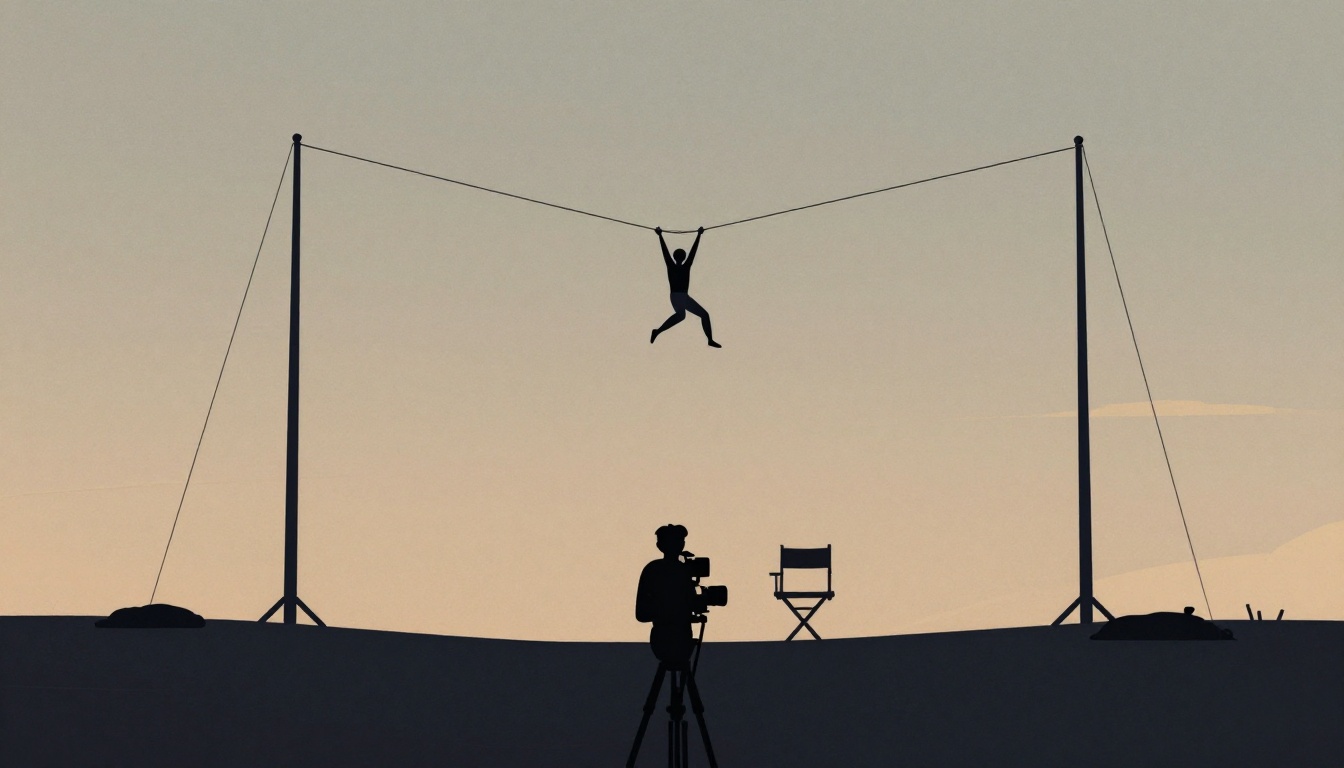
Behind the Wire: NeffyVisuals on Stunt Coordination, Safety, and the Work Audiences Never See
When a production calls for a stunt or wire sequence that falls outside the usual playbook, the first question is rarely about spectacle. It is about safety, planning, and whether the director's vision can be achieved without putting anyone at risk. That is the working philosophy of NeffyVisuals, a stunt coordination and special effects studio recently included in Peekwire's roundup of studios worth knowing alongside JCB Productions and Essential Stunts & Special Effects.
After confirming their place in that article, the team agreed to answer three questions about how they approach complex sequences, what the industry's online presence tends to leave out, and what producers should consider before hiring a stunt and effects team for the first time.
Starting With the Script, Not the Stunt
Asked what they look at first when a production needs a sequence the usual approach will not cover, the team described a process that begins well before any rigging or effects work.
"My first priority is understanding the creative vision and the safety requirements of the sequence."
From there, they examine the script, the action involved, the performers' abilities, the location, the camera angles, and the practical limitations of the set. For wire work specifically, they also weigh rigging requirements, anchor points, performer movement, landing zones, and the coordination needed between the stunt, camera, and special effects departments.
The guiding principle, they said, is that every sequence should be designed around the safest practical method of achieving the director's vision. When the conventional approach will not work, they collaborate with technical specialists to assess alternatives, run proper planning and testing, and establish clear emergency procedures before filming begins.
"My goal is to deliver an action sequence that looks convincing on screen without compromising the safety of the cast and crew."
The Work That Does Not Make the Showreel
The second question asked what comes up most often on stunt and special effects jobs that the pages ranking for this kind of work do not mention. The answer was not about explosions or prosthetic transformations, but about the logistics surrounding them.
"The biggest challenges are often not the stunts or effects themselves, but the preparation, communication, and problem-solving behind them."
Online descriptions, the team noted, tend to showcase spectacular action without explaining the practical work required to achieve those results on a real production. Common challenges include last-minute script changes, limited budgets, tight shooting schedules, unsuitable locations, weather conditions, continuity between takes, and coordinating multiple departments that depend on one another. There is also the recurring problem of making an effect look realistic from the camera's perspective while keeping it controlled and repeatable on set.
"In my experience, successful stunt and effects work depends on preparation, creativity, technical knowledge, teamwork, and the ability to adapt when circumstances change."
That gap between what audiences see and what actually happens on set is one of the reasons stunt coordination remains a largely invisible craft. The finished scene reads as spontaneous, but the work behind it is methodical.
What First-Time Producers Decide Too Quickly
The final question turned to hiring. For producers or directors bringing on a stunt and effects team for the first time, the team pointed to a familiar pattern: decisions driven mainly by price, impressive showreels, or the assumption that a sequence can be worked out on the day.
"A strong showreel is important, but producers and directors should also consider the team's experience, planning process, technical capabilities, communication, and approach to safety."
Another common mistake is bringing the stunt and special effects team into the production too late. Early involvement, they explained, allows the team to assess the script, identify potential risks, recommend practical solutions, estimate costs accurately, and collaborate with the director and cinematographer before locations, schedules, and budgets become difficult to change.
"I would advise producers to look for a team that understands both the creative and technical sides of filmmaking."
That combination, they added, is what allows a team to do more than execute a stunt or create an effect. It helps solve production challenges, protect the people involved, and achieve the desired result efficiently and professionally.
For producers navigating special effects and stunt work for the first time, the takeaway is straightforward: the earlier the conversation starts, the more options remain open. And the safest method, planned properly, is usually the one that ends up looking best on screen.