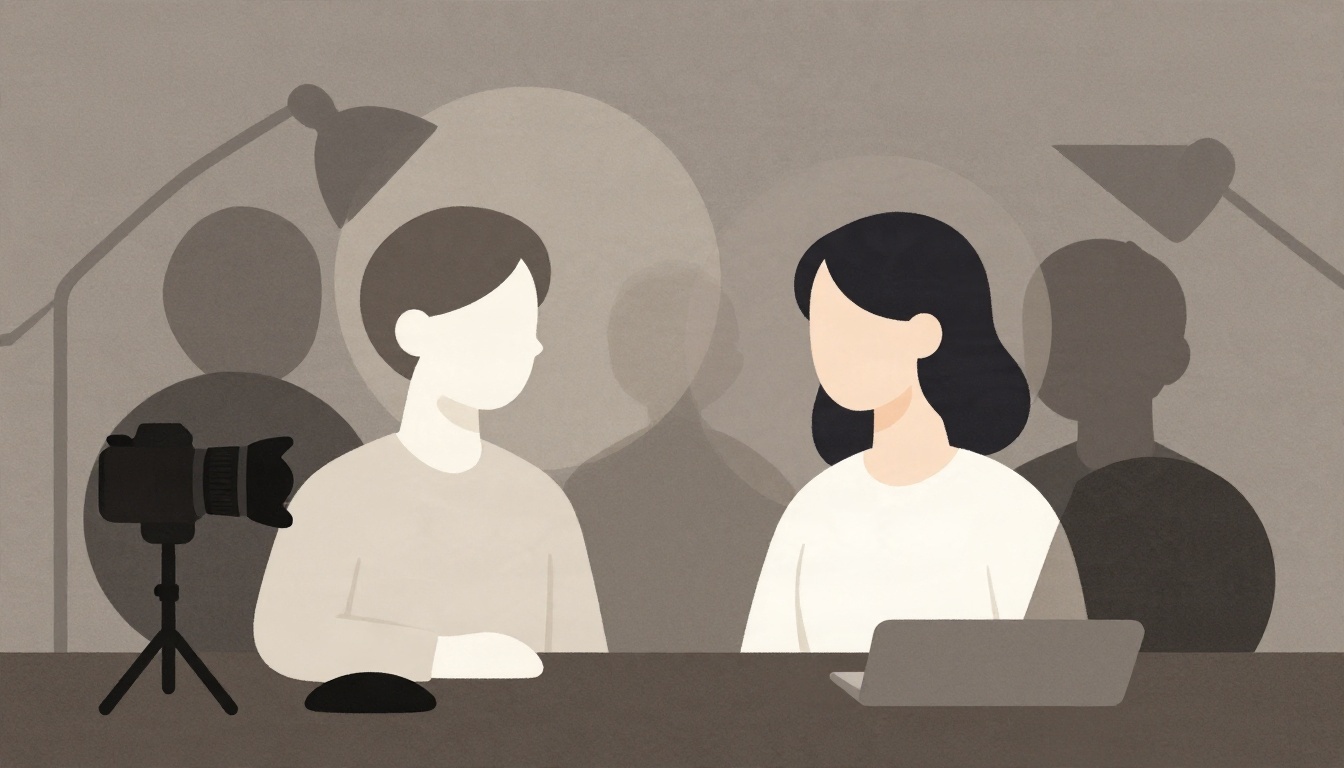
Behind the Lens: Fiona on Communication, Problem-Solving, and Choosing a Commercial Photographer
When a brand books a commercial photographer for food or product images, the stakes are high: the photos need to sell, represent the brand accurately, and meet expectations that are often hard to articulate. Fiona, the photographer behind Rebik Photography Co., recently shared her approach to these challenges in an interview with Peekwire. Her answers reveal a process built on open dialogue, adaptability, and a clear-eyed view of what the job really entails.
When the first shoot doesn't land
Even with careful planning, a first shoot can miss the mark. Fiona's first step is not to overhaul everything but to talk. "I think communication is the most important thing," she said. "I want the client to be happy with the images, so I'd always start by having an open conversation about what isn't quite working for them and what they had envisioned differently. It's important to understand where that disconnect is rather than making assumptions."
From there, she returns to the brief to identify what can be adjusted—styling, lighting, composition, colour, or overall feel. "I don't think the answer is necessarily to change everything," she noted. "Sometimes quite small adjustments can make a big difference. Ultimately, it's about listening to the client, understanding what they're trying to achieve and making sure we get there together."
That emphasis on collaboration and listening is a recurring theme in her work, and it reflects a broader shift in commercial photography toward partnership rather than pure execution.
The work that happens before the camera comes out
Many photographers' websites focus on polished final images, but Fiona points out that a successful shoot depends heavily on what happens before the shutter clicks. "There's a huge amount of problem-solving involved, and things rarely go exactly to plan," she said. "You're constantly adapting to the space, the light, the product itself and sometimes quite tight time constraints. Food changes, natural light moves, a location might not look quite how you expected, or something that seemed like a great idea in the planning stages just doesn't work when you see it through the lens."
She also stresses the interpersonal side of the job. "You're not just there to take a pleasant photograph; you're working with someone else's ideas, brand and expectations," she explained. "Being able to listen, interpret and make creative decisions along the way is a really big part of the job."
For brands, this means the photographer's ability to adapt and communicate is as important as their technical skill—something that's easy to overlook when browsing portfolios.
What clients should look for beyond price and aesthetic
When booking a commercial photographer, clients often make quick judgments based on price or whether they like the photographer's overall style. Fiona suggests looking deeper. "Both are important, of course, but I'd encourage clients to look a little deeper," she said. "I'd look at how a photographer approaches different briefs, whether they can adapt their style to suit a particular brand, and whether their work shows a good understanding of composition, lighting and visual storytelling."
She also highlights the collaborative nature of commercial photography. "You want someone who understands what you're trying to achieve, can bring their own creative ideas to the table and is also happy to work within a brief," she added. "Ultimately, it's about finding someone whose way of thinking and working is a good fit for the project, not purely someone whose portfolio looks impressive."
Practical takeaways
- Talk first, adjust second. When a shoot misses the mark, start with an open conversation to understand the disconnect before changing anything.
- Expect the unexpected. Successful shoots involve constant problem-solving—adapting to light, space, product behaviour, and time constraints.
- Look beyond the portfolio. Evaluate a photographer's ability to adapt to different briefs, their understanding of visual storytelling, and how they collaborate.
- Value communication. The best commercial photographers listen, interpret, and make creative decisions that serve the brand's goals.
For brands seeking food and product photography, Fiona's insights underscore that the best results come from a partnership built on clear communication and mutual understanding—not just a pretty picture. You can see more of her work at Rebik Photography Co..
For further reading on commercial photography best practices, see resources from Professional Photographers of America and Creative Bloq's photography section.