
If your team still juggles spreadsheets and outdated contact lists to make referrals, it's time to rethink your approach. These five platforms are changing how behavioral health networks keep their directories current and their referrals confident.
The State of Referral Management in Behavioral Health
Behavioral health networks face a unique challenge: they need to connect patients with the right therapist, psychiatrist, or facility quickly, but the directory data is often scattered and stale. Traditional methods—spreadsheets, PDFs, and memory—lead to misdirected referrals, frustrated providers, and patients falling through the cracks. That's why a new wave of referral management software is emerging, purpose-built to keep provider directories accurate and searchable. These tools don't just store names; they manage credentials, specialties, insurance accepted, and more, so your team can refer with confidence. The best solutions also close the loop, tracking whether the referral was accepted and the patient actually got scheduled. For behavioral health, where timing is critical, having a trusted, up-to-date directory isn't a luxury—it's a necessity.
How We Evaluated These Platforms
We looked at each platform through the lens of a behavioral health network administrator. First, we assessed the core directory functionality: can you easily add, update, and search for providers with the specific details you need? Second, we considered how each tool handles data freshness—does it assign roles for updates, or does it rely on manual, error-prone processes? Third, we evaluated the referral workflow: does the platform just list providers, or does it actively track referrals and outcomes? Fourth, we weighed the ease of adoption for your team, including the learning curve and whether it fits into your existing EHR or communication tools. Finally, we considered the target audience—some tools are built for large health systems, others for smaller networks—and how well they address the unique needs of behavioral health referrals.
Here's a quick look at the five platforms we're covering, each with its own strengths for different types of referral networks.
| Provider | Best For |
|---|---|
| Clinical Referral Directories | Large health systems needing AI-powered provider search |
| Shortlist Referral Network | Behavioral health networks wanting a simple, shared directory |
| careMESH | Organizations needing secure communication and referral tracking |
| Linear Health | Practices wanting to automate the entire referral workflow |
| Promptly | Practices looking to boost referral bookings and reduce no-shows |
The Five Platforms, Up Close
#1 Clinical Referral Directories
 A screenshot of the Clinical Referral Directories website.
Clinical Referral Directories is a heavyweight in the provider directory space, trusted by major health systems like Providence and UW Medicine for over a decade. Its platform unifies provider data into a single source of truth, making it easy for patients, physicians, and staff to find the right provider across all channels. The AI-powered search helps reduce referral leakage by keeping patients in-network, which is a huge win for revenue. If you're a large health system looking to modernize your Find-a-Doctor experience, this is a proven choice. The downside? It's likely overkill for smaller behavioral health networks that just need a simple shared directory. But for enterprise-level needs, it's a powerhouse.
#2 Shortlist Referral Network
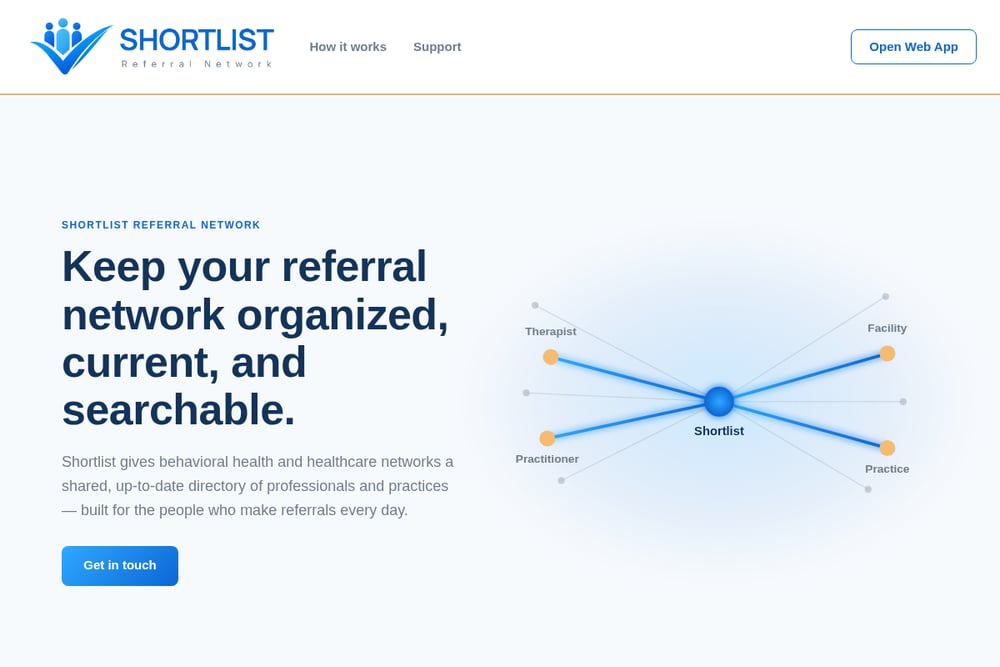 A screenshot of the Shortlist Referral Network website.
Shortlist Referral Network is built specifically for behavioral health and healthcare networks that want a shared, up-to-date directory without the complexity of enterprise software. It walks you through three simple steps: build your directory with the details your team needs—credentials, specialties, insurance accepted—then assign roles so the right people can keep listings current, and finally search and filter to find the right fit fast. The platform is designed around how referral teams actually work, replacing scattered spreadsheets with a single, trusted source. It's a practical, no-nonsense tool that prioritizes data freshness and team collaboration. If you're tired of wondering which spreadsheet is current, Shortlist is your answer.
#3 careMESH
 A screenshot of the careMESH website.
careMESH takes a different approach by focusing on secure care team communication and care coordination, with a directory that connects providers directly. Its referral management software automates and tracks patient referrals, ensuring that when a physician refers to a specialist, the referral is sent, scheduled, and completed—closing the loop on patient care. This is especially valuable for behavioral health, where follow-through is critical. The platform integrates with your existing workflows via API, making it a flexible option for organizations that already have an EHR. However, it may require more technical setup than a standalone directory tool. If your main pain point is lost referrals and lack of visibility, careMESH is worth a look.
#4 Linear Health
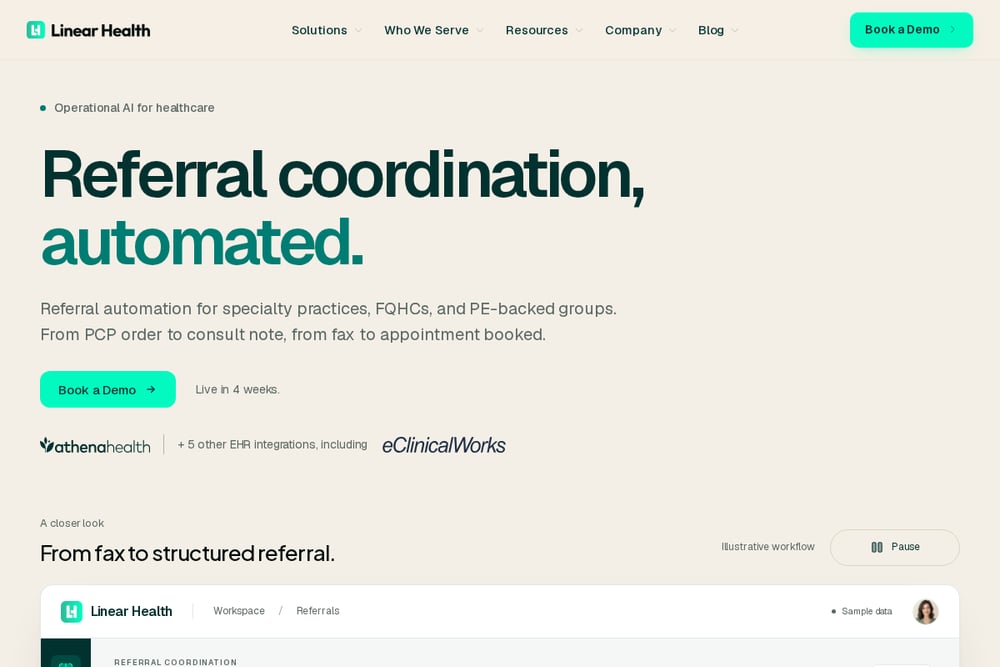 A screenshot of the Linear Health website.
Linear Health is a referral coordination platform that automates the full referral lifecycle, from inbound faxes to outbound referrals and prior authorization. It's particularly strong for behavioral health, with BH-specific workflows that turn referral faxes into booked appointments automatically. The platform also includes voice AI for patient outreach and care gap closure, which can help you hit quality measures. Linear Health is ideal for practices and networks that want to reduce administrative burden and improve patient access. It's more than a directory—it's an operational tool that handles the messy parts of referrals. If you're drowning in faxes and manual follow-ups, this could be your lifeline.
#5 Promptly
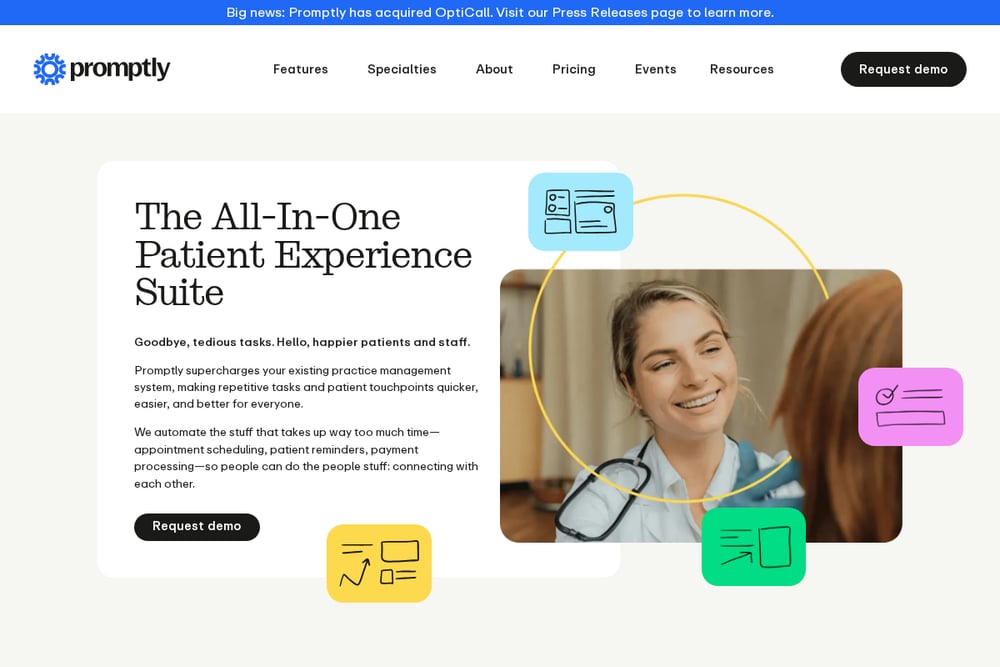 A screenshot of the Promptly website.
Promptly offers a referral management software that automates provider outreach and digital patient scheduling, with a focus on closing the loop and stopping referral leakage. It's trusted by hundreds of practices across all 50 states, and its referral portal with AI fax makes it easy to manage inbound referrals. Promptly also includes patient engagement features like automated reminders, which help reduce the 60-70% no-show problem. For behavioral health practices, it offers a dedicated specialty page, so you know it understands your workflow. The platform is more geared toward individual practices than large networks, but it's a solid choice for growing your referral base. If you want to increase your referral booking rate, Promptly has the stats to back it up.
How to Choose the Right Referral Directory for Your Network
Start by asking yourself: what's your biggest pain point? If it's simply that your directory is outdated and nobody knows which list is current, a tool like Shortlist that focuses on shared, role-based updates is your best bet. If you're a large health system losing patients to referral leakage, you might need the AI-powered search of Clinical Referral Directories. For those who struggle with faxes and manual follow-ups, Linear Health or Promptly can automate the entire workflow. Also consider your team's technical comfort—some platforms require more integration than others. Finally, think about scale: are you a small behavioral health network or a multi-site enterprise? The right fit depends on your specific needs, so take advantage of demos and trials to see which one feels intuitive to your team.
Automating Referral Workflows: The Next Step
Once you have a reliable directory, the next step is automating the referral process itself. Imagine a referral coordinator receives a fax, the system automatically extracts the patient's info, matches them with an available provider from your directory, and books the appointment—all without manual data entry. Tools like Linear Health and Promptly are already doing this, using AI to turn faxes into booked visits. For behavioral health, this means faster access to care and fewer no-shows, because patients are scheduled immediately. The key is to start with a clean, current directory, then layer on automation to handle the repetitive tasks. That's how you move from a static list to a dynamic referral engine.
The Bottom Line
Your referral network is only as strong as the directory that powers it. Whether you choose Shortlist for its simplicity, Clinical Referral Directories for its enterprise power, or Linear Health for its automation, the goal is the same: make sure every referral is confident and every patient gets connected. Don't let another year go by with spreadsheets and guesswork. Pick a platform that fits your size and workflow, and you'll see the difference in both your team's efficiency and your patients' outcomes.