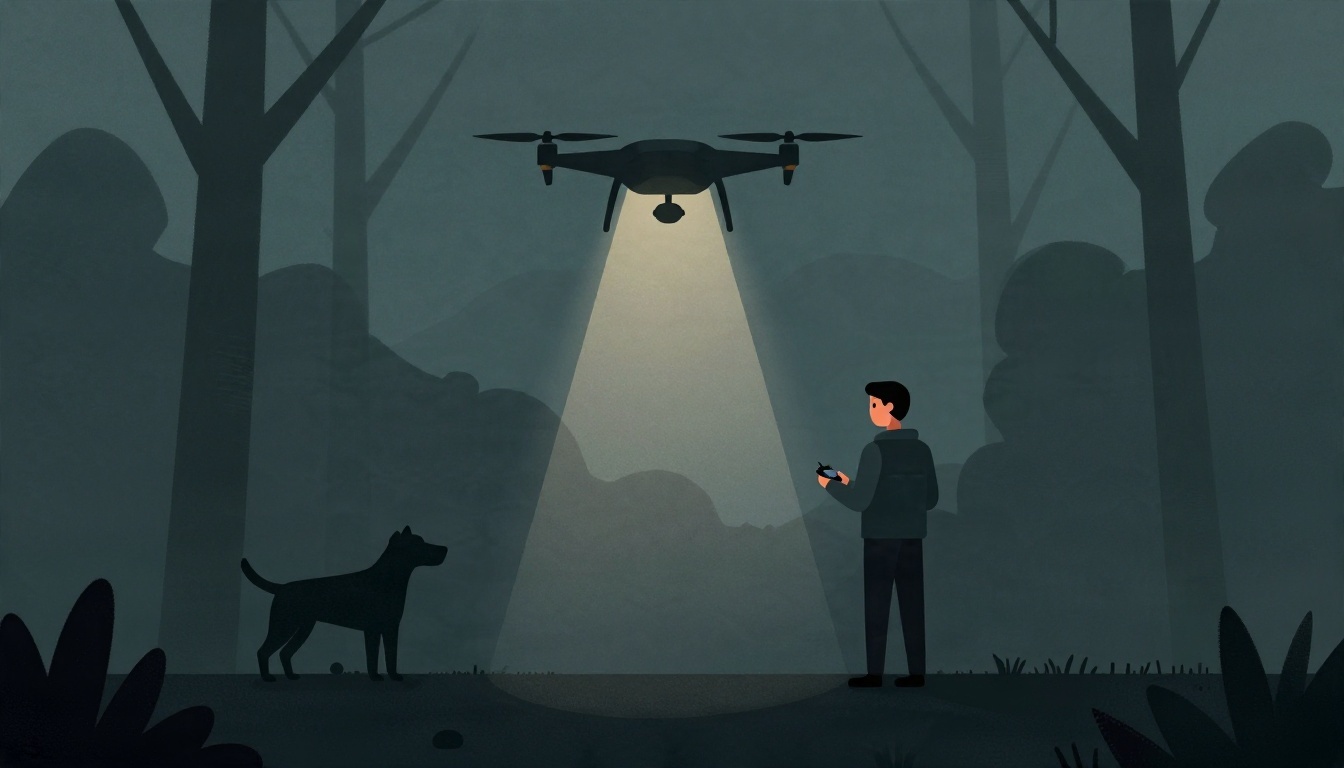
When a dog slips out of a yard or a wounded deer disappears into the treeline, the instinct is to get a drone in the air immediately. Bryan Fields, who runs A Different Altitude, a drone services provider in the Northeast US, says the more useful first step is a conversation. In a written interview, he walked through what he asks callers, what the online listings miss, and where expectations tend to go wrong.
The first few minutes
Fields does not start with an address. He starts with a picture of what happened. He said "A lot of my initial contact with someone is a thorough conversation, not just getting an address and putting a drone in the air. I want to understand what happened, what they need accomplished, and what information we have to work with."
The basics come first: the last confirmed location, when the animal was last seen, and which direction it was traveling. Then the circumstances around the disappearance. He asks whether the animal slipped out of the yard, got startled and ran, or took off during a walk, and what has happened since, including any sightings and where people have already searched.
From there the questions get more personal. He wants the pet's name, how long it has been part of the family, whether it is comfortable around strangers or tends to hide, and whether it has injuries, mobility limitations, or other health concerns. A recent photo and a good description matter too. For a deer search, he looks for the circumstances, last confirmed location, direction of travel, and any observations or evidence the caller can share. In both cases he needs to establish where he has permission to operate and what property access is available.
He framed the purpose plainly: "I want to make sure we're searching with a purpose rather than just flying around." He also noted that the assignment is personal for the caller. "This may be a search assignment for me, but for the caller, it can be something deeply personal. I don't want to lose sight of that."
What the listings never mention
Fields said the part of the work that gets the least attention is everything that happens before launch. "One part that deserves more attention is how much of the work happens before the drone ever leaves the ground. A listing can tell you what equipment someone has, but that doesn't tell you much about how they listen, gather information, or develop a search plan."
A call often begins with a simple request, he said, but there is more underneath it. He wants to understand the animal's personality, its relationship with the family, what is normal or unusual for it, and what the owner has already tried. Even asking the pet's name is deliberate. "I don't want the conversation to feel like I'm just collecting coordinates and quoting a flight."
Coordination is the other piece. That means separating confirmed sightings from possible ones, mapping where people have already looked, and knowing who can help on the ground if something is found. He prefers those conversations early rather than mid-search.
There is also the human side, which he said is hard to capture in a listing. Callers may be worried, exhausted, or making decisions under pressure. His approach is to be thorough without making them feel interrogated, and honest without being dismissive. "The equipment is important, but so is how you communicate with the person relying on you."
What callers get wrong
The most common expectation Fields tries to reset is that launching a drone is the same as having a search plan. He understands the urgency. "If it were my pet, I'd want someone searching right away, too. But I still need enough information to decide where to focus and what we're trying to accomplish."
He is equally direct about what the aircraft can and cannot do. "I also want people to understand that the drone is a tool, not a promise that we'll find the animal. I don't want to create false hope or make the equipment sound like a guaranteed answer."
Some callers are puzzled by questions that seem unrelated to flying. He said asking how long someone has had their dog, whether it has an old injury, or how it behaves when frightened is not small talk. It is how he builds a working understanding of the animal and the circumstances.
His stated goal is not simply to get a drone overhead as fast as possible, but to use the information, equipment, and available help as thoughtfully as possible, and to leave the caller feeling heard.
Practical takeaways for owners
- Have the last confirmed location, the time of the last sighting, and the direction of travel ready before you call.
- Note what happened right before the animal disappeared and what has been done since, including any sightings and areas already searched.
- Prepare a recent photo, a description, and details about health, mobility, and how the animal reacts to strangers.
- Confirm where a pilot is allowed to operate and what property access is available.
- Expect questions that seem personal. They shape the search plan, not the invoice.
For owners weighing whether to call a pilot at all, Fields' answers point to a simple standard: the value of a drone search starts with the quality of the information gathered before the props spin up.