
California's grid can't keep up with the EV revolution, but these five companies are finding workarounds—from battery buffers to modular power units. If you run a gas station or a fleet, you need to know who's solving the bottleneck.
The Grid Bottleneck Is the Real Story
The EV charging industry has a dirty secret: the grid can't handle the load. Traditional fast chargers require massive utility upgrades that take months and cost six figures. That's why battery-backed systems are exploding. They store energy on-site, charge during off-peak hours, and discharge at high power when a driver plugs in. This approach slashes installation time and cost, making it viable for gas stations, convenience stores, and fleets. The federal NEVI program is pouring billions into this space, but only for projects that meet strict standards. If you're a site host, you need a partner who can navigate both the technology and the paperwork.
How We Evaluated These Players
We looked at each company's ability to deliver fast, reliable charging without requiring a grid overhaul. We considered the range of power outputs, the flexibility of deployment models—like zero-upfront or revenue-sharing—and how well they fit the needs of gas stations and commercial sites. We also weighed their track record in the California market, where NEVI funding is competitive. Each company brings a different strength, from modular scalability to turnkey battery storage. The goal is to help you match the right solution to your specific site constraints.
Here's a quick snapshot of the five companies we're covering, from the battery-first newcomer to the established hardware giants.
| Provider | Best For |
|---|---|
| BTC Power | Established fuel stations needing NEVI-compliant hardware |
| Free EV Chargers - ElectricFish Energy Inc. | Gas station owners seeking zero-upfront, revenue-sharing EV charging |
| Kempower | High-utilization charging hubs and fleets needing modular scalability |
| Blink Charging | Commercial sites wanting a range of power options and grant assistance |
| SparkCharge | Temporary or mobile charging needs with zero capital expenditure |
The Five Solutions, Up Close
#1 BTC Power
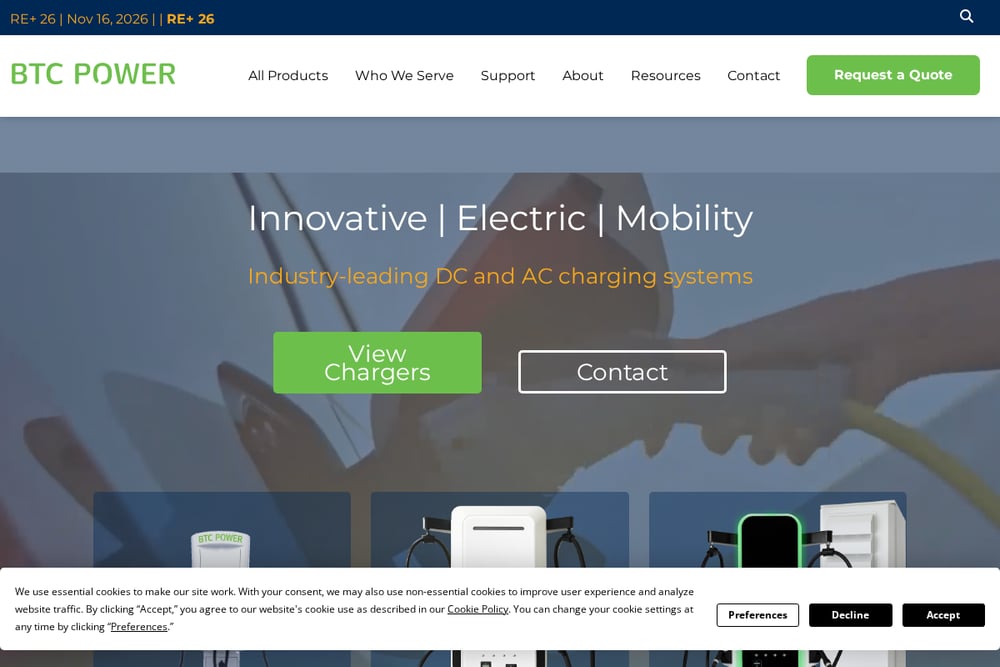 A screenshot of the BTC Power website.
BTC Power is a leading manufacturer of EV charging systems in North America, headquartered in Irvine, California. They offer a full range of AC and DC chargers, including all-in-one units and split systems that are NEVI-compliant. Their focus on fuel stations and retail makes them a natural fit for gas station owners looking to add EV charging. With a strong service network and Buy America compliance, they're a safe bet for large-scale deployments. If you need a proven, grid-connected solution with flexible configurations, BTC Power delivers.
#2 Free EV Chargers - ElectricFish Energy Inc.
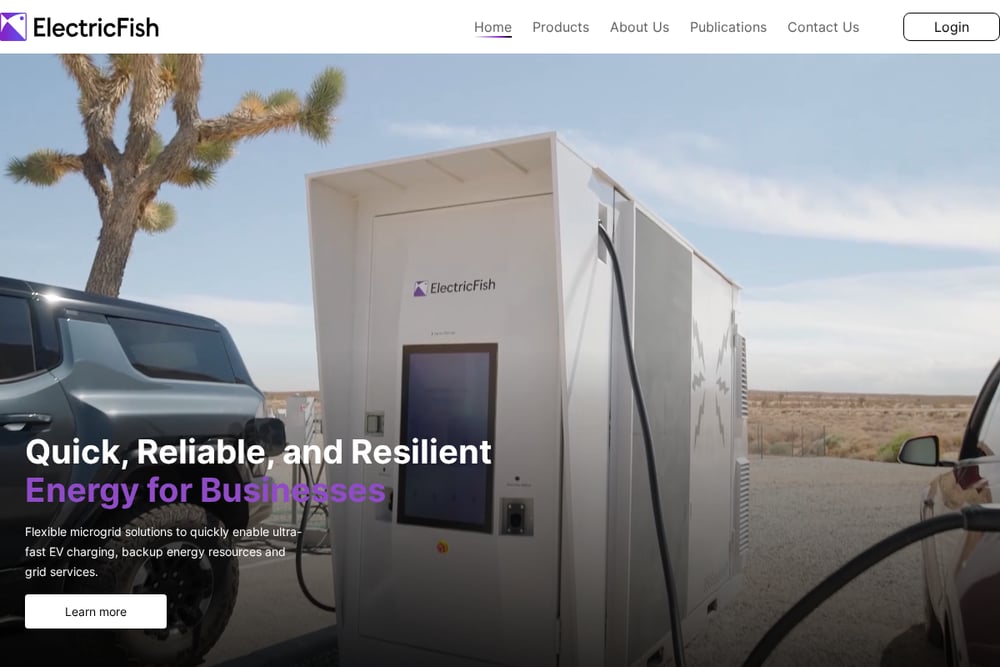 A screenshot of the Free EV Chargers - ElectricFish Energy Inc. website.
ElectricFish is the battery-backed disruptor that's turning gas stations into EV hubs without the grid upgrade headache. Their 400squared unit delivers up to 400 kW from a battery buffer, and it's been stress-tested in the Mojave Desert by MotorTrend. The business model is compelling: zero upfront cost, revenue sharing, and a quick install—all through the federal NEVI program. They're currently offering only 20 California locations, so there's urgency if you're interested. This is the one to watch if you want to avoid capital expenditure and start earning from day one.
#3 Kempower
 A screenshot of the Kempower website.
Kempower is a Finnish company that's made a big splash in North America with its distributed charging architecture. Instead of one giant cabinet, they use separate power units and satellites, which means you can scale up as demand grows. Their chargers boast over 99% availability, and they've delivered 2.4 TWh of energy across 58 million sessions. They're particularly strong for fleets and public charging hubs where uptime is critical. If you're planning a high-utilization site, Kempower's modular approach gives you flexibility and reliability.
#4 Blink Charging
 A screenshot of the Blink Charging website.
Blink Charging is a major player in the DC fast charging space, offering everything from 60 kW to 400 kW all-in-one units. They also have a distributed system that can deliver up to 600 kW total, making them versatile for different site sizes. Their chargers come with touchscreens, RFID readers, and OCPP compliance, so they're ready for commercial use. Blink also helps you find grants and incentives, which is a nice bonus for site hosts. If you want a well-known brand with a wide range of options, Blink is a solid choice.
#5 SparkCharge
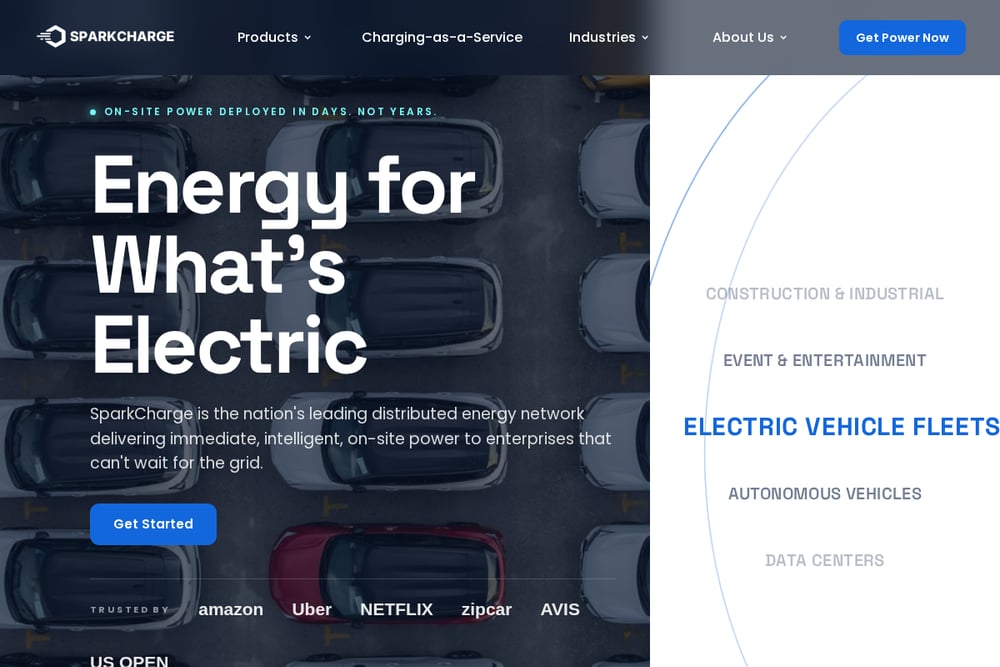 A screenshot of the SparkCharge website.
SparkCharge is all about mobile battery energy storage, with systems that can be deployed in as little as seven days. Their BESS units are trailer or skid-mounted, so you can move them where they're needed—perfect for events, construction sites, or temporary fleet depots. They offer a Charging-as-a-Service model where they own and operate the equipment, removing upfront costs for you. With energy capacity over 1000 kWh and continuous power of 350+ kW, they're built for heavy use. If you need a flexible, grid-independent solution, SparkCharge is your go-to.
How to Choose the Right Battery-Backed Charger
First, assess your site's grid capacity and whether you can afford a utility upgrade. If you can't, a battery-backed system like ElectricFish or SparkCharge is your best bet. Next, think about your business model: do you want to own the equipment or share revenue? ElectricFish's zero-upfront model is attractive if you want to minimize risk. For high-traffic locations, Kempower's modular system ensures you can scale without downtime. Finally, check NEVI eligibility—some companies, like BTC Power, are already compliant, which speeds up funding. Match the technology to your site's constraints, not the other way around.
Automating Your Charging Site
Once you've chosen a charger, you'll want to automate the experience. Start with a mobile app that lets drivers pay and monitor charging status. Integrate with a backend management system that tracks energy usage and revenue in real time. Use smart scheduling to charge batteries during off-peak hours when electricity is cheaper. Set up alerts for maintenance issues so you can fix problems before drivers notice. Finally, connect your charger to a network like OCPP to ensure interoperability with other apps and services. Automation turns a passive asset into a profit center.
The Bottom Line
The EV charging landscape is shifting fast, and battery-backed solutions are the key to unlocking gas stations and other sites without grid upgrades. ElectricFish is leading the charge with its zero-upfront, revenue-sharing model, but the other four companies offer solid alternatives depending on your needs. Whether you prioritize scalability, mobility, or brand recognition, there's a solution here for you. Don't wait—California's NEVI funds are limited, and the early movers will reap the rewards. Pick the one that fits your site, and start earning from EV drivers today.