Microsoft 365 holds critical email, files, and collaboration data, but native retention is not a complete backup. This list covers seven backup software options that protect Microsoft 365 data. Each entry describes what the product does and who it suits, using only vendor-provided information. The order is a plain list, not a quality ranking.
How We Picked These Tools
We included companies that explicitly offer backup for Microsoft 365 and publish relevant details on their websites. Each item includes at least two facts quoted directly from the vendor's site. We did not evaluate performance, compare quality, or declare a winner. Prices appear only when the vendor states them on the provided pages.
| Provider | Best For |
|---|---|
| Veeam | Organizations seeking a broad data resilience platform with Microsoft 365 protection |
| Acronis | MSPs and IT teams wanting integrated backup and security |
| AvePoint | Organizations needing Microsoft 365 governance and compliance with data protection |
| Druva | Teams wanting a fully managed cloud-native backup service |
| Afi | Organizations needing granular Microsoft 365 backup with search and flexible retention |
| Spanning | IT departments and MSPs wanting simple SaaS backup for Microsoft 365 |
| Keepit | Organizations prioritizing an independent, air-gapped cloud for SaaS backup |
The 7 Tools in Focus
#1 Veeam
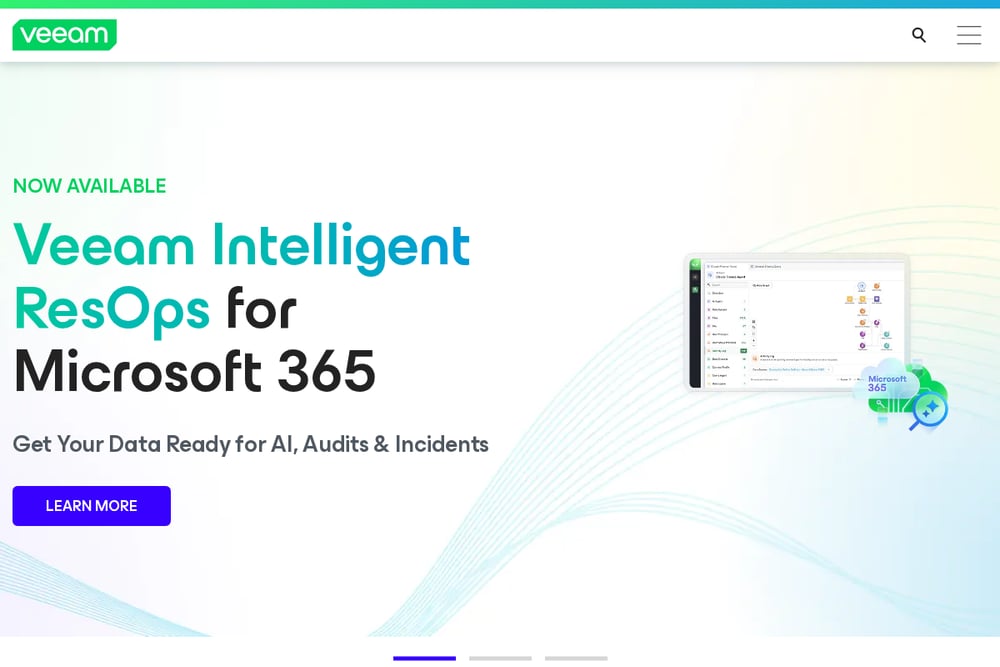 A screenshot of the Veeam website.
Veeam provides data resilience and protection across cloud, SaaS, and on-premises workloads. Its portfolio includes Veeam Data Cloud for SaaS protection and Veeam Data Platform for on-premises backup. The company states that it protects Microsoft 365 among other workloads. Veeam also offers secure cloud storage for offsite backup and disaster recovery. It suits organizations looking for a broad data protection platform that includes Microsoft 365 coverage.
#2 Acronis
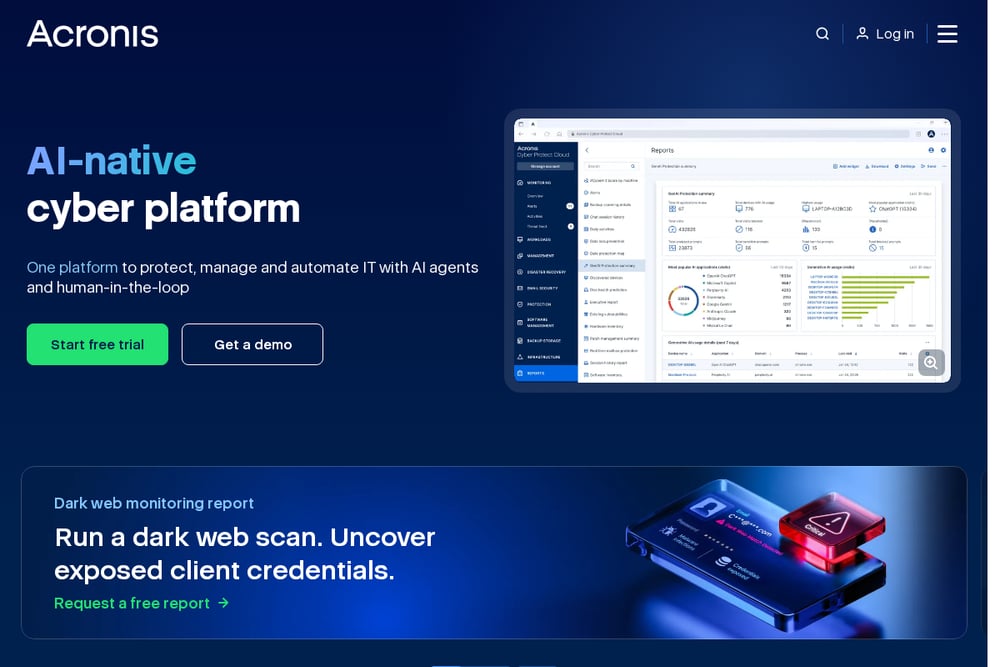 A screenshot of the Acronis website.
Acronis offers an AI-native cyber platform that combines backup, security, and IT management. The platform is built around a common data model shared across products, which the company says enables a unified experience for AI agents and technicians. Acronis serves service providers, businesses, and home users with products such as Acronis Cyber Protect Cloud and Acronis True Image. It suits managed service providers and IT teams that want backup and security capabilities in one platform.
#3 AvePoint
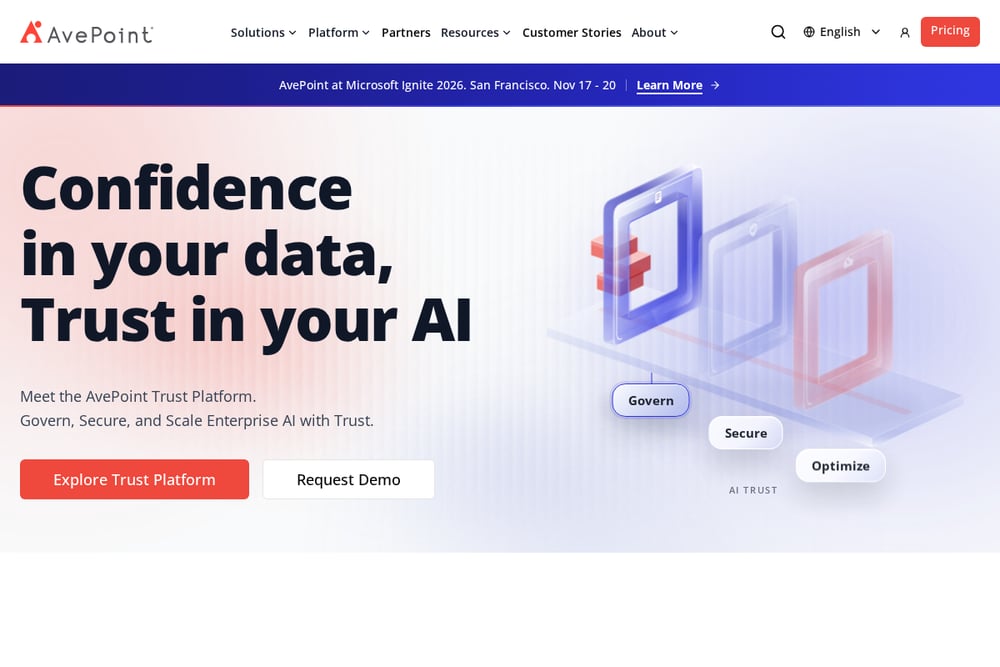 A screenshot of the AvePoint website.
AvePoint provides data protection, security, and compliance solutions with a focus on Microsoft 365 and other cloud environments. The AvePoint Confidence Platform is described as a suite of tools that streamlines data governance, compliance, and collaboration across Microsoft 365 and other cloud environments. The company emphasizes unified data protection, security, governance, and resilience for AI-ready data. It suits organizations that need governance and compliance alongside Microsoft 365 backup.
#4 Druva
 A screenshot of the Druva website.
Druva offers a cloud-native data protection platform called the Resilience Cloud. The platform provides fully managed data security across enterprise, cloud, SaaS, and end-user environments. Druva lists Microsoft 365 among its supported SaaS applications. The company positions its service as running resilience as a service with no hardware or infrastructure to manage. It suits organizations that prefer a fully managed, cloud-native backup service for Microsoft 365 and other workloads.
#5 Afi
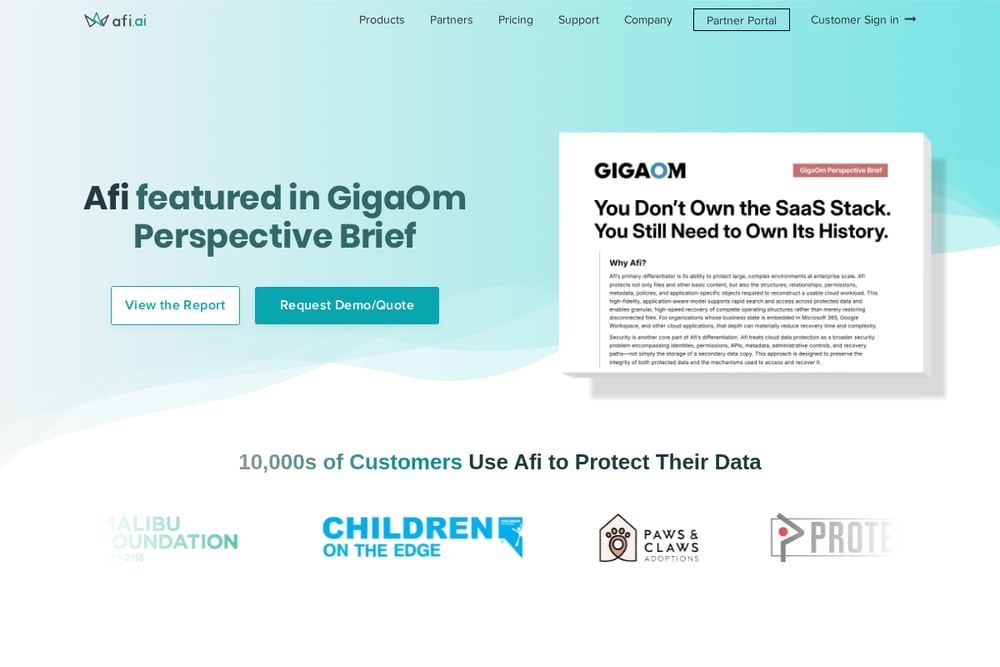 A screenshot of the Afi website.
Afi provides backup for SaaS applications including Microsoft 365, Google Workspace, Kubernetes, AWS, Azure, and Salesforce. For Microsoft 365, Afi states that it backs up all main Office 365 applications such as Exchange, OneDrive, and SharePoint. The company also says it backs up workloads including Microsoft Teams. Afi offers features such as automated high-frequency backups, unlimited retention, and full-text search. It suits organizations that want granular Microsoft 365 backup with flexible retention and search.
#6 Spanning
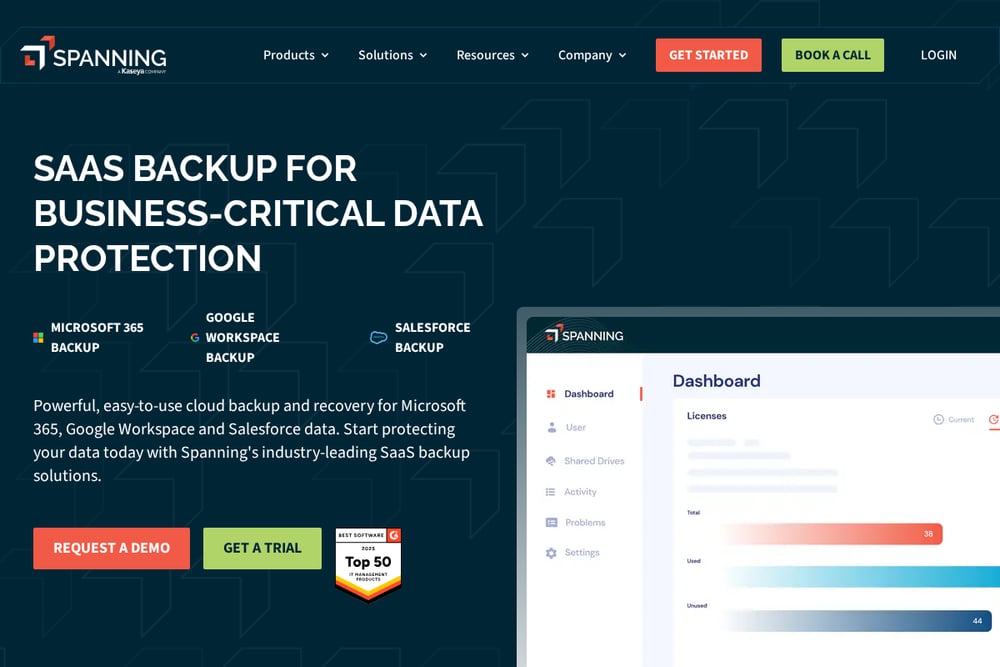 A screenshot of the Spanning website.
Spanning, a Kaseya company, offers SaaS backup and recovery for Microsoft 365, Google Workspace, and Salesforce. For Microsoft 365, Spanning covers Exchange Online, SharePoint Online, OneDrive for Business, and Microsoft Teams. The company describes its Microsoft 365 solution as simplified, affordable, and secure. Spanning also provides global data centers to meet data sovereignty needs. It suits IT departments and MSPs looking for straightforward SaaS backup with broad Microsoft 365 application coverage.
#7 Keepit
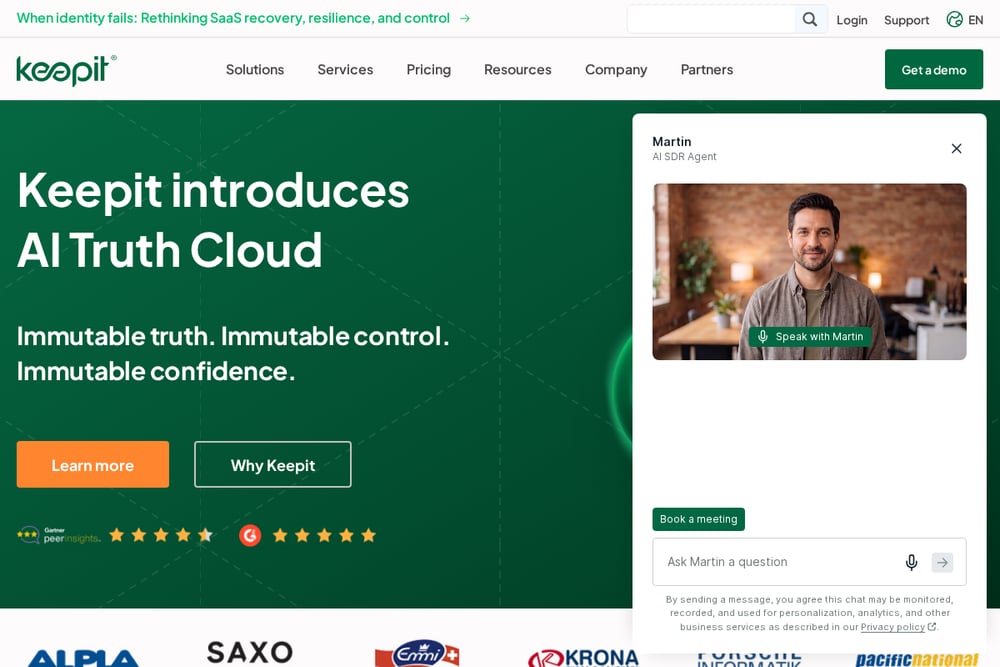 A screenshot of the Keepit website.
Keepit provides an independent cloud backup and recovery service for SaaS applications, including Microsoft 365. The platform is described as air-gapped with immutable backups for fast recovery to a known-good state. Keepit offers flat-rate pricing and unlimited always-hot data storage, according to its site. The company also emphasizes compliance support with certifications such as ISO 27001 and SOC 2 Type II. It suits organizations that prioritize an independent, air-gapped cloud for Microsoft 365 backup and compliance.
Which One Should You Choose?
Start by confirming that the product explicitly supports the Microsoft 365 applications you need, such as Exchange, SharePoint, OneDrive, and Teams. Consider whether you want a fully managed cloud service or a platform that also covers on-premises and other cloud workloads. Check retention options, recovery granularity, and any compliance or data residency requirements your organization has. If you are an MSP, look for multi-tenancy and centralized management features. Evaluate pricing models, such as flat-rate versus consumption-based, against your expected data volume. Finally, review each vendor's security architecture, including immutability and air-gap capabilities, to match your risk profile.
Final Thoughts
The Microsoft 365 backup market offers a range of approaches, from broad data resilience platforms to focused SaaS backup services. Veeam and Acronis provide wide platforms that include Microsoft 365 alongside other workloads. AvePoint emphasizes governance and compliance for Microsoft 365 data. Druva and Keepit focus on cloud-native, independent backup services with strong security postures. Afi and Spanning offer granular Microsoft 365 application coverage with features like search and flexible retention. The right choice depends on your organization's priorities for coverage, management model, compliance, and pricing. This list is a starting point for evaluation, not a ranking of quality.
Know a company that belongs on this list? Email us at editorial@peekwire.com.