
If you're a bookkeeper or accountant drowning in month-end report prep, these five tools can turn hours of copy-paste into minutes of review-and-send. Each one takes a different approach to automating financial reporting, so you can find the fit that matches your workflow.
The State of Automated Financial Reporting
Financial reporting has long been a manual grind—pulling numbers from QuickBooks or Xero, formatting them into branded PDFs, and emailing them to clients. But the landscape is shifting fast. Tools now integrate directly with your accounting software and email, pulling live data and generating polished reports in seconds. The focus has moved from just creating reports to automating the entire delivery process, saving you hours every month. Whether you're a solo bookkeeper or a large enterprise, there's a solution that fits your scale and budget.
How We Evaluated These Tools
We looked at each tool's core functionality, ease of integration with popular accounting platforms, the level of automation in report generation and distribution, and how well it serves the specific needs of bookkeepers and accountants. We also considered pricing transparency and the learning curve. Each tool stood out in different ways—some excel at deep customization, others at seamless email delivery, and others at enterprise-grade compliance.
Here's a quick snapshot of the five tools we're diving into, so you can see at a glance what each one brings to the table.
| Provider | Best For |
|---|---|
| Reach Reporting | Accountants who want interactive, data-rich client reports |
| Streamline Reports — Send client reports in minutes | Bookkeepers who want to automate client report delivery from their own inbox |
| Gravity Software | Mid-sized businesses and nonprofits needing integrated reporting and accounting |
| Workiva | Large enterprises needing compliant, auditable financial reporting |
| Martus Solutions | Nonprofits and organizations needing flexible budgeting and reporting |
The Deep Dive: Five Tools That Automate Financial Reporting
#1 Reach Reporting
 A screenshot of the Reach Reporting website.
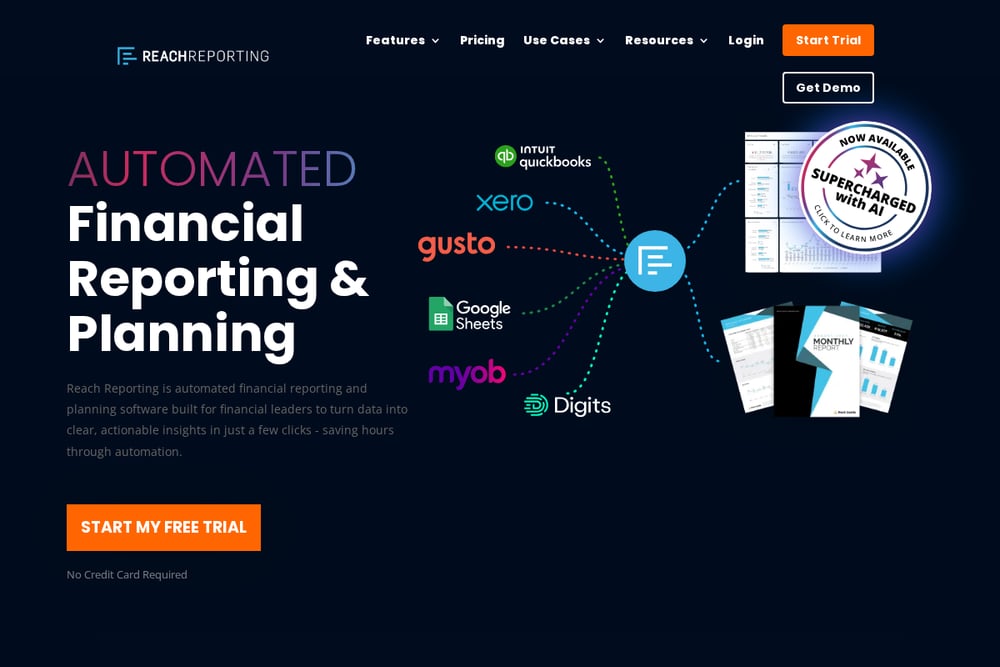
Reach Reporting is a comprehensive financial reporting and planning platform that turns your QuickBooks or Xero data into interactive dashboards and visually rich reports. It goes beyond simple PDFs, offering customizable templates, 3-way budgeting, and forecasting, so you can deliver insights that go beyond the numbers. The automation features let you connect data from multiple sources, including Google Sheets and Excel, and schedule report generation. If you want to impress clients with dynamic, interactive reports that tell a story, this is a strong contender. It's built for financial leaders who need more than just a static PDF. You can start with a free trial to see if it fits your workflow.
#2 Streamline Reports — Send client reports in minutes
 A screenshot of the Streamline Reports website.
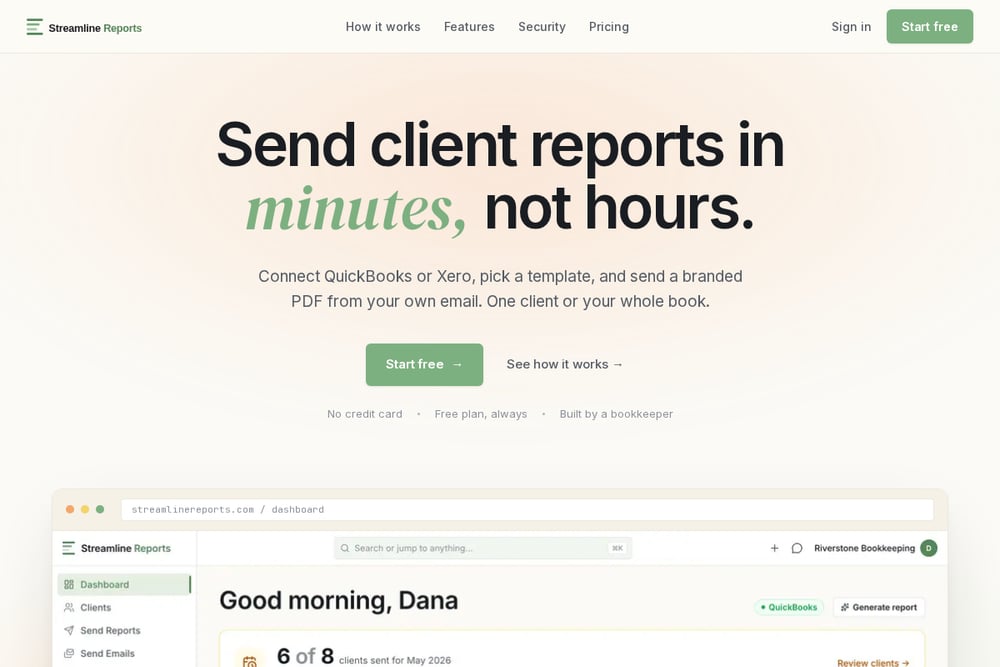
Streamline Reports is a purpose-built tool for bookkeepers who want to send branded client reports in minutes, not hours. It connects directly to QuickBooks or Xero and Gmail or Outlook, pulling your numbers and generating a polished PDF in seconds. You review the report, hit send, and the email goes out from your own address—no client portals or logins required. The founder, a bookkeeper himself, built it to solve the exact pain of copy-pasting numbers every month-end. It's refreshingly simple, with a free plan that's always available, making it accessible for solo practitioners. If you want a no-fuss solution that plugs into your existing stack, this is it.
#3 Gravity Software
 A screenshot of the Gravity Software website.
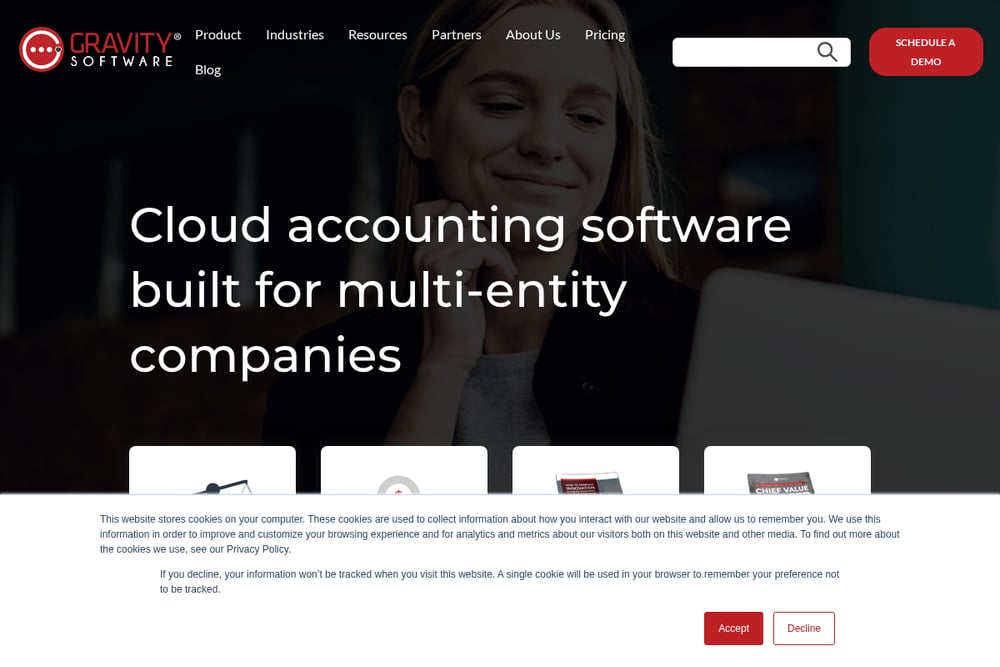
Gravity Software is a full-suite accounting solution that includes automated financial report distribution as part of its broader platform. It's built on Microsoft Power Platform, so you can leverage Power Automate to package and deliver board-ready financials and custom report packages with just a few clicks. This tool is ideal for mid-sized businesses and nonprofits that need robust reporting alongside their core accounting functions. The integration with Microsoft 365 and Dynamics CRM makes it a natural fit for organizations already in the Microsoft ecosystem. You can schedule report distribution to stakeholders, ensuring everyone gets the right information on time. It's more than just a reporting tool—it's a complete financial management system.
#4 Workiva
 A screenshot of the Workiva website.
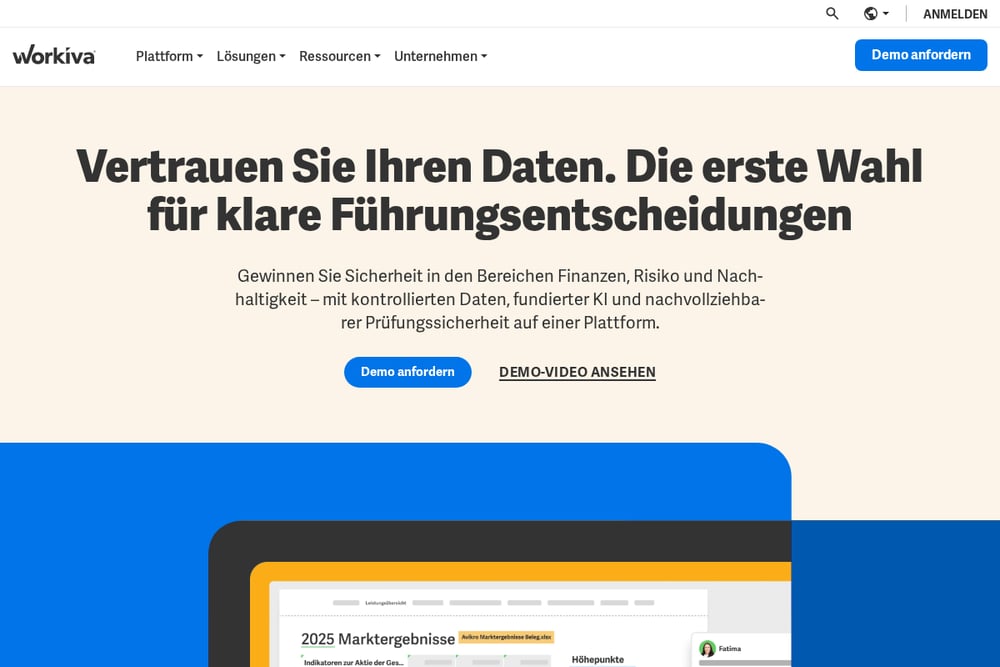
Workiva is an enterprise-grade platform that automates financial reporting, compliance, and risk management. It's designed for large organizations that need to produce SEC filings, sustainability reports, and other regulated documents with full audit trails. The platform connects data from multiple sources, including your ERP and spreadsheets, and streamlines collaboration across teams. With features like Workiva AI and agent studio, it's at the forefront of intelligent financial reporting. If you're a CFO or finance team at a public company, Workiva ensures accuracy and compliance while saving significant time. It's a heavyweight solution for complex reporting needs.
#5 Martus Solutions
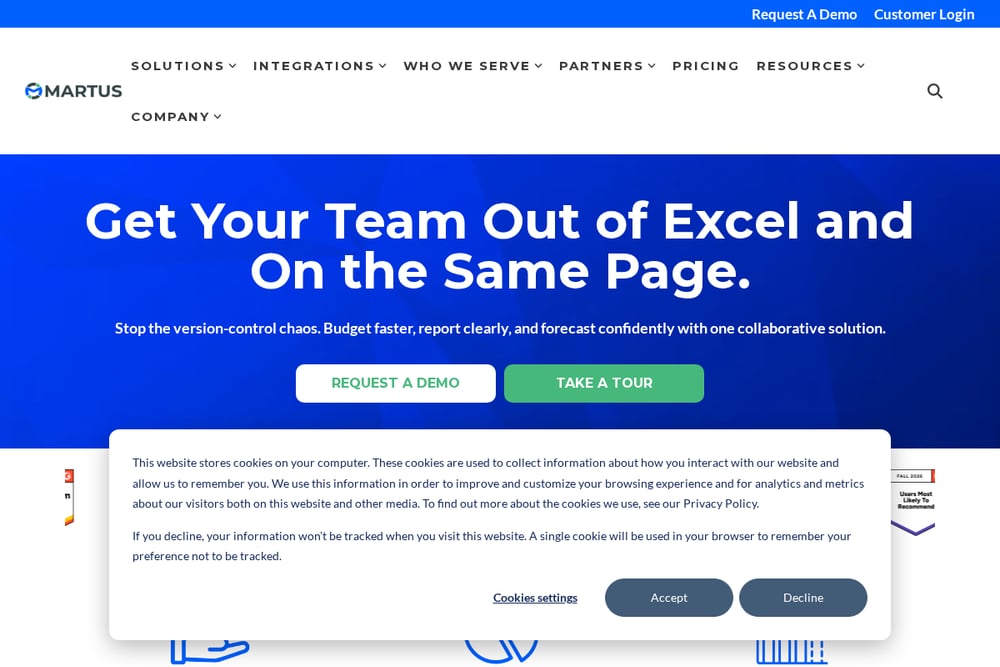 A screenshot of the Martus Solutions website.
Martus Solutions offers automated reporting and budgeting tools that integrate with a wide range of accounting systems, including QuickBooks, Xero, and NetSuite. It's particularly strong for nonprofits and mission-based organizations, with features like personnel budgeting and collaborative budgeting. The platform automates financial reporting and insights, helping you create accurate reports without manual data entry. You can connect file-based integrations and pull data from multiple sources to get a complete picture. Martus is a practical choice if you need a flexible tool that adapts to your existing accounting software. It's designed to save you time on reporting so you can focus on your mission.
How to Choose the Right Tool for Your Firm
Start by thinking about your current workflow. If you're a solo bookkeeper who just wants to send branded PDFs from your own email, Streamline Reports is the simplest path. If you need interactive dashboards and deeper analytics, Reach Reporting gives you more visual firepower. For mid-sized businesses that want an all-in-one accounting and reporting solution, Gravity Software is worth a look. Large enterprises with compliance requirements should consider Workiva's robust platform. And if you're in the nonprofit space, Martus Solutions offers tailored features. Consider your budget, the size of your client base, and how much customization you need. Most tools offer free trials, so take advantage of those to see which one feels right.
Automating Your Reporting Workflow
The key to saving time is automating the repetitive parts. With Streamline Reports, you connect your books and email once, and then each month you just review the auto-generated PDF and hit send. Reach Reporting lets you schedule report generation and delivery, so reports land in your inbox or your clients' inboxes automatically. Gravity Software uses Power Automate to create custom distribution workflows. Workiva automates the entire reporting cycle, from data collection to final filing. Martus Solutions automates data aggregation and report creation. The goal is to eliminate manual data entry and copy-paste, freeing you to focus on analysis and client relationships.
The Bottom Line
Automated financial reporting is no longer a luxury—it's a necessity for staying competitive. Whether you're a solo bookkeeper or a global enterprise, there's a tool that can cut your reporting time dramatically. Streamline Reports stands out for its simplicity and direct integration with your email, making it a game-changer for bookkeepers. Reach Reporting offers depth for those who want to deliver more insights. Gravity, Workiva, and Martus each serve specific niches with robust features. Take the time to evaluate your needs, try a few options, and you'll find the perfect fit to streamline your reporting process.