
If you're a contractor, architect, or permit tech wrestling with wind load reports, these five tools can save you hours. Here's a look at the ones that actually deliver.
The Wind Load Calculation Landscape in 2026
Wind load calculations are a critical part of building in hurricane-prone and high-wind states. With ASCE 7-22 now the standard, professionals need tools that are both accurate and easy to use. The market has shifted toward web-based calculators that generate permit-ready reports quickly, without the need for expensive desktop software. Whether you're in Florida, Texas, or the Carolinas, having a reliable calculator can make or break your project timeline.
How We Evaluated These Tools
We looked at each tool's service scope, pricing clarity, and local fit for U.S. coastal states. We also considered ease of use, report quality, and whether the tool supports the latest ASCE 7-22 code. Each tool has its strengths, and we've highlighted what stood out for each one.
Here's a quick snapshot of the five calculators we reviewed, with their best use cases and standout features.
| Provider | Best For |
|---|---|
| MecaWind Software | Engineers and firms needing full MWFRS and C&C analysis |
| ASCE 7-22 Wind Load Calculator for Windows, Doors & Building Components - Wind Load Calc | Contractors and permit techs needing quick, affordable permit reports |
| SkyCiv Wind Load Calculator | Students, educators, and professionals needing a free, multi-code calculator |
| WindLoad Solutions ASCE 7 Wind Load Calculator | Architects and contractors who want ZIP-based wind speed lookup and HVHZ support |
| CADDtools Design Pressure Calculator | Estimators and engineers needing quick design pressure verification |
The Deep Dive: 5 Wind Load Calculators Compared
#1 MecaWind Software
 A screenshot of the MecaWind Software website.
MecaWind is a heavyweight in the wind load calculation space, offering support for ASCE 7-22, 7-16, and older codes. It handles both Main Wind Force Resisting Systems (MWFRS) and Components and Cladding (C&C), making it versatile for a range of projects. The software produces detailed reports in PDF, Word, and HTML formats, which is great for documentation. It's a desktop application, so you'll need to install it, but the depth of features is unmatched. If you're an engineer or a firm that needs comprehensive analysis, MecaWind is a solid choice. The learning curve is minimal, but it's not a quick web tool.
#2 ASCE 7-22 Wind Load Calculator for Windows, Doors & Building Components - Wind Load Calc
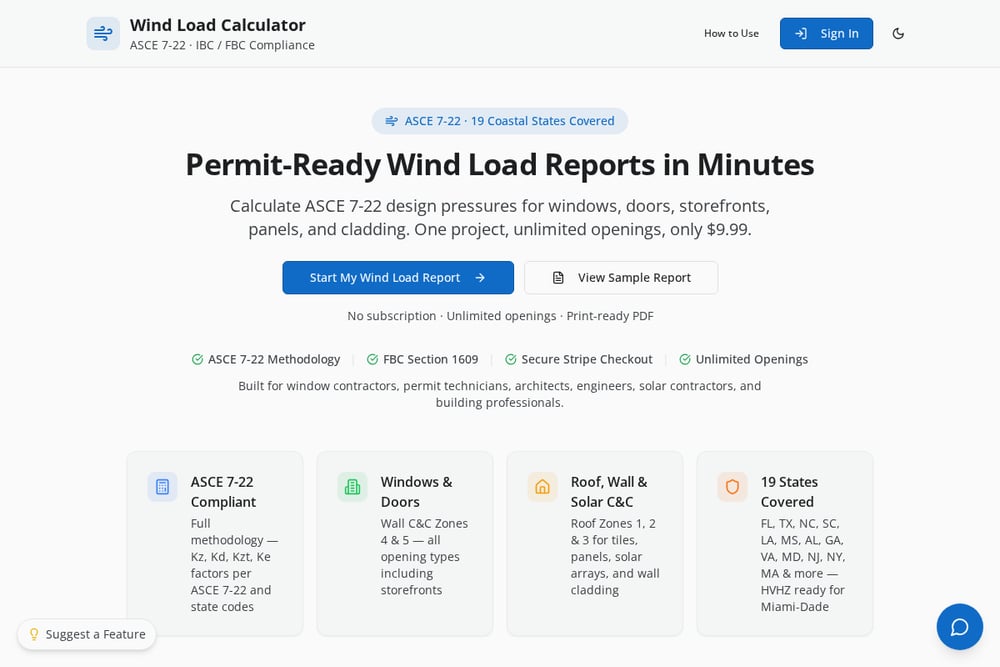 A screenshot of the ASCE 7-22 Wind Load Calculator for Windows, Doors & Building Components - Wind Load Calc website.
This web-based tool is built specifically for window, door, and building component contractors. It generates ASCE 7-22 compliant, permit-ready reports in minutes, covering 19 coastal states including Florida, Texas, and the Carolinas. The one-time $9.99 fee per project is a bargain compared to subscription models, and you get unlimited openings per project. It handles wall zones 4 & 5, roof zones 1, 2 & 3, and even solar panel calculations, making it a versatile pick. The print-ready PDF is designed for county inspectors, so you can submit it directly. If you need a fast, affordable report without the hassle of complex software, this is your tool.
#3 SkyCiv Wind Load Calculator
 A screenshot of the SkyCiv Wind Load Calculator website.
SkyCiv offers a free online wind load calculator that supports ASCE 7-10, 7-16, and 7-22, along with international codes. It's part of a larger suite of structural analysis tools, so you can integrate loads directly into your 3D models. The interface is user-friendly, and you can generate PDF reports for your deliverables. It's a great option for students, educators, and professionals who want a free starting point. However, for advanced features like HVHZ or specific state requirements, you might need to upgrade. SkyCiv is a solid all-rounder for those who need flexibility and don't mind a bit of a learning curve.
#4 WindLoad Solutions ASCE 7 Wind Load Calculator
 A screenshot of the WindLoad Solutions ASCE 7 Wind Load Calculator website.
WindLoad Solutions provides a professional-grade calculator that pre-fills wind speed from your ZIP code, saving you time on map reading. It covers all four risk categories and applies exposure adjustments automatically, which is a huge plus. The tool is built by structural engineers, so you know the methodology is sound. It supports both MWFRS and C&C, and it includes HVHZ and county overrides for Florida. The interface is clean and guided, making it easy to run calculations step by step. If you're an architect or contractor who wants a reliable, engineer-backed tool, this is worth a look.
#5 CADDtools Design Pressure Calculator
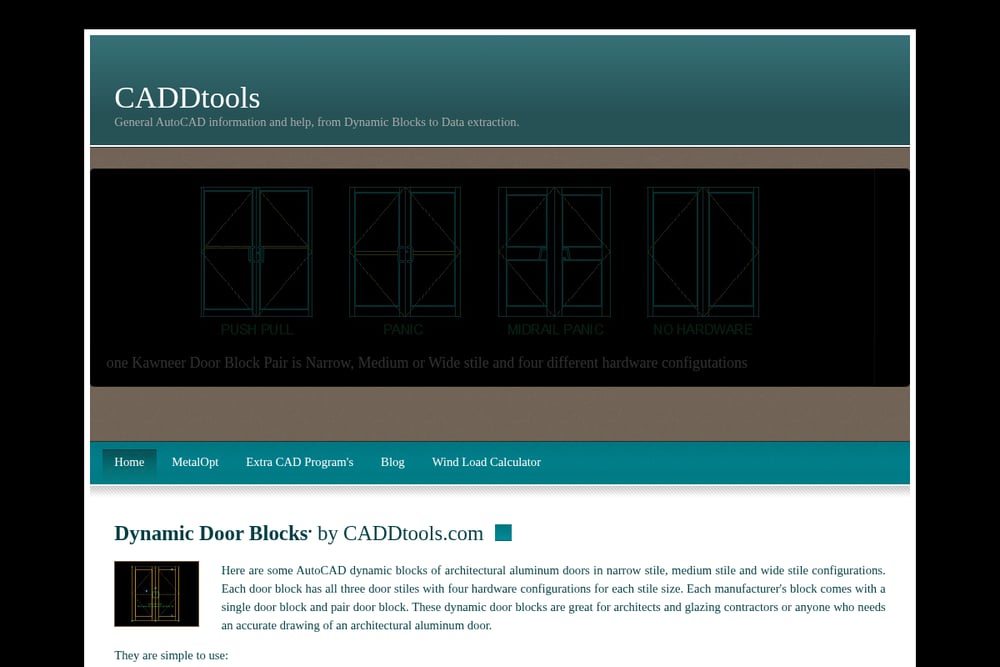 A screenshot of the CADDtools Design Pressure Calculator website.
CADDtools offers a straightforward web-based calculator that focuses on wall components and cladding design pressures. It automatically determines whether to use Part 1 or Part 2 of ASCE 7-22 based on building height, which is handy. The tool calculates both LRFD and ASD pressures, giving you flexibility in your design. It's a no-frills option that's great for quick verification of architect-provided pressures. However, it doesn't generate full permit-ready reports, so you'll need to do some manual work. If you're an estimator or engineer who needs a quick check, this is a practical choice.
How to Choose the Right Wind Load Calculator
Start by considering your typical project scope. If you're a contractor who needs permit-ready reports fast, a web-based tool like the ASCE 7-22 Wind Load Calculator is your best bet. For engineers handling complex structures, MecaWind's depth is invaluable. If you're on a budget, SkyCiv's free tier is a great starting point. Also, think about your state's specific requirements—HVHZ in Florida, for example, needs specialized support. Finally, consider whether you need to integrate with other software, as SkyCiv offers that flexibility.
Automating Wind Load Reports: A Workflow
With tools like the ASCE 7-22 Wind Load Calculator, you can automate the entire report generation process. Start by entering your project details and ZIP code to get the design wind speed. The tool then calculates all the necessary factors—Kz, Kd, Kzt, Ke—and generates a print-ready PDF. You can review the report, make any adjustments, and submit it to the county inspector. This cuts down your turnaround time from days to minutes, letting you focus on the actual installation work.
Final Thoughts
Choosing the right wind load calculator comes down to your specific needs. For most contractors and permit techs, the ASCE 7-22 Wind Load Calculator offers the best balance of speed, cost, and compliance. If you need more advanced features, MecaWind and WindLoad Solutions are strong contenders. And for those just starting out, SkyCiv's free tool is a great way to learn. No matter which you pick, having a reliable calculator is essential for staying compliant and keeping your projects on track.