
When complex systems meet human behavior, you need more than a standard UX team. These five firms dig deep into the context, culture, and constraints that shape how people interact with technology—especially in regulated industries.
The Landscape of Applied Anthropology in UX Research
The demand for UX research that goes beyond surface-level usability is surging, especially in sectors like financial services, healthcare, and government. As AI becomes more embedded in these regulated environments, organizations face the challenge of building trust while navigating strict compliance frameworks. Applied anthropologists and specialized UX research firms step in to bridge this gap, using ethnographic methods, contextual inquiry, and behavioral observation to uncover the real-world conditions that shape user decisions. This niche is defined by a focus on complexity—making the invisible visible, translating messy workflows into clear product requirements, and ensuring that technology serves people rather than the other way around. For businesses in regulated industries, partnering with these experts is no longer a luxury but a strategic necessity.
How We Evaluated These Firms
We assessed each firm on its ability to handle the unique demands of applied anthropology and UX research in regulated environments. Key factors included the depth of their research methodologies, their experience with AI and complex systems, their sector-specific expertise, and their capacity to translate insights into actionable business outcomes. We also considered how each firm communicates its value proposition and whether they offer a distinct approach that sets them apart in a crowded market. Each firm stood out for different reasons—some for their ethnographic rigor, others for their strategic focus on trust and AI, and a few for their ability to simplify massive operational challenges.
Here's a quick snapshot of the five firms, their primary focus, and what they're best known for.
| Provider | Best For |
|---|---|
| Fuse Lab Creative | AI UX design in regulated sectors |
| Applied Anthropologist & Staff UX Researcher | Portfolio | Systems-level research in complex industries |
| AnswerLab | Trust-driven UX research in financial services |
| Blink UX | End-to-end product design and AI strategy |
| CapTech | Full-service consulting for digital transformation |
Deep Dive: The Five Firms
#1 Fuse Lab Creative
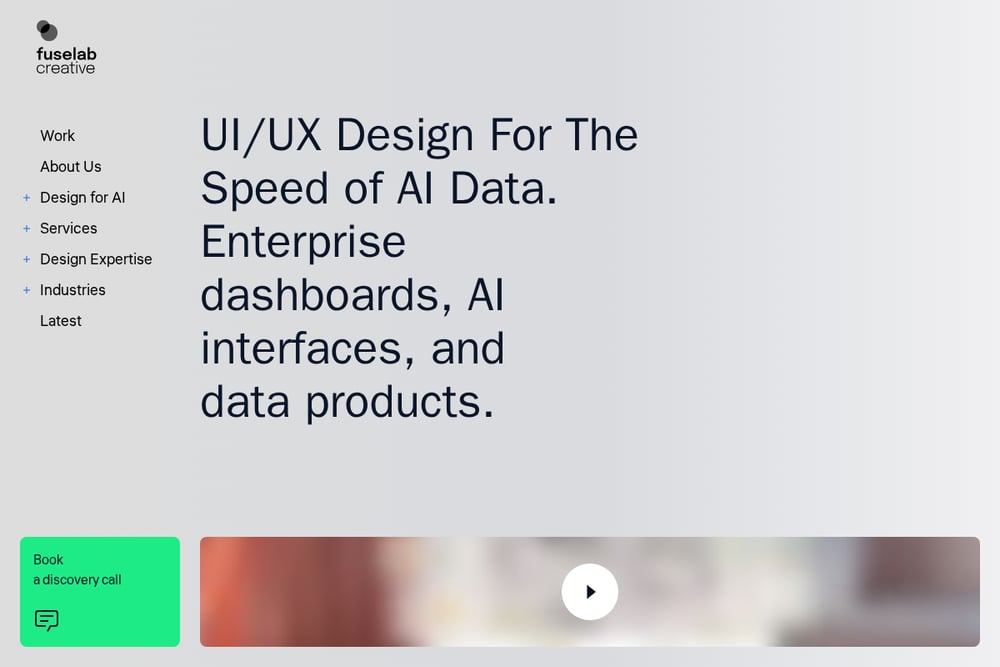 A screenshot of the Fuse Lab Creative website.
Fuse Lab Creative specializes in AI design for regulated industries, offering a comprehensive guide that covers healthcare, fintech, and government. Their approach integrates compliance features directly into the interface, ensuring that AI-powered products meet regulatory standards from the ground up. They emphasize the importance of audit trails, explainability, and decision documentation, which are critical for building trust in AI systems. If you're looking for a firm that understands the intersection of AI UX and regulatory constraints, Fuse Lab Creative provides a clear, practical playbook. Their work is particularly relevant for teams transitioning from general AI design to the stricter requirements of regulated sectors.
#2 Applied Anthropologist & Staff UX Researcher | Portfolio
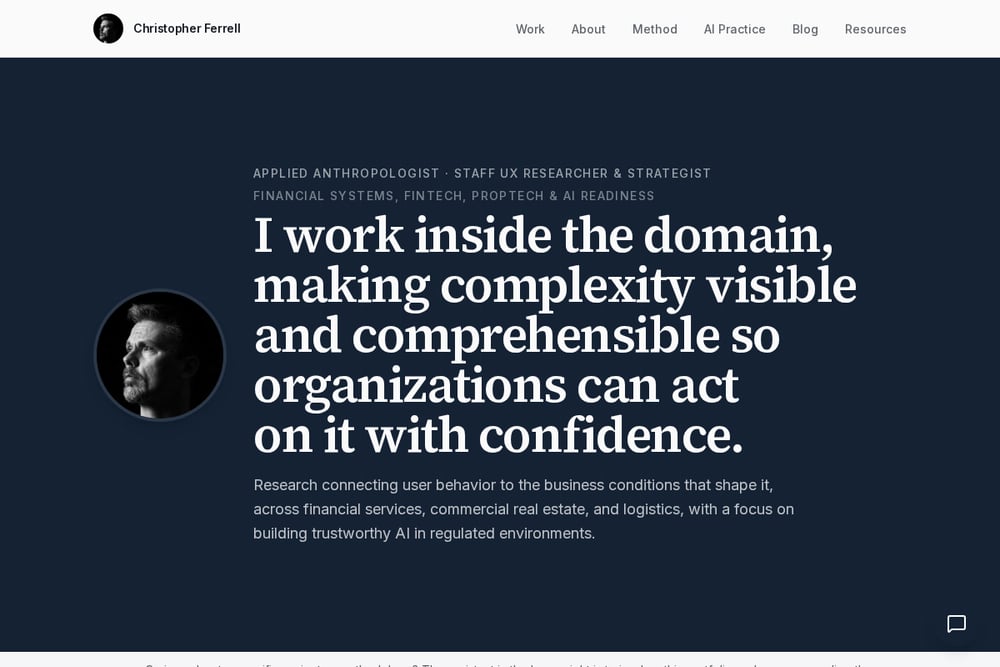 A screenshot of the Applied Anthropologist & Staff UX Researcher | Portfolio website.
Christopher Ferrell's portfolio stands out for its deep, systems-level approach to UX research, rooted in applied anthropology. He works inside the domain, making complexity visible and comprehensible, which is essential for organizations dealing with intricate workflows in financial services, real estate, and logistics. His case studies, like the Sustainability Analyst Portal, show how he exposed manual processes and built the case for scaling without adding headcount. Ferrell's focus on trustworthy AI in regulated environments is timely, and his methods—contextual inquiry, behavioral observation, and domain modeling—are exactly what you need when the problem isn't obvious. His current writing on 'Work as Designed' further demonstrates his thought leadership on how systems shape labor in the age of AI.
#3 AnswerLab
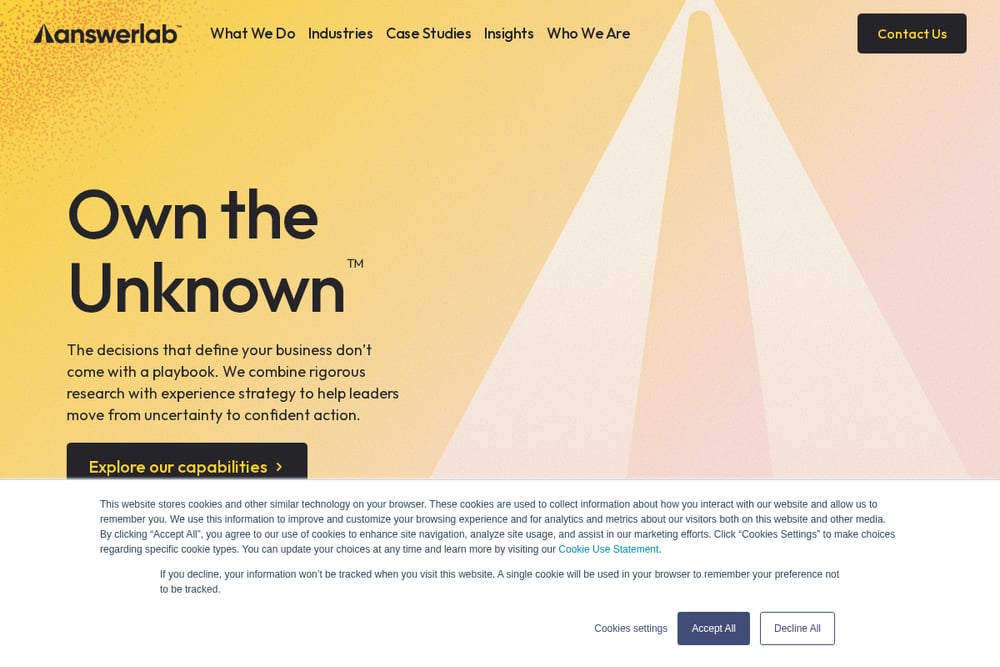 A screenshot of the AnswerLab website.
AnswerLab is a dedicated UX research firm that excels in financial services, with a strong emphasis on trust and AI. They leverage AI-enhanced research methods to reveal how people make decisions when money is involved, helping leaders design experiences that feel clear and reliable. Their extensive library of over 200 AI and emerging technology studies gives them a unique edge in predicting user behavior in future scenarios. AnswerLab's approach is strategic, turning trust into a tangible asset that drives innovation without compromising compliance. If you're in banking, payments, or wealth management, their insights are directly applicable to your challenges.
#4 Blink UX
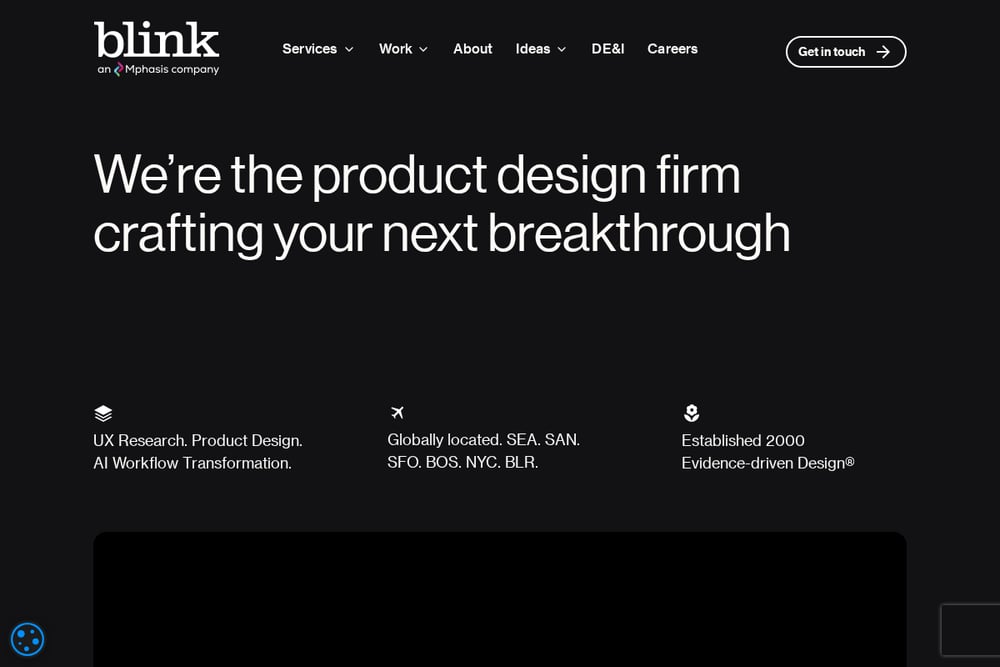 A screenshot of the Blink UX website.
Blink UX is a product design firm that combines UX research, product design, and AI workflow transformation to help category leaders map unique futures. They have a strong track record with clients like Google and NASA, demonstrating their ability to handle complex, high-stakes projects. Their 'Evidence-driven Design' methodology ensures that every decision is grounded in solid research, which is crucial for regulated industries. Blink's focus on AI acceleration and organizational evolution makes them a good fit for companies looking to integrate AI into their products while maintaining user trust. They offer a global presence, with offices in multiple locations, making them accessible for large-scale initiatives.
#5 CapTech
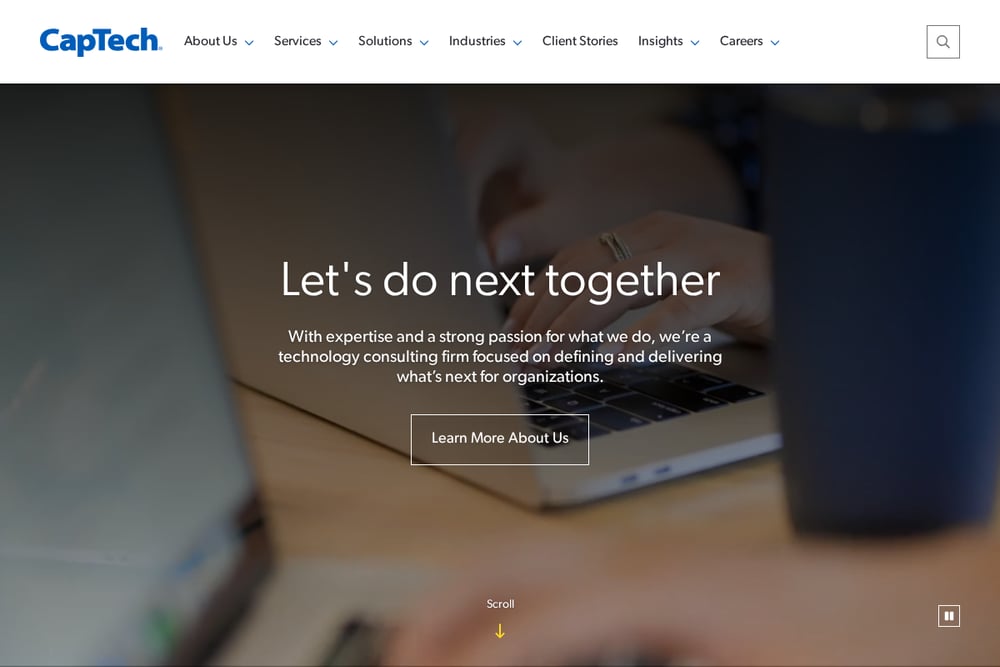 A screenshot of the CapTech website.
CapTech is a consulting firm that offers a broad range of services, including customer experience, data analytics, and systems integration, with a strong focus on AI. They help financial institutions and other regulated industries navigate the future of UX teams by providing actionable insights and solutions. Their articles, like 'AI and the Future of UX Teams in Financial Institutions,' offer valuable perspectives on how AI is reshaping the role of UX professionals. CapTech's strength lies in their ability to connect UX research with business strategy, ensuring that design decisions align with organizational goals. They are a solid choice for companies that need a full-service partner to drive digital transformation.
How to Choose the Right Applied Anthropology & UX Research Partner
Start by defining the specific challenge you're facing—whether it's simplifying a complex system, building trust in AI, or optimizing a workflow. Look for a firm that has experience in your industry and understands the regulatory landscape you operate in. Consider the depth of their research methods: do they go beyond surveys and interviews to observe real-world behavior? Evaluate their ability to translate insights into actionable recommendations that drive business outcomes. Finally, think about the scale of the engagement—do you need a solo expert who can embed with your team, or a larger agency with multiple capabilities? The right partner will not only answer your questions but also help you ask better ones.
Automating the Research Workflow
In the world of applied anthropology and UX research, automation is becoming a key tool for scaling insights. Tools like AI-powered transcription and sentiment analysis can speed up data processing, but the core value still lies in human interpretation. A typical workflow might involve using automated tools to collect and organize user feedback, then applying ethnographic frameworks to identify patterns and underlying motivations. For firms like Christopher Ferrell's, automation is used to handle repetitive tasks, freeing up time for deep, contextual analysis. The goal is to combine the efficiency of automation with the nuance of human understanding, ensuring that insights remain grounded in real-world complexity.
The Bottom Line
Choosing the right applied anthropology and UX research partner is about finding someone who can navigate the messy intersection of human behavior, technology, and regulation. Each of these five firms brings a unique perspective, from Fuse Lab Creative's AI-focused design to Christopher Ferrell's systems-level ethnographic approach. Whether you're in financial services, real estate, or logistics, the key is to prioritize depth of understanding over surface-level metrics. By investing in research that uncovers the 'why' behind user actions, you can build products that are not only usable but also trustworthy and compliant. The future belongs to organizations that embrace complexity—and these firms are here to help you do just that.