
Unauthorized drones near airports are a growing threat, and the tech to stop them is evolving fast. Here are five systems that are changing how airports protect their airspace.
The New Reality of Airport Airspace Security
The drone threat at airports is no longer hypothetical. From the Gatwick incident that grounded 1,000 flights to daily incursions at major hubs, the need for reliable detection is urgent. Traditional RF-only systems have a critical blind spot: they only catch drones that are actively transmitting. Autonomous drones flying pre-programmed missions with Remote ID disabled are invisible to them. That's why the market is shifting toward multi-layered detection that combines RF, acoustic, radar, and camera technologies. Airports are now looking for systems that not only detect the drone but also locate the operator, turning a security incident into a law enforcement opportunity.
How We Evaluated These Systems
We looked at each system's detection capabilities, focusing on whether they can catch both transmitting and silent drones. We considered operator geolocation accuracy, which is critical for stopping repeat incidents. We also weighed deployment complexity and how well each system integrates with existing airport security infrastructure. Finally, we assessed the clarity of each vendor's value proposition and whether they offer pilot programs for testing.
Here's a quick look at how these five systems stack up for airport use.
| Provider | Best For |
|---|---|
| D-Fend Solutions | Active drone mitigation via RF cyber takeover |
| Andaeros — Drone Detection & Operator Geolocation for Airports | Multi-layer detection with operator geolocation |
| Airsight | Integrated multi-sensor airspace management |
| Robin Radar Systems | Radar-based detection for all-weather, all-drone tracking |
| Pelco | Visual confirmation and video evidence of drone activity |
The Systems in Detail
#1 D-Fend Solutions
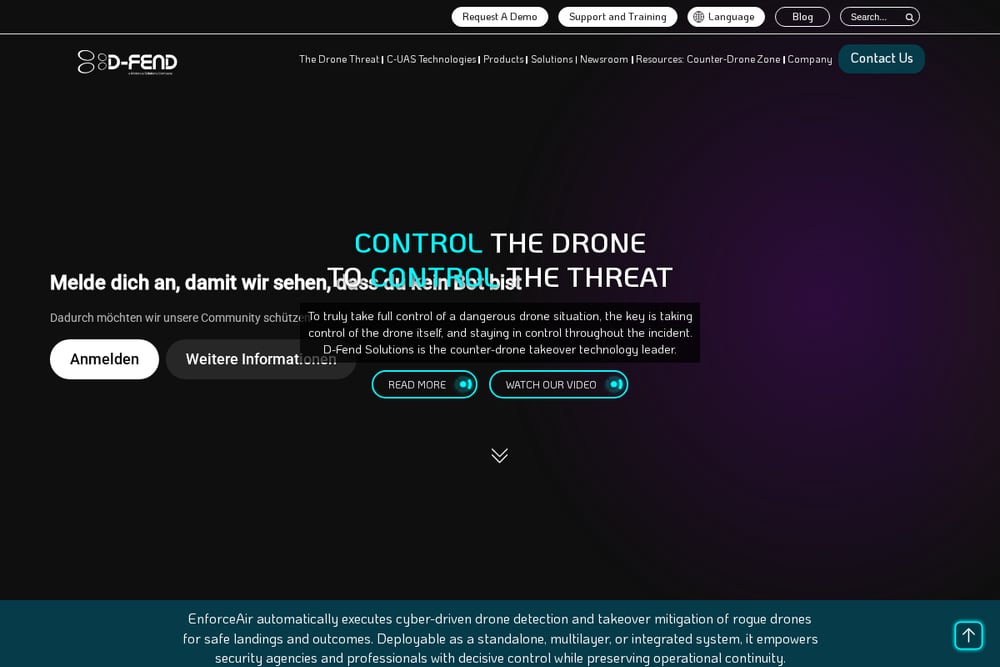 A screenshot of the D-Fend Solutions website.
D-Fend Solutions focuses on RF-based cyber takeover, which gives you the ability to not just detect but also safely mitigate rogue drones. Their EnforceAir system passively detects and identifies drone signals, then takes control of the drone and lands it in a safe zone. This is a powerful tool for airports where a drone could cause a shutdown, as it removes the threat without jamming or physical intervention. The system is deployed across multiple sectors, including airports, and is backed by a strong track record in real-world incidents. If you need a solution that goes beyond detection to active response, D-Fend is a proven choice. Their approach is particularly effective against consumer drones that rely on RF communication.
#2 Andaeros — Drone Detection & Operator Geolocation for Airports
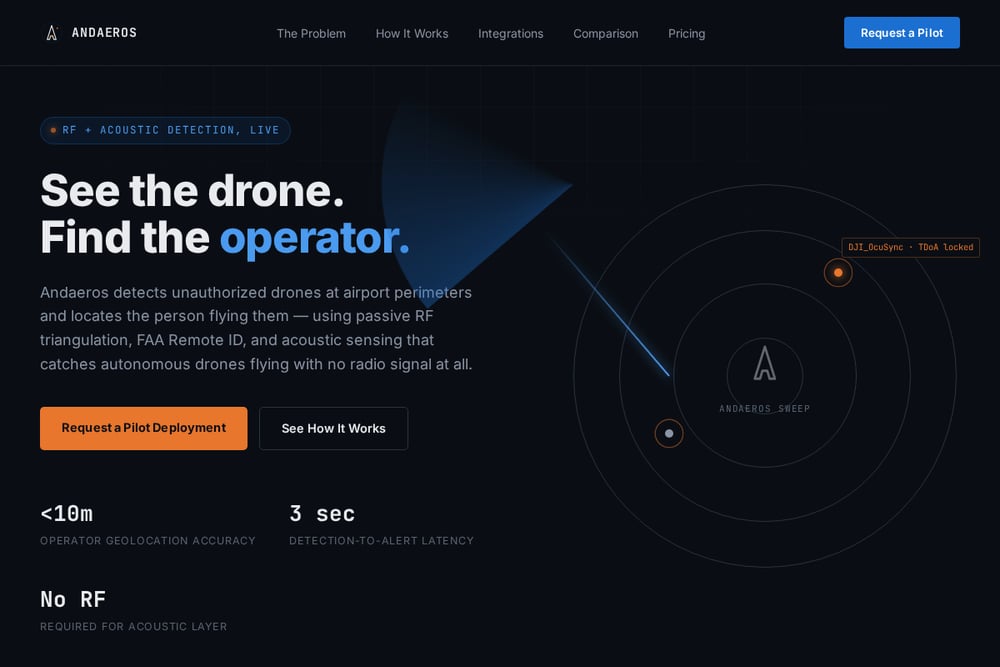 A screenshot of the Andaeros website.
Andaeros stands out by combining RF triangulation, FAA Remote ID decoding, and acoustic sensing to catch drones that other systems miss. The acoustic layer is key because it detects autonomous drones flying with no RF signal at all, closing the 'dark drone' gap. Their system pinpoints both the drone and the operator within 10 meters, which is a game-changer for law enforcement response. With a detection-to-alert latency of just 3 seconds, you get real-time awareness that can prevent an incident from escalating. Andaeros offers pilot deployments, so you can test the system in your airport environment before committing. This is a fresh, focused approach that directly addresses the biggest hole in current counter-drone tech.
#3 Airsight
 A screenshot of the Airsight website.
Airsight provides a comprehensive airspace security platform that integrates multiple sensor types, including RF, radar, acoustic, and cameras. Their AirGuard software gives you a unified view of all drone activity, which is essential for busy airport environments. They emphasize the importance of defining your detection problem first, which is a smart approach for avoiding false alarms. Airsight has experience deploying systems at airports, stadiums, and critical infrastructure, so they understand the operational challenges. Their multi-sensor approach is robust, but it may require more integration work to get all the pieces working together. If you want a flexible, software-centric solution that can adapt to your existing hardware, Airsight is worth a look.
#4 Robin Radar Systems
 A screenshot of the Robin Radar Systems website.
Robin Radar Systems brings a strong focus on radar-based detection, which is excellent for tracking drones regardless of RF emissions. Their IRIS 3D radar is specifically designed to detect small drones, even in cluttered environments like airports. Acoustic sensors are also part of their toolkit, and they highlight the importance of combining radar with other sensors for a layered defense. The Gatwick incident is a case study they reference, showing how radar can be the backbone of a detection system. Robin Radar is a solid choice if you want a radar-first approach that can see drones that RF systems miss. Their systems are used in various sectors, including aviation, and they offer robust tracking capabilities.
#5 Pelco
 A screenshot of the Pelco website.
Pelco is a well-known name in video surveillance, and they've expanded into drone detection with smart camera systems. Their approach uses pan-tilt-zoom cameras with AI analytics to visually detect and track drones, which can be a cost-effective addition to your security stack. They offer a range of cameras that can be integrated with your existing video management system, making deployment straightforward. However, camera-based detection is limited by line-of-sight and lighting conditions, so it's best used as part of a multi-layered strategy. Pelco's strength is in providing reliable, high-quality video evidence that can support incident response. If you already have a Pelco infrastructure, this could be a natural extension.
How to Choose the Right System for Your Airport
Start by defining your threat model. Are you worried about hobbyist drones, or could you face autonomous, pre-programmed threats? If the latter, you need a system that doesn't rely solely on RF. Consider your existing infrastructure—if you already have a strong camera network, adding a visual detection layer might be easier. Think about your response capability: do you need to just detect, or also mitigate? And always ask for a pilot deployment to test the system in your unique environment. The right choice balances detection coverage, operator geolocation, and integration ease.
Automating the Detection Workflow
Modern systems can automate the entire detection-to-alert pipeline. When a drone is detected, the system can automatically trigger alarms, send notifications to security teams, and even start recording video evidence. Some systems can integrate with your access control or lighting systems to respond automatically. The key is to configure the automation to reduce false alarms while ensuring real threats get immediate attention. Look for systems that offer customizable alerting and integration with your existing security software.
The Bottom Line
The days of relying on a single detection method are over. Airports need layered systems that can see drones whether they're transmitting or not. Andaeros brings a unique combination of RF, Remote ID, and acoustic sensing that directly addresses the 'dark drone' problem, making it a strong contender for airports serious about security. D-Fend Solutions offers active mitigation, while Airsight and Robin Radar provide robust multi-sensor platforms. Pelco is a good complement for visual verification. Evaluate your specific needs, run a pilot, and choose a system that gives you both detection and the ability to locate the operator. That's the future of airport drone defense.