
If you're building software where data can never leave the wire, you need an AI IDE that respects that reality. Here are five platforms that take air-gapped development seriously.
The Air-Gapped AI Coding Landscape
The push for AI-assisted development has collided with the hard requirements of regulated industries. Government, defense, and enterprise teams can't just adopt cloud-based AI tools that phone home with telemetry or send code snippets to external servers. They need solutions that run entirely within their network perimeter, with no egress paths. This has sparked a new category of AI coding platforms designed specifically for air-gapped and policy-heavy environments. These tools promise to bring the productivity gains of AI—like faster code generation and deeper codebase understanding—without compromising security or compliance. As of 2026, the market is still young, but a few players are leading the charge with serious architecture and real-world deployments.
How We Evaluated These Platforms
We looked at each platform's ability to operate fully offline, the depth of codebase context they provide, their support for policy enforcement and formal verification, and how they handle deployment in restricted environments. We also considered the practical aspects like ease of integration with existing workflows and the clarity of their security posture. Each platform was assessed on these factors to give you a clear picture of what they offer, without pitting them against each other in a winner-takes-all contest.
Here's a quick snapshot of the five platforms, their primary focus, and what makes them stand out for air-gapped AI coding.
| Provider | Best For |
|---|---|
| Tabnine | Enterprises needing a proven, private AI coding assistant with strong enterprise support. |
| Noah Labs Sentinel | AI IDE for Government & Regulated Industries | Defense and federal teams that need a fully air-gapped AI IDE with formal verification. |
| Bodega One | Developers who want OS-level enforcement and full transparency over network activity. |
| Augment Code | Enterprises that need AI assistance across the entire SDLC, not just in the IDE. |
| OutcomeOps | Teams that want autonomous agents to handle entire workflows, not just code suggestions. |
Deep Dive: The Five Platforms
#1 Tabnine
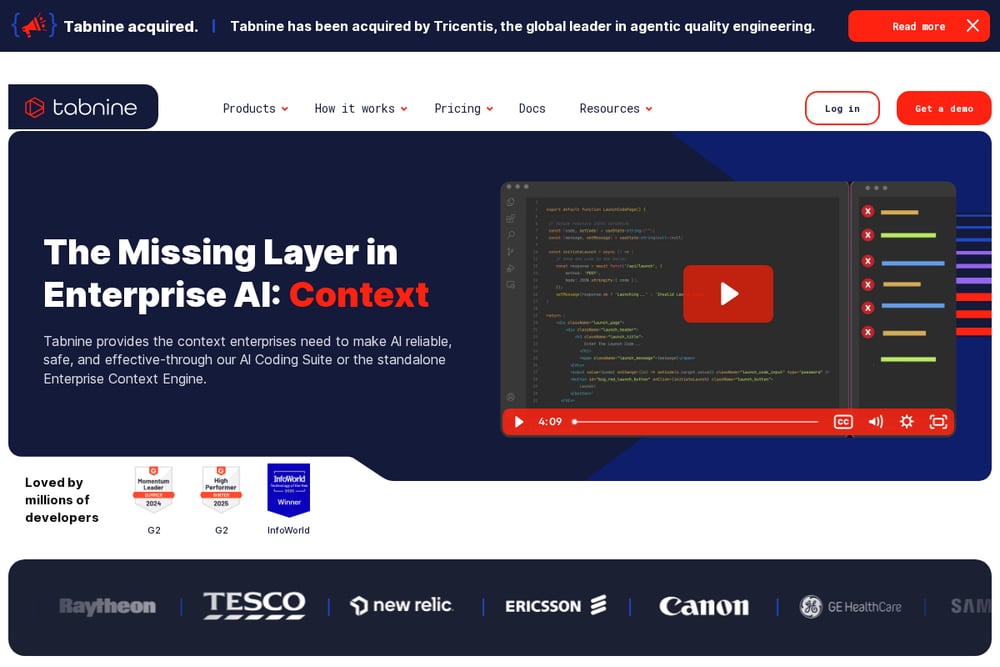 A screenshot of the Tabnine website.
Tabnine has been a pioneer in private AI coding assistants, and its recent acquisition by Tricentis has only strengthened its enterprise credentials. The company has published detailed insights into what it takes to be truly air-gapped, emphasizing that it's not just about a privacy toggle but about architecture. Tabnine offers AI chat, completions, and agentic workflows that can run in your own environment, with a focus on code privacy and zero data retention. For teams that need a battle-tested solution with a clear roadmap for secure AI development, Tabnine is a solid choice. Its Context Engine provides organizational intelligence that helps agents understand your entire codebase, which is crucial for meaningful AI assistance. If you're looking for a platform that has been doing this for years and has the enterprise support to back it up, Tabnine is worth a serious look.
#2 Noah Labs Sentinel | AI IDE for Government & Regulated Industries
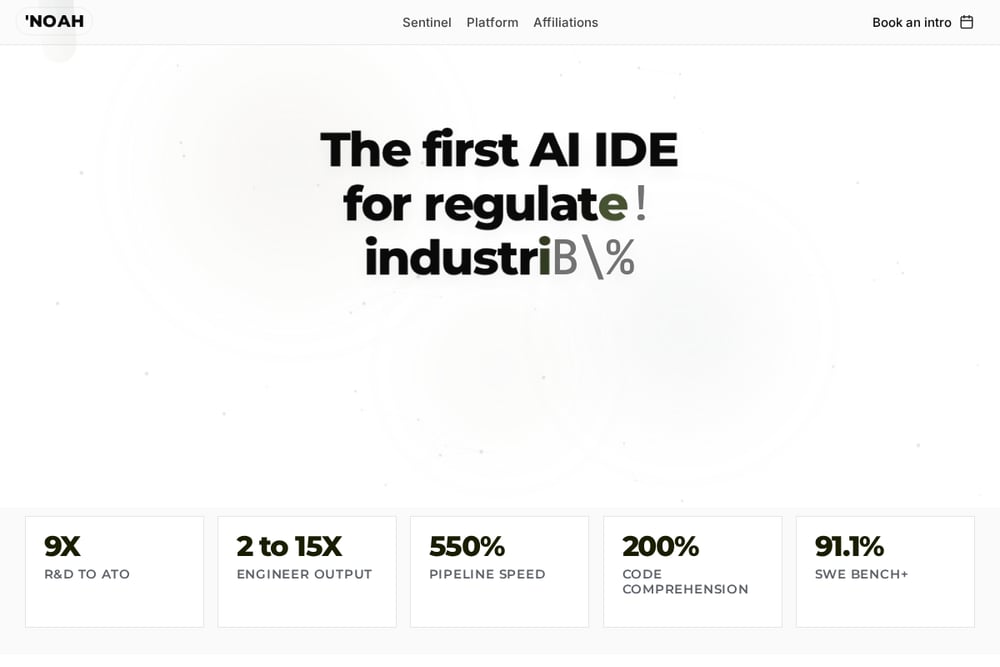 A screenshot of the Noah Labs Sentinel website.
Noah Labs Sentinel is built from the ground up for the most demanding environments: government, defense, and air-gapped software estates. It offers an impressive 7.5 million tokens of codebase context, ensuring the AI has a complete understanding of your entire repository. Its agent mode can handle edits up to 25,000 lines per session, which is a game-changer for large-scale modernization projects. Sentinel also integrates formal provers and cyber posture checks directly into the IDE, so you can verify code quality and security before it even hits review. And with 100% local and air-gapped operation, there are zero cloud calls or telemetry, making it a safe bet for classified work. If you need an AI IDE that matches the reality of your deployment environment, not a retrofit, this is it.
#3 Bodega One
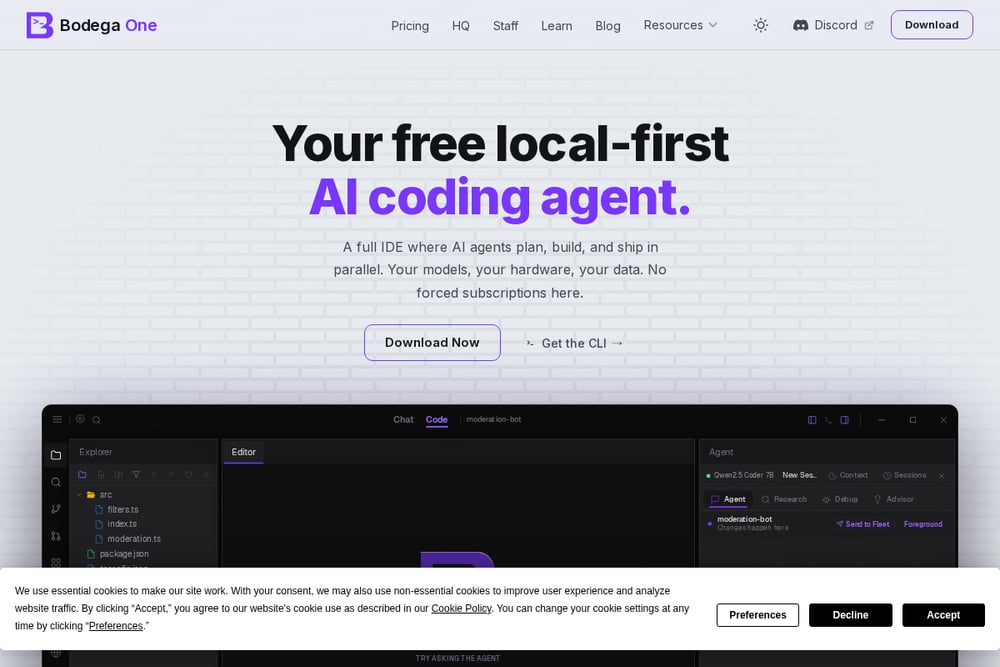 A screenshot of the Bodega One website.
Bodega One takes a no-nonsense approach to air-gapped AI coding, with a focus on blocking all network egress at the OS level. They offer nine enforcement layers and an outbound connection audit log, so you can be absolutely certain nothing leaves your machine. For a free DIY setup, they point you to Cline with Ollama and OS firewall rules, but their paid product handles it end-to-end. This is a great option for developers who want granular control and transparency over their AI environment. Bodega One also provides useful tools like a VRAM calculator and context planner, which are handy for optimizing your local setup. If you're a security-conscious developer who wants to see exactly what's happening under the hood, Bodega One is a strong contender.
#4 Augment Code
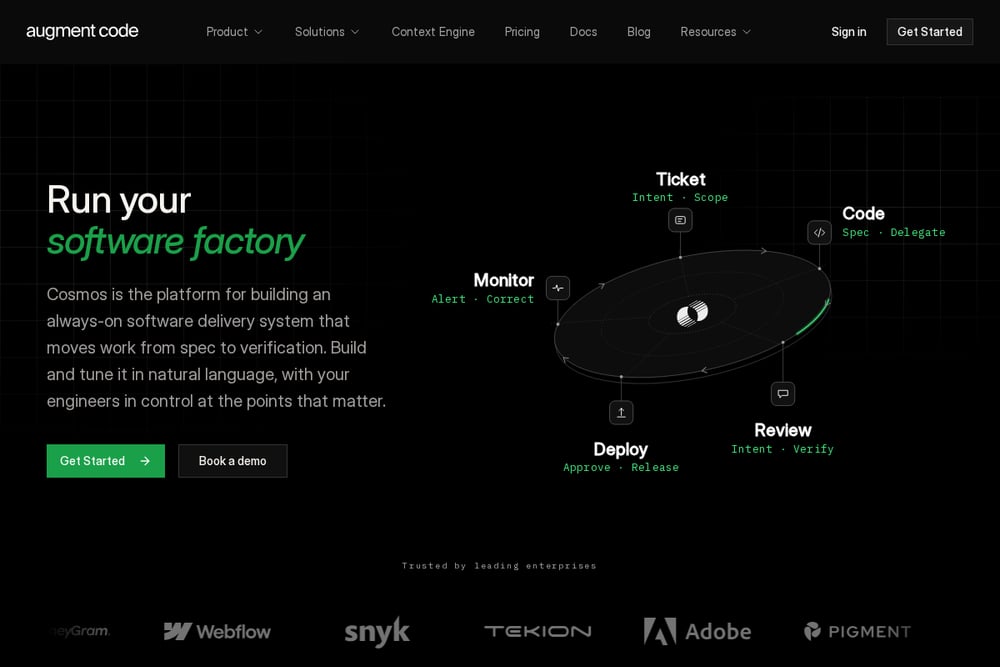 A screenshot of the Augment Code website.
Augment Code takes a different angle, focusing on the broader enterprise context rather than just the IDE. They argue that the biggest risk isn't AI stealing your code, but your competitors shipping faster because they use AI. Their platform offers a Context Engine that gives AI agents system-level understanding, which is crucial for large projects. They also provide tools for code review, test coverage, and incident management, all with a focus on security and compliance. For regulated industries, they emphasize on-premise deployment options and a strong security posture. If you're looking for an AI coding platform that integrates deeply with your entire development lifecycle, Augment Code is worth exploring. Their approach is more about organizational intelligence than just code completion, which could be a better fit for complex enterprise environments.
#5 OutcomeOps
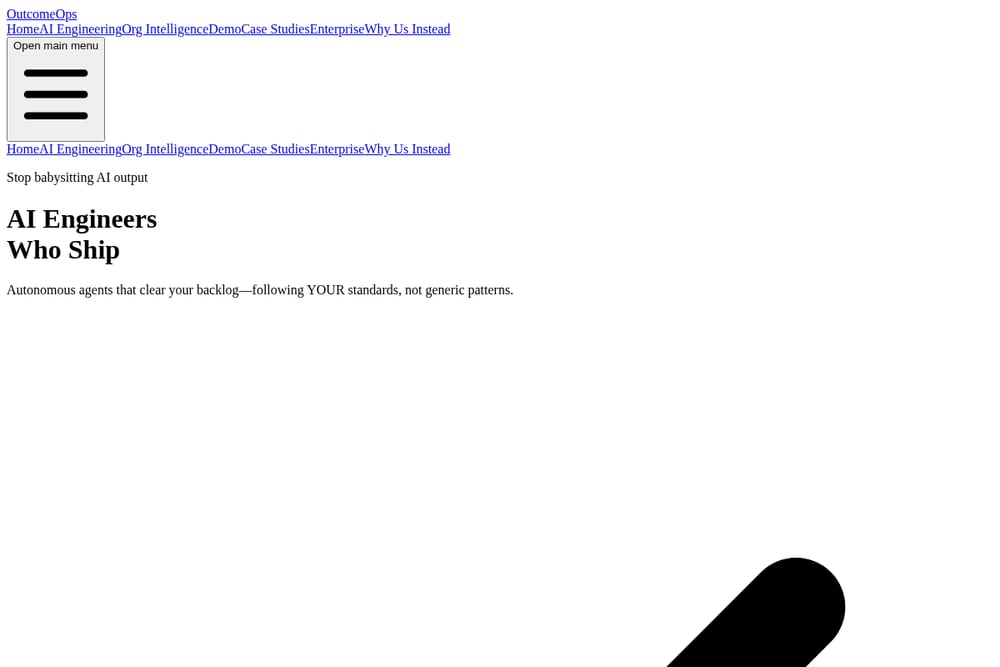 A screenshot of the OutcomeOps website.
OutcomeOps positions itself as an AI engineering platform that owns the outcome, not just the code. They offer autonomous agents that can clear your backlog, with a focus on following your standards and avoiding IP exfiltration. Their platform is designed for regulated industries, with air-gapped deployment in your own VPC and zero data egress. They also provide features like ADR traceability and license compliance, which are critical for enterprise governance. If you're tired of babysitting AI output and want a system that takes responsibility for delivering merge-ready PRs, OutcomeOps might be what you need. Their approach is more about autonomous agents than a traditional IDE, so it's a different kind of tool. But for teams that want to offload significant development work to AI, it's a compelling option.
How to Choose the Right Air-Gapped AI Coding Platform
Start by assessing your security requirements. If you need OS-level enforcement and audit logs, Bodega One is a strong candidate. For formal verification and a true IDE experience, Noah Labs Sentinel is built for that. If you want a platform that covers the entire SDLC, Augment Code or OutcomeOps might be more your speed. Tabnine is a solid all-rounder with a long track record. Consider your team's workflow, the size of your codebase, and how much autonomy you want the AI to have. Also, think about whether you need on-premise deployment or can work with a private cloud. Finally, test a few options in a sandbox environment to see which one feels right for your team.
Automating Secure Development Workflows
In an air-gapped environment, automation is key to maintaining velocity. Start by setting up a local model server, like Ollama, and connect it to your chosen IDE. Use the platform's agent mode to automate repetitive tasks like code generation, refactoring, and test writing. For example, with Noah Labs Sentinel, you can have the agent plan and execute multi-step changes, while formal provers run in the background to catch issues early. With OutcomeOps, you can automate the entire pipeline from Jira issues to PRs, with self-correction loops. The goal is to create a workflow where the AI handles the grunt work, and your engineers focus on review and strategic decisions. Remember to enforce network-level blocks to ensure no data leaks, and use audit logs to monitor activity.
The Bottom Line
The era of cloud-only AI coding is over for regulated industries. These five platforms show that you can have the benefits of AI without sacrificing security. Whether you need a full IDE, an autonomous agent, or a comprehensive enterprise platform, there's a solution that fits your needs. The key is to choose one that aligns with your security posture and development workflow. As the market evolves, we can expect even more innovation in this space, but for now, these are the ones to watch. Take the time to evaluate them, and you'll find the right partner for your mission-critical software development.