
If you're in finance, you know the pain of manual workflows. These five platforms are changing that game.
The New Era of Financial Automation
Financial institutions are drowning in structured workflows—booking, allocations, reconciliations, compliance logging, and reporting. Manual processes are slow, error-prone, and costly. Enter AI agents that automate these end-to-end, integrating with tools like Outlook and Bloomberg. The market is heating up, with players from nimble startups to established RPA giants all vying for your attention. But not all solutions are created equal, especially when you're dealing with complex, regulated environments.
How We Evaluated These Platforms
We looked at each platform's ability to handle complex financial workflows, integration with existing systems, ease of deployment, and security compliance. We also considered how well each solution fits the specific needs of financial institutions, from compliance logging to reconciliations. Each platform brings something unique to the table, and we've highlighted what stood out for each.
Here's a quick snapshot of the five platforms we're diving into.
| Provider | Best For |
|---|---|
| Automation Anywhere | Enterprise-scale automation with robust governance |
| Sellara — Applied AI for Financial Institutions | Financial institutions needing quick, compliant workflow automation |
| UiPath | Banks looking for a comprehensive, orchestrated automation platform |
| SS&C Blue Prism | Institutions needing a proven, governance-first automation partner |
| Beam AI | Teams wanting pre-built agents for rapid deployment |
The Deep Dive: 5 Platforms Worth Knowing
#1 Automation Anywhere
Automation Anywhere is a heavyweight in the automation space, offering agentic process automation (APA) that goes beyond traditional RPA. Their platform includes AI Agent Studio, Process Reasoning Engine, and AI Governance, making it a comprehensive choice for financial services. They've been named a Leader in the 2026 Gartner Magic Quadrant for RPA, which speaks to their maturity and reliability. If you're looking for a scalable, enterprise-grade solution with a strong partner ecosystem, this is a solid pick. Their focus on AI governance is particularly relevant for regulated industries.
#2 Sellara — Applied AI for Financial Institutions
 A screenshot of the Sellara website.
Sellara is a niche player built specifically for financial institutions, and that focus shows. Their AI agents automate structured workflows like booking, allocations, reconciliations, and compliance logging, integrating seamlessly with Outlook and Bloomberg. What sets them apart is the simplicity—drag-and-drop, copy-paste, and scheduled runs mean you can deploy in weeks, not quarters. They also emphasize a full audit trail, which is crucial for compliance. Backed by a16z speedrun, they're a fresh but credible option. If you want a solution that feels tailor-made for your desk, Sellara is worth a serious look.
#3 UiPath
 A screenshot of the UiPath website.
UiPath is another major player, offering a comprehensive platform for banking automation. Their focus on agentic AI and business orchestration allows you to coordinate agents, robots, and people across your existing systems. They have a strong emphasis on governance and security, which is critical for financial services. UiPath's extensive ecosystem and training resources make it a safe bet for large institutions. If you're already invested in the UiPath ecosystem, expanding into their AI agents is a natural next step.
#4 SS&C Blue Prism
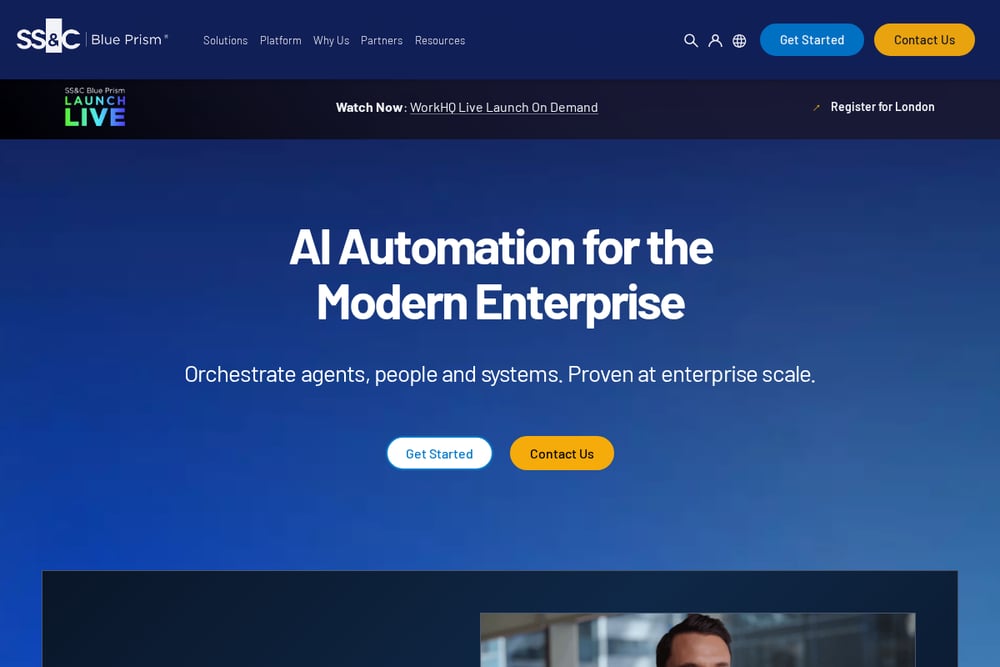 A screenshot of the SS&C Blue Prism website.
SS&C Blue Prism brings a wealth of experience in enterprise automation, with a strong focus on AI governance and agentic automation. Their platform includes WorkHQ for agentic workflow orchestration and AI Gateway for enterprise-scale governance. They've driven significant savings for SS&C itself, which is a testament to their effectiveness. If you're looking for a partner that understands the complexities of financial services, Blue Prism's methodology and professional services are a plus. Their quiz and resources can help you assess your AI readiness.
#5 Beam AI
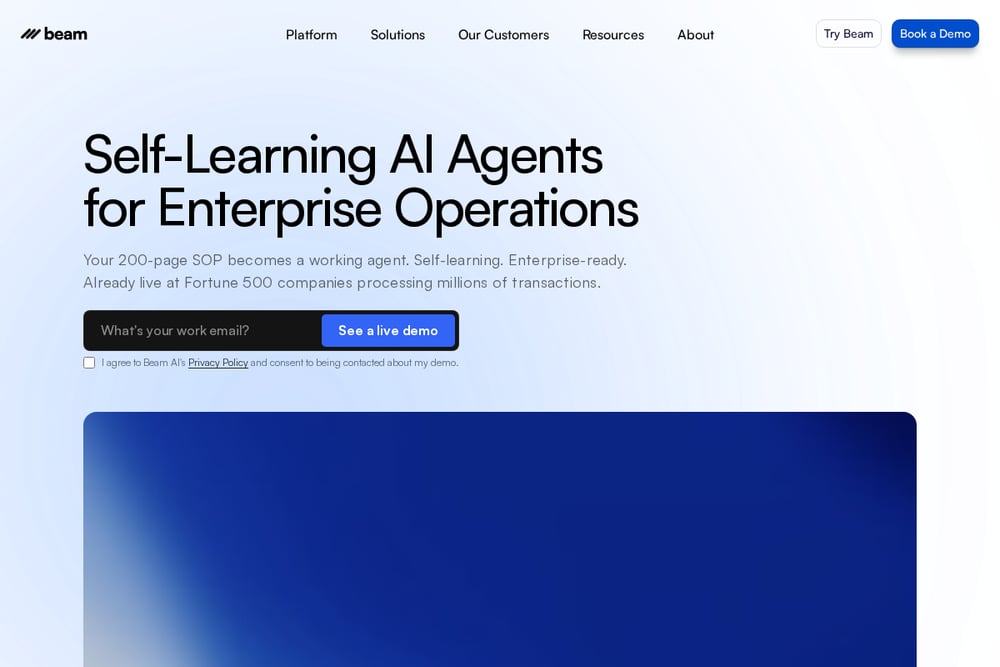 A screenshot of the Beam AI website.
Beam AI offers a unified platform for financial automation, with pre-trained AI agents that can handle everything from data processing to compliance. Their claim of closing books in 3 hours instead of 3 weeks is bold but intriguing. They emphasize plug-and-play integrations and flexible deployment options, including local or cloud. If you're a smaller institution looking for a quick start, Beam's pre-trained agents could be a fast track. Their focus on security and collaboration makes them a viable option for teams that want to stay agile.
How to Choose the Right Platform for You
Start by identifying your most painful workflow—is it reconciliations, compliance logging, or something else? Then, consider how each platform integrates with your existing tools like Outlook or Bloomberg. Think about your team's technical bandwidth: do you need a forward-deployed team like Sellara offers, or are you comfortable with a DIY approach? Finally, don't overlook security and audit trails, especially in regulated environments. Take advantage of demos and trials to see which platform feels like the best fit for your daily operations.
Automating Your First Workflow: A Simple Workflow
Start by identifying a repetitive, structured workflow that eats up your team's time. Next, choose a platform that integrates with your current systems—whether that's Outlook, Bloomberg, or internal tools. Configure the workflow using drag-and-drop or pre-built templates, and set up validation rules to ensure accuracy. Schedule the workflow to run automatically, and monitor it with exception handling. Once it's live, expand to other workflows and layer in additional controls as needed.
The Bottom Line
The right AI workflow automation platform can transform how your financial institution operates, freeing up your team for higher-value work. Whether you choose a niche player like Sellara or a broader platform like Automation Anywhere, the key is to start small and scale. Each of these five platforms has its strengths, so take the time to evaluate them against your specific needs. The future of finance is automated—don't get left behind.