AI voice generators have become part of the video creator's toolkit, whether you need narration for a documentary, character voices for animation, or quick scratch tracks for a rough cut. The five platforms below each approach voice generation from a different angle, and the right fit depends on your workflow, your budget, and the kind of content you make. Here is what each one offers, drawn from its own public pages.
How We Picked These Tools
We looked at platforms that publicly describe voice generation features relevant to video production, such as voice libraries, editing controls, language support, and integration with creative workflows. Each entry includes at least two facts quoted directly from the company's own site. The order is a plain list, not a quality ranking.
| Provider | Best For |
|---|---|
| ElevenLabs | Creators who want an all-in-one audio and video creation platform |
| Murf AI | Video creators who need fast voiceover production and dubbing |
| WellSaid | Teams that need licensed, directable voiceover for professional video |
| Speechify | Creators who want voice generation across many devices and apps |
| Resemble AI | Creators who need deepfake detection and voice identity verification |
The 5 Tools in Focus
#1 ElevenLabs
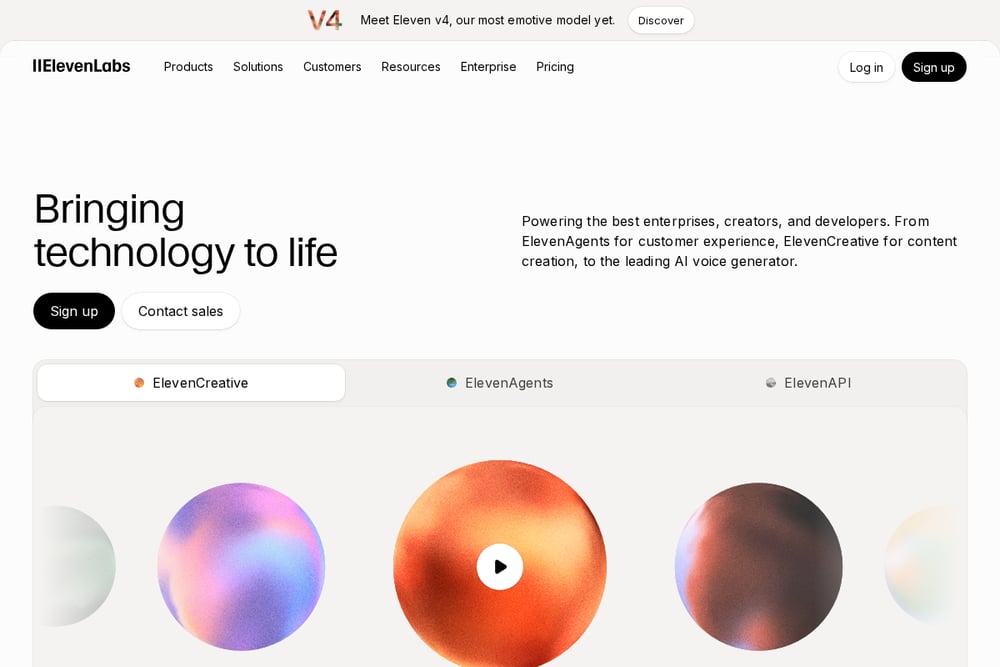 A screenshot of the ElevenLabs website.
ElevenLabs offers a creative platform that combines speech generation with music, sound effects, and image and video tools. Its AI voice generator supports expressive speech across many languages, and the platform includes an all-in-one editor for podcasts, audiobooks, and voiceovers. Video creators can use it to generate narration, character voices, or social media voiceovers, and the library of voices is large. The company also provides APIs for developers who want to build voice into their own tools.
#2 Murf AI
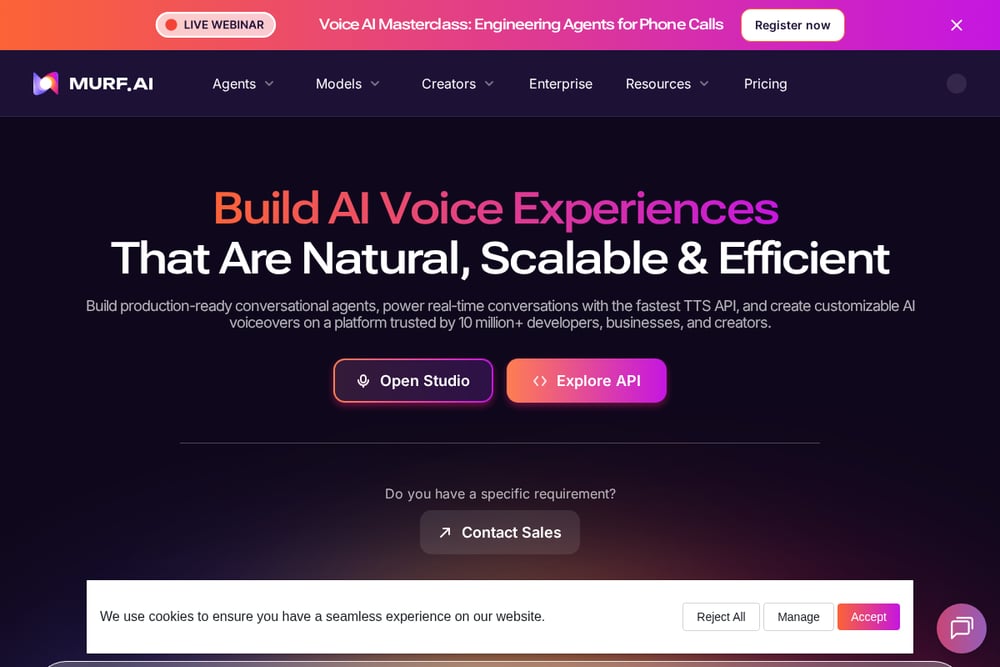 A screenshot of the Murf AI website.
Murf AI provides a studio for creating voiceovers, with a library of AI voices and tools for voice cloning and dubbing. The platform is built for creators who need to produce voiceovers quickly, and it integrates with common presentation and e-learning tools. Murf also offers APIs for text-to-speech and speech-to-text, aimed at developers building voice agents. For video creators, the studio and dubbing features cover narration and localization needs.
#3 WellSaid
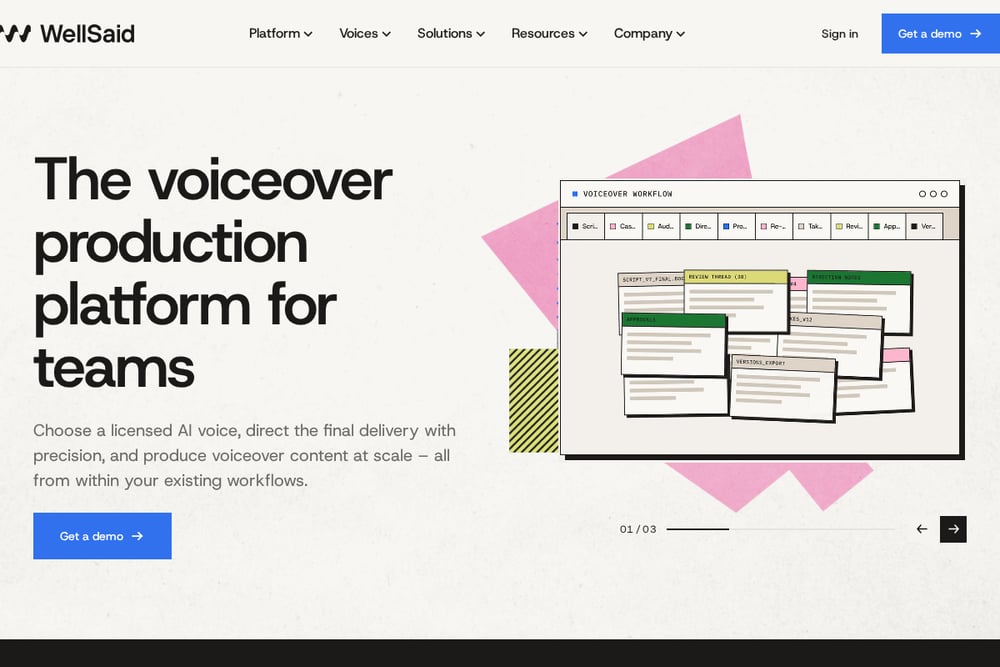 A screenshot of the WellSaid website.
WellSaid is a voiceover production platform built around licensed AI voices created from recordings of real voice actors. It offers tools for directing pacing, emphasis, and pronunciation line by line, and it keeps versions and approvals together for teams. Audio is generated at 48kHz, a standard for film, video, and broadcast. The platform supports many languages and accents, making it suitable for corporate training, marketing, and localization projects.
#4 Speechify
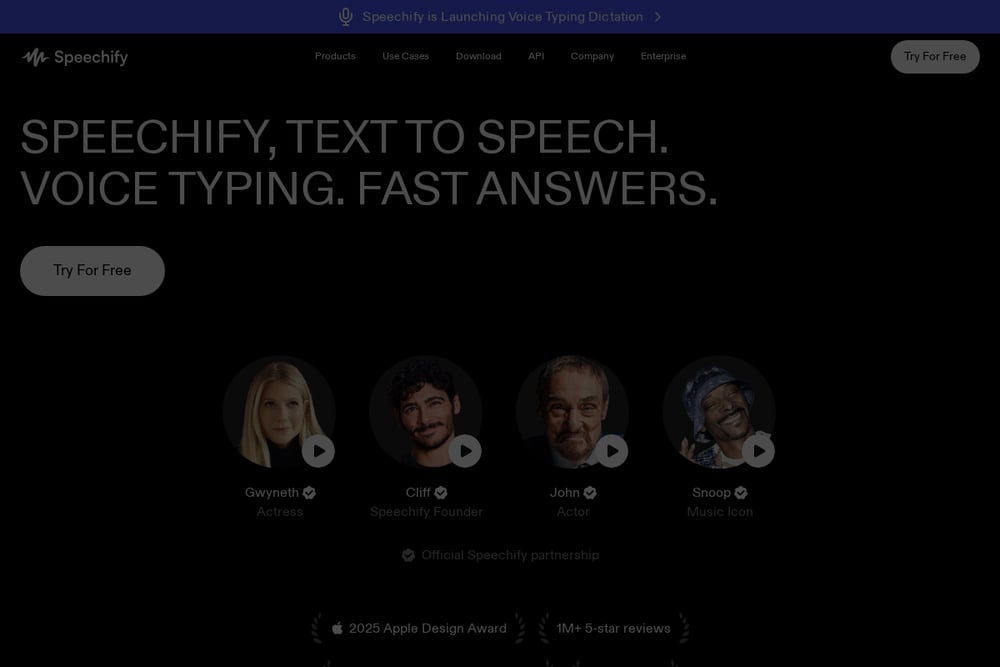 A screenshot of the Speechify website.
Speechify is a voice AI platform with text-to-speech, voice typing, and podcast creation tools across web, mobile, and desktop apps. It offers an AI voice generator and voice over features, and its apps can read documents aloud, summarize content, and create podcasts from text. For video creators, Speechify can be useful for turning scripts or documents into narration or for generating voiceover quickly. The platform also includes a Chrome extension and integrations with common tools.
#5 Resemble AI
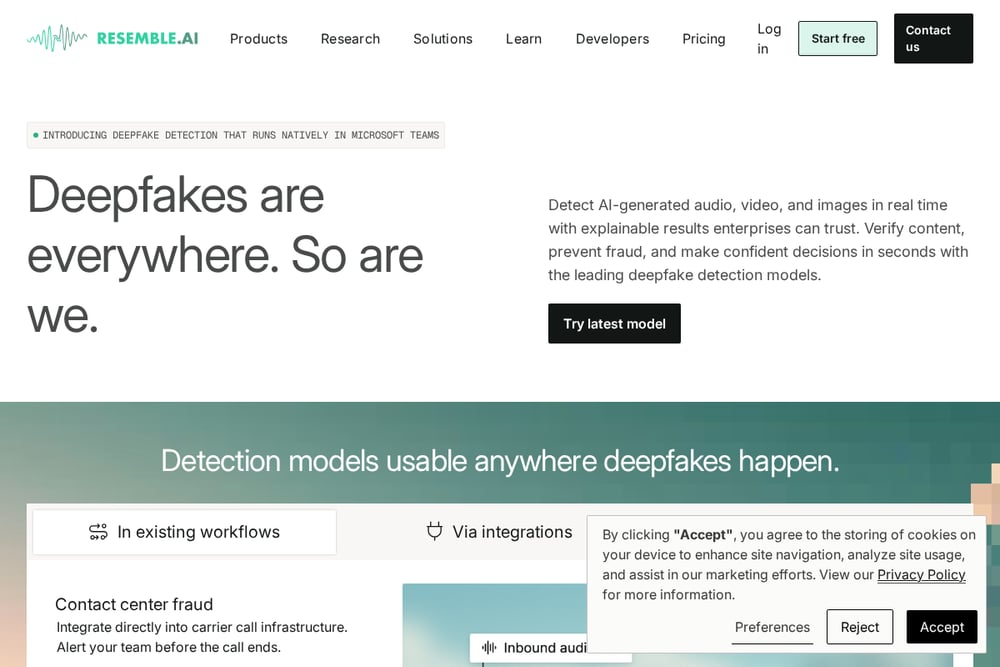 A screenshot of the Resemble AI website.
Resemble AI focuses on deepfake detection and voice identity, with products for detecting synthetic audio, video, and images. While its public homepage emphasizes detection and watermarking rather than voice generation, it offers APIs and identity tools that can be relevant for creators concerned with authenticity and provenance. The platform provides real-time detection and explainable results, and it supports watermarking for compliance. Video creators working with sensitive or branded content may find its verification tools useful alongside voice generation workflows.
Which One Should You Choose?
Start with the type of video you make. If you need expressive narration and an all-in-one editor, look at platforms that combine speech with music and video tools. If speed and dubbing are priorities, consider a studio built for quick voiceover production. For team workflows with licensed voices and precise direction, a platform focused on professional voiceover production may fit. If you work across many devices and want voice generation integrated into your daily apps, a multi-platform tool could be convenient. And if authenticity and detection matter for your content, a platform with deepfake detection and watermarking is worth reviewing. Always check the current pricing and features on each company's site, since offerings change.
Final Thoughts
Each of these platforms approaches AI voice from a different angle, and none is universally better than the others. The right choice depends on your production workflow, the level of control you need, and whether you require extras like dubbing, team approvals, or detection tools. Use the quoted facts above as a starting point, then test the platforms with your own scripts to see which one fits your video projects.
Know a company that belongs on this list? Email us at editorial@peekwire.com.