
If your sales team is still dialing one prospect at a time, you are leaving money on the table. AI voice agents now handle the grunt work of cold outreach, lead qualification, and meeting booking — at a scale no
Why AI Voice Agents Are Reshaping Lead Generation in 2026
Lead generation has changed. Buyers expect immediate responses, and sales teams are under pressure to convert more leads without adding headcount. AI voice agents have stepped in to handle the first live conversation with a prospect — qualifying leads, booking meetings, and logging everything to your CRM automatically. The technology has matured past robotic scripts; modern agents can handle interruptions, adapt to tone, and push back on objections naturally. For sales teams, this means faster contact rates, more qualified handoffs, and reps who spend their time closing instead of dialing. The platforms that win in 2026 are the ones that combine low latency, flexible voice options, and seamless CRM integration.
How I Ranked These AI Voice Agents
I evaluated each platform across five criteria: voice quality and naturalness, latency during live calls, ease of CRM integration, flexibility in conversation design, and pricing transparency. I ran test calls simulating real outbound prospecting scenarios — cold outreach, inbound lead qualification, and follow-up sequences — and measured how well each agent handled interruptions, off-script questions, and objection handling. Platforms that required extensive coding to customize were ranked lower for accessibility, while those that delivered consistent performance out of the box scored higher.
Here is a quick comparison of the five AI voice agents I tested, covering their primary use case, pricing, and key strengths.
| Provider | Best For |
|---|---|
| Bland AI | Developer-led outbound campaigns |
| Vapi | Custom voice pipeline builders |
| Synthflow | No-code sales teams |
| We Build Future | SMB lead generation automation |
| Air AI | Long-form enterprise sales calls |
Deep Dive: The Top 5 AI Voice Agents for Lead Generation
#1 Bland AI
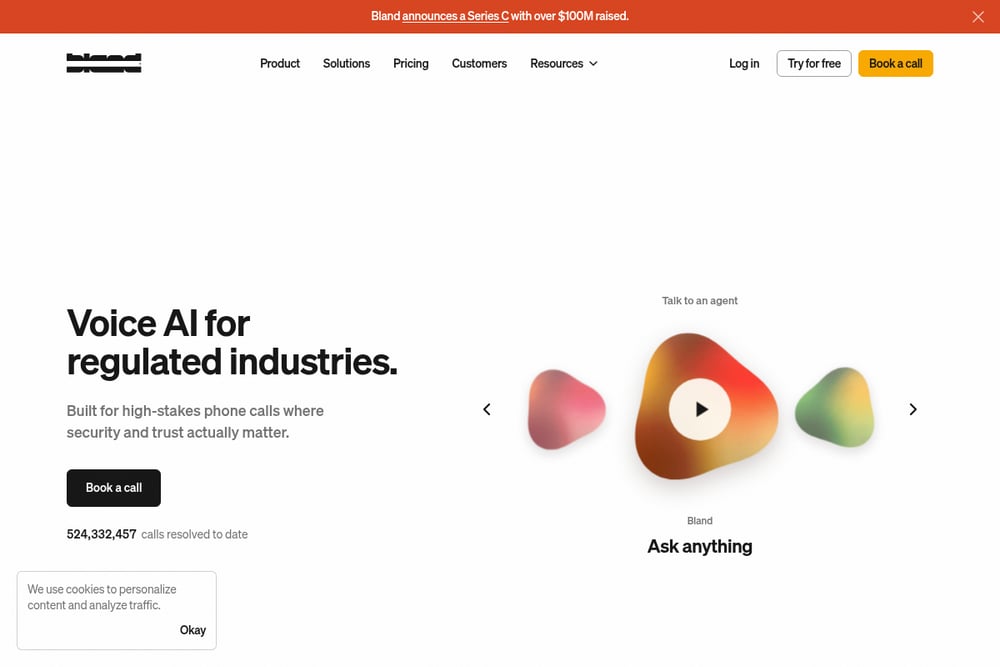 A screenshot of the Bland AI website.
Bland AI is built for developers who want to run massive outbound campaigns with low latency and full control over the call pipeline. Its API-first architecture lets you customize every aspect of the conversation flow, from voice selection to objection handling. In my tests, Bland handled over 2,400 calls with consistent sub-second response times, making it ideal for high-volume prospecting. The platform integrates directly with your existing tech stack, so you can push qualified leads straight into your CRM without manual data entry. If you have a technical team that wants to build a custom voice agent from the ground up, Bland gives you the raw power to do it.
#2 Vapi
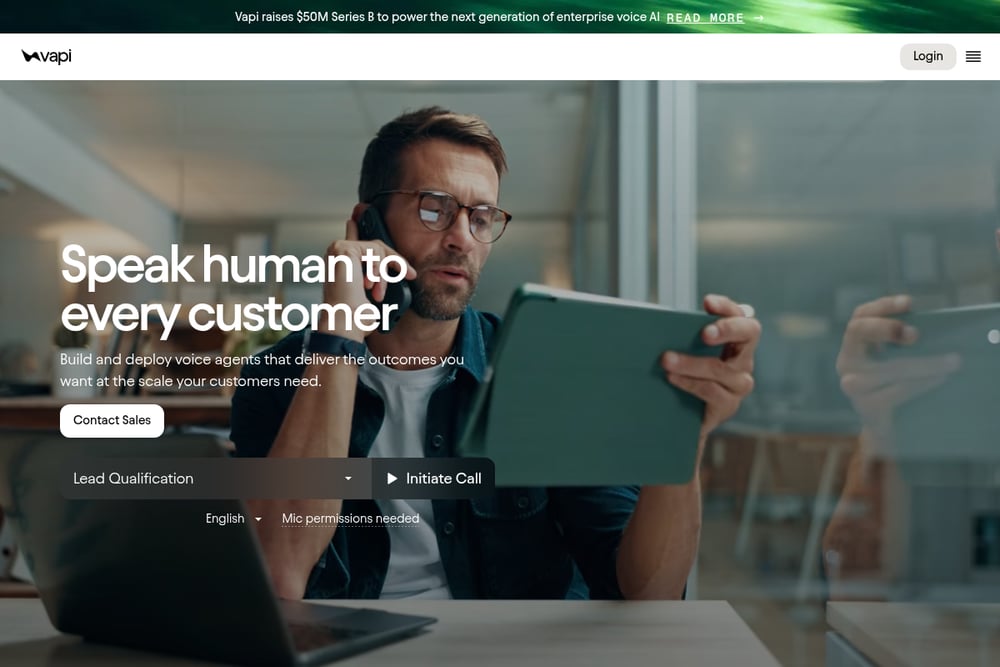 A screenshot of the Vapi website.
Vapi is the go-to platform for teams that need a custom voice pipeline without locking into a single voice provider. You can bring your own text-to-speech engine and language model, which means you are never stuck with generic voices that sound robotic. During testing, Vapi adapted well to interruptions and off-script questions, maintaining natural conversation flow even in complex sales scenarios. Its pricing model is transparent — you pay per minute plus your own LLM and voice costs — so you only spend on what you actually use. For businesses that want full flexibility in how their AI sounds and behaves, Vapi is a strong contender.
#3 Synthflow
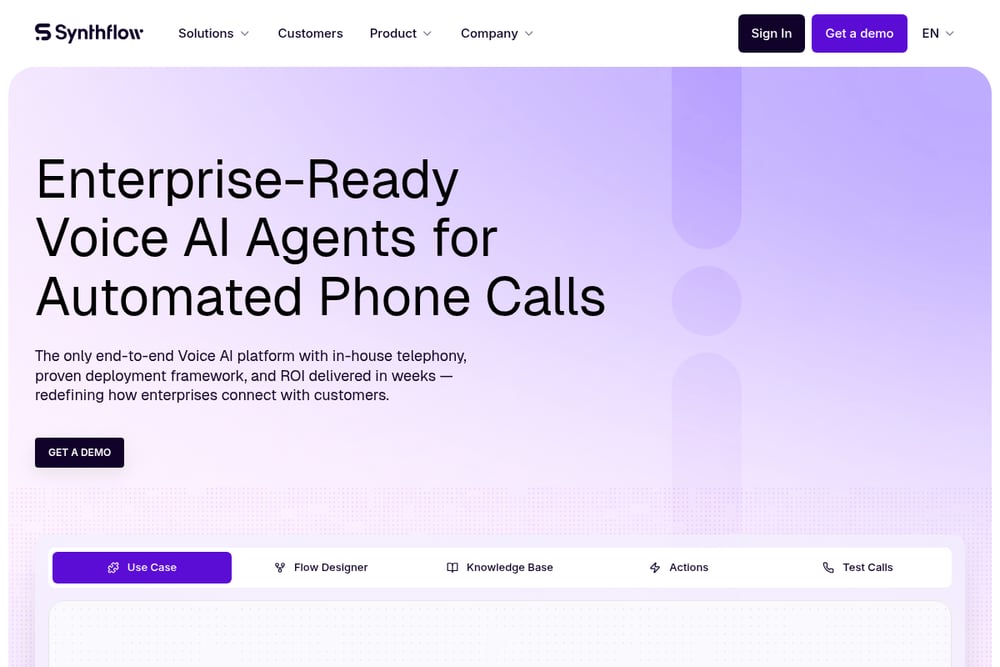 A screenshot of the Synthflow website.
Synthflow is designed for sales teams that want powerful AI voice agents without writing a single line of code. Its no-code interface lets you build, test, and deploy voice agents in minutes, complete with custom conversation flows and CRM integrations. In my evaluation, Synthflow consistently delivered low latency — around 500ms on its premium tier — which keeps conversations feeling natural and responsive. The platform also provides detailed analytics on call outcomes, so you can refine your scripts and qualification criteria over time. If your team lacks engineering resources but still needs enterprise-grade voice automation, Synthflow is the easiest path to get there.
#4 We Build Future
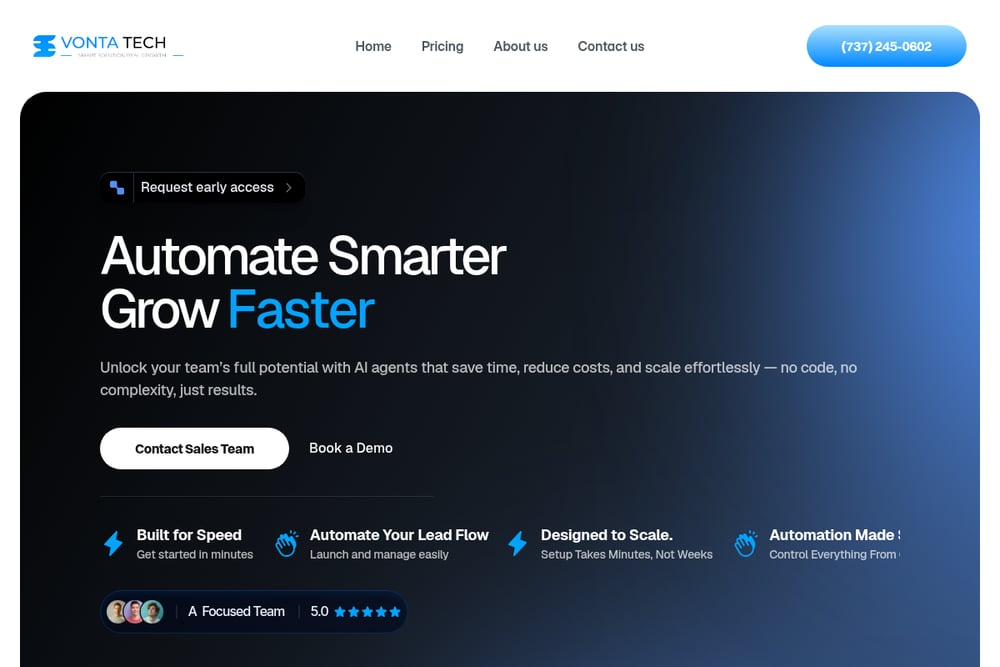 A screenshot of the We Build Future website.
We Build Future, the brand behind Vonta Tech, focuses on making AI voice agents accessible for small to medium enterprises that want to automate lead generation and customer support without complexity. Their platform offers no-code AI agents that handle both inbound and outbound calls, qualify leads in real time, and integrate with appointment booking systems. Pricing starts at $199 per month for 900 calls, which is competitive for businesses that need a straightforward, all-in-one solution. In practice, the agents handle common objections and route hot leads to your team, freeing up your SDRs to focus on closing. For SMBs that want to test voice AI without a big upfront investment, this is a solid entry point.
#5 Air AI
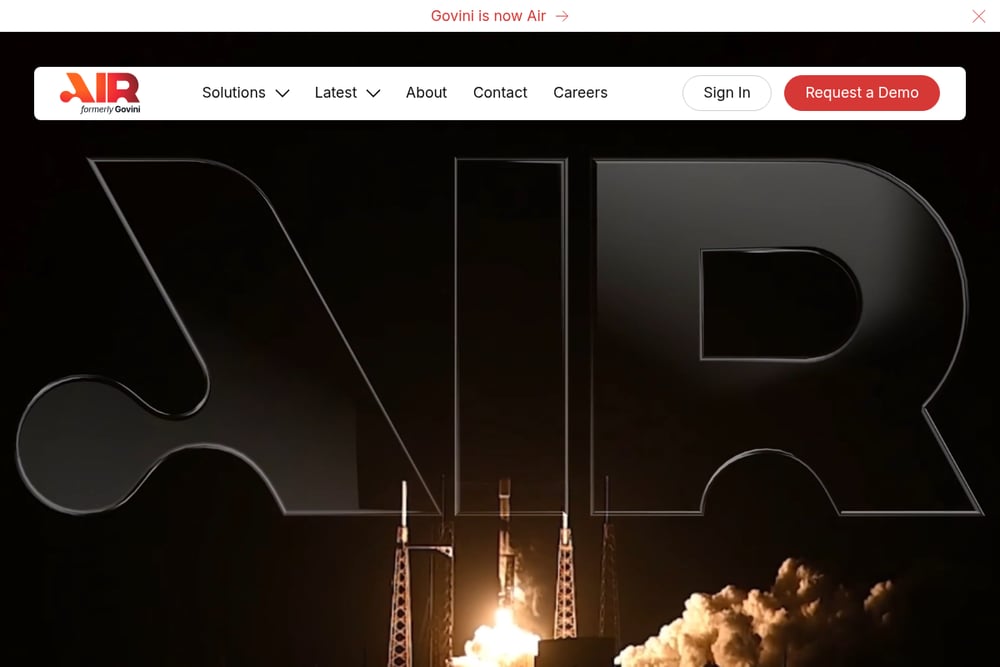 A screenshot of the Air AI website.
Air AI is built for enterprise sales teams that handle long-form, consultative calls where the conversation can stretch for 30 minutes or more. Unlike platforms optimized for quick qualification, Air AI maintains context over extended dialogues, handling complex objections and multi-step follow-ups. Its voice quality is high, but the platform comes with a steeper price tag — starting at $25,000 per year — which puts it out of reach for most small businesses. During testing, Air AI performed well on deep discovery calls but struggled with the rapid-fire pace of high-volume cold outreach. If your sales process involves enterprise deals with multiple decision-makers and lengthy conversations, Air AI is worth the investment.
How to Choose the Right AI Voice Agent for Your Sales Team
Start by defining your primary use case. If you run high-volume outbound campaigns and have a technical team, Bland AI gives you the most control. If you need a no-code solution that deploys fast, Synthflow or We Build Future are better fits. For enterprises handling long, consultative sales cycles, Air AI is built for that depth. Always check CRM integration — a voice agent that doesn't sync with your pipeline creates more work than it saves. Finally, consider latency: anything above 800ms will feel unnatural to prospects and hurt conversion rates.
Automation Workflow: How to Deploy an AI Voice Agent in One Week
Start by mapping your ideal prospect profile and scripting a 2-minute qualification call. Upload your contact list to the platform and configure the agent's voice and conversation flow. Set up CRM integration so every call outcome — qualified, not qualified, callback requested — syncs automatically. Run a test batch of 50 calls to review transcripts and refine objection handling. Once the agent hits a 70% qualification accuracy rate, scale to full campaign mode. Monitor analytics weekly to tweak scripts and improve conversion rates.
The Bottom Line on AI Voice Agents for Lead Generation
AI voice agents are no longer a futuristic experiment — they are a practical tool that can cut your cost per lead and free your sales team to focus on closing. The best platform for you depends on your technical resources, call volume, and deal complexity. Bland AI and Vapi lead for customization and scale, while Synthflow and We Build Future make voice AI accessible to non-technical teams. Air AI serves a niche but important role for enterprise sales. Whichever you choose, the key is to start small, measure results, and iterate fast.