
From automated diagnostics to smart training tools, these five platforms are reshaping how eye care professionals work. Here's a look at what each one brings to the table.
The AI Shift in Vision Care
The vision care industry is undergoing a major transformation as artificial intelligence moves from research labs into everyday clinical practice. AI is now being used to detect diseases earlier, automate routine tasks, and even guide personalized therapy. For professionals, this means faster, more accurate decisions and the ability to serve more patients without sacrificing quality. But with so many options emerging, it can be tough to know which platform actually fits your workflow. That's where this roundup comes in.
How We Evaluated These Platforms
We looked at each platform across four key factors: the scope of services offered, how clearly pricing and features are presented, how well the platform fits into a US-based practice, and the level of innovation in its AI approach. For service scope, we considered whether the platform addresses diagnostics, training, or practice management. Pricing clarity was assessed by how upfront each site is about costs. Local fit looked at US regulatory approvals and integration with existing systems. Finally, we evaluated how each platform uses AI to solve real clinical problems.
Here's a quick snapshot of the five platforms and what they're best for.
| Provider | Best For |
|---|---|
| Eyenuk | Autonomous diabetic retinopathy screening |
| Home - Business Center | AI-guided vision training and therapy |
| Micromed | Portable AI-powered visual field testing |
| MaximEyes | AI-powered practice management and EHR |
| LandingAI | AI-driven quality control for medical device manufacturing |
A Closer Look at Each Platform
#1 Eyenuk
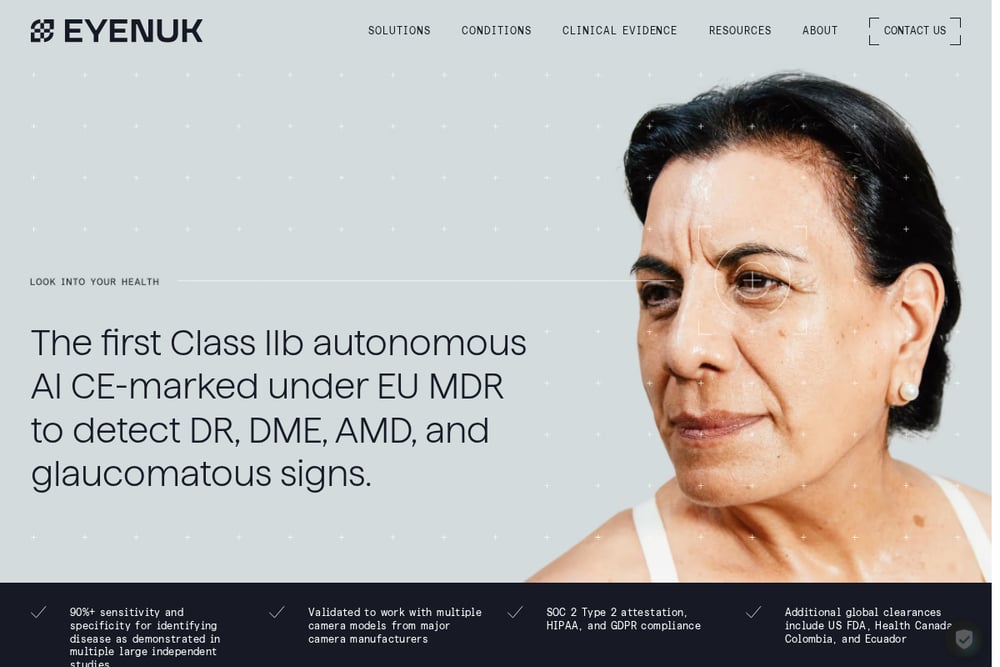 A screenshot of the Eyenuk website.
Eyenuk is a pioneer in autonomous AI screening for diabetic retinopathy, with the first FDA 510(k)-cleared system for detecting vision-threatening disease. Its EyeArt technology delivers results in seconds without needing a specialist on site, making it ideal for primary care and endocrinology settings. The platform boasts high sensitivity and specificity, backed by clinical evidence and compliance with HIPAA and GDPR. If you're looking to catch diabetic retinopathy early and reduce manual screening burden, Eyenuk is a strong contender. Its focus on a single, high-impact condition makes it a specialized but powerful tool. For more details, check out their clinical evidence page.
#2 Home - Business Center
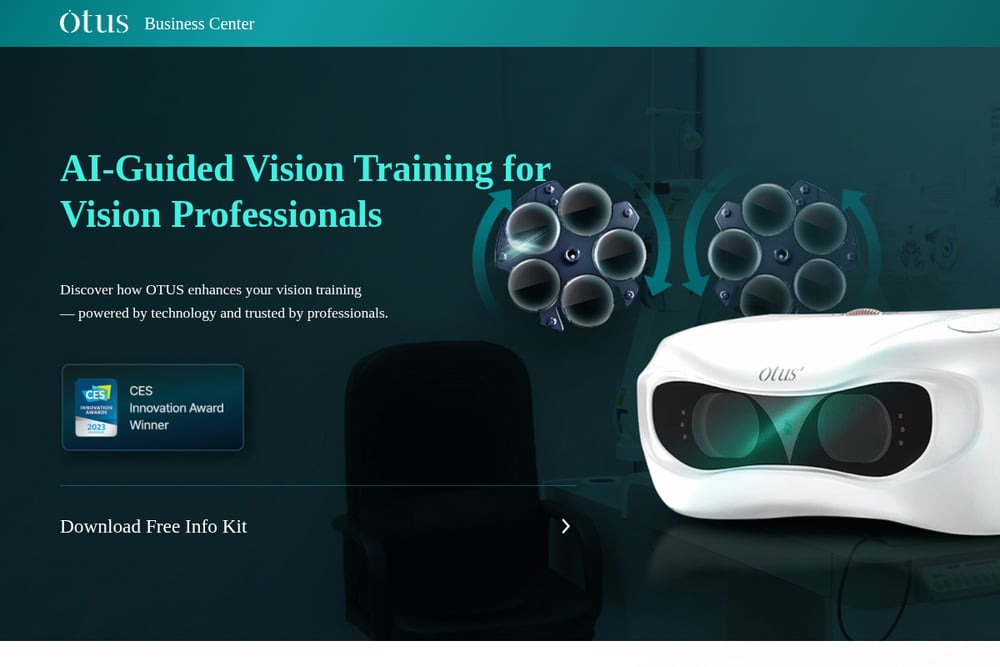 A screenshot of the Home - Business Center website.
OTUS, featured on Home - Business Center, brings AI-guided vision training to therapy centers and optical clinics. Unlike diagnostic tools, OTUS focuses on treatment, offering personalized eye exercises powered by AI and sensor technology. It automates lens transitions and records data automatically, ensuring consistent training sessions that don't depend on the therapist's skill level. The platform also includes game-based exercises to keep patients engaged, which is a big plus for compliance. With over 25,000 users worldwide, OTUS has real-world traction. If you're looking to modernize your vision therapy offerings, this is worth a look.
#3 Micromed
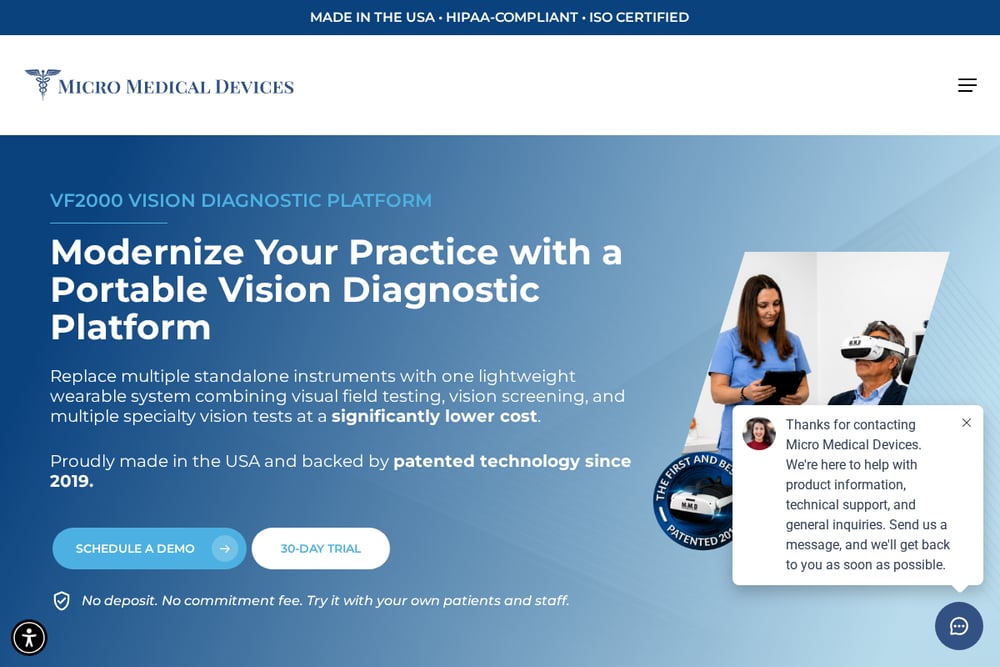 A screenshot of the Micromed website.
Micromed is a US-based manufacturer of diagnostic devices, including the VF2000 virtual perimetry system that integrates AI-powered analytics. Their platform focuses on functional vision testing, making it easier to detect glaucoma and other conditions in a portable format. The VF2000 is designed to be used in more settings than traditional perimeters, which is a plus for practices that need flexibility. Micromed emphasizes HIPAA compliance and ISO certification, giving you confidence in data security. Their approach is more hardware-centric, but the AI integration is a clear step forward. For a deep dive into AI in ophthalmology, check out their blog post on the topic.
#4 MaximEyes
 A screenshot of the MaximEyes website.
MaximEyes is an all-in-one EHR and practice management solution designed specifically for eye care. Their AI-powered suite, MaximEyesAI, reduces administrative work and boosts efficiency across scheduling, billing, and patient engagement. While not a diagnostic or training tool, MaximEyes helps you run your practice more smoothly, freeing up time for patient care. The platform is built for solo providers, multi-location practices, and corporate networks, so it scales with your needs. If you're looking to streamline operations and reduce errors, this is a solid choice. Their website offers a clear breakdown of features for each practice type.
#5 LandingAI
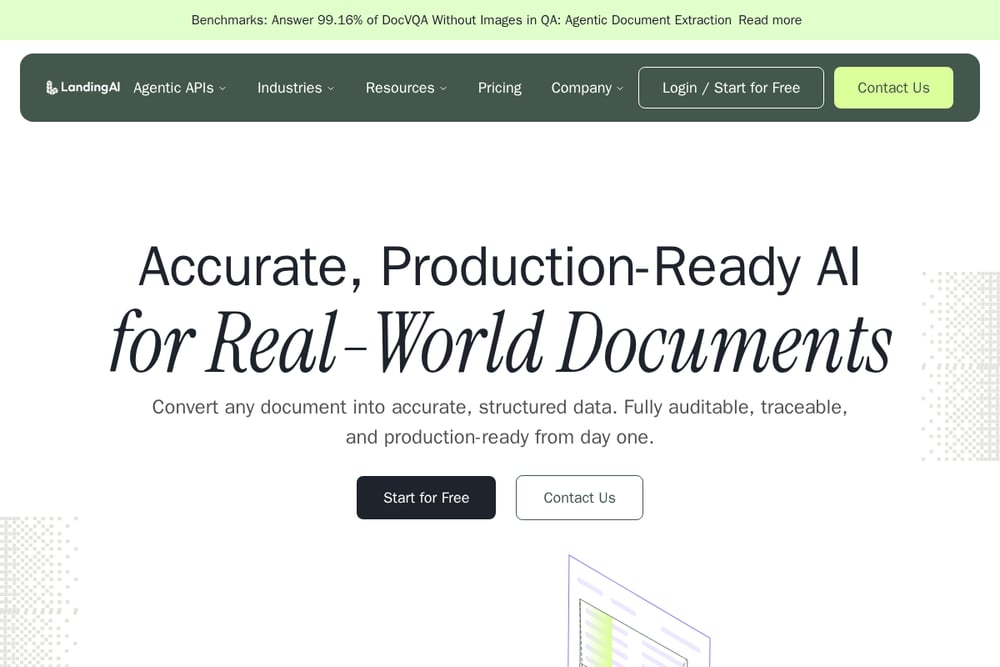 A screenshot of the LandingAI website.
LandingAI provides computer vision solutions for medical device manufacturing, focusing on quality control and inspection. Their platform, LandingLens, uses deep learning to automate the inspection of nano-scale components, seals, and PCBs in medical devices. This is more of a B2B tool for manufacturers rather than a clinical platform, but it's essential for ensuring the safety and compliance of vision care devices. If you're involved in producing ophthalmic equipment, LandingAI can help you maintain high standards. Their approach is about precision and consistency, which is critical in this industry. For more on their medical device applications, visit their industries page.
How to Choose the Right Platform
Start by identifying your biggest pain point. If you're a clinician who wants to catch diseases earlier, look at diagnostic AI like Eyenuk. If you're running a vision therapy center, OTUS might be the better fit. For practices that need to improve efficiency, MaximEyes offers a comprehensive EHR solution. And if you're on the manufacturing side, LandingAI is your go-to. Consider your budget, the size of your practice, and how much training your team will need. Also, think about integration with your existing systems—some platforms are standalone, while others need to work alongside your current EHR. Finally, check for US-specific compliance and support, as that can make or break your experience.
Automating Your Vision Care Workflow
Imagine a day where your diagnostic screenings run automatically, your therapy sessions are guided by AI, and your administrative tasks are handled in the background. With Eyenuk, you can screen patients for diabetic retinopathy without needing a specialist on site, freeing up your staff. OTUS automates lens transitions and data tracking during vision training, so you can focus on patient interaction. MaximEyes automates scheduling, billing, and reminders, reducing no-shows and paperwork. Even in manufacturing, LandingAI automates inspection, ensuring quality without manual oversight. The key is to pick one area to automate first, then expand as you see results.
The Future Is AI-Assisted
The vision care landscape is changing fast, and these five platforms represent the cutting edge of what's possible. Whether you're diagnosing, treating, or managing a practice, there's an AI tool that can help you do it better. The trick is to choose the one that aligns with your specific goals and workflow. Don't be afraid to start small—implement one solution, measure the impact, and then scale up. The future of eye care is here, and it's powered by AI.