
If you're serious about creating video content, the tools you choose can make or break your workflow. Here are five AI video generators that are shaping the future of production.
The AI Video Landscape in 2026
The AI video generation space has exploded in the past year, moving from simple text-to-clip experiments to full production-grade tools. Today's platforms offer native 4K output, synchronized audio, and even AI director modes that handle camera angles and shot transitions. For creators, this means you can produce broadcast-quality content in minutes, not days. But with so many options, it's crucial to understand what each tool brings to the table. Whether you're a solo YouTuber or a full production studio, the right AI video generator can transform your workflow.
How We Evaluated These Tools
We looked at each platform's core capabilities, focusing on video quality, audio integration, ease of use, and the range of features offered. We also considered how well each tool fits different types of creators, from beginners to professionals. For Kling 3.0 AI, we were impressed by its native 4K output and integrated audio, which sets a new standard for quality. Kling AI stood out for its character consistency and lip-sync capabilities, making it a favorite for narrative work. Runway impressed us with its editing suite, which goes beyond generation to offer precise control over footage. Higgsfield caught our attention with its multi-model approach, giving you access to top models like Veo and Sora in one workspace. Neural4D appealed to us with its focus on cinematic motion and physics-based simulation, ideal for film previsualization.
Here's a quick look at the five tools we're diving into, each with its own strengths and ideal use cases.
| Provider | Best For |
|---|---|
| Kling AI | Character consistency and narrative video |
| Kling 3.0 AI - Next-Gen AI Video Generator | All-in-one 4K video with audio and AI direction |
| Runway | Editing and refining AI-generated video |
| Higgsfield | Access to multiple top AI models in one place |
| Neural4D | Film previsualization and production-grade motion |
The Deep Dive: Five AI Video Generators Compared
#1 Kling AI
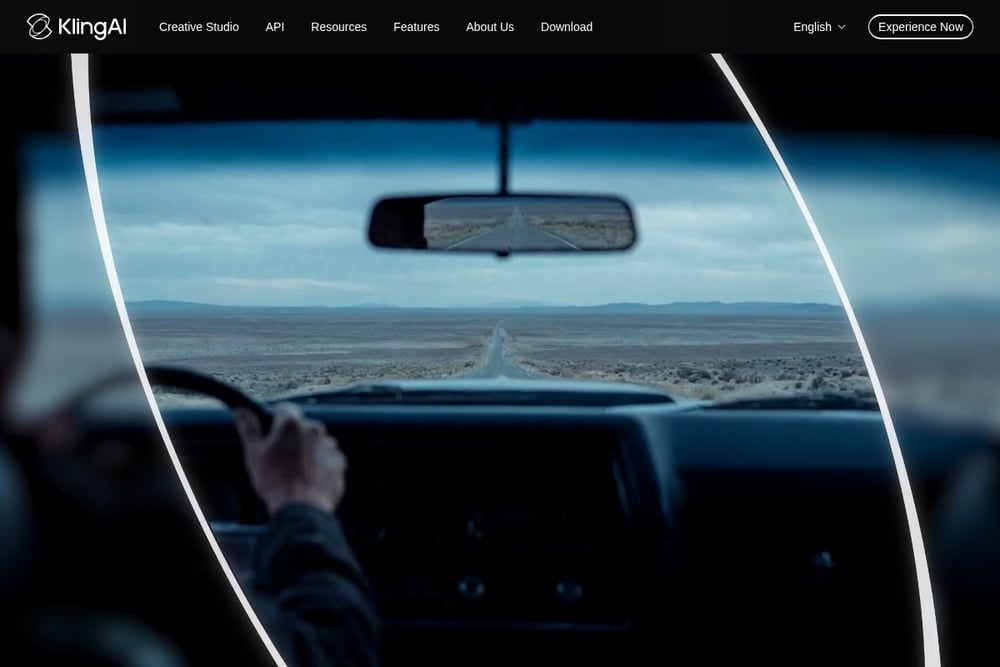 A screenshot of the Kling AI website.
Kling AI is the original powerhouse behind the Kling video model, offering native 4K generation with flawless character consistency. You can upload a single photo or a short video to lock a character's appearance, eliminating the 'AI morphing' effect that plagues other tools. It also includes native audio and lip-sync, so your videos speak with perfectly matched voices. The platform is designed for both text-to-video and image-to-video workflows, making it versatile for any project. If you need reliable, high-quality output with a focus on character-driven stories, Kling AI is a solid choice. Check out their AI video generator page for more details.
#2 Kling 3.0 AI - Next-Gen AI Video Generator
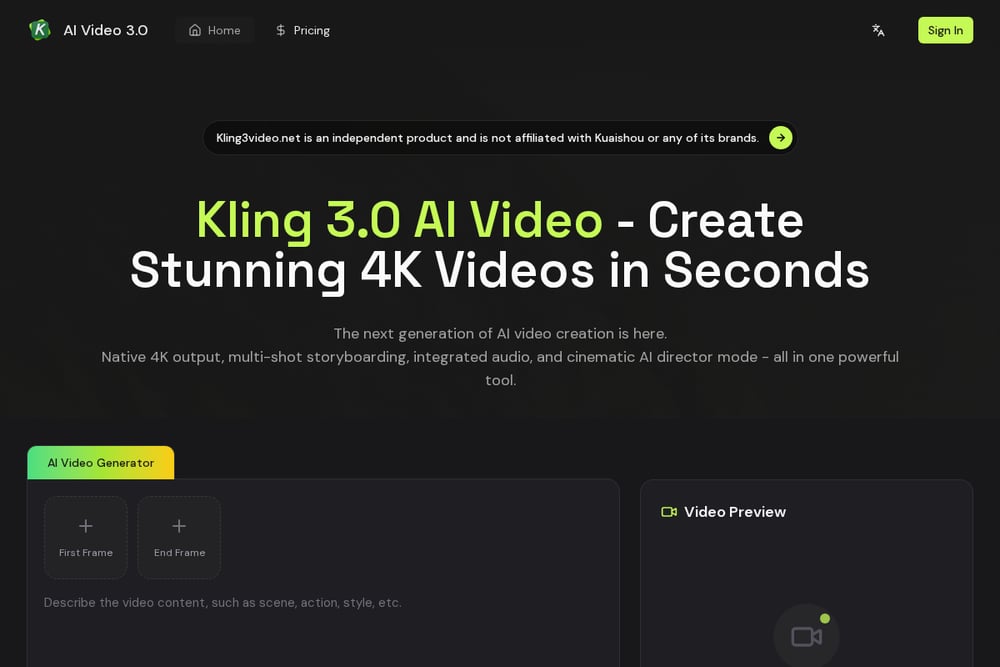 A screenshot of the Kling 3.0 AI - Next-Gen AI Video Generator website.
Kling 3.0 AI takes the next step in AI video creation, offering native 4K output without upscaling, which is perfect for professional broadcast and commercial work. It also generates 15-second extended clips in a single pass, so you can tell fuller stories without stitching together multiple short segments. The integrated audio is a game-changer—character voices, ambient sounds, and music are all part of the creation process from the start. Its AI Director Mode automatically handles camera angles, shot transitions, and scene composition, giving you cinematic results without film school training. For creators who want a complete, all-in-one tool that produces stunning visuals and sound, this is a top contender. You can try it free at kling3video.net.
#3 Runway
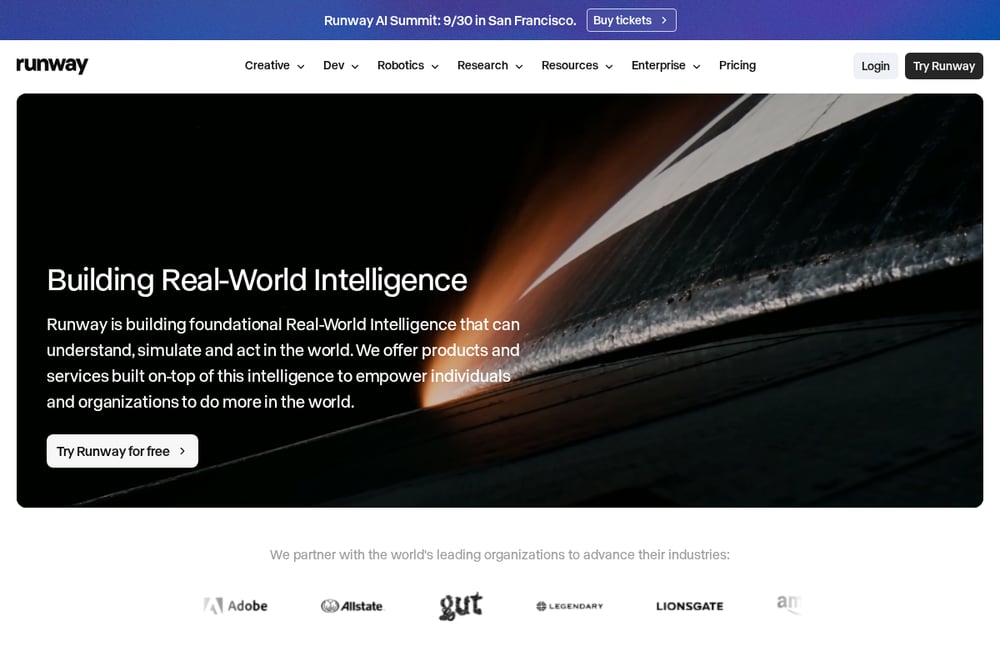 A screenshot of the Runway website.
Runway is more than just a video generator—it's a full creative suite that lets you generate, edit, and refine video with precision. You can start from a prompt, image, or existing clip, and then use tools like object removal, backdrop swap, and relighting to tweak every detail. This makes it ideal for post-production work where you need to make precise changes to real footage. Runway's models, like Aleph 2.0, are designed for flexibility, allowing you to extend, upscale, and export your final video in the resolution you need. If you're looking for a tool that handles both generation and editing seamlessly, Runway is a strong option. Explore their AI video generator to see what's possible.
#4 Higgsfield
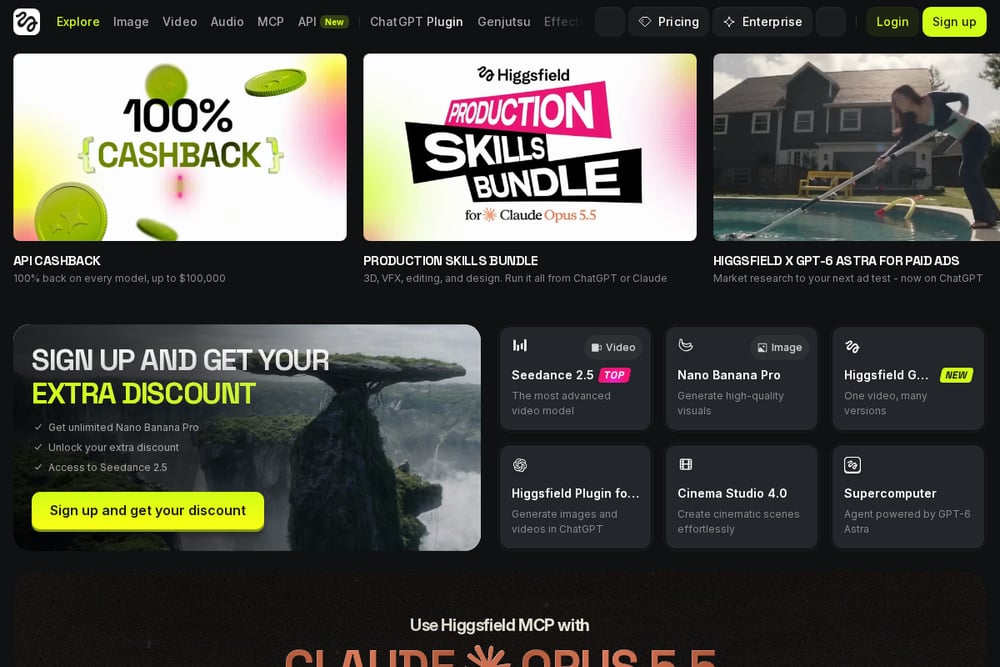 A screenshot of the Higgsfield website.
Higgsfield is a multi-model AI video generator that gives you access to top-tier models like Veo, Sora, Kling, and Seedance all in one workspace. This means you can pick the best model for your specific project without switching platforms. It offers advanced controls like first and last image reference for seamless consistency, and motion control to dictate the exact pace and gesture of your generation. You can also edit any existing video, changing styles or swapping objects without reshooting. For creators who want total control and access to the latest models, Higgsfield is a powerful ally. Check out their AI video generator for more.
#5 Neural4D
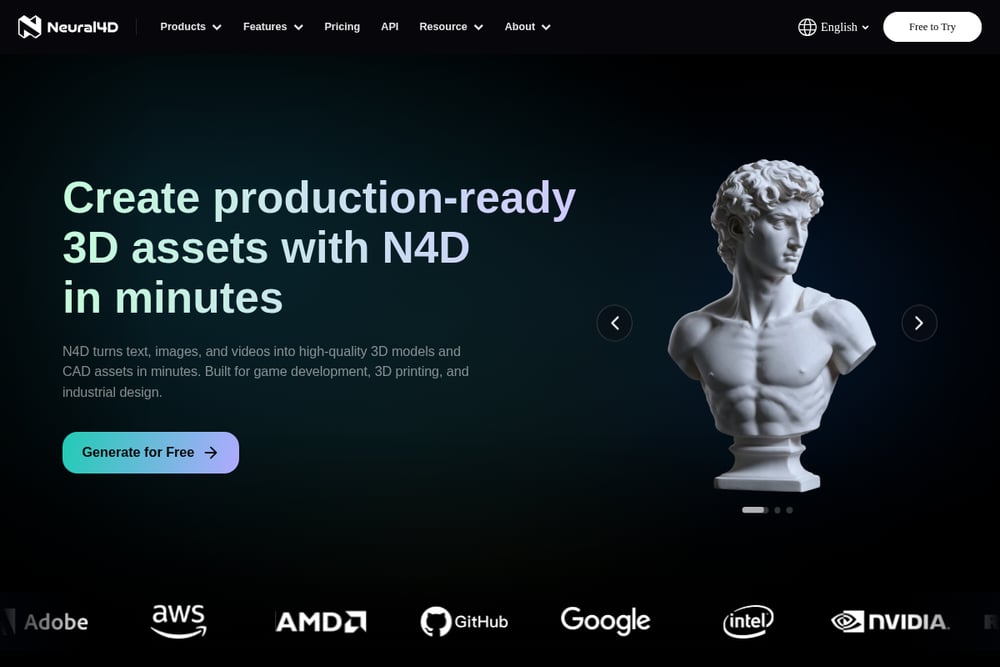 A screenshot of the Neural4D website.
Neural4D is engineered for professional film and creative pipelines, offering high-fidelity cinematic motion with four AI video engines. You can choose from Veo 3.1 for realism, Seedance 2.0 for stable complex motion, or other models for speed and efficiency. It supports output up to 4K and includes native audio, so you can generate clips with synchronized sound in the same pass. The platform is particularly strong for film previsualization and CGI blocking, making it a favorite among studios. If you need production-ready assets with precise temporal coherence, Neural4D delivers. Visit their AI video generator page to learn more.
How to Choose the Right AI Video Generator
Start by thinking about your end goal. If you need broadcast-quality 4K with audio built-in, Kling 3.0 AI is a great fit. If character consistency is your priority, Kling AI's reference locking is unmatched. For editing and post-production, Runway's suite of tools gives you the most control. If you want to experiment with multiple models, Higgsfield's all-in-one approach is convenient. And for film-level previsualization, Neural4D's physics-based simulation is hard to beat. Consider your budget, technical comfort, and the type of content you create most often. Try free trials where available to see which workflow feels most natural to you.
Automating Your Video Workflow
With these tools, you can automate much of your video production. Start by using a tool like Kling 3.0 AI to generate a full video with audio from a simple text prompt. Then, use Runway to refine the footage, adjusting lighting or removing unwanted objects. For batch projects, Higgsfield's multi-model access lets you switch between engines without manual setup. Neural4D can handle complex scenes with physics-based motion, reducing the need for manual animation. By integrating these tools into your pipeline, you can produce high-quality videos at scale, freeing up time for creative strategy.
The Bottom Line
The AI video generation market is crowded, but these five tools stand out for their unique strengths. Kling 3.0 AI offers the most complete package with native 4K and audio, making it a top choice for creators who want everything in one place. Kling AI remains a reliable workhorse for character-driven content. Runway excels in post-production flexibility. Higgsfield provides unmatched model variety, and Neural4D is the go-to for cinematic precision. Whichever you choose, you're stepping into a new era of video creation where the only limit is your imagination.