
Your customers don't need another FAQ bot. They need the work done. These five AI support agents are changing how ecommerce brands handle order changes, returns, and escalations.
The Shift from Answers to Actions
The customer support landscape is moving fast. Generic chatbots that just spit out answers are losing ground. What you need now is an agent that can actually execute tasks—checking order status, processing returns, updating addresses, and handing off to a human with full context. According to Gartner, agentic AI will autonomously resolve 80% of common customer service issues by 2029. That's the direction the industry is heading. For ecommerce brands, this means less repetitive work for your team and faster resolutions for your customers. The tools below are leading that charge.
How We Evaluated These AI Support Agents
We looked at each platform on the same set of factors: service scope (can it just answer, or does it actually do the work?), ease of deployment (how fast can you go live?), integration with your existing stack (Shopify, Zendesk, Salesforce), and the quality of human handoff when the AI hits its limit. We also considered pricing transparency and how well each solution fits the specific needs of growing ecommerce brands. Each tool has its own strengths, and we've highlighted what stood out for each.
Here's a quick snapshot of the five AI support agents we're covering, so you can see at a glance what each one brings to the table.
| Provider | Best For |
|---|---|
| Salesforce Agentforce | Enterprise ecommerce teams already on Salesforce |
| AI Support Agent for Ecommerce Brands | Adelante CX | Ecommerce brands that want a managed, fast-deploy AI agent |
| Enjo AI | Teams that want to automate within their existing helpdesk |
| Zendesk AI Agents | Existing Zendesk users looking to add AI resolution |
| Creatio AI Agents | Businesses wanting no-code customization of AI agents |
The Five AI Support Agents in Detail
#1 Salesforce Agentforce
Salesforce Agentforce is a heavyweight in the AI support space, built directly into the Salesforce ecosystem. It lets you deploy AI agents that can handle customer inquiries across service, sales, and marketing, all while tapping into your existing CRM data. The platform is designed for enterprises that already live in Salesforce, so if you're a large operation, this is a natural fit. It's not the fastest to set up, but the depth of integration is unmatched. You can see how it works on the Salesforce website. For ecommerce brands already using Salesforce, this is a powerful option.
#2 AI Support Agent for Ecommerce Brands | Adelante CX
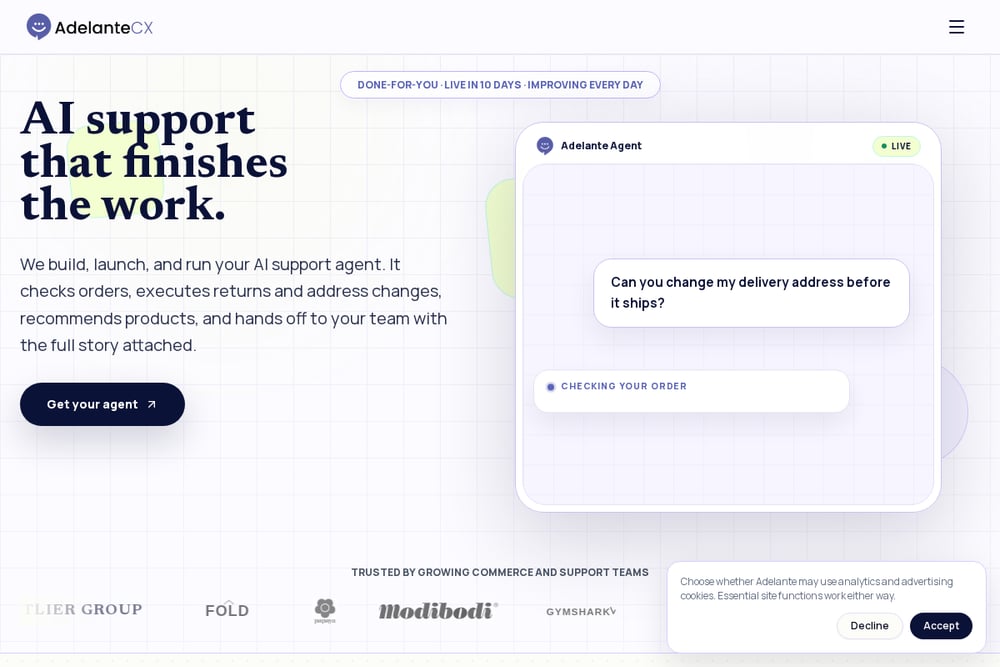 A screenshot of the Adelante CX website.
Adelante CX is the done-for-you option that actually finishes the work. They build, launch, and run your AI support agent, so you don't need a team of engineers to get started. The agent checks orders, executes returns and address changes, and recommends products—all autonomously. When it does need a human, it hands off with the full story attached, so your team doesn't have to start from scratch. They promise you're live in 10 days, and they're improving every day. Their customer stories show real results, like lifting Trustpilot ratings while resolving 80%+ of tickets with AI. If you want a managed solution that just works, this is it.
#3 Enjo AI
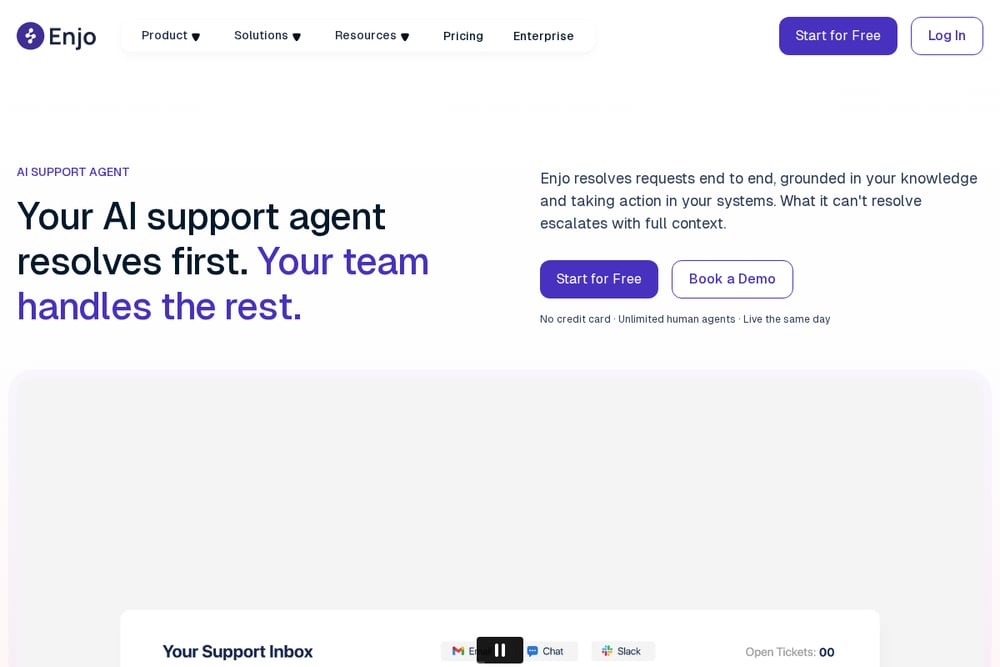 A screenshot of the Enjo AI website.
Enjo AI is all about autonomous resolution. It plugs into your existing support stack—Zendesk, Salesforce, Jira, and more—and resolves requests end to end, safely. The platform includes guardrails to enforce accuracy and policy, so you can trust it with sensitive customer data. It's a solid choice if you want to automate complex workflows without ripping out your current helpdesk. Enjo's focus on safety and governance makes it a good fit for brands that need to be careful with compliance. You can check out their guide on AI support agents to see how they think about automation.
#4 Zendesk AI Agents
 A screenshot of the Zendesk AI Agents website.
Zendesk AI Agents are part of the broader Zendesk Resolution Platform, which is already trusted by thousands of support teams. These agents can handle complex issues autonomously across all channels—chat, email, voice, and social. They're designed to continuously improve every solution, so the more you use them, the smarter they get. If you're already a Zendesk customer, adding their AI agents is a no-brainer because it integrates seamlessly with your existing workflows. The platform also includes quality assurance and workforce management tools, so you can monitor performance. For a reliable, well-known name in support, Zendesk is a safe bet.
#5 Creatio AI Agents
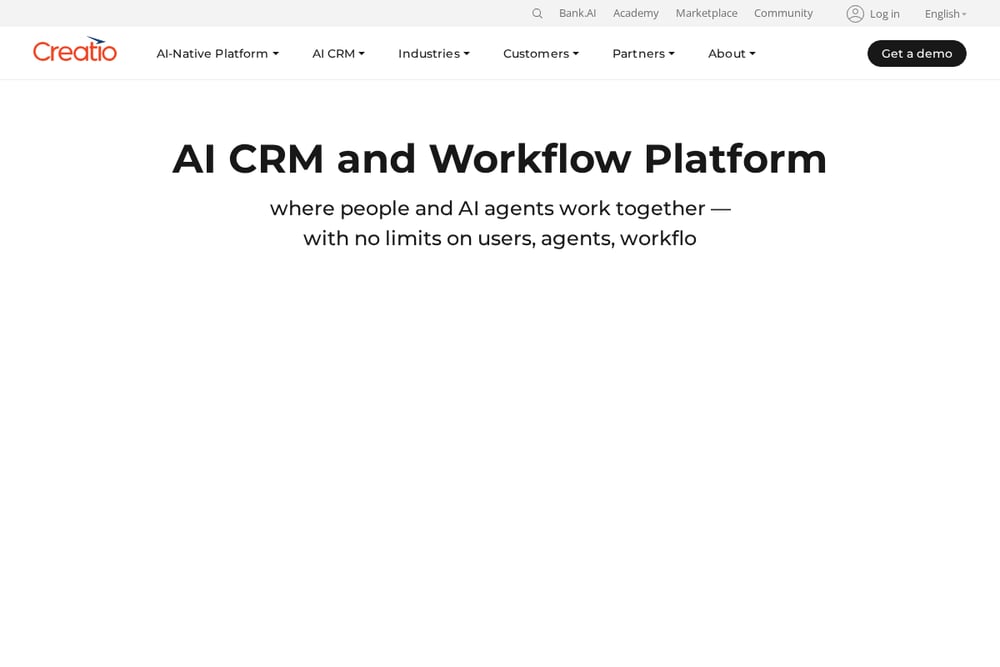 A screenshot of the Creatio AI Agents website.
Creatio takes a no-code approach to AI agents, letting you build and manage the entire agent lifecycle through their AI Studio. It's part of a broader AI-native CRM platform that covers sales, marketing, and service, so you can automate across the whole customer journey. The platform is designed for businesses that want to empower every employee to build their own agents, not just IT. It's a flexible option if you want to customize your automation without writing code. Creatio's strength is in its visual design tools and the ability to scale across departments. If you're looking for a platform that grows with you, this is worth a look.
How to Choose the Right AI Support Agent for Your Ecommerce Brand
Start by asking yourself: do you want a managed service or a DIY platform? If you don't have a dedicated AI team, a done-for-you solution like Adelante CX gets you live in days, not months. If you're already on Salesforce or Zendesk, sticking with their native agents might be easier. Think about the complexity of your support tickets—if you need to execute returns and address changes, make sure the agent can actually do that, not just answer questions. Also, consider your budget and how quickly you need to scale. Finally, look for a solution that offers a clear human handoff with context, so your team isn't left in the dark. The right choice depends on your team's size, tech stack, and growth plans.
Building an Automation Workflow That Works
Start by mapping out your most common ticket types—order status, returns, address changes, product questions. Then, pick an AI agent that can handle those specific actions. Set up clear escalation paths: when the AI can't resolve something, it should hand off to a human with the full conversation history. Monitor performance weekly, looking at resolution rates and customer satisfaction. Use the insights to tweak the agent's responses and workflows. Over time, you'll shift more tickets to full automation, freeing your team for complex issues. The goal is to make the AI better every day, just like Adelante promises.
The Bottom Line on AI Support Agents
The era of AI support agents that just chat is over. What you need now is an agent that finishes the work—checks the order, processes the return, updates the address, and hands off with context. Whether you go with a managed service like Adelante CX or build your own with Salesforce, Enjo, Zendesk, or Creatio, the key is to pick a solution that matches your team's capacity and your customers' needs. Start small, measure results, and scale what works. Your customers will notice the difference, and so will your bottom line.