
When your pager goes off at 3 a.m., you need answers fast. These five AI-powered SRE platforms are changing how engineering teams investigate incidents and cut downtime.
The AI SRE Landscape in 2026
The role of the Site Reliability Engineer has evolved dramatically. With the rise of AI agents, the manual grind of root cause analysis is being replaced by autonomous investigation. Teams are no longer just monitoring; they're delegating the detective work to AI that can sift through logs, metrics, and traces in minutes. The pressure to reduce MTTR is intense, and these tools are stepping in to handle the correlation that humans struggle with under stress. As you evaluate your options, you'll see a clear shift from reactive alerting to proactive, AI-driven incident prevention.
How We Evaluated These AI SRE Tools
We looked at each platform's ability to investigate across multiple data sources, the depth of its root cause analysis, and how well it integrates with your existing stack. We also considered the transparency of the investigation process—can you see the evidence behind each finding? Security and compliance features were another key factor, especially for teams in regulated industries. Finally, we weighed the ease of deployment and whether the tool can operate within your VPC or cloud environment.
Here's a quick snapshot of the five platforms we're diving into, so you can see how they stack up at a glance.
| Provider | Best For |
|---|---|
| Resolve.ai | Autonomous incident investigation and resolution |
| Sherlocks.ai - AI-Powered SRE Incident Management | Kubernetes-native teams wanting evidence-based RCA |
| Rootly | Teams wanting an all-in-one incident response platform |
| Mezmo | Teams needing open-source flexibility and self-hosting |
| NeuBird | Complex distributed systems needing rapid RCA |
The Deep Dive: Five AI SRE Platforms Compared
#1 Resolve.ai
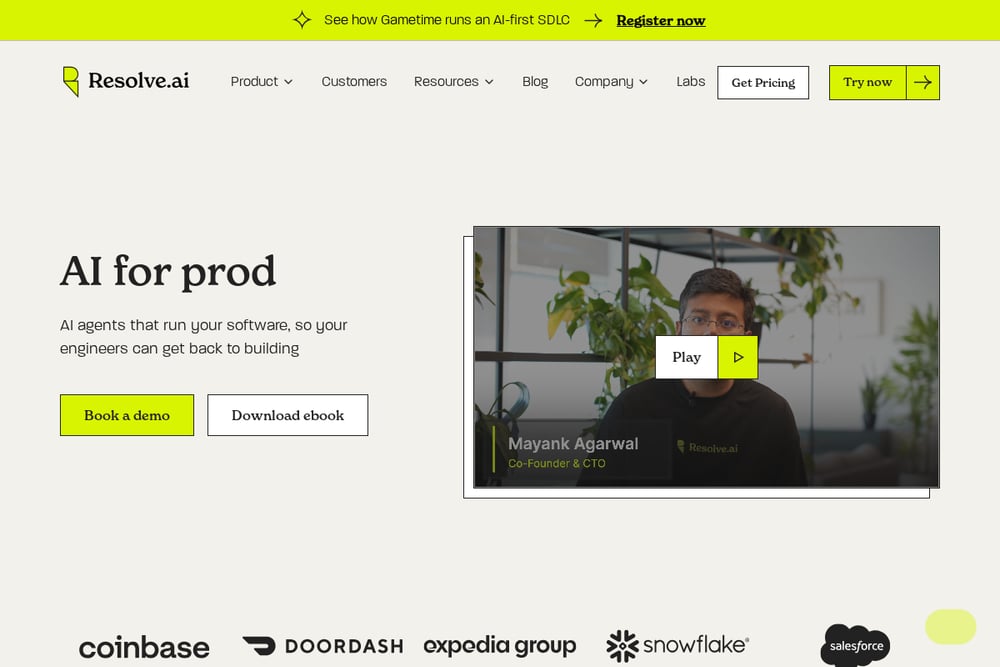 A screenshot of the Resolve.ai website.
Resolve.ai is an autonomous AI SRE that investigates production incidents and performs root cause analysis in minutes. It connects to your observability tools, cloud infrastructure, and communication platforms to triage every alert. The platform claims to reduce MTTR by up to 80%, and it operates without human intervention, making it a true first responder. If you're looking for a fully autonomous agent that can handle the entire incident lifecycle, this is a strong contender. Their glossary page provides a solid overview of what an AI SRE is and how it works.
#2 Sherlocks.ai - AI-Powered SRE Incident Management
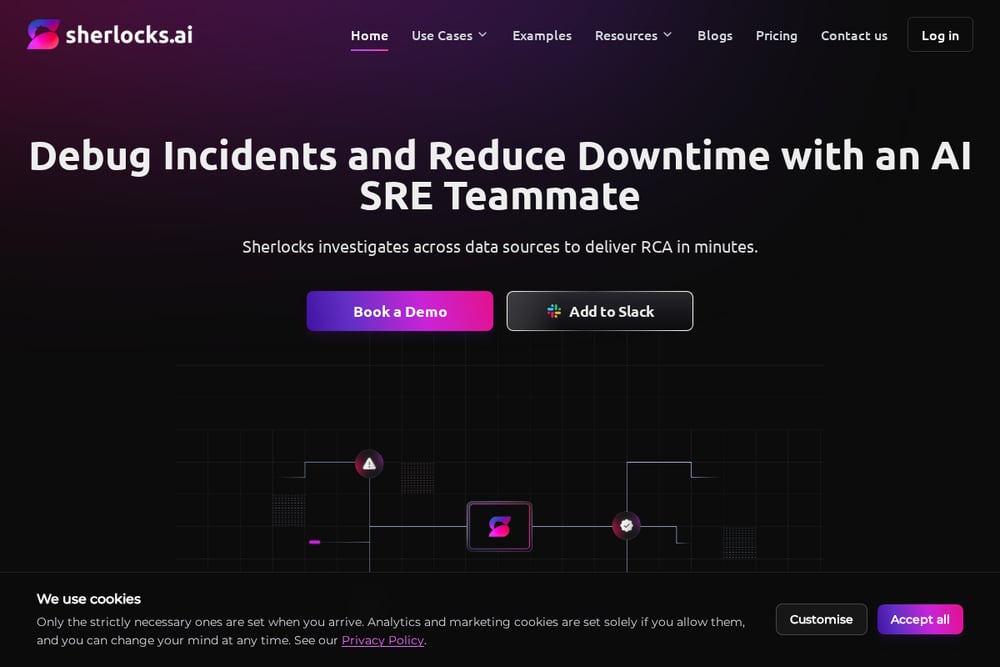 A screenshot of the Sherlocks.ai website.
Sherlocks.ai is an AI SRE teammate that investigates incidents across your data sources to deliver root cause analysis in minutes. It's designed to debug incidents 10x faster and prevent outages proactively, with a focus on Kubernetes environments. The platform shows real investigations, like an OOMKill incident where it traced the cause to an unbounded KYC query pulling 22 million rows. You can see the command output behind each finding, which builds trust in the AI's conclusions. It's SOC2 compliant and can run entirely inside your VPC, ensuring your data stays secure. If you want an AI that works alongside your team in Slack and provides evidence-backed answers, Sherlocks is worth a look.
#3 Rootly
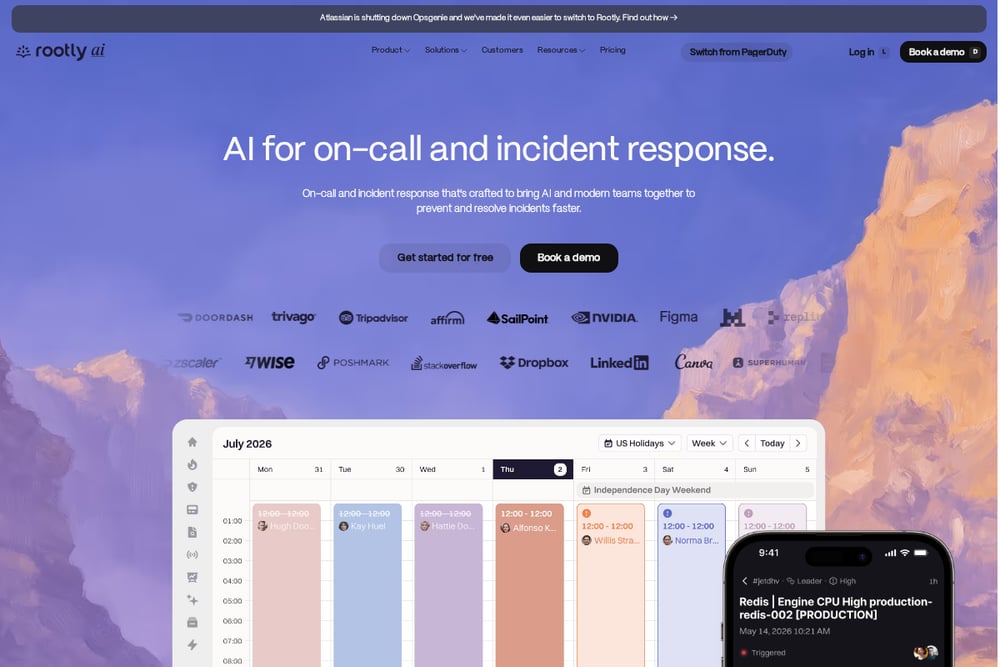 A screenshot of the Rootly website.
Rootly offers an AI SRE module that automates root cause analysis and integrates seamlessly with your incident response workflow. It's particularly strong in Slack and Microsoft Teams, making it easy to trigger investigations from where your team already works. Rootly also provides on-call management, retrospectives, and status pages, so it's a comprehensive incident management platform. With Atlassian shutting down Opsgenie, Rootly is positioning itself as a natural migration path. If you're looking for an all-in-one incident response solution with AI capabilities, Rootly is a solid choice.
#4 Mezmo
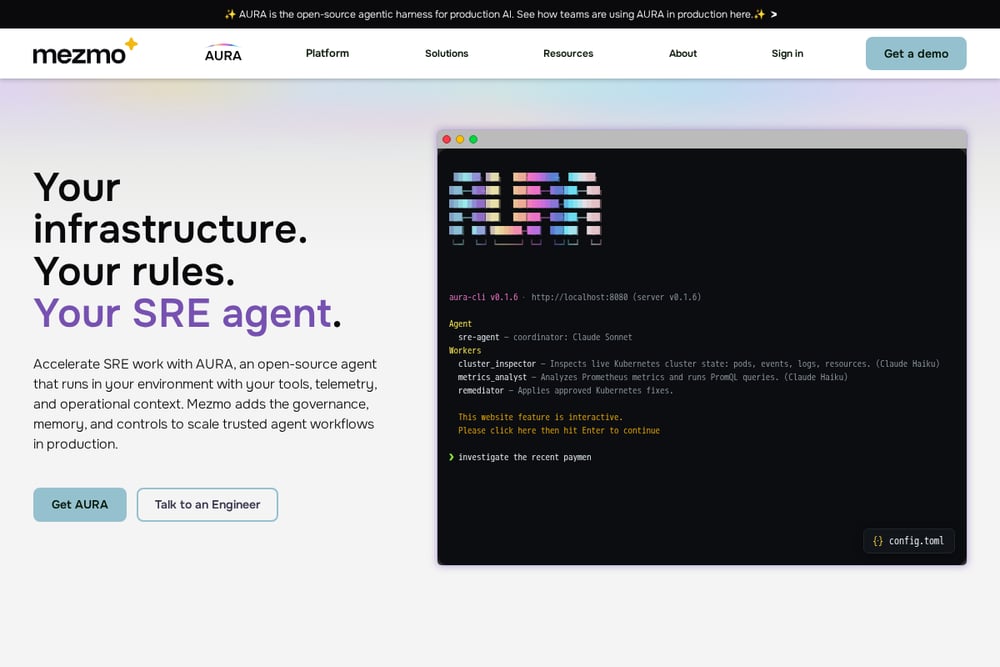 A screenshot of the Mezmo website.
Mezmo pairs agentic RCA with an open-source execution and harness layer, plus active telemetry pipeline control. It's the only platform on this list that you can self-host and audit the code, which is a big deal for security-conscious teams. Mezmo's approach focuses on giving you control over your data and the AI's actions. They also provide a buyer's guide to help you evaluate AI SRE tools, which shows their commitment to transparency. If you want to avoid vendor lock-in and have deep visibility into how the AI works, Mezmo is a compelling option.
#5 NeuBird
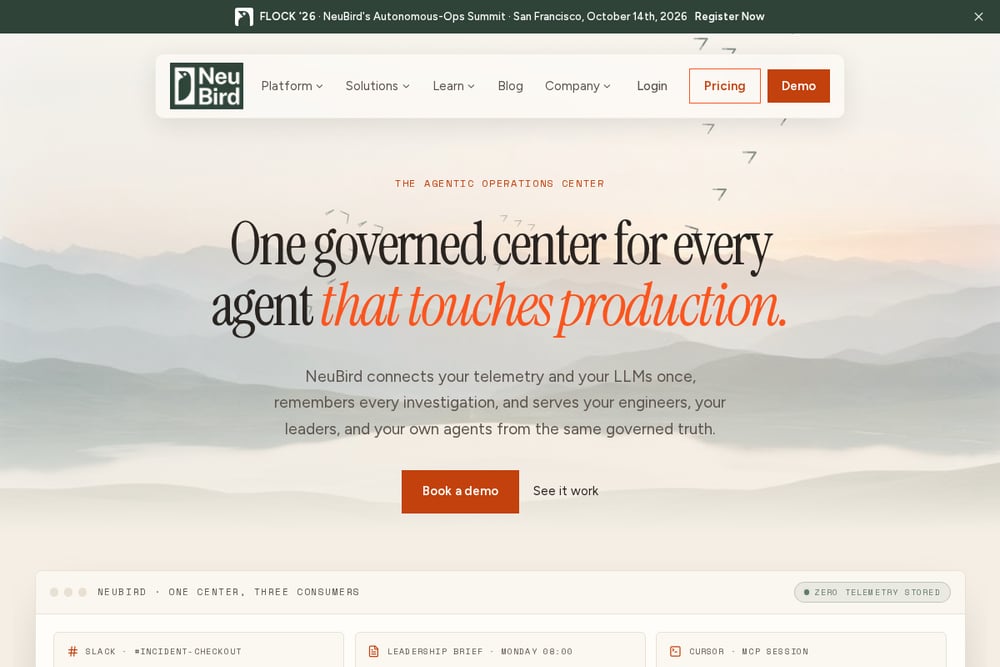 A screenshot of the NeuBird website.
NeuBird's agentic RCA tool is designed to close the gap between manual investigation and automated resolution. They document a payments incident that took 4.5 hours manually but was closed in under five minutes with their agent. NeuBird focuses on correlating telemetry across services to surface the root cause, not just the symptoms. Their blog provides a comprehensive guide to RCA tools, which is a great resource for anyone evaluating the space. If you're dealing with complex distributed systems and need fast, accurate RCA, NeuBird is worth considering.
How to Choose the Right AI SRE Platform
Start by identifying your biggest pain point: is it alert fatigue, slow RCA, or on-call burnout? If you need a fully autonomous agent, Resolve.ai might be your best bet. If you're deeply invested in Kubernetes and want evidence-backed answers, Sherlocks.ai is a strong fit. For teams that want a complete incident management suite, Rootly covers all bases. If you have strict data governance requirements, Mezmo's self-hosted option is a game-changer. And if you're dealing with complex microservices, NeuBird's speed could be the difference. Always trial the tool with your own data to see how it handles your specific environment.
Automating Incident Response with AI SREs
The typical workflow starts with an alert from your monitoring system, which triggers the AI SRE to begin an investigation. The AI pulls data from logs, metrics, and traces, correlating them to identify the root cause. It then presents its findings with evidence, often in Slack or your incident channel. Some platforms can even suggest or execute remediation steps. This automation frees your engineers from the manual toil of digging through thousands of log lines, allowing them to focus on the fix. The result is a dramatic reduction in MTTR and a more proactive approach to preventing future incidents.
The Future of SRE Is AI-Assisted
The days of manually correlating logs under pressure are numbered. These five platforms represent the cutting edge of AI-driven incident management, each with its own strengths. Whether you prioritize autonomy, transparency, or integration, there's a tool here that can transform your incident response. The key is to choose one that fits your team's workflow and security requirements. As AI SREs become more sophisticated, they'll not only help you debug faster but also prevent outages before they happen. It's time to let the machines do the heavy lifting so your engineers can focus on building great software.