
Deep research is getting a serious upgrade. These five AI-powered tools help you find, understand, and synthesize academic sources faster than ever.
The New Wave of AI Research Assistants
The days of keyword-stuffing your way through Google Scholar are fading. A new generation of AI research assistants is changing how we approach complex queries, pulling from millions of academic papers, preprints, and clinical trials. These tools don't just search—they understand context, rank relevance, and even generate cited reports. For students, researchers, and professionals, this means less time sifting and more time synthesizing. The market is crowded, but each tool brings a unique angle, from source-first curation to evidence-based citation analysis.
How We Evaluated These Tools
We looked at each tool's ability to handle complex research queries, the breadth and quality of sources it taps into, and how much control you have over the final output. We also considered the clarity of pricing and the overall user experience. Each tool was assessed on these factors independently, highlighting what stood out for each—not pitting them against each other. The goal is to help you find the right fit for your specific research workflow.
Here's a quick snapshot of the five tools we're diving into, so you can see at a glance what each one brings to the table.
| Provider | Best For |
|---|---|
| Elicit | Researchers needing rigorous, cited reports from massive academic databases. |
| Ovaaz – Don't Just Search, Overstand Your Topic | Deep, iterative research projects where you want to shape the final output. |
| ScholarAI | Students and researchers who want seamless citation management and AI-assisted writing. |
| Scite | Researchers who need to verify the strength and context of scientific claims. |
| Paperguide | Teams and researchers conducting systematic reviews and evidence synthesis. |
The Deep Dive: Five Tools That Redefine Research
#1 Elicit
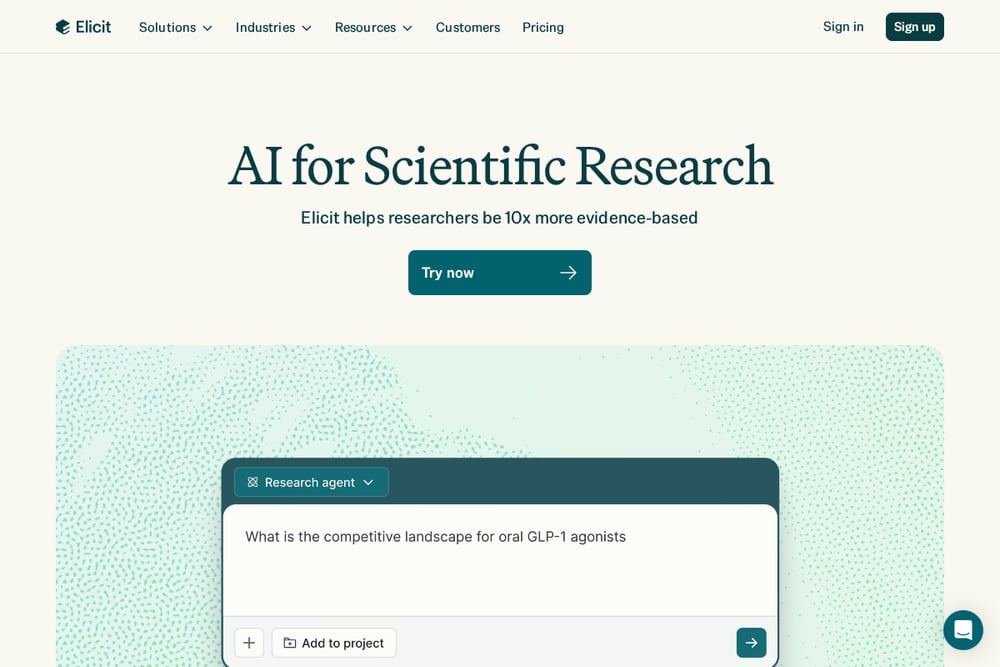 A screenshot of the Elicit website.
Elicit is a powerhouse for evidence-based research, trusted by over 5 million researchers. It searches across 138 million academic papers and 545,000 clinical trials, using semantic search so you don't need to know the exact keywords. You can type a research question, and Elicit generates a structured report with citations in seconds. It's built for high-stakes decisions and rigorous workflows, making it a go-to for systematic reviews. If you need a quick answer or a multi-month comprehensive review, Elicit scales to your needs. Its ability to create fully cited artifacts like tables and figures sets it apart.
#2 Ovaaz – Don't Just Search, Overstand Your Topic
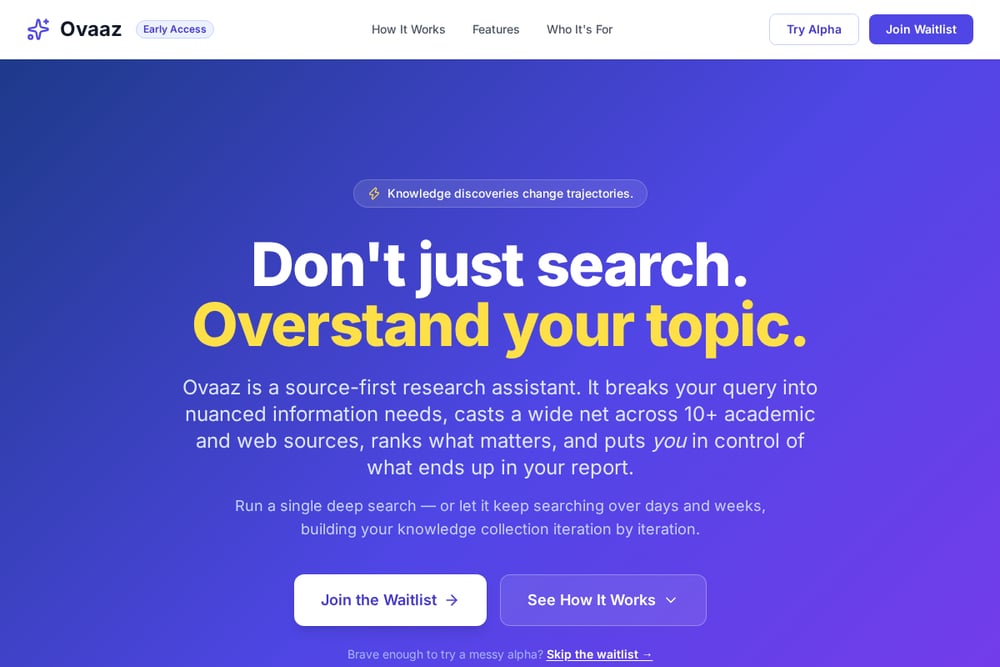 A screenshot of the Ovaaz website.
Ovaaz is an early-access research assistant that takes a source-first approach, breaking your complex query into nuanced information needs before searching. It casts a wide net across 10+ academic and web sources like PubMed, arXiv, and Semantic Scholar, then deduplicates and rates each result for relevance. You get AI-generated summaries for every result, so you can quickly decide what matters. What sets Ovaaz apart is its iterative, long-running searches—it keeps searching over days or weeks, building your knowledge collection based on your feedback. You can thumbs-up or thumbs-down results, and your kept sources persist into the next iteration. When you're ready, you can generate a cited, synthesized report or export a clean PDF, reflecting your choices, not just the algorithm's.
#3 ScholarAI
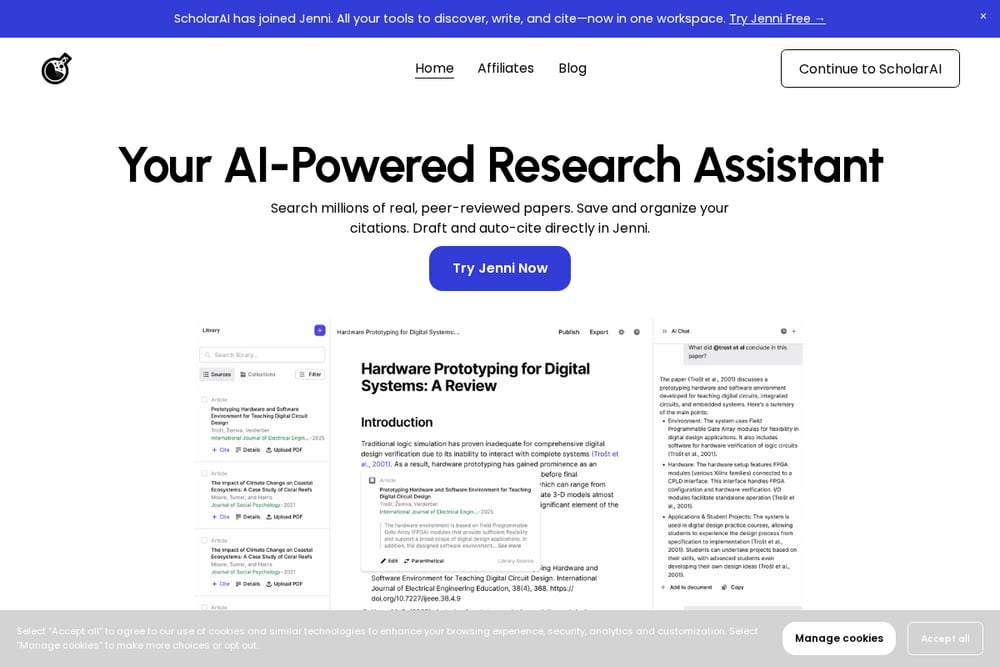 A screenshot of the ScholarAI website.
ScholarAI is your AI-powered research assistant that searches millions of real, peer-reviewed papers. It's now integrated with Jenni, an AI writing workspace, so you can draft and auto-cite directly in your document. You can sync your entire Zotero or Mendeley library with one click, and the agentic AI chat consults the latest research and your PDF uploads. It supports over 2.6k citation styles, making it a favorite among students and academics. The platform is trusted by 600k+ researchers at top institutions and Fortune 100 companies. If you're looking to unify your sources, notes, and citations in one intelligent workspace, ScholarAI delivers.
#4 Scite
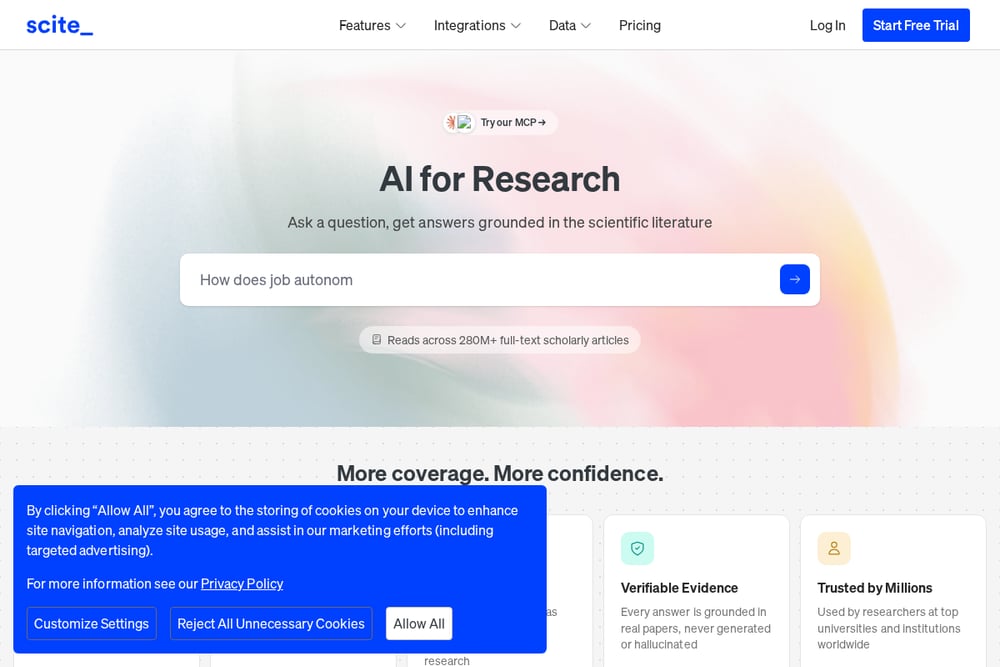 A screenshot of the Scite website.
Scite is an AI for research that reads across 280M+ full-text scholarly articles, offering more coverage and confidence. Its Smart Citations show whether a finding has been supported or contradicted by later research, giving you a deeper understanding of the evidence. Scite is built on the largest licensed database of scholarly content, with agreements with Wiley, SAGE, and 30+ publishers. It goes beyond abstracts to find what's actually inside the research, and its AI Assistant grounds every answer in real papers, never hallucinating. You can use Scite inside Claude, ChatGPT, or any MCP-compatible assistant, and it plugs into Zotero. For tracing an idea from funded proposal to published finding, Scite is unmatched.
#5 Paperguide
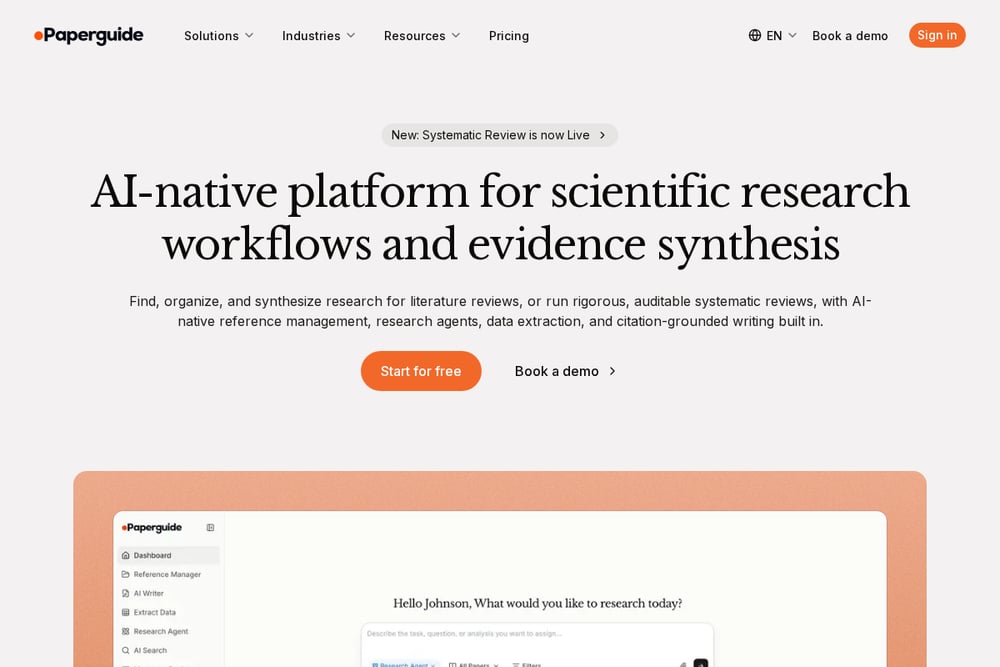 A screenshot of the Paperguide website.
Paperguide is an AI-native platform for scientific research workflows and evidence synthesis. It combines AI Search, Reference Manager, AI Writer, and Extract Data into one cohesive tool. You can ask a research question in plain language, and AI Search returns a synthesized answer from across 200M+ papers, with every claim linked to its source. The Reference Manager lets you import from Zotero or Mendeley, and the Research Agent compares studies and maps a field. Extract Data pulls details from many papers into a structured, cited table, which is a game-changer for systematic reviews. Trusted by 974,000+ researchers, Paperguide is built for teams and individuals who need rigorous, auditable research.
How to Choose the Right AI Research Assistant
Start by thinking about your research workflow. If you need a quick, cited answer from a massive database, Elicit is your best bet. If you're working on a long-term project that evolves over time, Ovaaz's iterative approach lets you shape the results as you go. For those who live in Zotero or Mendeley and want to streamline writing, ScholarAI integrates seamlessly. If you're concerned about the validity of findings, Scite's Smart Citations give you confidence. And if you're doing a systematic review, Paperguide's structured extraction is a lifesaver. Consider your budget, too—some offer free plans, while others are premium. Ultimately, the right tool is the one that fits your specific research style and needs.
Automating Your Research Workflow
Imagine setting up a research assistant that works while you sleep. With Ovaaz, you can run a single deep search or let it keep searching over days and weeks, building your knowledge collection iteration by iteration. You provide feedback by thumbs-up or thumbs-down, and the tool learns from your choices, refining future searches automatically. For a more immediate automation, Elicit can generate a full report in seconds, and Scite can be integrated into your existing AI assistant via MCP. Paperguide automates the extraction of data into structured tables, saving you hours of manual work. The key is to set up your initial query carefully and let the tool do the heavy lifting.
The Bottom Line
The era of manual, keyword-based research is fading. These five tools each offer a unique approach to helping you overstand your topic, not just search it. Whether you prioritize speed, depth, or evidence verification, there's a tool here that can transform your research process. Ovaaz stands out for its source-first, iterative approach, putting you in control of what ends up in your final report. The others bring their own strengths, from Elicit's scale to Scite's citation intelligence. The best choice depends on your workflow, but any of these will elevate your research game.