Clinics are adopting AI scribes to reduce documentation burden and keep clinicians present with patients. The five options below are worth knowing for 2026 because each brings a distinct approach to ambient documentation, EHR integration, and clinic workflows. This list is not a ranking of quality; it is a starting point for clinics comparing fit.
How This List Was Chosen
The list focuses on AI medical scribe software that is described on its own website as supporting clinical documentation and clinic workflows. Each entry was included because the source pages describe ambient documentation, note generation, or related capabilities relevant to clinics. No company is presented as better than another; the entries are ordered as a plain list.
| Provider | Best For |
|---|---|
| Abridge | Clinics seeking a broad documentation layer across the care workflow |
| Suki | Clinics wanting an AI assistant that spans documentation and clinical reasoning |
| Freed | Independent clinics seeking an affordable AI scribe |
| Heidi Health | Clinics looking for a scribe connected to practice workflows |
| Nabla | Clinics wanting ambient documentation with dictation and coding support |
5 AI Medical Scribe Software Options for Clinics
#1 Abridge
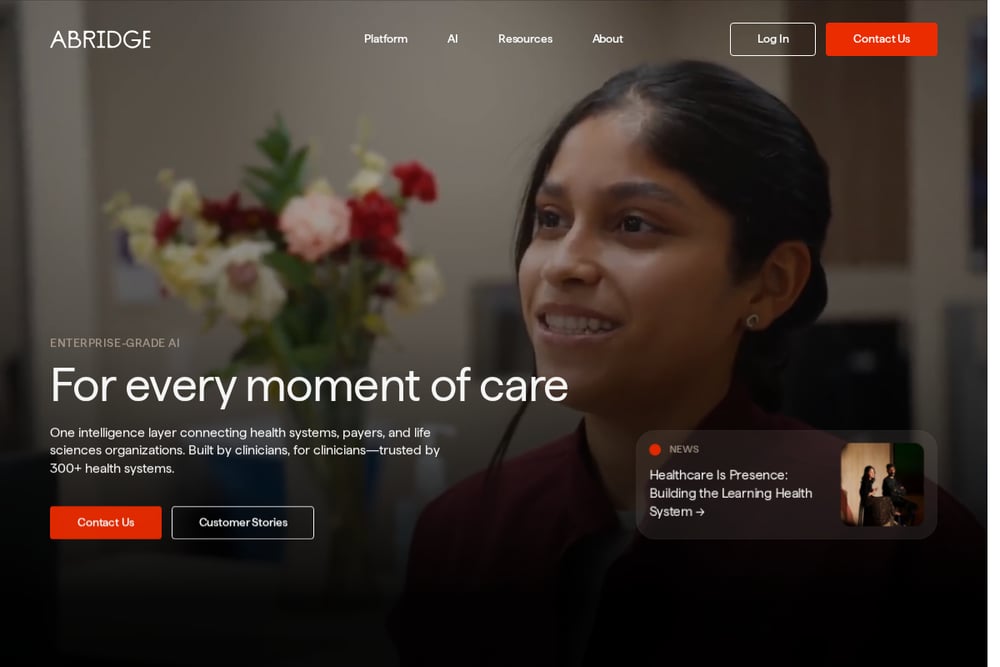 A screenshot of the Abridge website.
Abridge describes a single intelligence layer for healthcare that connects health systems, payers, and life sciences organizations. Its care workflow spans pre-visit, mid-encounter, and post-visit documentation, turning clinical conversations into notes, insights, and actions. The company says it is built by clinicians, for clinicians, and its platform is aimed at enterprise-grade use across care teams. Clinics looking for documentation support that extends from before the visit to after the visit may find this approach relevant.
#2 Suki
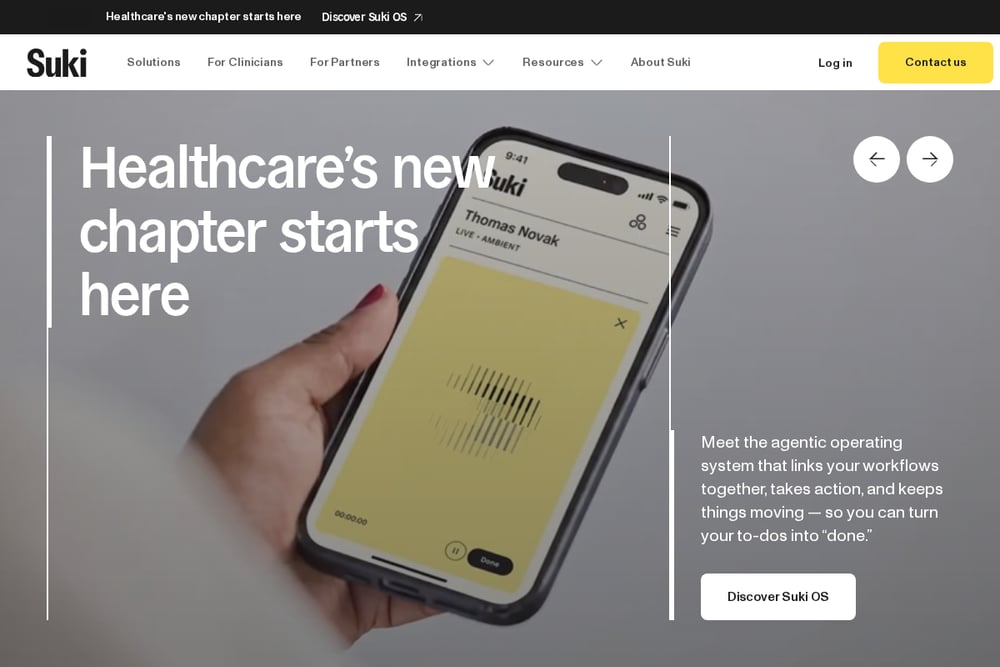 A screenshot of the Suki website.
Suki presents an agentic operating system that links workflows together and takes action. Its ambient documentation captures the entire patient conversation to generate notes, patient instructions, and orders, with voice-enabled editing and problem-based charting. Suki says its technology works across desktop and mobile devices and adapts to various care settings and major EHRs. Clinics that want an AI assistant spanning documentation, coding, and clinical reasoning may want to know about Suki.
#3 Freed
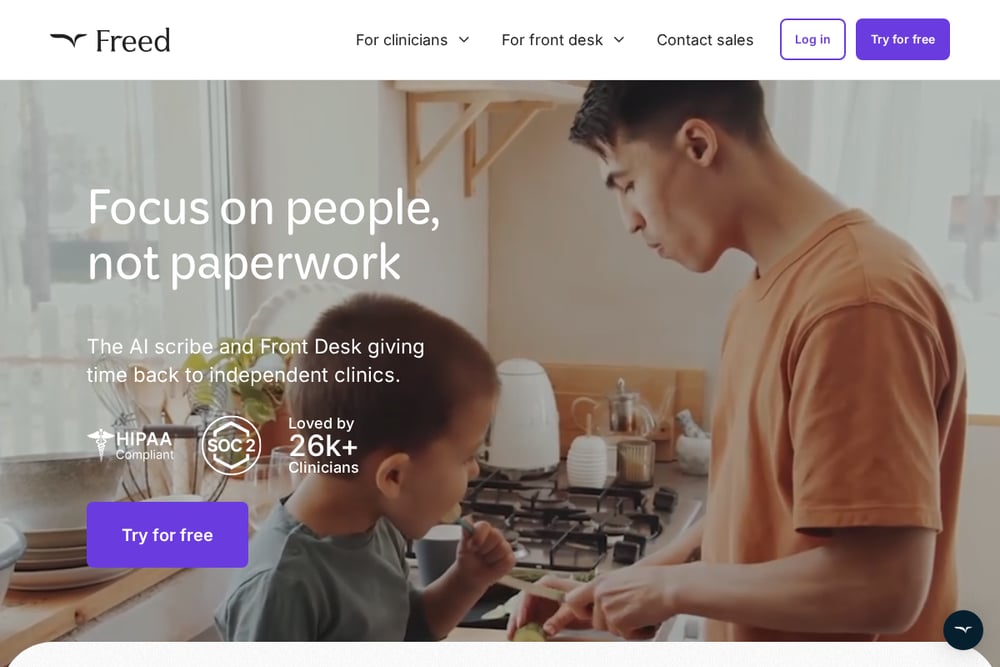 A screenshot of the Freed website.
Freed describes itself as an AI scribe and front desk tool giving time back to independent clinics. Its AI scribe turns patient conversations into notes that can sync to an EHR, and it also offers clinical evidence and a coding assistant. Freed says it is built for independent practices rather than massive healthcare systems, with plans starting at $39/mo for the AI scribe. Small and midsized clinics looking for an affordable, clinic-focused scribe may find Freed worth knowing.
#4 Heidi Health
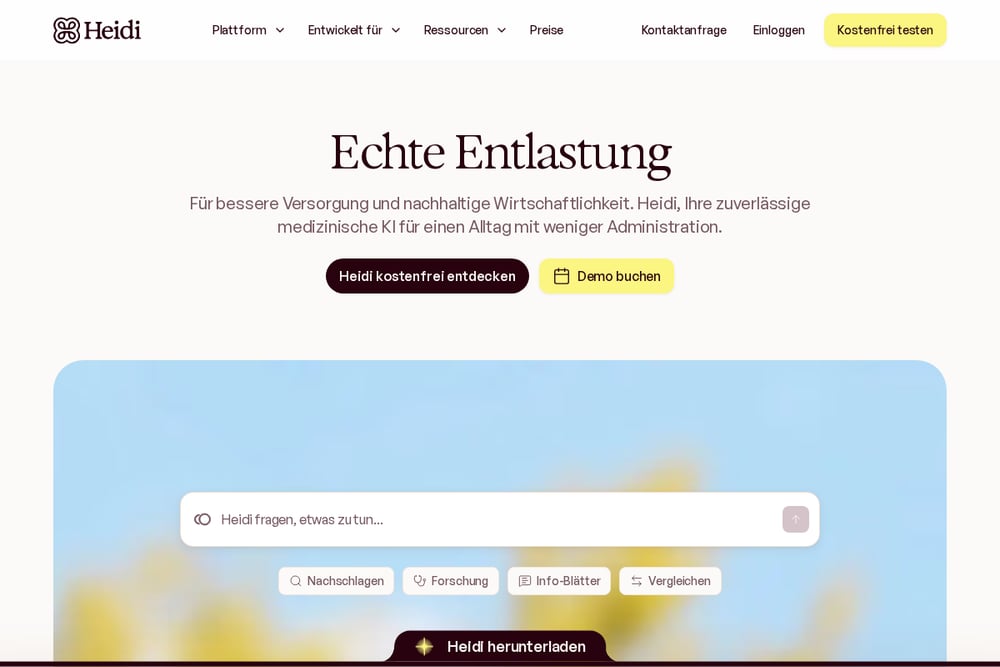 A screenshot of the Heidi Health website.
Heidi Health presents itself as an AI care partner for modern clinical work, with a scribe that helps draft clinical notes. The product page describes integration with practice and clinic information systems, processing of incoming documents and findings, telemedicine, patient communication, and letter and correspondence workflows. Heidi also mentions unlimited clinical evidence on demand. Clinics that want a scribe tied to broader practice workflows and documentation handling may want to know about Heidi.
#5 Nabla
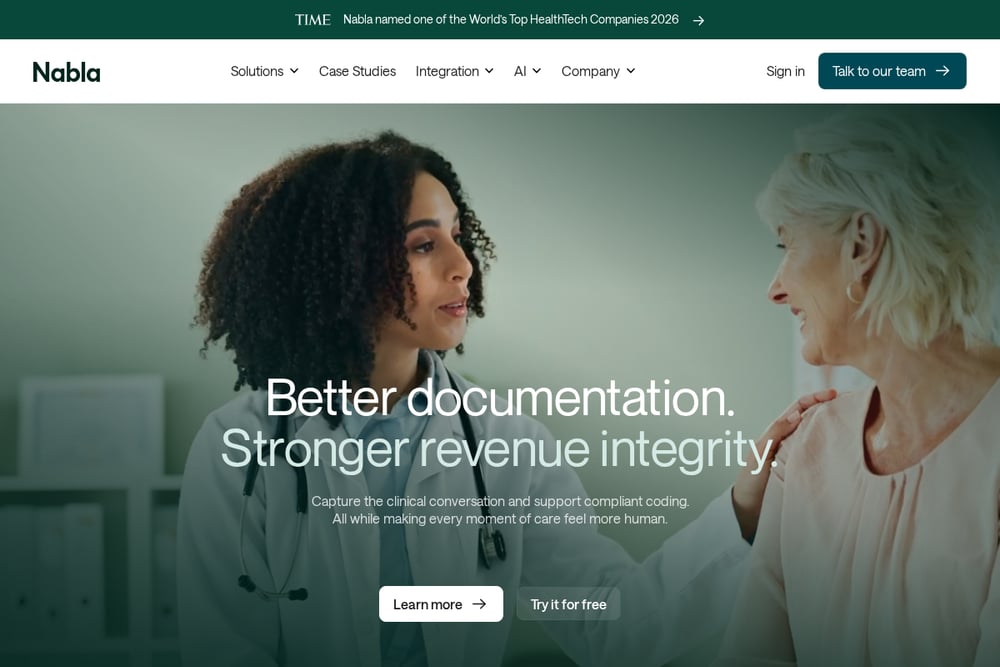 A screenshot of the Nabla website.
Nabla describes an AI assistant for clinical documentation that captures the patient-clinician conversation and generates structured clinical notes automatically. It also offers dictation with clinical-grade speech recognition built into Epic and major EHRs, plus E/M and ICD-10 coding suggestions grounded in clinical documentation and AMA guidelines. Nabla says every final coding decision remains in the clinician's hands. Clinics that want ambient documentation alongside dictation and coding support may find Nabla relevant.
Which One Should You Choose?
Start by mapping your clinic's documentation workflow: does the scribe need to prepare notes before visits, capture conversations in real time, or handle post-visit coding and summaries? Check which EHRs and practice systems the scribe integrates with, since that affects how notes reach your record. Consider whether you need only ambient documentation or also dictation, coding suggestions, or front-desk support. Review pricing and plan structure against your clinic size and budget. Finally, look at the support and onboarding described by each vendor, because adoption depends on how well the tool fits your team's daily routine.
Final Thoughts
Each of these five options approaches AI medical scribing from a different angle: Abridge emphasizes a broad documentation layer across the care workflow, Suki presents an AI assistant spanning documentation and clinical reasoning, Freed focuses on independent clinics with an affordable scribe, Heidi Health connects its scribe to practice workflows and document handling, and Nabla combines ambient documentation with dictation and coding support. There is no single best choice for every clinic. Use the criteria above to match each option's described capabilities to your clinic's workflow, systems, and budget.
Know a company that belongs on this list? Email us at editorial@peekwire.com.