
AI is making decisions at machine speed, but who's making sure those decisions are defensible? These five platforms are stepping up to govern, audit, and secure your AI systems in production.
The AI Governance Landscape in 2026
AI governance has moved from a nice-to-have to a must-have. With regulations like the EU AI Act and increasing scrutiny on AI-driven decisions, companies are realizing that they need more than just good intentions—they need enforceable controls and verifiable evidence. The market is responding with a range of solutions, from inline decision layers that sit in the request path to comprehensive security platforms that scan models and monitor runtime behavior. As AI agents become more autonomous, the ability to allow, block, or escalate actions in real time is becoming a critical differentiator. This roundup covers five platforms that are shaping how enterprises govern their AI, each with a unique approach to the challenge.
How We Evaluated These AI Governance Platforms
We looked at each platform's core approach to governance, focusing on how they enforce policies and provide auditability. We considered the scope of their coverage—whether they handle model outputs, agent actions, or both—and the depth of their evidence trail. We also weighed the ease of integration into existing workflows, as well as the clarity of their pricing and deployment models. Finally, we assessed how well each solution fits the needs of US-based enterprises, particularly those in regulated industries. Each platform stood out for different reasons, and we've highlighted what makes each one worth your attention.
Here's a quick look at the five platforms we're covering, each with its own take on AI governance.
| Provider | Best For |
|---|---|
| HiddenLayer | Comprehensive AI security and threat detection |
| Turrigan | Inline AI Governance. Audit-Ready Proof. | Inline, audit-ready governance with deterministic verdicts |
| Sweet Security | Runtime governance for AI agents |
| Rubrik | Semantic governance for enterprise AI agents |
| Docker | Developer-friendly governance integrated with container workflows |
The Deep Dive: Five AI Governance Platforms Compared
#1 HiddenLayer
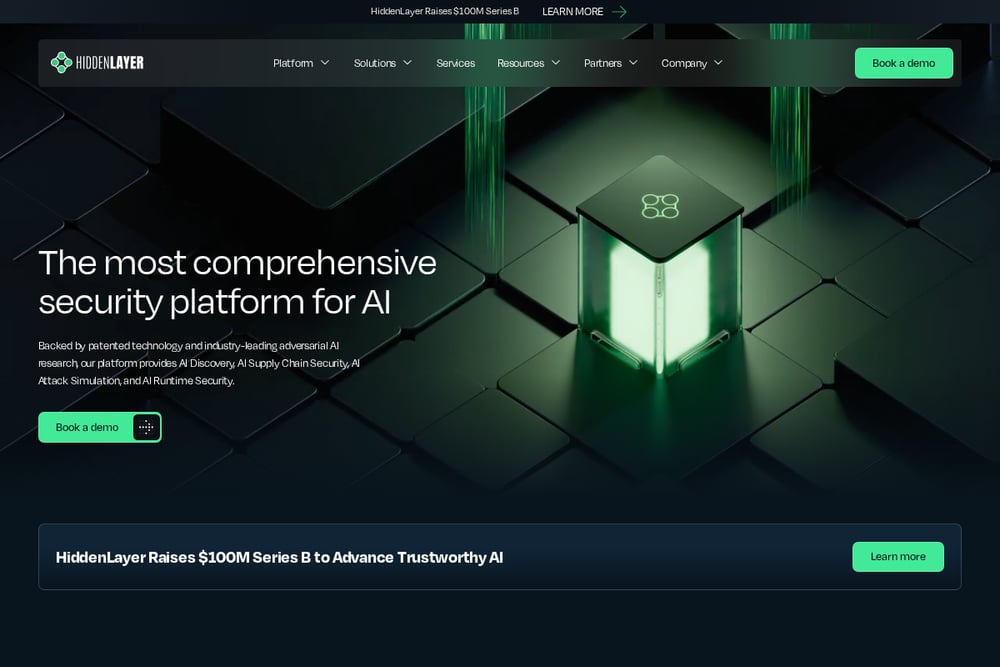 A screenshot of the HiddenLayer website.
HiddenLayer offers a comprehensive AI security platform that covers the entire lifecycle, from model discovery to runtime protection. Their AI Attack Simulation and AI Guardrails are designed to detect and block threats like prompt injection and data leakage in real time. With a recent $100M Series B, they're clearly a major player in the space. If you're looking for a broad security suite that goes beyond just governance, HiddenLayer is a strong contender. Their focus on AI supply chain security and red teaming makes them a favorite for security-first teams. You can see how they position themselves as the most comprehensive AI security platform on their website.
#2 Turrigan | Inline AI Governance. Audit-Ready Proof.
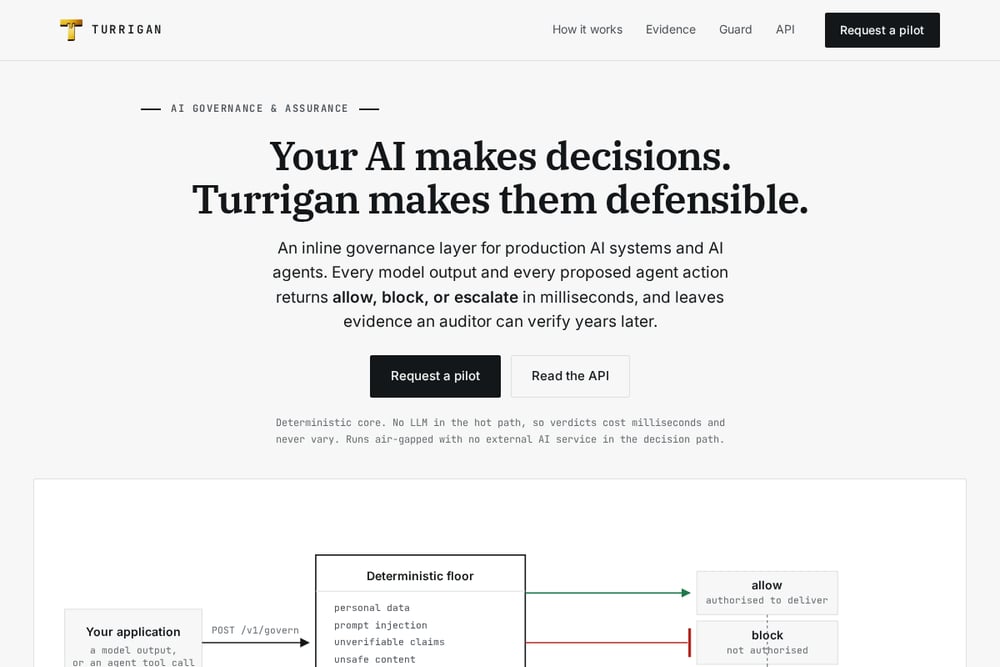 A screenshot of the Turrigan website.
Turrigan is the inline governance layer that sits directly in your AI's decision path, returning allow, block, or escalate verdicts in milliseconds. What sets them apart is their deterministic core—no LLM in the hot path—so verdicts are fast and never vary. They also provide tamper-evident, audit-ready evidence, which is a game-changer for compliance teams. Their approach is simple: one HTTP call, and you keep your existing models and stack. If you need to make your AI decisions defensible without overhauling your infrastructure, Turrigan is worth a serious look. Their focus on auditability and fail-closed escalation makes them a unique fit for regulated industries.
#3 Sweet Security
 A screenshot of the Sweet Security website.
Sweet Security focuses on runtime AI governance, operating at the execution layer to control agent tool calls and API requests. They differentiate themselves from guardrails by actively intervening in the execution path, not just filtering text. This means they can block unauthorized actions like prompt-injection-driven database exports before they happen. Their approach is framework-agnostic, so you can govern both open-source and proprietary agents consistently. If you're deploying AI agents that interact with live data and external systems, Sweet Security offers the control you need. Their emphasis on real-time enforcement makes them a solid choice for production environments.
#4 Rubrik
 A screenshot of the Rubrik website.
Rubrik has entered the AI governance space with what they call the industry's first semantic AI governance engine. Their domain-specific small language model is designed to accelerate trusted AI agent deployment and control. As a well-established player in security and AI operations, Rubrik brings enterprise credibility and a focus on data protection. Their approach leverages semantic understanding to govern AI actions, which could be a differentiator for complex use cases. If you're already in the Rubrik ecosystem, this could be a natural extension. Their press release highlights a strong commitment to helping enterprises deploy AI agents with confidence.
#5 Docker
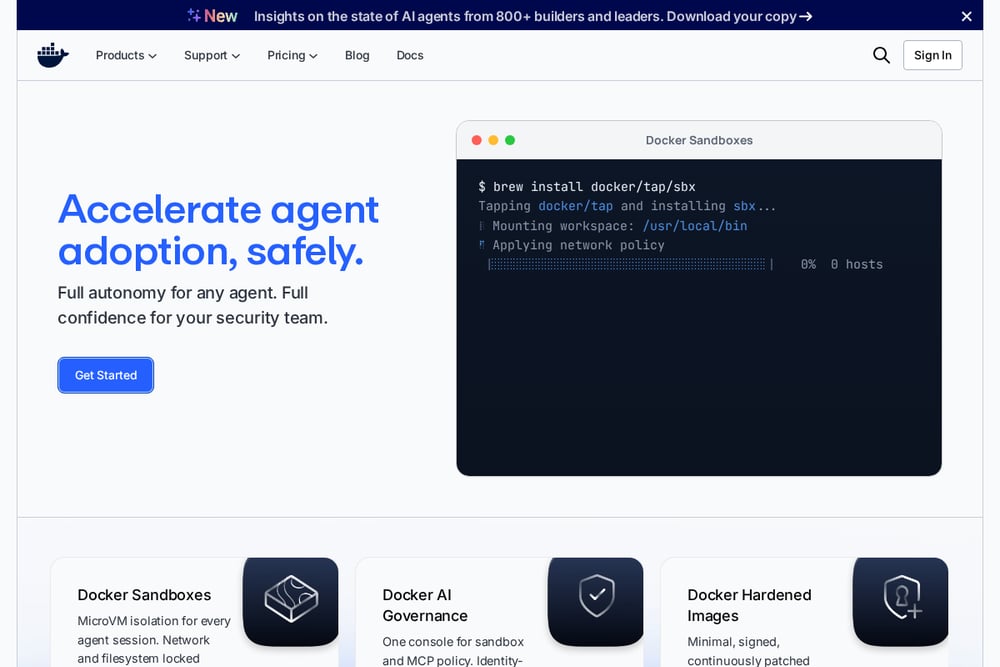 A screenshot of the Docker website.
Docker has expanded into AI governance with a focus on governing agents and MCP tools across teams. Their AI Governance offering is part of a broader platform that includes sandboxes and enterprise gateway solutions. Docker's approach is developer-centric, making it easy to integrate governance into your existing containerized workflows. They emphasize local-first LLM inference and secure image management, which appeals to teams that want control without complexity. If you're already using Docker for development, their governance tools could be a seamless addition. Their blog on AI governance provides a solid overview of frameworks and best practices.
How to Choose the Right AI Governance Platform
Start by identifying where your AI systems are most vulnerable—whether it's model outputs, agent actions, or supply chain risks. If you need a lightweight, inline control point that provides audit-ready evidence, Turrigan's approach is hard to beat. For a broader security suite that includes threat simulation and model scanning, HiddenLayer offers comprehensive coverage. If your focus is on runtime enforcement for agents, Sweet Security's execution-layer governance is key. Consider your existing infrastructure: Rubrik integrates well with enterprise data protection, while Docker fits naturally into containerized development environments. Finally, think about your compliance requirements—do you need deterministic verdicts and tamper-evident logs, or is a more flexible policy engine sufficient?
Streamlining Governance with Automation
Automation is at the heart of modern AI governance. Turrigan automates the decision-making process with a deterministic core that returns verdicts in milliseconds, ensuring consistent enforcement without human intervention. HiddenLayer automates threat detection and response, continuously scanning for vulnerabilities and blocking attacks in real time. Sweet Security automates policy enforcement at the execution layer, intervening before unauthorized actions complete. Rubrik's semantic engine automates the understanding of AI actions, enabling context-aware governance. Docker automates governance across development pipelines, making it easy to enforce policies as part of your CI/CD workflow. By automating these controls, you can ensure that every AI decision is governed without slowing down your operations.
The Bottom Line on AI Governance
AI governance is no longer optional—it's a business imperative. Whether you're deploying AI agents, managing model outputs, or preparing for audits, the right platform can make your AI defensible. Turrigan stands out for its inline, audit-ready approach, while HiddenLayer offers a comprehensive security suite. Sweet Security excels at runtime control, Rubrik brings semantic intelligence, and Docker integrates governance into development. The key is to choose a solution that fits your specific needs and infrastructure. With the right governance in place, you can move forward with confidence, knowing that your AI decisions are not only fast but also defensible.