
AI can propose, but who decides what it's allowed to do? These five platforms are building the guardrails that turn enterprise AI from a liability into a controlled asset.
The AI Governance Landscape in 2026
AI governance has moved from a compliance checkbox to a critical control plane. As autonomous agents gain the ability to act across enterprise systems, the risk of unauthorized actions, data leaks, and operational chaos has skyrocketed. Traditional security and IT frameworks weren't built for AI's speed and autonomy. That's why a new category of software has emerged: platforms that sit between AI proposals and real-world execution, enforcing policies, logging decisions, and providing audit trails. In 2026, the market is crowded with solutions ranging from broad data governance suites to specialized execution authority layers. The challenge for you is finding the one that fits your risk profile, deployment speed, and existing stack.
How We Evaluated These Platforms
We looked at each platform through the lens of real-world deployment. Service scope mattered: does it cover the full lifecycle from discovery to enforcement? Pricing clarity was another factor—can you quickly understand what you're paying for? Local fit considered how well each integrates with your existing infrastructure and workflows. We also weighed the speed of deployment, the granularity of control, and the strength of the audit trail. Each platform stood out in different ways, and we've highlighted what makes each one worth your attention.
Here's a quick snapshot of the five platforms we're covering, so you can see at a glance what each one brings to the table.
| Provider | Best For |
|---|---|
| OneTrust AI Governance | Enterprises needing comprehensive compliance and risk management across AI and data. |
| Lakhowal — Execution Authority Infrastructure for Autonomous AI | Teams deploying autonomous AI agents that need sub-100ms, audit-grade enforcement. |
| Speakeasy AI Control Plane | Engineering teams that want a developer-centric control plane for managing AI agents. |
| BigID AI Governance | Organizations prioritizing data security and privacy in their AI deployments. |
| Natoma AI Governance Platform | Enterprises looking for a structured, production-ready governance framework for AI. |
The Five Platforms, Up Close
#1 OneTrust AI Governance
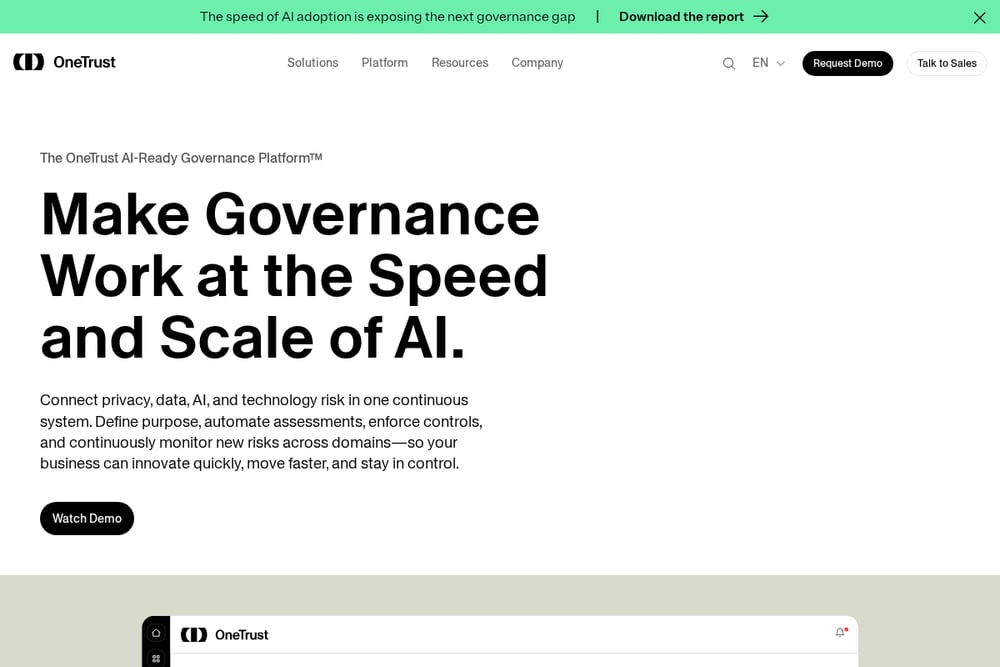 A screenshot of the OneTrust website.
OneTrust brings its massive compliance and privacy expertise to AI governance, offering a comprehensive suite that covers everything from AI inventory to risk assessments and regulatory compliance. It's a heavyweight choice if you're already using OneTrust for privacy management, as it integrates seamlessly with your existing data governance workflows. The platform excels at mapping AI systems to regulations like the EU AI Act, making it a go-to for enterprises with strict compliance requirements. However, its breadth can feel overwhelming if you just need a quick enforcement layer. If you're looking for a one-stop shop that ties AI governance into your broader trust infrastructure, OneTrust is a solid bet. OneTrust AI Governance
#2 Lakhowal — Execution Authority Infrastructure for Autonomous AI
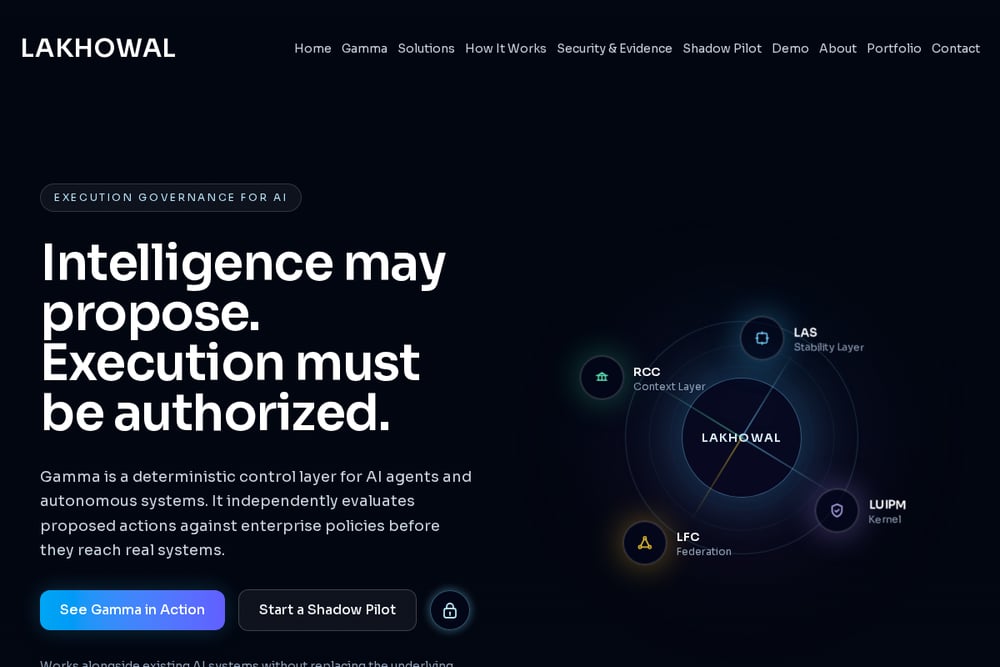 A screenshot of the Lakhowal website.
Lakhowal takes a radically different approach: it inserts a deterministic Gamma Permit boundary between what an AI proposes and what your enterprise authorizes, all in under 100 milliseconds. You can deploy it in Shadow Mode without changing a single line of your model code, which means you can start seeing would-permit/would-deny decisions with signed evidence immediately. The staged path—from diagnostic to shadow mode to full enforcement—lets you build confidence before you flip the switch. Its focus on execution authority is unique, making it ideal for autonomous agents that need hard guardrails. If you're tired of governance platforms that only produce reports but don't actually stop bad actions, Lakhowal is worth a serious look. Lakhowal
#3 Speakeasy AI Control Plane
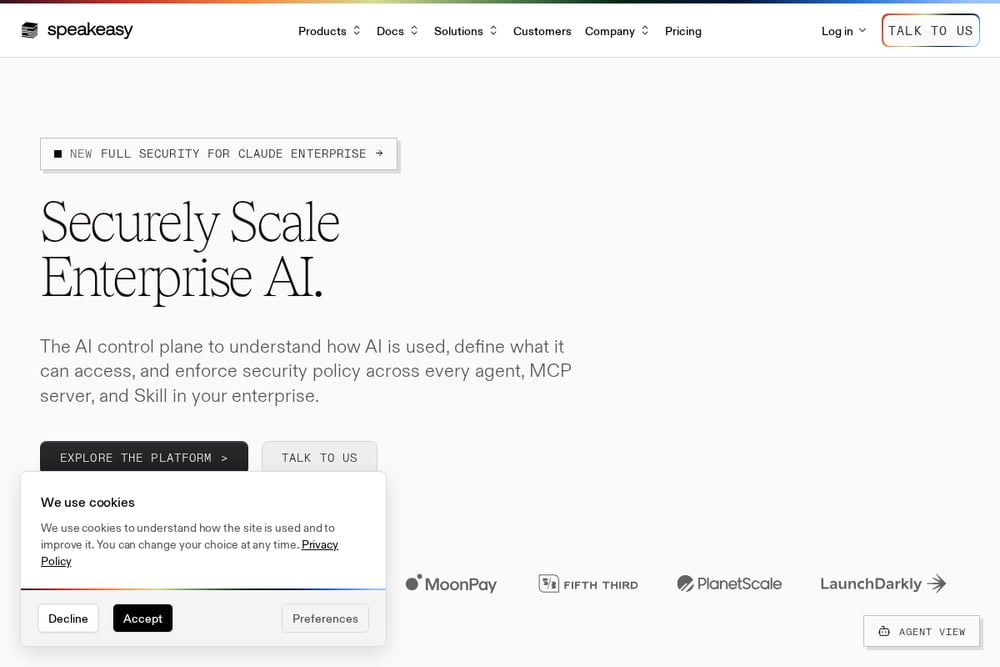 A screenshot of the Speakeasy website.
Speakeasy positions itself as the AI control plane, giving you a single place to connect, secure, distribute, and observe all your AI agents. It focuses on agent access controls, shadow AI detection, and real-time prevention of risky actions, which is crucial if you're scaling AI across your organization. The platform integrates with MCP (Model Context Protocol) to centralize tools and skills, making it easier to manage what agents can access. Its strength lies in its developer-friendly approach, with SDKs and APIs that let you embed governance directly into your workflows. If you're looking for a platform that grows with your AI adoption and gives you granular control over every agent action, Speakeasy is a strong contender. Speakeasy AI Control Plane
#4 BigID AI Governance
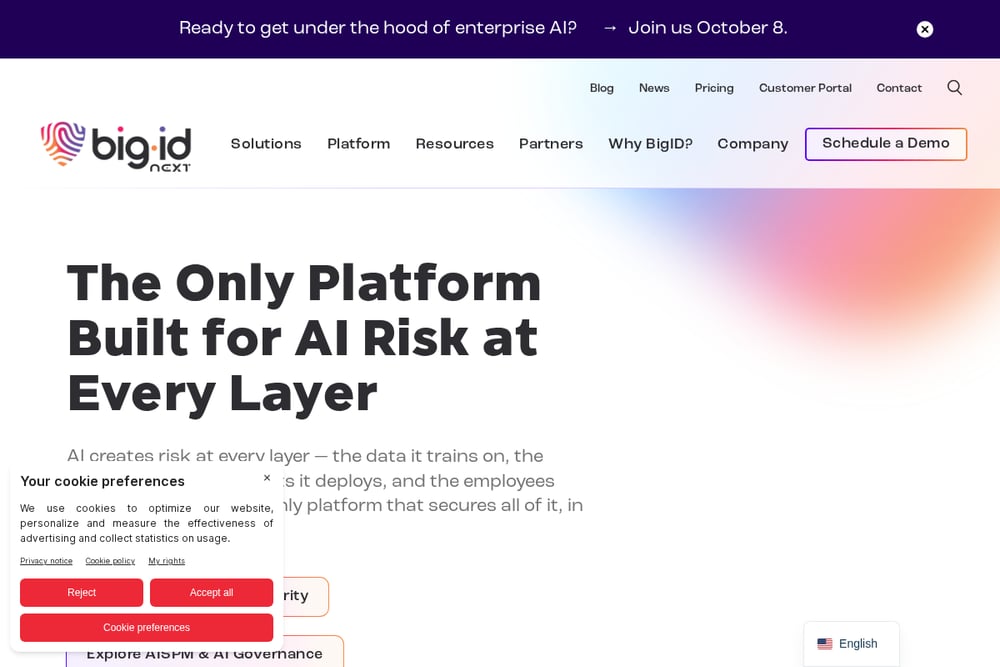 A screenshot of the BigID website.
BigID brings its data intelligence and security expertise to AI governance, focusing on discovering AI assets, classifying data, and enforcing policies across the AI lifecycle. It's particularly strong if you're dealing with sensitive data and need to ensure that AI systems don't mishandle it. The platform provides continuous oversight, which is essential as AI models and data evolve. BigID's strength is in its deep data classification capabilities, which help you understand what data your AI is touching and whether it's compliant. If your primary concern is data security and privacy within AI, BigID offers a robust solution. BigID AI Governance
#5 Natoma AI Governance Platform
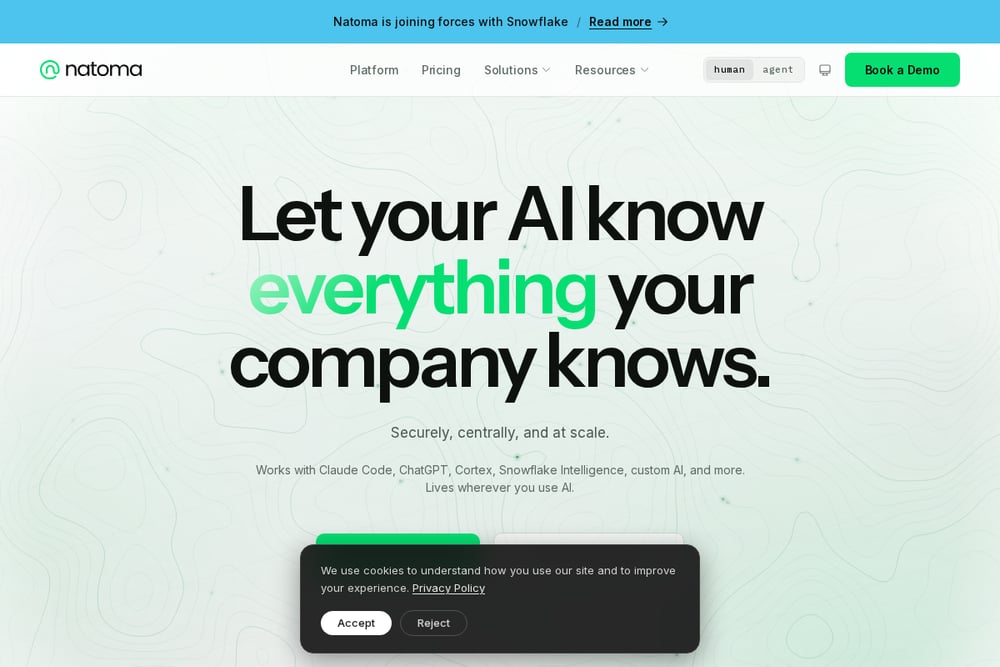 A screenshot of the Natoma website.
Natoma offers a centralized control plane for AI governance, focusing on policy enforcement, monitoring, and compliance across all your AI systems. It's designed to transform experimental AI into production-ready infrastructure, which is a common pain point for enterprises. The platform emphasizes safety, security, and predictability, with features like identity enforcement and tool access controls. Natoma's approach is particularly relevant if you're dealing with operational risks from AI agents that can take actions across your systems. It provides a clear framework for governing AI at scale, making it a practical choice for organizations that need a structured way to manage AI risk. Natoma AI Governance Platform
How to Choose the Right AI Governance Platform
Start by asking yourself what you're actually trying to control. If you need to enforce permissions on autonomous agents with minimal latency, Lakhowal's execution authority layer is built for that. If you're more concerned about compliance with regulations like the EU AI Act, OneTrust's comprehensive suite might be a better fit. Consider your team's technical expertise: Speakeasy is developer-friendly, while BigID excels in data-heavy environments. Also, think about deployment speed—do you need shadow mode to test before enforcing? Finally, evaluate how each platform integrates with your existing stack. The right choice depends on your risk profile, your AI's autonomy level, and your compliance obligations.
Automating Governance: From Policy to Enforcement
The real power of these platforms is in automation. You can set up a workflow where AI proposals are automatically evaluated against your policies, with decisions logged and enforced in real time. For example, with Lakhowal, you start in shadow mode to collect evidence, then activate enforcement once you're confident. With Speakeasy, you can automate access controls for every agent action. The key is to move from manual oversight to automated, policy-driven enforcement. This not only reduces risk but also frees your team to focus on higher-level strategy. The goal is to make governance a seamless part of your AI operations, not an afterthought.
The Bottom Line
AI governance is no longer optional—it's a necessity for any enterprise deploying autonomous systems. The five platforms we've covered offer different strengths, from Lakhowal's execution authority to OneTrust's compliance breadth. Your choice should align with your specific needs: speed, compliance, data security, or developer experience. The good news is that you don't have to choose between safety and innovation. With the right governance layer, you can let your AI propose, but you'll always have the final say on what gets executed.