
If you're in clinical research or regulatory affairs, you know the pain of manual literature reviews. These five platforms are changing how teams turn scientific literature into defensible evidence.
The New Standard for Evidence Synthesis
The pressure to accelerate regulatory submissions and HTA dossiers has never been higher. Traditional systematic reviews take months, but AI-powered platforms are compressing timelines to days. However, regulators demand traceability, audit trails, and human oversight. The market is responding with tools that combine machine speed with the rigor required for regulated workflows. From biopharma to academia, teams are adopting these platforms to stay competitive and compliant.
How We Evaluated These Platforms
We looked at each platform's ability to handle large-scale literature screening, extract verifiable evidence, and produce audit-ready outputs. We also considered the level of human oversight built into the workflow, the clarity of pricing and deployment models, and how well each fits the needs of US-based research teams. Finally, we weighed the depth of support for regulatory submissions and strategic intelligence use cases.
Here's a quick snapshot of the five platforms we evaluated, each with its primary strength.
| Provider | Best For |
|---|---|
| DistillerSR | Large-scale systematic reviews with strict audit requirements |
| otto-SR | Regulatory submissions and strategic intelligence with human oversight |
| Laser AI | Building FAIR-compliant evidence foundations in pharma |
| QueryNow | Regulated pharma teams needing fast, compliant evidence synthesis |
| Cencora | Outsourced evidence synthesis and SLR services |
The Deep Dive: Five Platforms for AI-Driven Evidence Synthesis
#1 DistillerSR
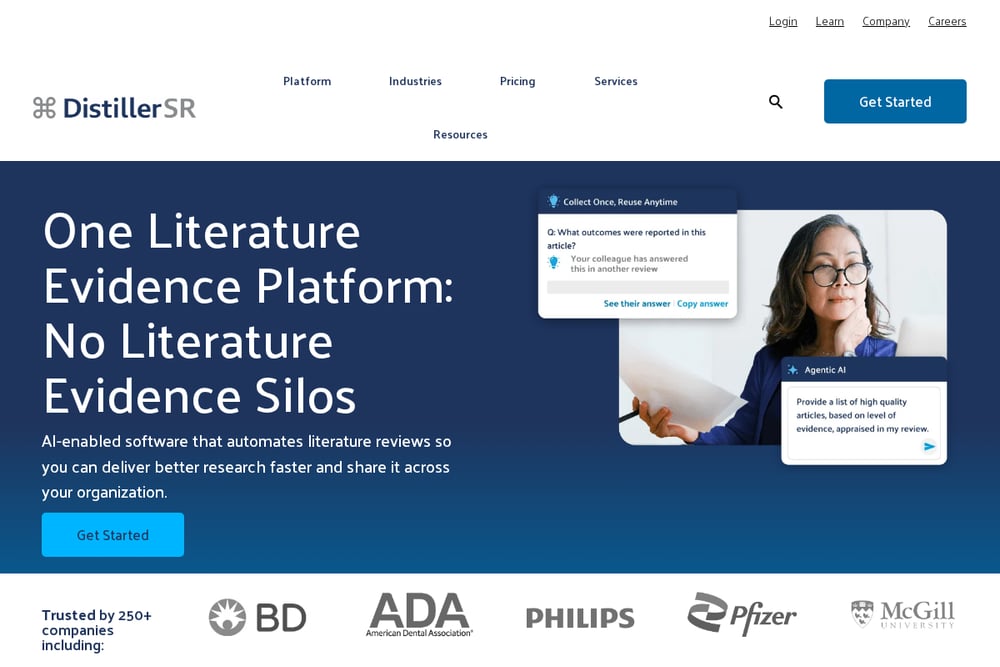 A screenshot of the DistillerSR website.
DistillerSR is a mature, widely adopted platform for systematic review management. It offers robust project management features, including multi-user collaboration, version control, and full audit trails. The platform integrates AI for screening and data extraction, but keeps humans firmly in the loop, which is critical for regulatory submissions. Its recent focus on 'regulatory-grade AI' addresses the credibility gap that plagues general-purpose tools. If you need a proven, enterprise-ready solution with deep methodological support, DistillerSR is a strong contender. It's particularly strong for teams that need to manage complex review workflows across large projects.
#2 otto-SR
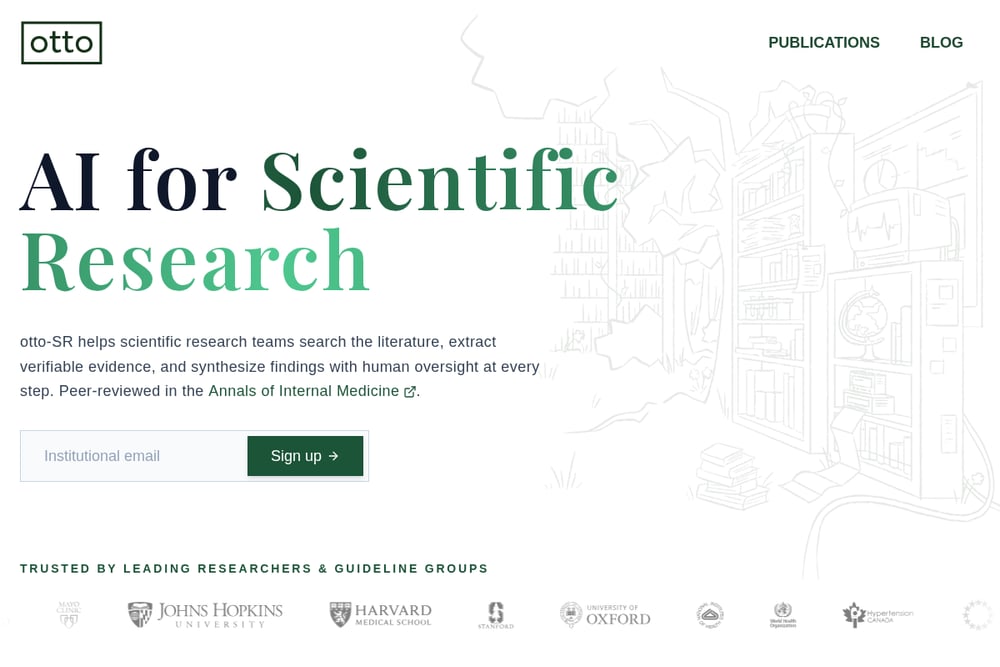 A screenshot of the otto-SR website.
otto-SR is an AI-powered platform designed specifically for scientific research teams that need to search literature, extract verifiable evidence, and synthesize findings with human oversight at every step. It has been peer-reviewed in the Annals of Internal Medicine, which adds a layer of credibility. The platform excels at handling regulatory submissions, as shown in its EU-MDR case study where it screened over 30,000 citations, including non-English sources, and tripled search coverage. It also supports strategic intelligence and market insight use cases, making it versatile for biopharma and academia. The built-in human oversight ensures that every output is defensible, which is crucial for audit-ready evidence packages. If you want a platform that balances speed with rigor, otto-SR is a compelling choice.
#3 Laser AI
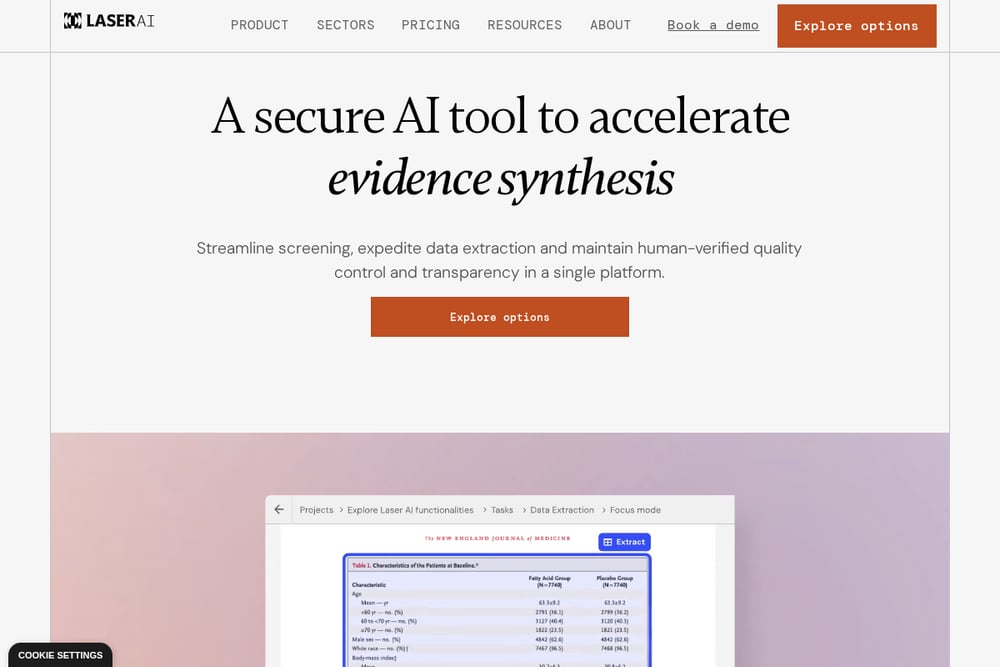 A screenshot of the Laser AI website.
Laser AI transforms unstructured research into structured, FAIR-compliant evidence across the R&D organization. It emphasizes data interoperability and controlled vocabularies, which is a boon for teams that need to integrate evidence into broader data ecosystems. The platform claims up to 45% reduction in screening time and 50% reduction in extraction time, with a 70% reduction in manual review effort. It provides a full audit trail and is PRISMA/Cochrane compliant, making it suitable for regulatory submissions. Laser AI is particularly strong for pharmaceutical companies that need to standardize evidence extraction across teams. Its focus on FAIR data principles sets it apart for organizations looking to build a long-term evidence foundation.
#4 QueryNow
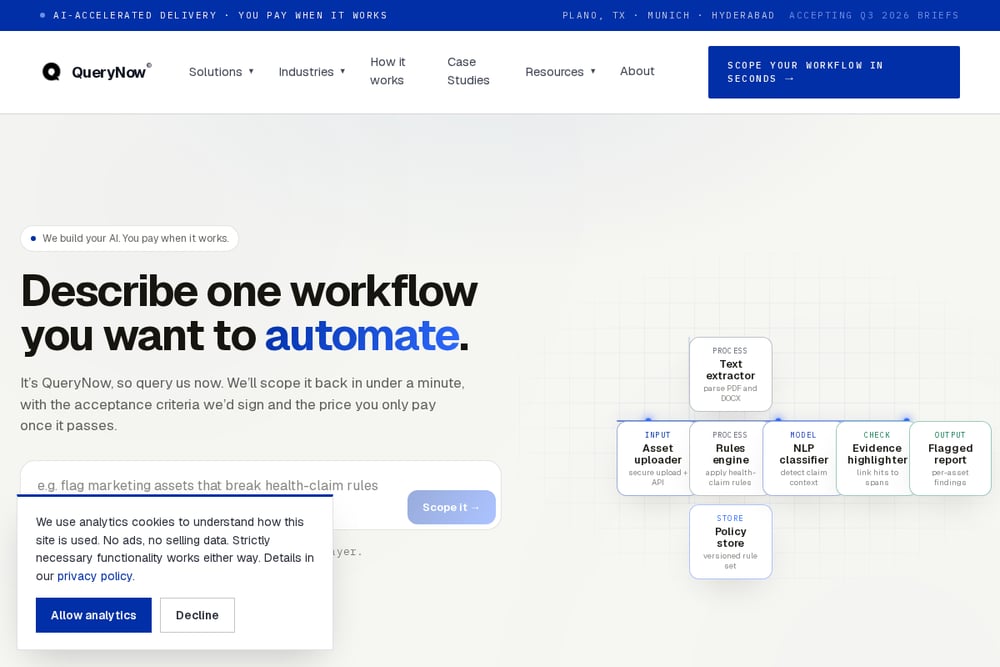 A screenshot of the QueryNow website.
QueryNow offers AI-accelerated clinical evidence synthesis with a strong emphasis on regulatory compliance, including HIPAA, GxP, and 21 CFR Part 11. The platform is designed to shorten timelines from months to weeks while maintaining audit trails and governance controls. It positions itself as a production-ready AI solution that embeds compliance checks into every step. QueryNow's 'you pay when it works' pricing model is a differentiator, reducing financial risk for clients. It's a good fit for regulated pharma and life sciences organizations that need to move fast without compromising compliance. The platform also offers a scoping tool to define workflows quickly, which is handy for teams with tight deadlines.
#5 Cencora
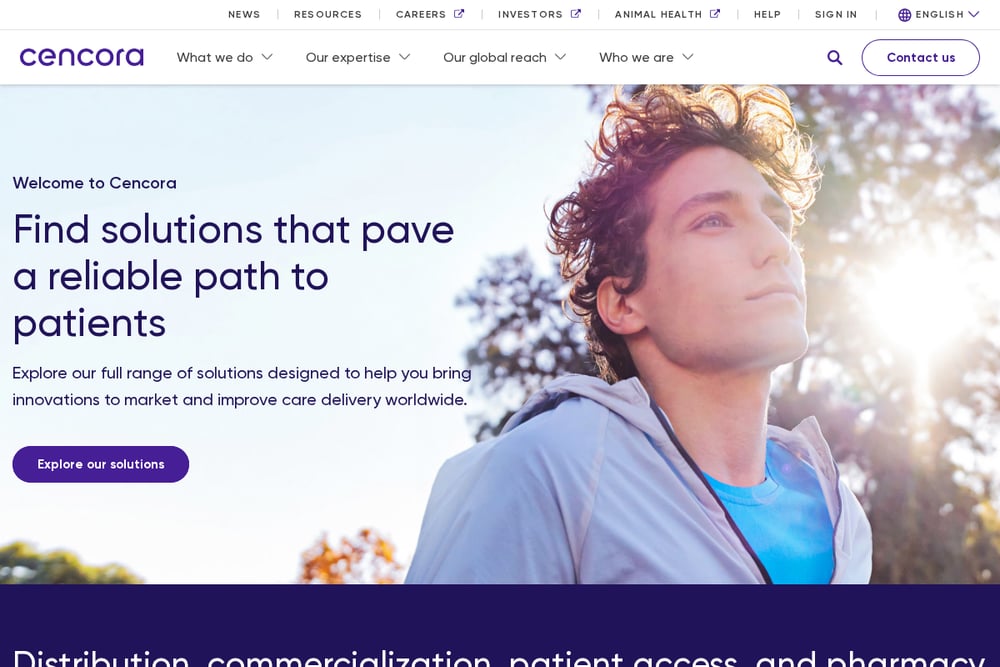 A screenshot of the Cencora website.
Cencora is a global healthcare solutions provider that offers scientific literature review services as part of its broader portfolio. Unlike the other platforms, Cencora is not a software product but a service-based offering, providing managed evidence synthesis and SLR support. It leverages AI to streamline processes but relies on expert teams to deliver results. This makes it a good option for organizations that prefer to outsource their evidence synthesis rather than build in-house capabilities. Cencora's strength lies in its scale and integration with drug development and commercialization services. However, it may lack the hands-on control that a dedicated software platform offers. If you're looking for a full-service partner, Cencora is worth considering.
How to Choose the Right Platform for Your Team
Start by defining your primary use case. If you need to produce audit-ready evidence for regulatory submissions, prioritize platforms with strong human oversight and traceability, like otto-SR or DistillerSR. If you're building a long-term evidence foundation with FAIR data principles, Laser AI might be the best fit. For teams that want to outsource the entire process, Cencora offers a service-based alternative. Consider your team's technical capacity and whether you prefer a software tool or a managed service. Also, evaluate the platform's ability to handle non-English sources and complex PICO variants, as these can be critical in global submissions. Finally, check for peer-reviewed validation or case studies that demonstrate real-world impact.
Automating Evidence Synthesis Without Losing Control
The key to successful automation is a human-in-the-loop approach. Start by using AI to screen and prioritize citations, which reduces the manual burden by up to 70%. Then, use AI-assisted extraction to pull key data points, but have human reviewers verify each extraction against the source. Finally, use AI to synthesize findings into structured evidence maps, but ensure that every conclusion is traceable to the underlying data. Platforms like otto-SR and DistillerSR embed these checks at every step, so you can automate the grunt work while maintaining the rigor regulators demand.
The Bottom Line on AI Evidence Synthesis Platforms
The era of manual literature reviews is ending. AI-powered platforms are now mature enough to handle the scale and complexity of regulatory-grade evidence synthesis. The key is to choose a platform that balances speed with human oversight, and that can produce audit-ready outputs you can defend. Whether you opt for a software solution like otto-SR or a service like Cencora, the goal is the same: get to submission faster without compromising quality. The platforms in this roundup represent the best of what's available today, and each has its own strengths. Evaluate them against your specific needs, and you'll find the right fit for your team.