
The AI engineering field is booming, but not all training programs are created equal. You need a curriculum that goes beyond theory and gets you hands-on with the tools and projects that matter. We've analyzed five top contenders to help
The AI Training Landscape in 2026
The demand for skilled AI engineers has never been higher, with companies across every sector racing to integrate intelligent systems. This has created a massive need for practical, job-ready training. While traditional computer science degrees provide a foundation, specialized bootcamps and professional certificates have emerged as faster, more focused pathways. The best programs now emphasize project-based learning, real-world case studies, and direct mentorship to bridge the gap between classroom concepts and workplace application. Whether you're a career changer or an experienced developer, choosing the right training can be the difference between landing a role and getting lost in the crowd.
How We Ranked the Top AI Engineering Programs
We evaluated each program based on five key criteria: curriculum relevance (how well it covers current AI/ML tools and techniques), practical application (the amount of hands-on projects and real-world simulations), career support (mentorship, placement rates, and industry connections), flexibility (self-paced vs. instructor-led options), and overall value (cost relative to outcomes). We also considered student reviews and completion rates to gauge real-world effectiveness.
Here's a quick look at how the top five AI engineering training programs stack up against each other.
| Provider | Best For |
|---|---|
| Coursera | Comprehensive, university-style AI engineering foundations |
| Microsoft Learn | Official Microsoft certification and Azure-focused AI skills |
| Codecademy | Hands-on, project-based learning for career changers |
| LINKAI | Personalized mentorship and direct industry connections |
| Practical AI application for career growth and job search |
Detailed Reviews of the Top 5 AI Engineering Training Programs
#1 Coursera
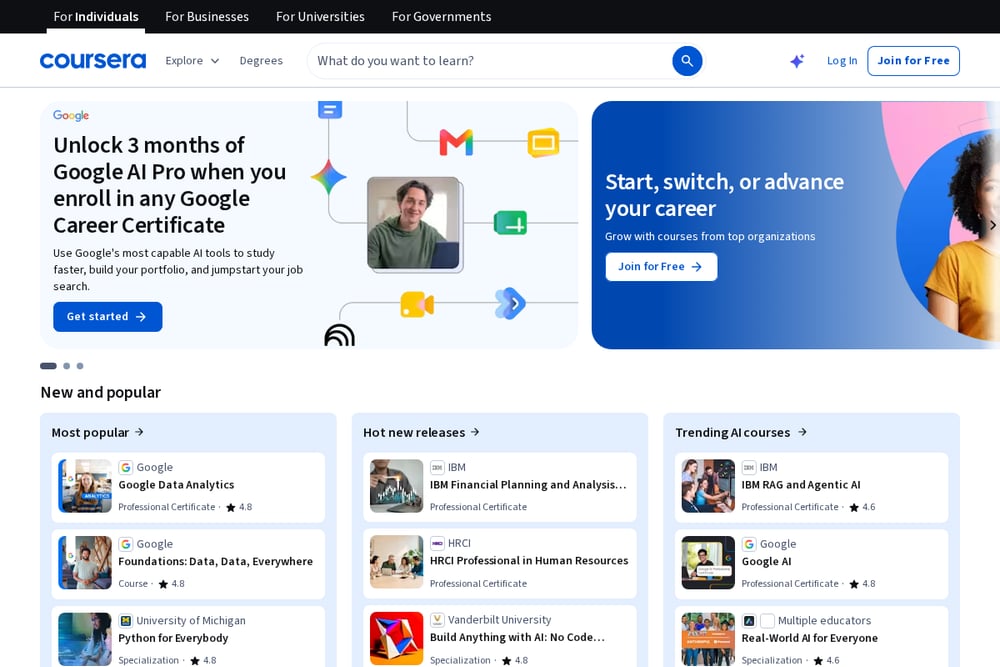 A screenshot of the Coursera website.
Coursera's IBM AI Engineering Professional Certificate is a powerhouse for building a strong theoretical and practical foundation. This 13-course series, taught by IBM experts, covers machine learning, deep learning, neural networks, and key tools like Keras, PyTorch, and TensorFlow. You'll work through supervised and unsupervised learning models, and even dive into large language models and retrieval-augmented generation. With over 263,000 learners enrolled, it's a proven path to career readiness, though you'll need to be self-motivated to complete the 4-month, 10-hour-per-week commitment.
#2 Microsoft Learn
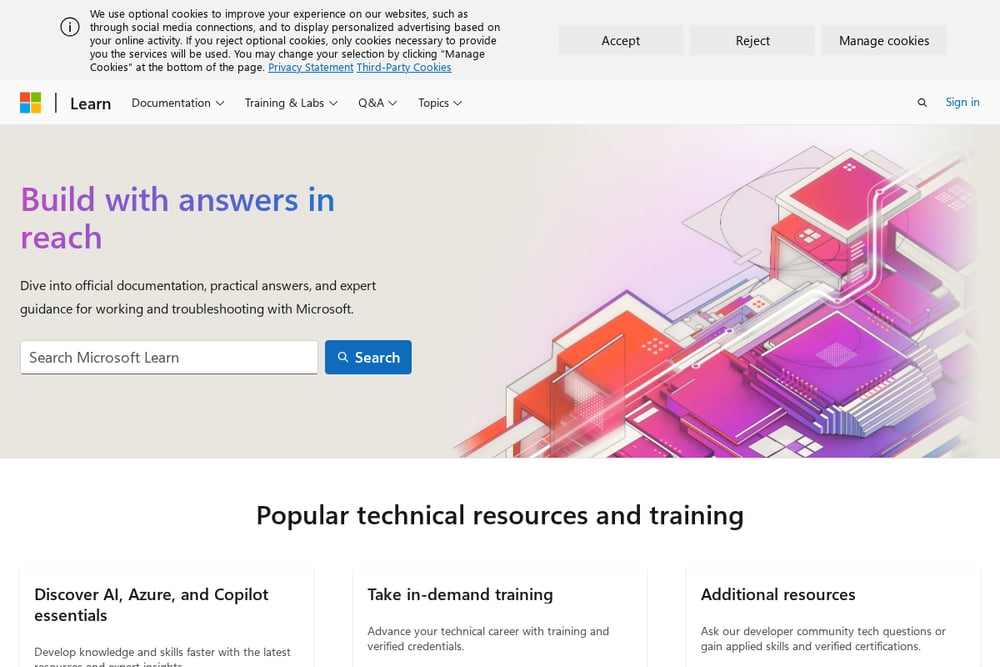 A screenshot of the Microsoft Learn website.
Microsoft Learn offers a structured, official career path for aspiring AI engineers, directly from the tech giant behind Azure AI. The program is designed to help you discover and master the tools and skills employers are actively seeking, with a focus on practical application. You can choose between self-paced online training and instructor-led classroom settings, giving you flexibility in how you learn. The path culminates in a certification exam, providing a clear, credential-based goal to validate your skills to potential employers.
#3 Codecademy
Codecademy's Machine Learning/AI Engineer Career Path is perfect if you learn best by doing. This interactive program focuses on building end-to-end ML applications, with 37 projects and 39 lessons that let you code from day one. You'll master Python, Git, scikit-learn, and other essential tools, all within a browser-based environment that eliminates setup headaches. The 50-hour curriculum is designed for intermediate learners and is ideal for those who want a fast, project-driven introduction to the field without a huge time commitment.
#4 LINKAI
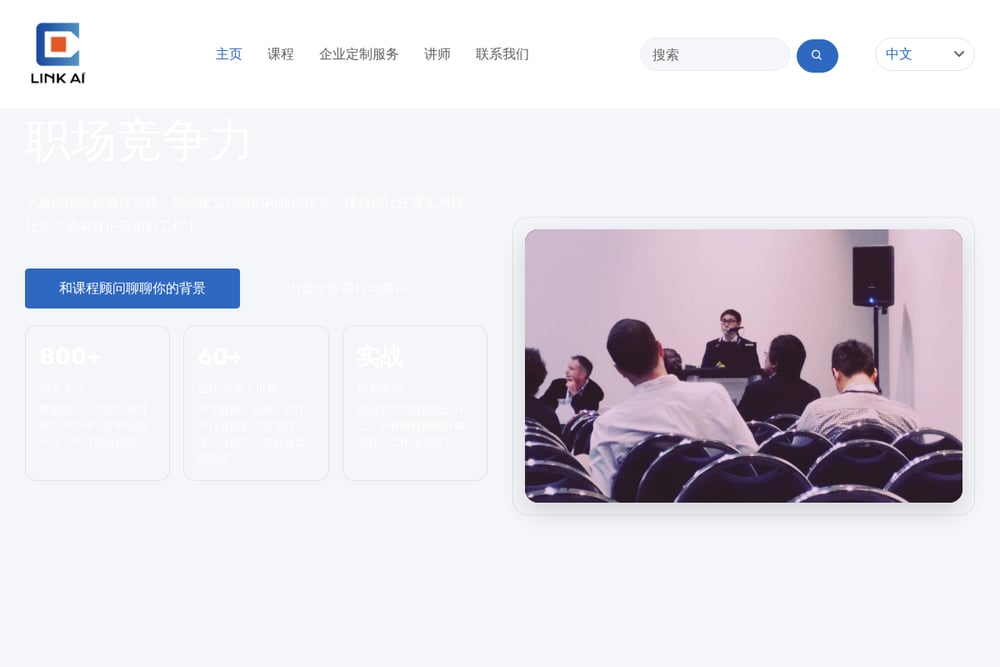 A screenshot of the LINKAI website.
LINKAI stands out as a career growth studio that combines systematic AI skills training with personalized mentorship and real enterprise projects. With over 800 students and partnerships with 60+ companies, LINKAI's curriculum is built around practical application, simulating real work scenarios from day one. You'll get one-on-one guidance from mentors like Dr. Fangxu Xing, a Harvard Medical School professor, and benefit from an impressive 85%+ placement rate at major tech companies. The program also offers unique career development modules that help you understand AI industry roles and create a personalized career plan.
#5 Google
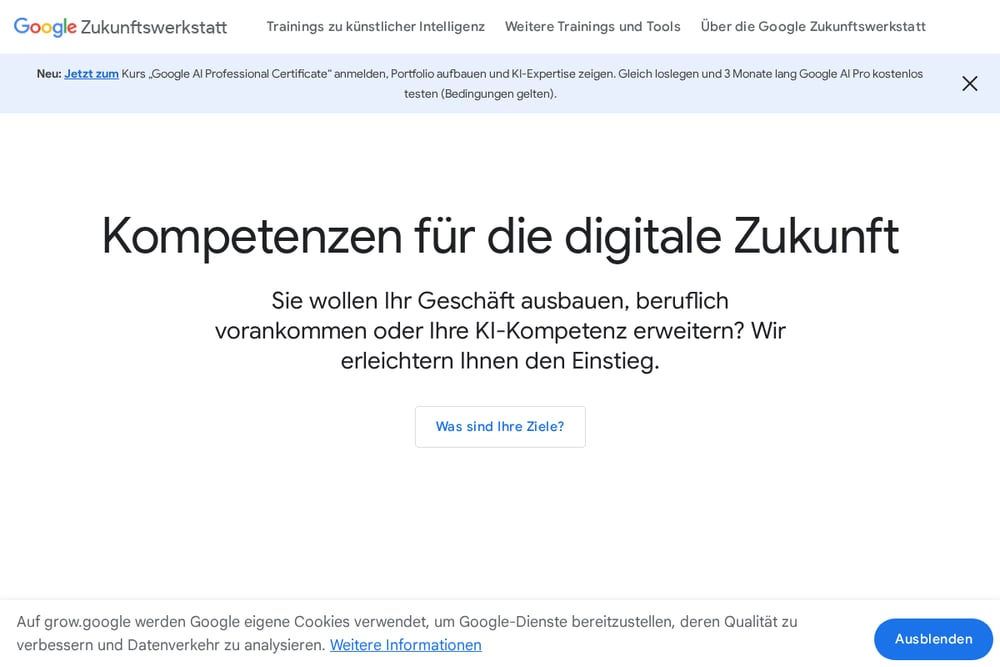 A screenshot of the Google website.
Google's AI training ecosystem, accessible through grow.google, provides a range of practical, expert-led courses designed to accelerate your career. From the AI Professional Certificate to shorter courses like AI Essentials, Google focuses on teaching you how to harness AI tools effectively in real-world scenarios. The program is particularly strong for those looking to integrate AI into existing roles or explore new career paths, with resources like the Career Dreamer tool to help you identify opportunities. While less technical than some competitors, it's an excellent entry point for professionals seeking to understand and apply AI in a business context.
How to Choose the Right AI Engineering Training for You
Start by defining your current skill level and career goals. If you're a complete beginner, a structured, comprehensive program like Coursera's IBM certificate or Microsoft Learn's official path can build a strong foundation. For hands-on learners who want to code immediately, Codecademy's project-based approach is ideal. If you value personalized mentorship and direct industry connections to land a job, LINKAI's studio model is a standout choice. Finally, if you're a professional looking to upskill quickly and apply AI in your current role, Google's practical courses offer the fastest path to immediate impact. Consider your budget, time commitment, and preferred learning style to make the best decision.
Automating Your Learning Workflow
To maximize your learning efficiency, set up a simple automation workflow. Use a tool like Zapier to connect your chosen training platform (e.g., Coursera or Codecademy) to a project management app like Notion. Whenever you complete a module or project, automatically log your progress and key takeaways. Then, schedule weekly reminders to review your notes and update your portfolio with new skills. This keeps you accountable and ensures your learning translates directly into career assets.
Your Next Step in AI Engineering
The path to becoming an AI engineer is more accessible than ever, but the right training program can make all the difference. Whether you choose the comprehensive depth of Coursera, the official certification of Microsoft Learn, the hands-on coding of Codecademy, the personalized mentorship of LINKAI, or the practical application focus of Google, the key is to start. Each of these programs offers a unique strength, so pick the one that aligns with your learning style and career ambitions. Your future in AI starts with a single step—take it today.