
Your team's prompts are the new data exfiltration channel. Here are four tools that build a boundary around your AI usage.
The AI Data Security Landscape in 2026
Every day, employees paste customer records, source code, and credentials into ChatGPT, Claude, and a dozen other AI tools. Traditional DLP never sees these prompts, and AI vendors' self-attested policies offer no proof. That's why a new category has emerged: prompt-level AI data loss prevention. These tools sit on the endpoint or in the network, inspecting every prompt in real time, and either blocking, redacting, or pseudonymizing sensitive data before it leaves your control. The market is crowded, but the leaders are those that combine real-time detection with comprehensive coverage and a clear audit trail.
How We Evaluated These Tools
We looked at each tool's ability to detect sensitive data across a wide range of AI platforms, the speed and locality of detection, the depth of the audit trail, and how clearly the pricing and deployment model are communicated. We also considered how well each tool handles obfuscation and encoding tricks, and whether it can protect across browsers, desktop apps, and internal APIs. Each tool was assessed on these factors, and what stood out for each is noted below.
Here's a quick look at the four tools we're covering, from the enterprise-grade platforms from Prompt Security and Lakera to the data-centric approaches from BigID and Aona AI.
| Provider | Best For |
|---|---|
| Prompt Security | Enterprise AI security with agent protection |
| Lakera | Comprehensive AI security with red teaming |
| BigID | Data classification and DSPM integration |
| Aona AI | Shadow AI discovery and prompt DLP |
The Four Tools, Closer Look
#1 Prompt Security
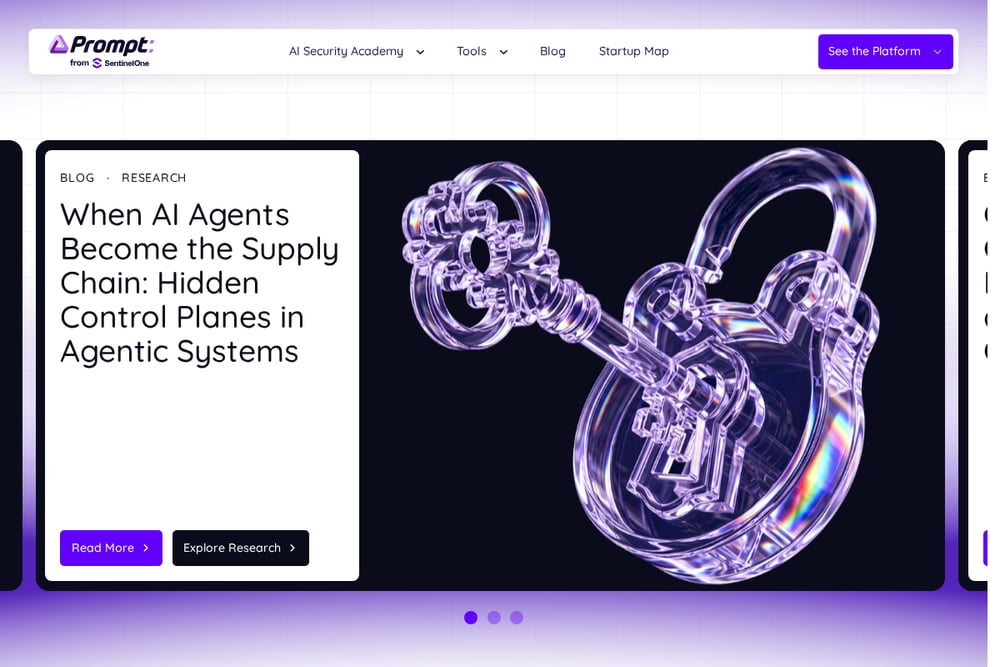 A screenshot of the Prompt Security website.
Prompt Security, now part of SentinelOne, offers a comprehensive AI security platform that goes beyond simple prompt inspection. It provides a full suite of tools, including a prompt fuzzer for vulnerability assessment and specialized modules for securing AI agents like OpenClaw. The platform is designed for enterprise-scale deployment, with a strong emphasis on research and threat intelligence. If you're looking for a vendor that can grow with your AI security needs, this is a solid choice. Their blog and research hub are excellent resources for understanding the evolving AI attack surface.
#2 Lakera
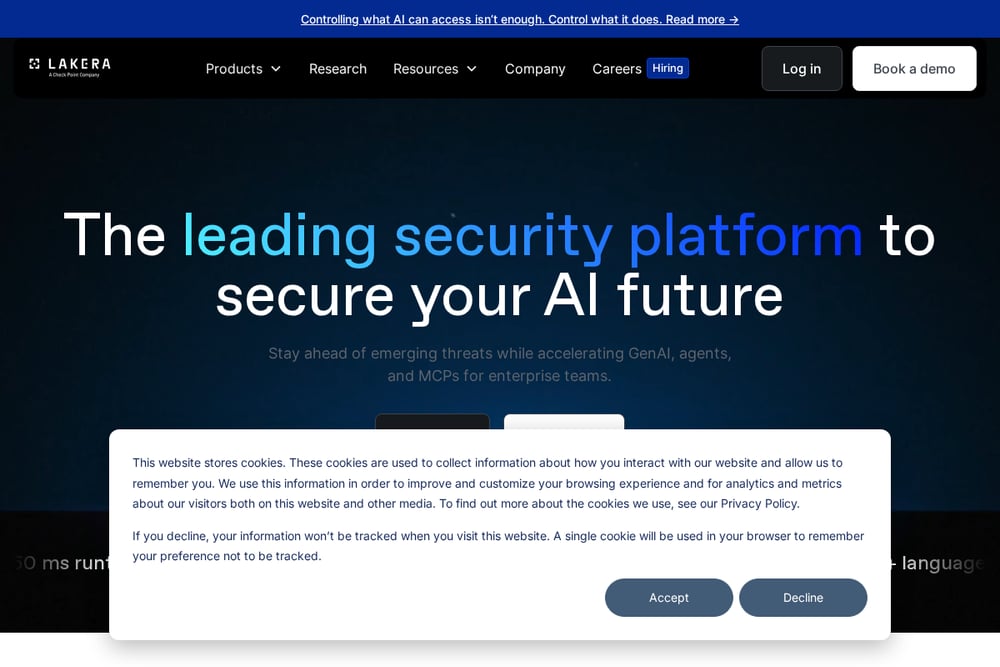 A screenshot of the Lakera website.
Lakera offers a comprehensive AI security platform that includes workforce AI security, agent security, and AI red teaming. Their guide on data loss prevention for the GenAI era is a must-read for anyone building an AI DLP strategy. They emphasize controlling what AI can do, not just what it can access, which is a key differentiator. Lakera's solutions are designed for both protecting employee AI usage and securing enterprise AI applications. If you need a holistic approach that covers both internal and external AI risks, Lakera is worth a look.
#3 BigID
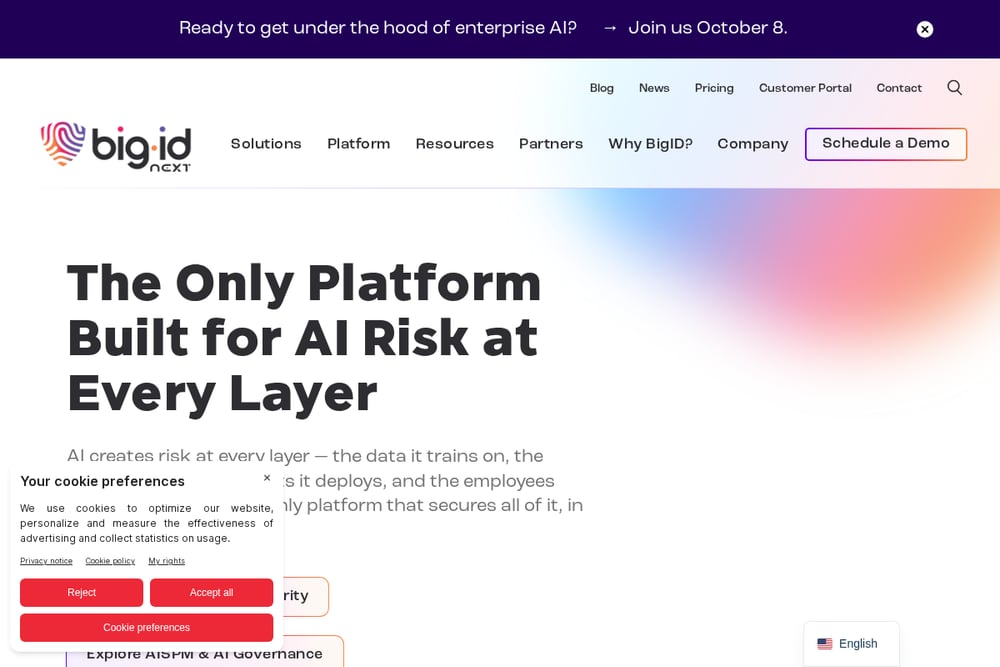 A screenshot of the BigID website.
BigID is a data security and privacy platform that has extended its capabilities to AI prompt security. It detects sensitive data in prompts and responses, enforces access controls, and redacts risky values across GenAI applications. BigID's strength lies in its deep data classification and discovery capabilities, which are now applied to AI conversations. This makes it a good fit for organizations that already use BigID for DSPM and want to extend that visibility to AI. The platform is enterprise-grade, with a focus on compliance and data minimization.
#4 Aona AI
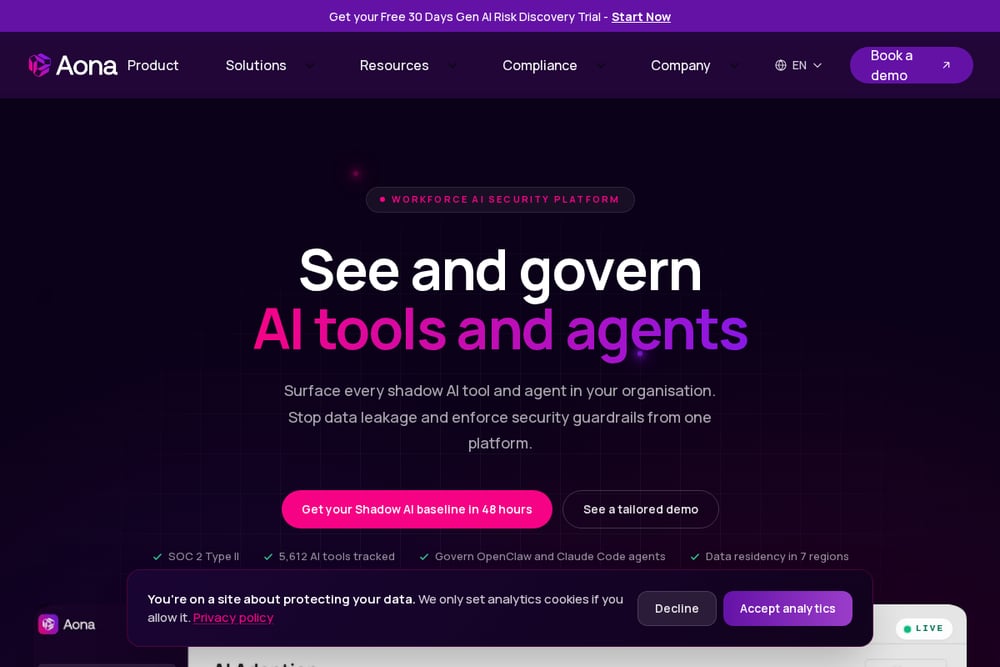 A screenshot of the Aona AI website.
Aona AI focuses specifically on prompt-level DLP, with a free 30-day GenAI risk discovery trial that helps you see which AI tools your team is using. Their blog post on AI data loss prevention is a practical guide that breaks down the differences between legacy DLP, CASB, and prompt-level AI DLP. Aona AI's approach is to provide visibility into shadow AI and then enforce policies on those tools. If you're starting from scratch and need to understand your AI usage first, Aona AI offers a low-friction entry point.
How to Choose the Right AI Data Security Tool
Start by assessing your current AI usage: which tools are your employees using, and what kind of data are they pasting? For enterprise-scale needs with agent security and red teaming, Prompt Security or Lakera offer more comprehensive platforms. If you already have a data security platform like BigID, extending it to AI prompts might be the most efficient path. And if you're still in the discovery phase, Aona AI's free trial can give you the visibility you need to make an informed decision.
Automating Your AI Data Boundary
The key to effective AI data security is automation. You can't rely on user training or manual policies. Instead, deploy a tool that automatically normalizes and inspects every prompt, blocks or pseudonymizes sensitive data in real time, and logs everything for audit. This kind of automation ensures consistent enforcement across your organization, without slowing down your team's productivity.
The Bottom Line
The era of uncontrolled AI data exports is over. Whether you choose an enterprise platform like Prompt Security, a comprehensive AI security suite like Lakera, or a data-centric approach like BigID, the important thing is to start building your AI data boundary today. Each of these tools offers a different path to the same goal: keeping your sensitive data out of AI models and your audit trail complete. Evaluate your needs, try a few, and pick the one that fits your workflow best.