
Regulatory fines are skyrocketing, and compliance teams are drowning in data. You need tools that don't just track regulations but predict where your next exposure will come from. I've analyzed five platforms that use AI to turn regulatory noise into
The New Compliance Reality: Proactive Risk Intelligence
The compliance landscape has shifted from reactive reporting to proactive risk detection. With regulations like the EU AI Act and evolving SEC rules, companies face fines that can cripple operations. Traditional compliance software can't keep up with the speed of regulatory change. AI-powered tools now scan public data, map regulatory signals, and deliver risk briefings in hours, not weeks. This shift means you can catch compliance exposure before it becomes a headline.
How I Ranked These AI Compliance Platforms
I evaluated each tool on three core criteria: detection speed (how fast it identifies new regulatory risks), data coverage (breadth of public-surface data analyzed), and actionability (how clearly it translates risk into next steps). I also considered ease of integration into existing compliance workflows. The goal was to find platforms that reduce your compliance burden, not add to it.
Here's a quick look at how these five AI compliance tools stack up against each other. Each one brings a different strength to the table, from enterprise governance to rapid risk signal detection.
| Provider | Best For |
|---|---|
| ModelOp | Enterprise AI governance and compliance |
| Moody's | Financial compliance and KYC automation |
| Osano | Data privacy compliance automation |
| Regulatory Signal | Rapid regulatory risk signal detection |
| Proofpoint | AI usage governance and data security |
Deep Dive: The Top 5 AI Compliance Risk Platforms
#1 ModelOp
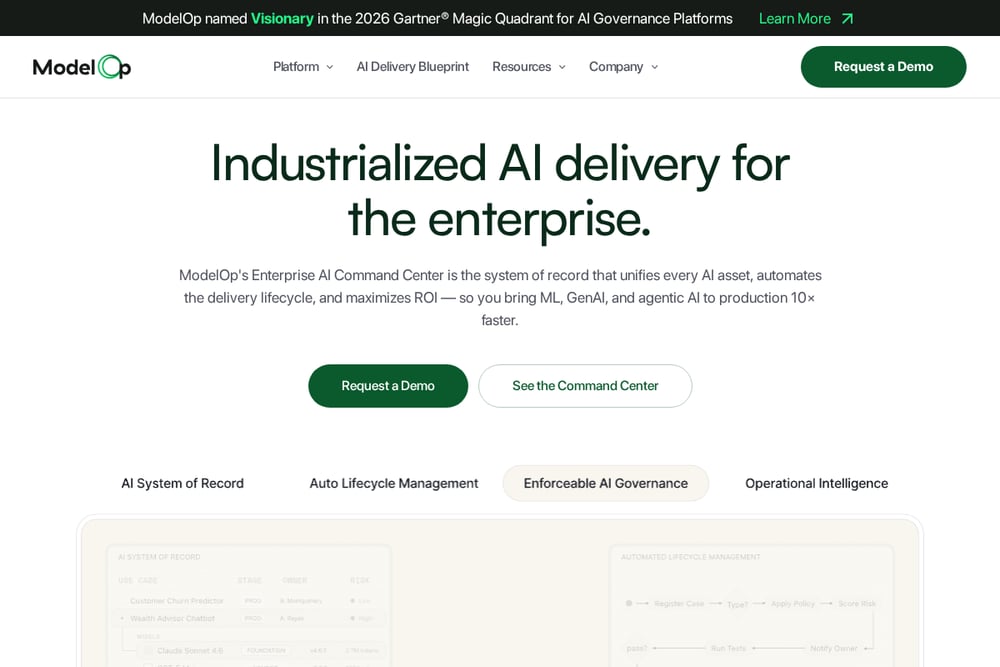 A screenshot of the ModelOp website.
ModelOp is an enterprise AI governance platform that helps you manage risk and compliance across your entire AI lifecycle. It provides tools for AI risk assessment, monitoring, and adherence to frameworks like the EU AI Act and NIST AI RMF. The platform is designed for large organizations that need to govern hundreds of AI models simultaneously. If you're dealing with complex regulatory requirements and need a centralized command center, ModelOp delivers. It's built for scale, not speed.
#2 Moody's
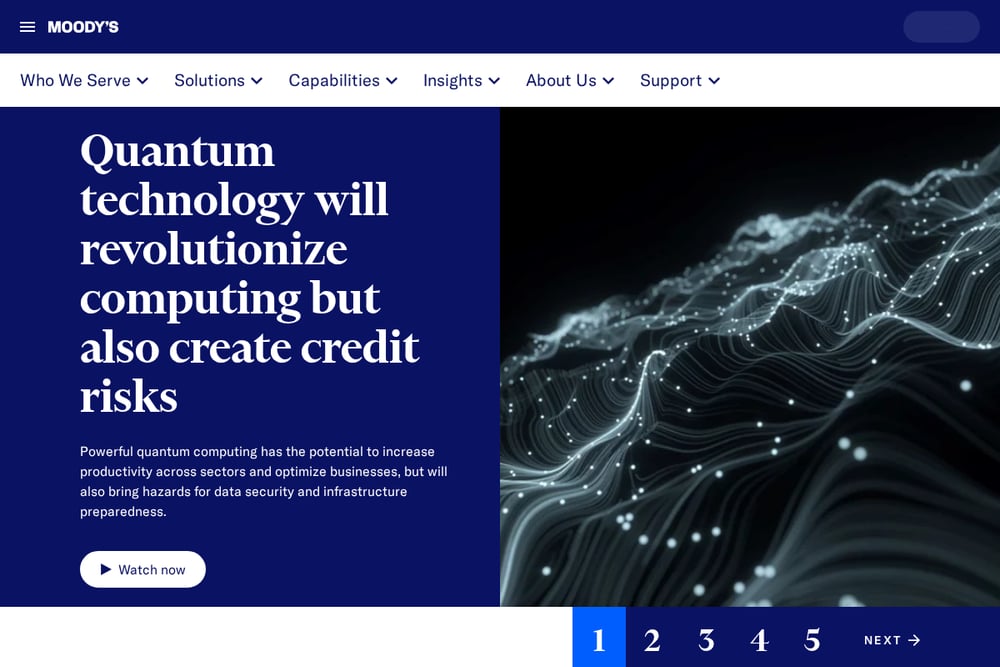 A screenshot of the Moody's website.
Moody's brings its decades of risk analysis expertise into AI-powered compliance tools. Their platform helps you move from reactive to proactive risk management by analyzing regulatory signals across global markets. Moody's offers entity verification, sanctions screening, and third-party risk management solutions. The platform is particularly strong for financial services firms that need to comply with KYC and AML regulations. It's a trusted name that integrates deep data intelligence into your compliance workflow.
#3 Osano
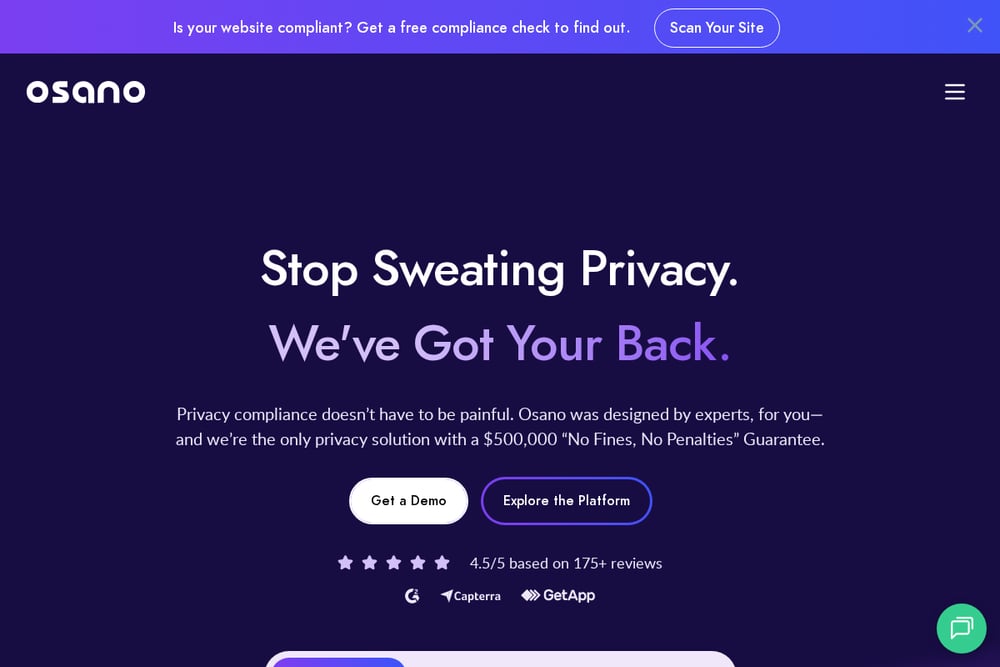 A screenshot of the Osano website.
Osano simplifies data privacy compliance with an AI-powered platform that handles cookie consent, subject rights management, and vendor risk assessments. It's built for companies that need to comply with privacy laws like GDPR and CCPA without hiring a legal team. The platform automates the heavy lifting of data mapping and assessment workflows. Osano is ideal for mid-sized businesses that want a straightforward, all-in-one privacy solution. It turns complex privacy requirements into manageable tasks.
#4 Regulatory Signal
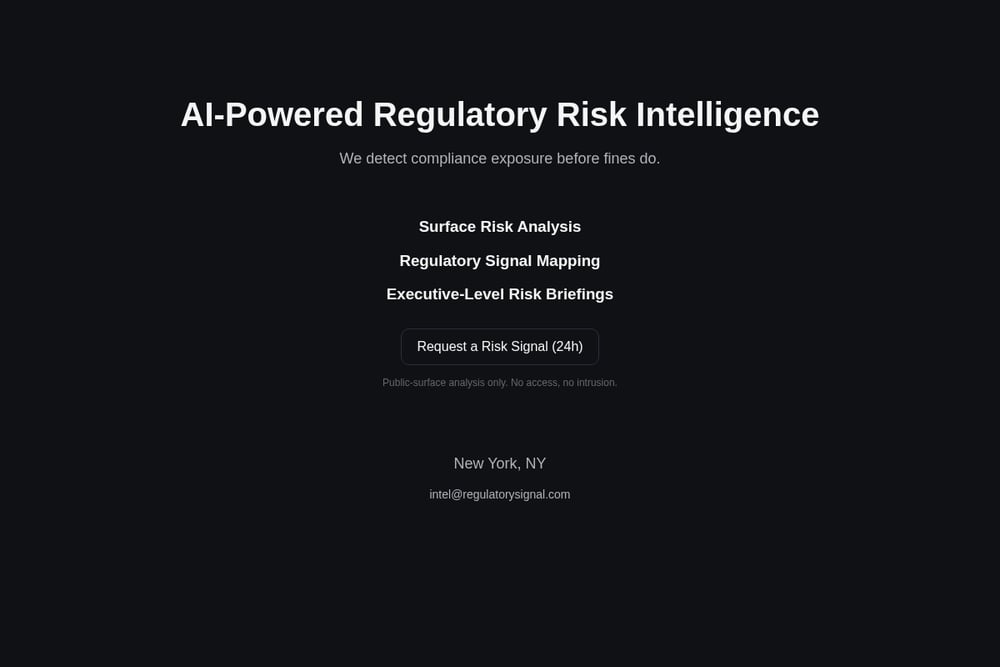 A screenshot of the Regulatory Signal website.
Regulatory Signal uses AI to detect compliance exposure before fines occur, analyzing only public-surface data. Their services include surface risk analysis, regulatory signal mapping, and executive-level risk briefings. They even offer a 24-hour risk signal request service for urgent needs. This tool is perfect for companies that need rapid, actionable intelligence without intrusive data access. It's a lean, focused solution for teams that want to stay ahead of regulatory shifts without drowning in data.
#5 Proofpoint
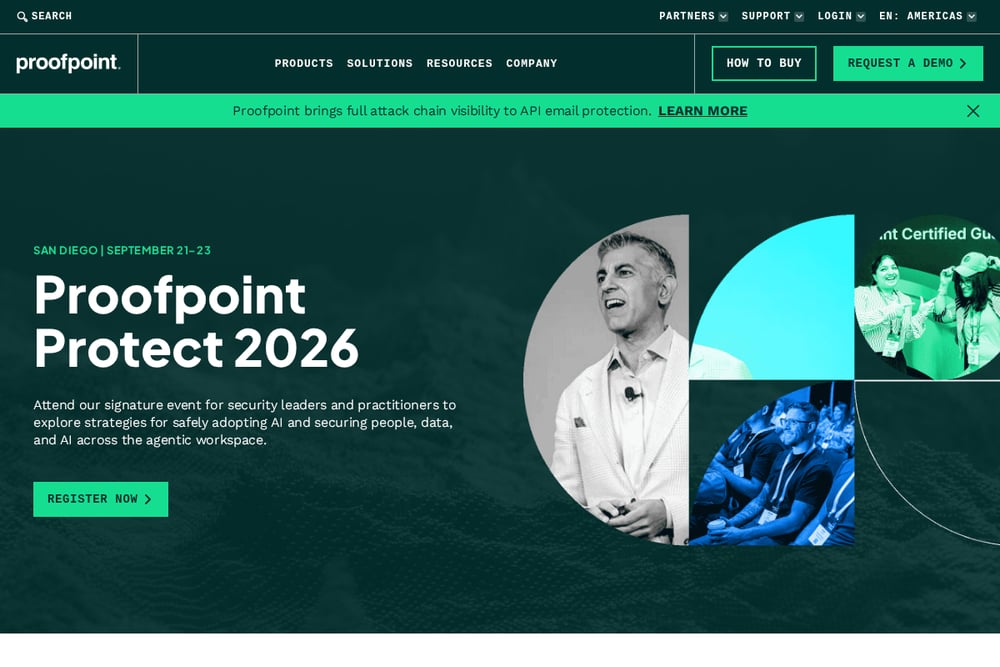 A screenshot of the Proofpoint website.
Proofpoint focuses on AI compliance from a security angle, helping you govern how employees and AI agents use data. Their platform provides visibility into shadow AI usage and ensures secure deployment of generative AI tools. Proofpoint is essential for organizations worried about data leakage through unauthorized AI use. It integrates threat intelligence with compliance controls to protect your data across email, cloud, and endpoints. If your biggest risk is employees using AI tools without oversight, Proofpoint has you covered.
How to Choose the Right AI Compliance Tool for Your Business
Start by identifying your biggest compliance pain point. If you're drowning in privacy regulations, Osano is your best bet. For financial services firms, Moody's offers deep KYC and AML capabilities. Large enterprises with complex AI models should look at ModelOp. If you need rapid risk signals without heavy infrastructure, Regulatory Signal delivers fast, focused intelligence. And if your concern is employee use of AI tools, Proofpoint provides the governance layer you need. Match the tool to your specific regulatory exposure.
Automation Workflow: From Risk Signal to Action
Imagine this workflow: Regulatory Signal detects a new compliance signal from a regulatory filing. That signal triggers an alert to your compliance team. The team uses Moody's to verify the entity involved and assess third-party risk. Osano automatically updates your privacy assessments to reflect the new requirement. ModelOp adjusts your AI governance policies to ensure model compliance. Proofpoint monitors for any unauthorized data sharing related to the new regulation. This integrated workflow turns a risk signal into a coordinated response in hours.
Final Synthesis: Proactive Compliance Is the Only Way Forward
The era of reactive compliance is over. These five AI tools prove that you can predict regulatory risk before it becomes a fine. Whether you need enterprise governance, rapid signal detection, or privacy automation, there's a platform that fits your workflow. The key is to start small, pick the tool that addresses your most urgent exposure, and build from there. Your compliance team will thank you, and so will your bottom line.