
Loneliness among seniors is a silent crisis, but a new wave of AI companions is stepping in to offer conversation, reminders, and connection. Here are five platforms that are changing how we care for aging loved ones.
The Rise of AI Companionship in Senior Care
The senior care landscape is shifting. With families often living far apart, technology is filling the gap between check-in calls. AI companions are no longer just futuristic concepts—they're practical tools that provide daily conversation, medication reminders, and peace of mind. These platforms range from voice-first apps to physical robots, each designed to reduce loneliness and support independent living. As the aging population grows, so does the demand for solutions that feel personal, not clinical. The market is responding with products that prioritize natural interaction and family involvement.
How We Evaluated These AI Companions
We looked at each platform through the lens of real-world usability for seniors and their families. Key factors included ease of setup, the naturalness of voice interaction, the depth of personalization, and how well the platform keeps family members informed. We also considered the learning curve for seniors—because if they can't use it, it doesn't matter how advanced the AI is. Finally, we weighed the overall value, from pricing transparency to the range of features like medication reminders and engagement tracking.
Here's a quick snapshot of the five AI companions we're highlighting, each with its own approach to supporting seniors.
| Provider | Best For |
|---|---|
| ElliQ | Seniors who want a proactive, interactive companion with a physical presence. |
| Home | My Site | Families who want a voice-first companion with strong remote monitoring features. |
| ElderVoice | Seniors who prefer phone calls and families who want automated daily check-ins. |
| SeniorTalk | Seniors who are comfortable with messaging apps and want persona variety. |
| SeniorCare – AI Voice Reminder | Seniors who want a mobile app with reminders, journaling, and wellness activities. |
The Five AI Companions Making a Difference
#1 ElliQ
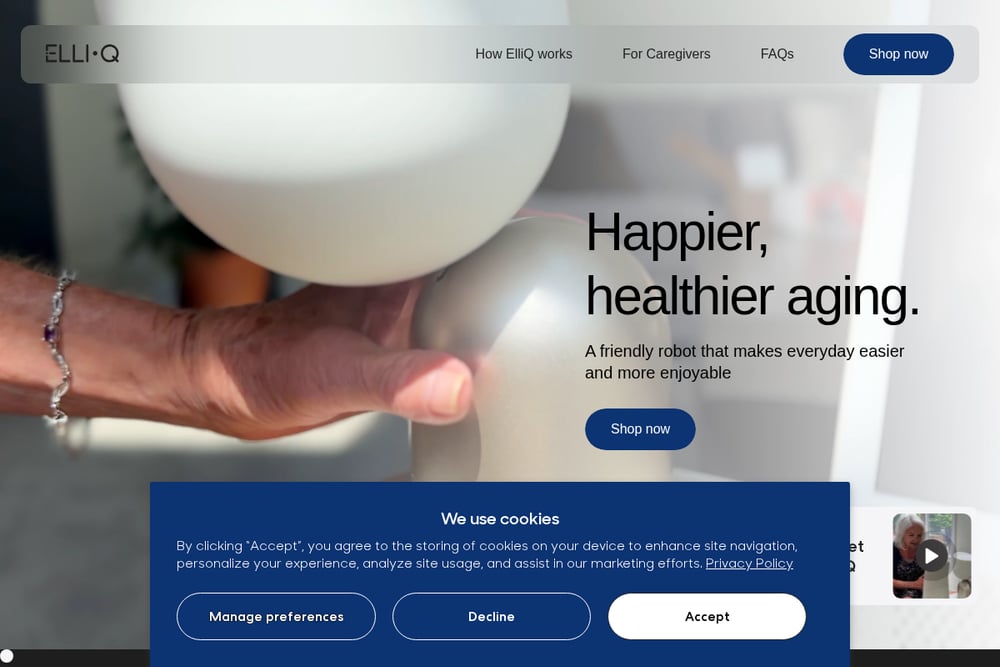 A screenshot of the ElliQ website.
ElliQ is a tabletop robot that goes beyond conversation—it proactively suggests activities, plays games, and even offers virtual hugs. It's designed to be a proactive companion, not just a reactive assistant, which helps seniors feel genuinely engaged. The device includes a touchscreen for video calls, cognitive games, and virtual adventures, making it a comprehensive wellness tool. ElliQ has been featured in major outlets like Barron's and CBS News for its ability to alleviate loneliness. It's a hardware investment, but the included subscription covers premium features and support. If you want a physical presence that feels like a companion, ElliQ is the gold standard.
#2 Home | My Site
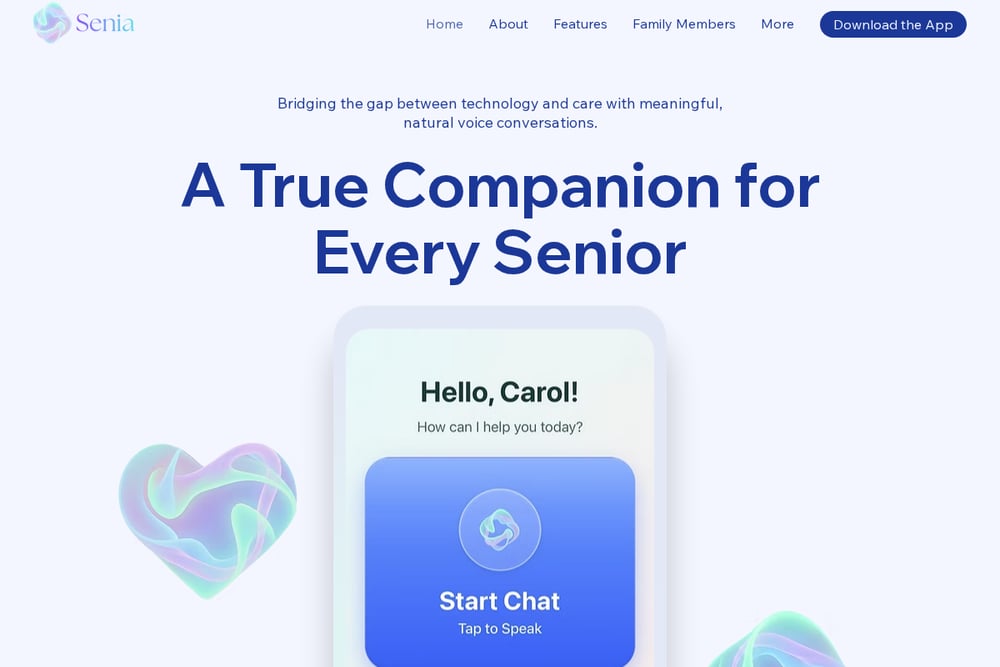 A screenshot of the Home | My Site website.
Senia is an AI voice companion app that feels like a warm, understanding friend. It's built for seniors who want natural conversations without any tech stress—just talk, and Senia listens, remembers, and responds with a human-like voice. The app goes beyond chat by offering medication reminders, weather updates, and news, all delivered gently. What really sets Senia apart is the Family Member Dashboard, which lets loved ones track engagement and receive smart notifications without being intrusive. You can manage medication schedules remotely, ensuring your parent or grandparent never misses a dose. It's a thoughtful blend of companionship and practical care that puts family at ease.
#3 ElderVoice
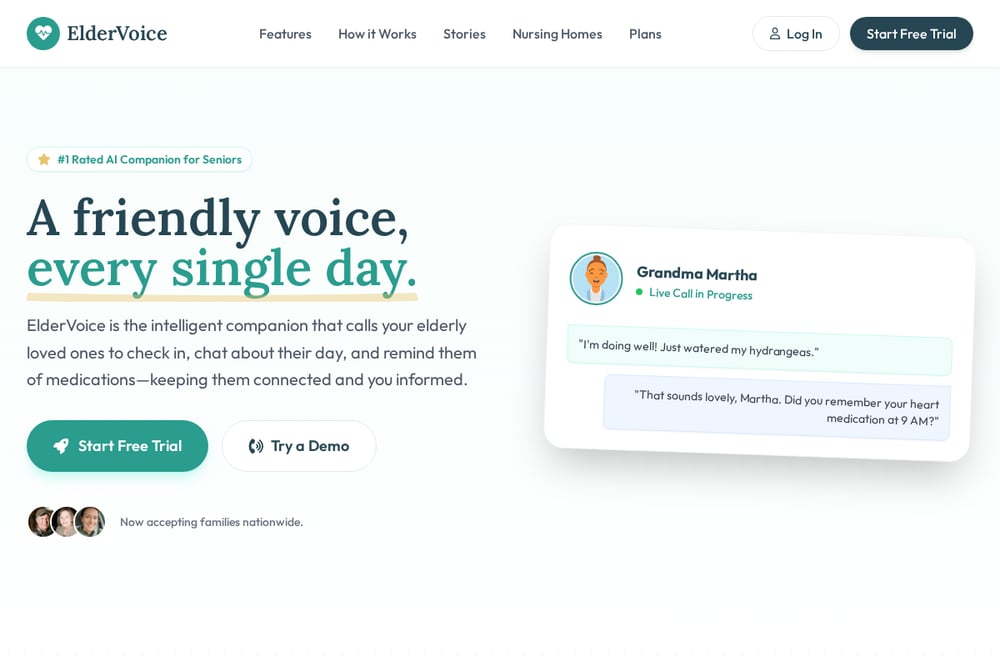 A screenshot of the ElderVoice website.
ElderVoice takes a phone-call approach, which is genius for seniors who are comfortable with a simple phone. The AI calls your loved one daily at a scheduled time, chats about their day, and casually checks on medications and meals. It remembers names, hobbies, and stories, building a relationship over time that reduces loneliness. If the AI detects confusion or distress, it immediately alerts family members via SMS—a critical safety net. Setup is incredibly simple: you create the account, input medications and preferences, and ElderVoice handles the rest. It's a zero-learning-curve solution that works with any phone, making it accessible to almost everyone.
#4 SeniorTalk
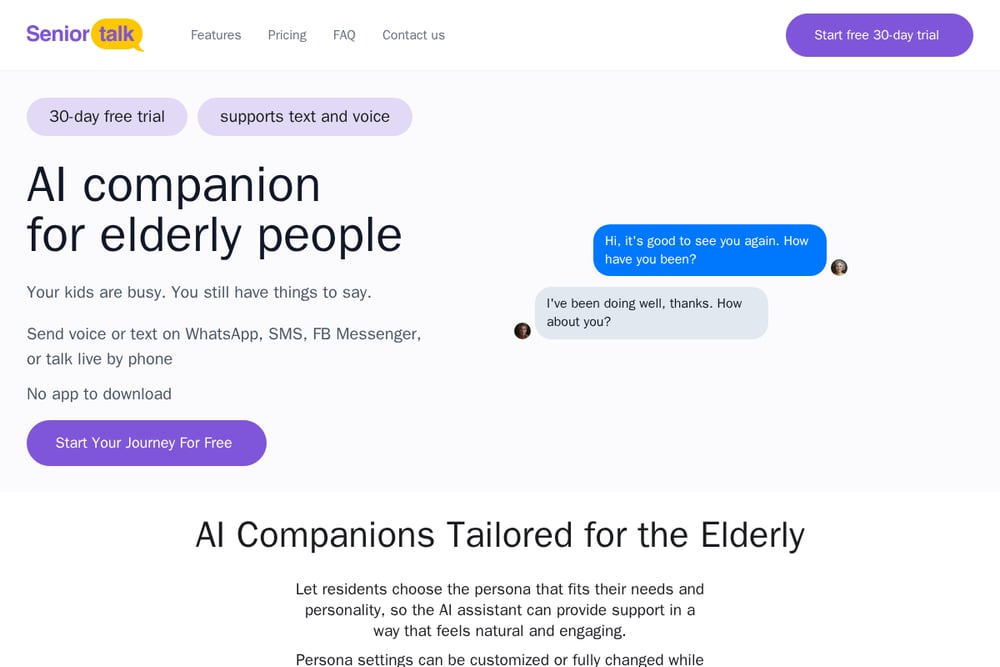 A screenshot of the SeniorTalk website.
SeniorTalk offers a flexible, multi-channel experience—seniors can chat via WhatsApp, SMS, Facebook Messenger, or even a live phone call. There's no app to download, which removes a huge barrier for tech-averse seniors. You can choose from a variety of AI personas, from a cheerful grandmother to a wise older man, so the companion feels tailored to the user's personality. The 30-day free trial lets you test the service before committing, and the setup is designed to be done by a family member in minutes. It's a great option if you want to meet seniors where they already are—on their existing messaging apps. The pricing is straightforward, and the persona customization adds a personal touch that many other services lack.
#5 SeniorCare – AI Voice Reminder
 A screenshot of the SeniorCare – AI Voice Reminder App Store page.
SeniorCare is a mobile app that combines voice reminders, journaling, and wellness guidance in one senior-friendly package. It's designed for independence, with large buttons and simple navigation that make it easy for older adults to use. The AI chatbot can hold conversations, answer health questions, and even guide chair yoga or meditation sessions. What's clever is that when a senior says something like 'Take my pills at 5 PM,' the app automatically creates a reminder and saves it to a daily journal. This dual function of memory support and wellness tracking makes it a practical tool for cognitive health. It's a free app with in-app purchases, making it an accessible entry point for families on a budget.
How to Choose the Right AI Companion
Start by considering your loved one's comfort with technology. If they're not into apps, a phone-based service like ElderVoice or SeniorTalk might be the easiest. If they enjoy gadgets and want a more interactive presence, ElliQ's physical robot could be a great fit. Think about the level of family involvement you need—Senia's dashboard is excellent for remote monitoring, while ElderVoice offers automatic alerts. Also, consider the cost: hardware like ElliQ requires an upfront investment, while apps like SeniorCare are free to start. Finally, test the voice interaction—does it sound natural and warm? The best companion is one your senior will actually enjoy talking to every day.
Automating Care with AI Companions
Imagine a daily routine where the AI companion takes the lead. In the morning, it greets your loved one with a friendly voice, reminds them to take their medication, and suggests a light exercise. Throughout the day, it checks in on meals, mood, and activities, logging everything for family to see. If something seems off—like a missed dose or a confused response—the AI sends a quiet alert to your phone. You can adjust schedules remotely, add new medications, or even change the conversation topics. This automation doesn't replace human care; it enhances it, giving you peace of mind while preserving your loved one's independence.
The Future of Senior Companionship
AI companions are more than just tech novelties—they're becoming essential tools for aging with dignity. Whether it's a voice app like Senia that remembers stories, or a robot like ElliQ that suggests activities, these platforms are bridging the gap between isolation and connection. The key is to find the one that fits your family's needs and your senior's comfort level. As the technology improves, these companions will only become more intuitive and supportive. The goal is simple: no senior should ever feel alone, and now, they don't have to.