AI coding assistants have moved from autocomplete to agents that plan, review, and ship. Development teams now choose among tools that differ in how they handle context, governance, and workflow. Here are seven worth knowing, described by what they do and who they suit.
How We Picked These Tools
Each entry is based on the company's own product pages. No company is ranked as better or worse; the numbers are a plain list order.
| Provider | Best For |
|---|---|
| GitHub Copilot | Teams already working on GitHub |
| Cursor | Teams adopting agentic development workflows |
| Tabnine | Teams focused on quality engineering |
| Windsurf | Teams managing multiple agents and models |
| Sourcegraph | Teams with large, complex codebases |
| Qodo | Teams needing governance and review quality |
| Amazon Q Developer | Teams building on AWS |
The 7 Tools in Focus
#1 GitHub Copilot
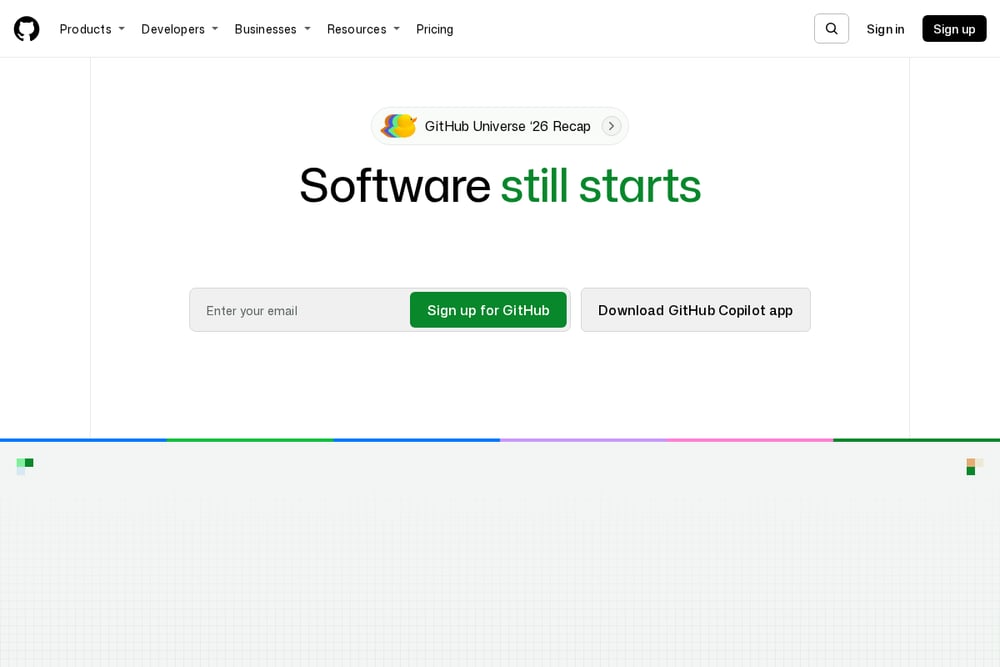 A screenshot of the GitHub Copilot website.
GitHub Copilot is described as an AI coding agent for tasks, projects, and automated work. It sits alongside repository hosting, code review, and collaboration on GitHub, so teams can use it where their code already lives. Copilot reviews proposed code changes and is offered with enterprise-grade AI features for businesses. It suits teams that want AI assistance integrated into their existing GitHub workflow.
#2 Cursor
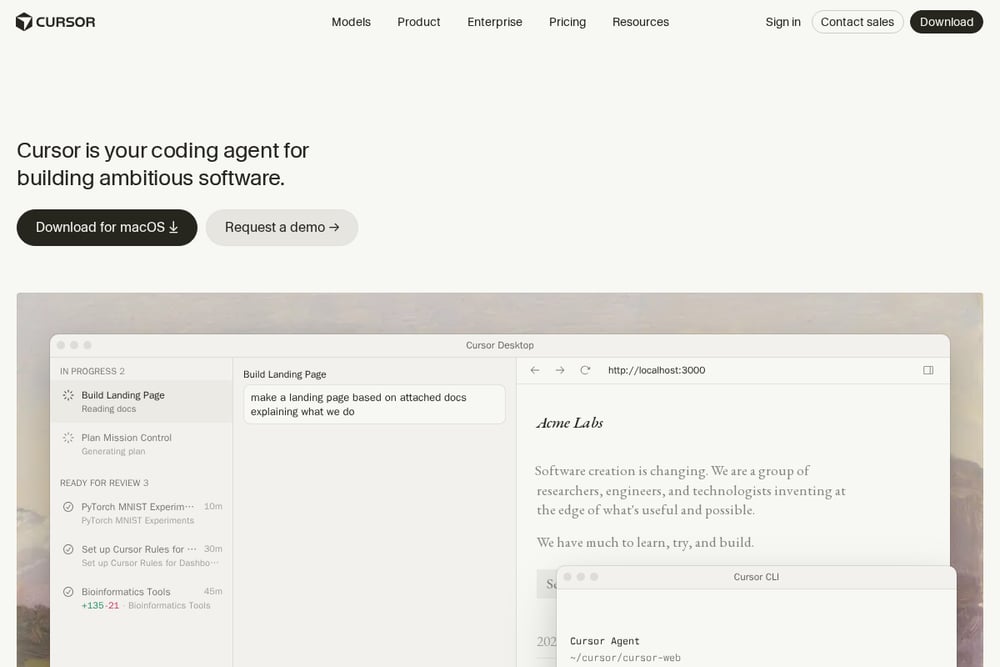 A screenshot of the Cursor website.
Cursor describes itself as a coding agent for building ambitious software. It offers a desktop interface and a CLI, and its agents can work autonomously and run in parallel. Cursor also runs in the terminal, collaborates in Slack, and reviews PRs in GitHub. It suits teams that want agentic development across multiple surfaces.
#3 Tabnine
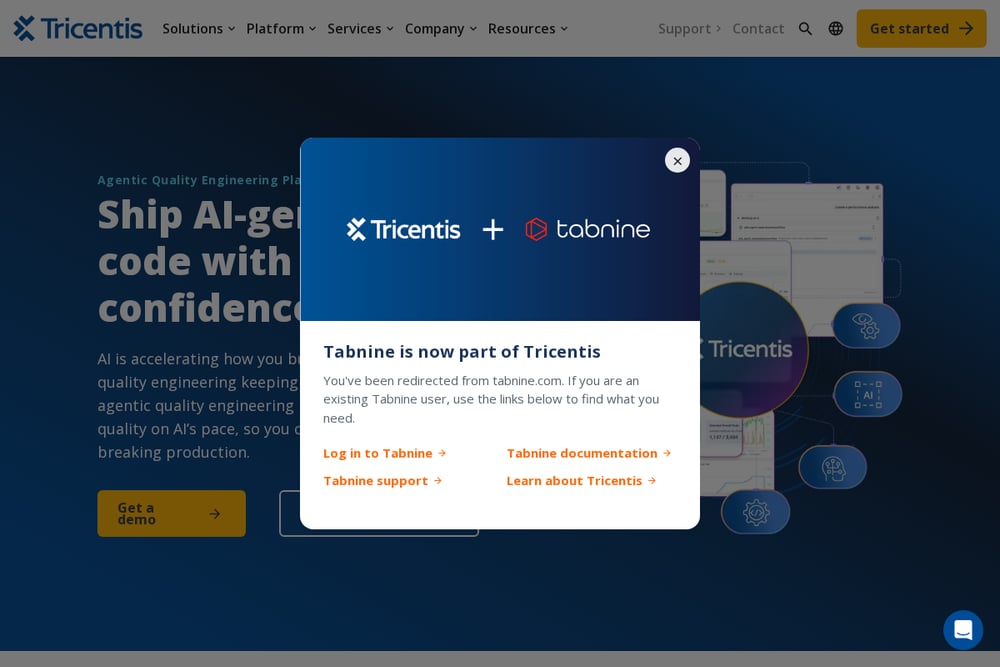 A screenshot of the Tabnine website.
The provided source page for Tabnine is a Tricentis page about an agentic quality engineering platform. It describes a platform that puts quality on AI's pace so teams can ship fast without breaking production. The page discusses agentic coding outpacing traditional testing and offers a control plane for quality agents with governance and human-in-the-loop approvals. It suits teams focused on quality engineering alongside AI-assisted development.
#4 Windsurf
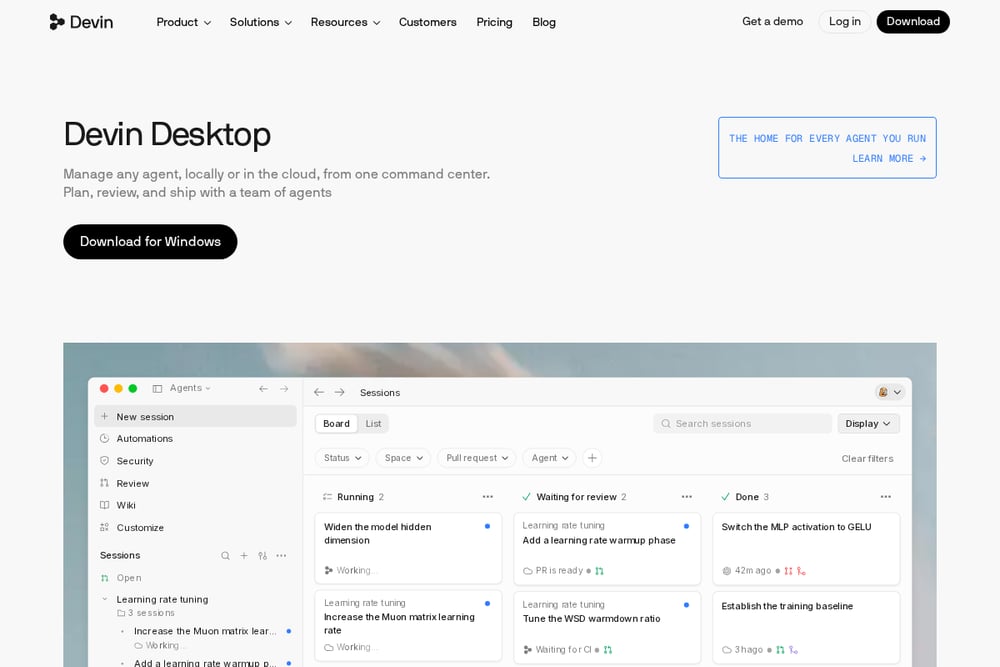 A screenshot of the Windsurf website.
The provided source page for Windsurf is a Devin Desktop page describing a command center for managing any agent, locally or in the cloud. It lets teams plan, review, and ship with a team of agents, and supports managing favorite agents and frontier models in one place using the Agent Client Protocol. It also describes coordinating agent swarms and handoff between local and cloud agents. It suits teams that want a single place to manage multiple agents and models.
#5 Sourcegraph
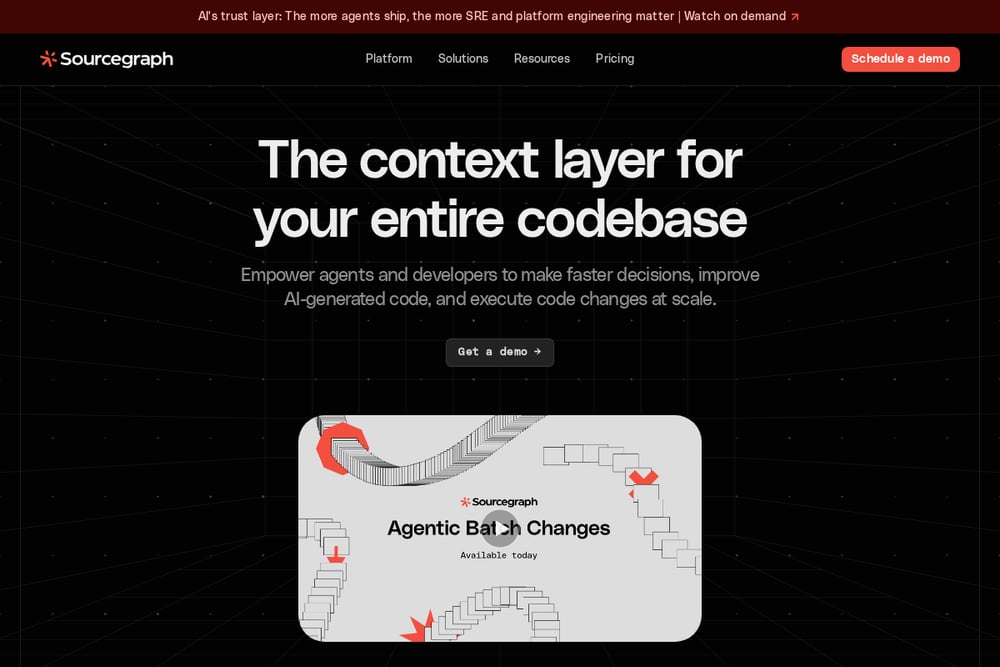 A screenshot of the Sourcegraph website.
Sourcegraph describes itself as the context layer for an entire codebase, empowering agents and developers to make faster decisions and execute code changes at scale. It offers code search, deep search with citation-backed answers, and agentic batch changes for code changes at scale. It also provides MCP code graph knowledge for agents and is built for large monorepos and multi-repo architectures. It suits teams working with large, complex codebases.
#6 Qodo
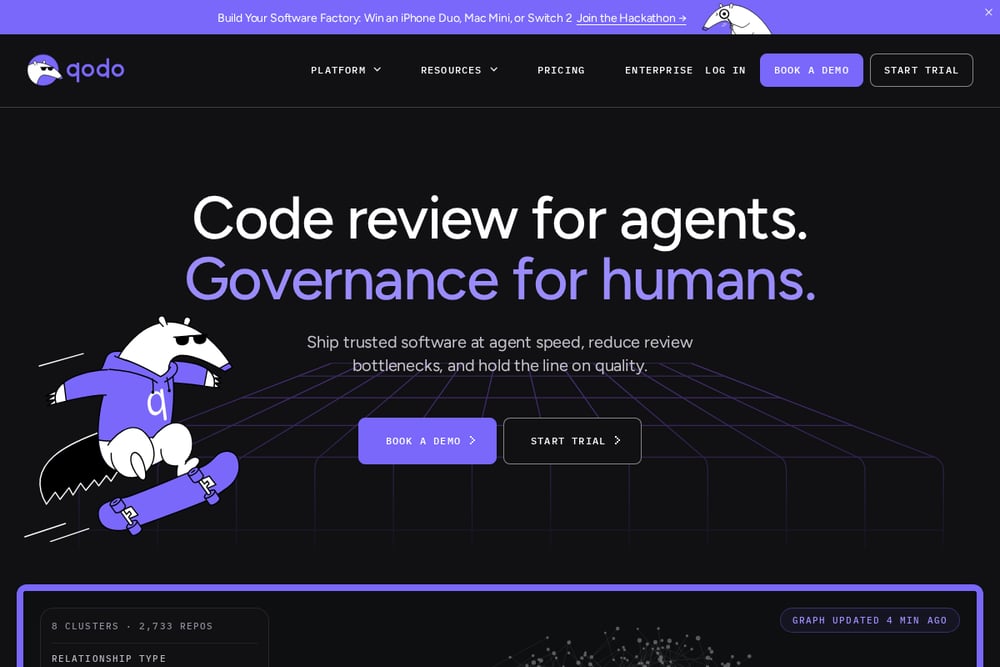 A screenshot of the Qodo website.
Qodo describes itself as code review for agents and governance for humans, helping teams ship trusted software at agent speed. It offers multi-agent code review, a wisdom base that brings codebase and PR history into the agentic SDLC, and rules and skills that turn organizational knowledge into enforceable standards. It also provides cross-repo review and a software map to track the blast radius of changes. It suits teams that want governance and review quality across repositories.
#7 Amazon Q Developer
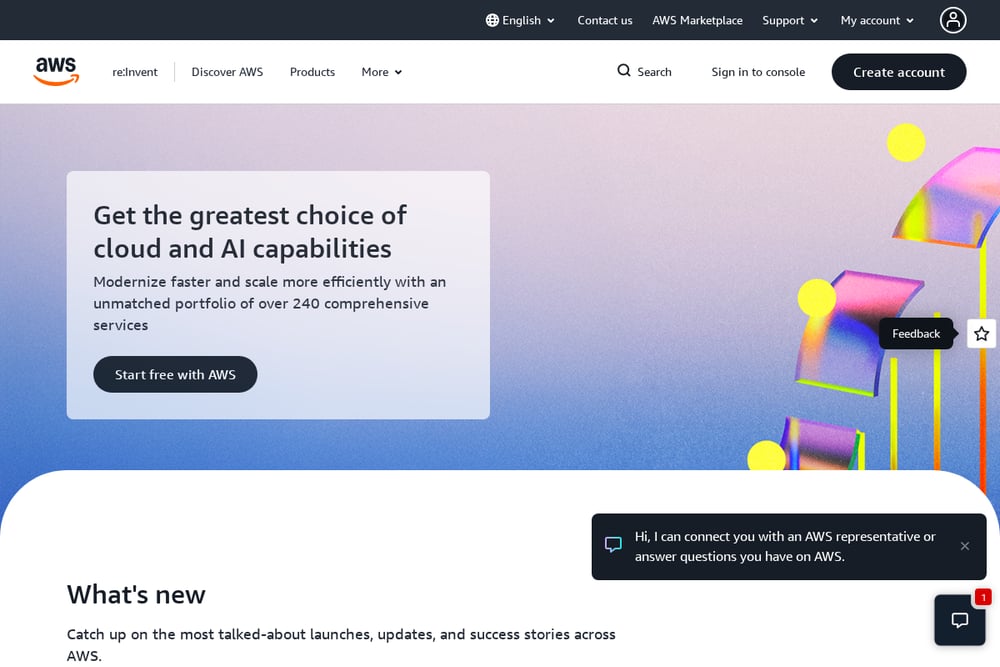 A screenshot of the Amazon Q Developer website.
The provided source page for Amazon Q Developer is the AWS homepage, which describes AWS as a cloud platform and highlights Kiro, a tool that turns a prompt into requirements, a design, and implementation tasks. The page also mentions connecting a coding agent and starting to build. It suits teams already building on AWS that want to connect coding agents to their cloud workflow.
Which One Should You Choose?
Consider where your code lives, how much agent autonomy you want, and how much governance your team needs. Match the tool to your existing workflow rather than chasing features. Each option above is worth knowing for different development team needs.
Final Thoughts
These seven AI coding assistants cover a range of development team needs, from repository-integrated agents to quality governance and large-codebase context. None is claimed to be best; the right fit depends on your workflow, codebase size, and governance requirements.
Know a company that belongs on this list? Email us at editorial@peekwire.com.