
You can't be everywhere, but your business can. These five platforms watch the signals you'd miss and bring you the problems while they're still cheap to fix.
The New Watchtowers: AI Monitoring for Business Health
Businesses generate endless signals—deals, accounts, meetings, usage, billing—but most of them get lost in the noise. Traditional dashboards show you what already happened, not what's about to go wrong. AI monitoring tools are changing that by continuously scanning your data sources and surfacing anomalies early. Whether it's a quiet account, a stalled deal, or a reputational risk, these platforms give you the foresight to act before small issues become fires. The market is crowded, but the best tools focus on turning raw data into decisions you can approve in minutes.
How We Evaluated These Platforms
We looked at each tool's ability to monitor business signals across different domains—from internal operations to external reputation. We considered the depth of integrations, the clarity of the alerts, and how actionable the insights are. We also weighed the ease of setup and whether the platform offers a pilot or trial. Each tool excels in a specific area, and we highlight what stood out for each without ranking them against each other.
Here's a quick look at the five tools we're covering, each with its primary strength.
| Provider | Best For |
|---|---|
| Signal AI | Reputation and risk intelligence at scale |
| Asqend — find out what’s wrong while it’s still cheap to fix | Early detection of internal business problems |
| LogicMonitor | IT infrastructure and AIOps monitoring |
| Visualping | Webpage change and competitor monitoring |
| Perigon | API-driven news and signal monitoring |
The Five Tools, Up Close
#1 Signal AI
 A screenshot of the Signal AI website.
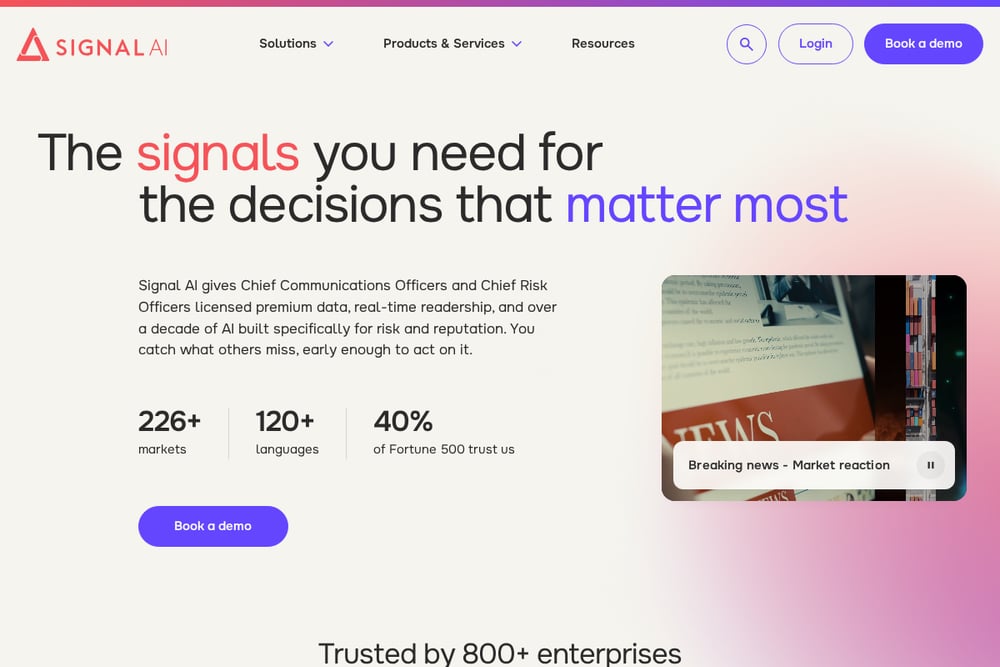
Signal AI scans over 5.5 million articles a day across 226 markets and 120+ languages, giving you real-time media intelligence. It's built for reputation management and risk intelligence, so you can spot a crisis before it hits your board agenda. The platform scores risks by frequency and impact, helping you prioritize what needs attention. If you're in PR, communications, or corporate strategy, this is your early warning system. It integrates with your existing AI tools, making it a flexible addition to your stack. You'll get board-ready reports that benchmark your reputation against competitors.
#2 Asqend — find out what’s wrong while it’s still cheap to fix
 A screenshot of the Asqend website.
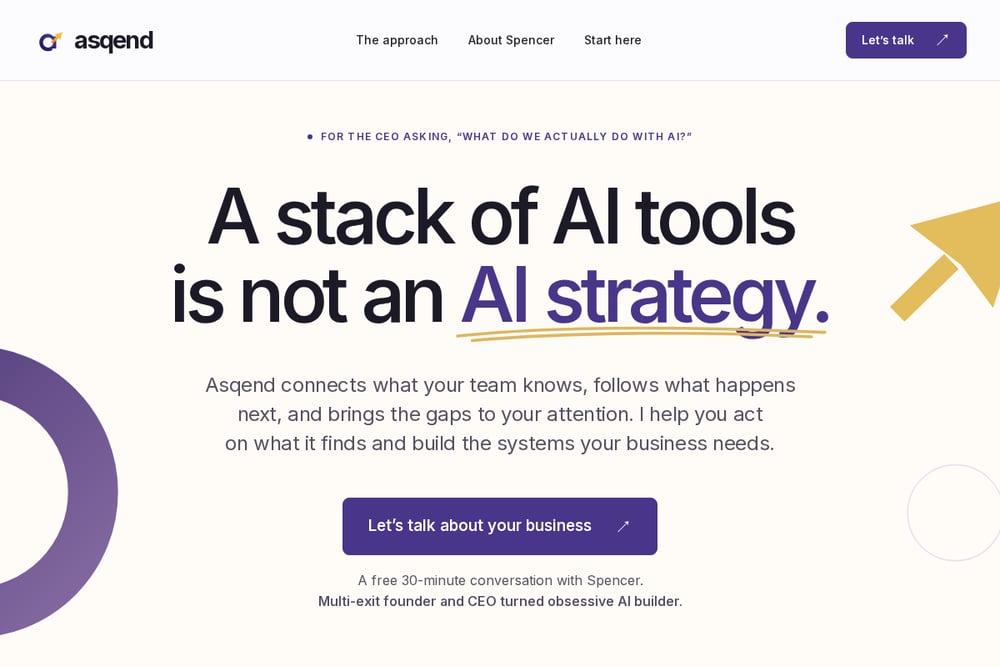
Asqend watches your deals, accounts, meetings, and billing—the internal signals that often go unnoticed until they become fires. It connects to your CRM, meeting tools, product analytics, and comms, then surfaces problems with ready-to-approve solutions. You get a daily review that you can do out loud, plus a report showing what each approved move earned. The 2-week pilot runs on your real accounts, so you see value immediately. It's like having a virtual COO that never sleeps, bringing you only the decisions that need your judgment. If you're tired of being the last to know, this is your answer.
#3 LogicMonitor
 A screenshot of the LogicMonitor website.
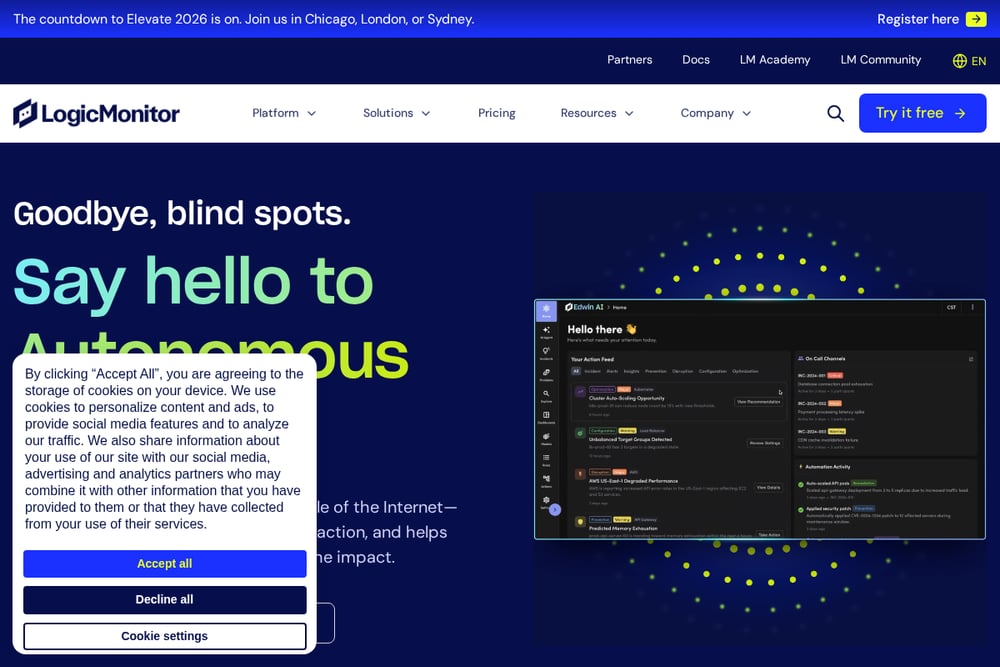
LogicMonitor is an AI-powered observability platform that monitors your entire IT infrastructure, from servers to cloud services. Its agentic AIOps, Edwin AI, autonomously detects, diagnoses, and resolves issues across your environment. You get real-time visibility into network, server, and database health, with AI that compresses alert storms into prioritized insights. It's built for IT teams that need to reduce mean time to resolution and avoid tool sprawl. With 3,000+ integrations, it fits into almost any stack. If your business runs on technology, this keeps your operations running smoothly.
#4 Visualping
 A screenshot of the Visualping website.
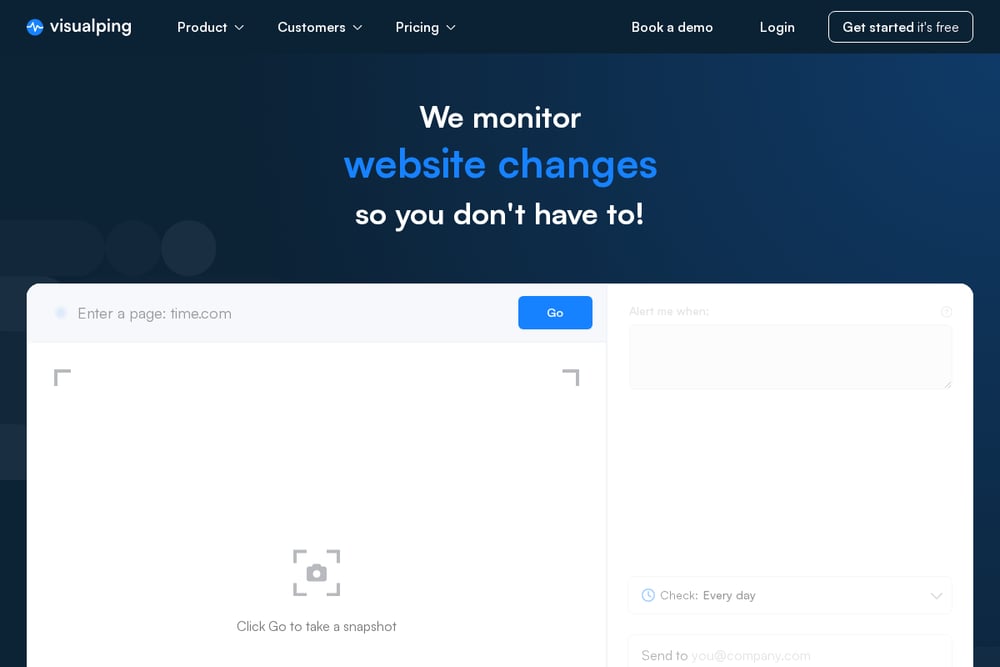
Visualping lets you monitor any webpage for changes, from competitor pricing to regulatory updates. It uses AI to detect meaningful changes and sends you alerts when something important happens. You can track competitor websites, job postings, or even your own site for regressions. It's a lightweight, easy-to-use tool that works for both personal and business use cases. The Chrome extension makes it simple to start monitoring any page in seconds. If you need to stay on top of external changes without heavy setup, this is your go-to.
#5 Perigon
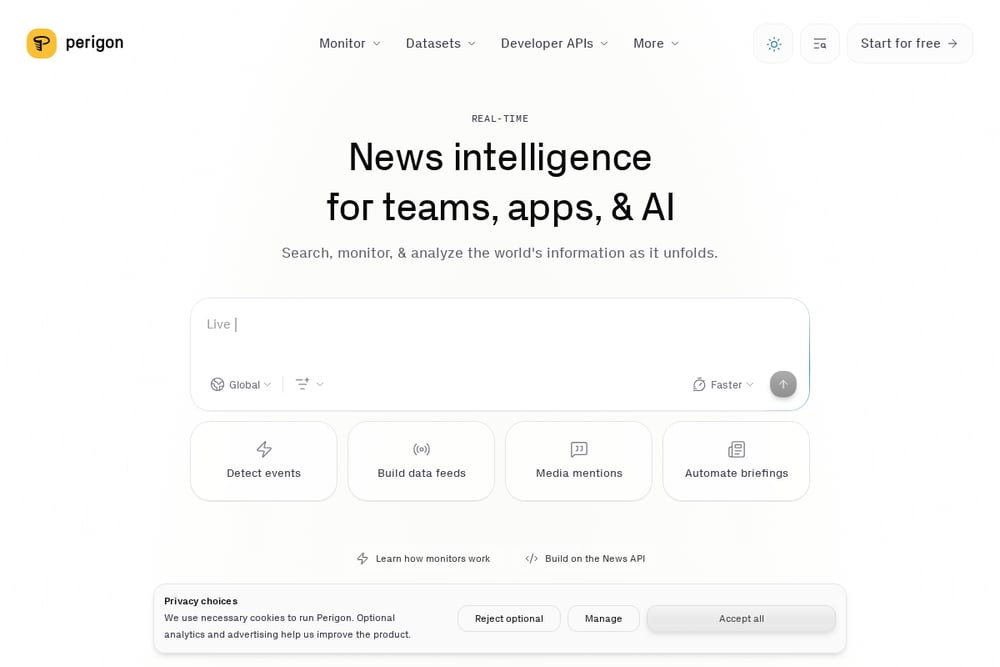 A screenshot of the Perigon website.
Perigon is an AI monitoring software that scans news, online mentions, and industry developments to detect signals that matter to your business. It uses natural language processing to filter out noise and alert you to relevant events. You can set up monitoring based on topics, entities, or keywords, and receive real-time alerts. It's designed for teams that need to stay informed without manual searches. The platform also offers developer APIs, so you can integrate its data into your own tools. If you're looking for a flexible, API-first approach to signal detection, Perigon is worth a look.
How to Choose the Right Monitoring Tool for You
Start by asking what signals you're missing. If it's internal—deals, accounts, meetings—look for a tool that integrates with your CRM and communication tools. If it's external—reputation, competitors, news—focus on media intelligence platforms. Consider the size of your team and how much automation you want. Some tools require heavy setup, while others offer quick pilots. Always check if the platform provides actionable alerts, not just raw data. And don't forget to test with a trial or pilot before committing.
Automating the Watch: From Signals to Actions
The best monitoring tools don't just alert you—they suggest actions. For example, Asqend watches a deal that's stalled and prepares a follow-up for your approval. Signal AI flags a reputational risk and drafts a response strategy. LogicMonitor detects a server issue and triggers a remediation playbook. Visualping sees a competitor's price drop and notifies you to adjust. Perigon spots a market shift and sends you a briefing. The workflow is simple: connect your data sources, let the AI analyze, and approve the moves that matter.
The Bottom Line: Pick Your Watchtower
You can't catch every problem early, but you can get closer. Each of these tools gives you a different kind of foresight—from internal operations to external reputation. The key is to choose the one that matches your biggest blind spot. Start with a pilot, see the value, and then scale. The cost of a small problem is nothing compared to the cost of a fire. So pick your watchtower and start watching.