
Agentic AI is moving fast, and securing it is no longer optional. Here are five platforms that are shaping how enterprises govern, protect, and audit their AI agents.
The New Frontier: Securing Agentic AI
As AI agents take on more autonomous tasks—from answering support tickets to executing financial transactions—the attack surface expands dramatically. Traditional security tools weren't built for this. They can't inspect the full context of an agent's decision: what it can reach, who it's acting for, and what it's trying to do. That's why a new category of AI agent security and governance platforms has emerged. These tools sit between your agents and the rest of your stack, enforcing policies in real time, blocking threats, and providing audit trails for compliance. In 2026, the stakes are higher than ever: a single misconfigured agent can leak sensitive data or trigger a costly breach. The platforms below are leading the charge, each with a distinct approach to keeping your agents safe.
How We Evaluated These Platforms
We assessed each platform on five key factors: deployment flexibility (self-hosted vs. cloud), depth of security coverage (prompt, RAG, tools, sessions), compliance readiness (OWASP, MITRE, NIST alignment), cost control features, and ease of integration. We also considered how well each platform fits the needs of regulated industries like finance, healthcare, and the public sector. What stood out for TrustGate AI was its uncompromising self-hosted model with zero data egress, making it a natural fit for air-gapped environments. Zenity impressed with its agentic identity and exposure management, while Palo Alto Networks brought enterprise-grade threat intelligence. Sweet Security focused on runtime behavioral monitoring, and Boomi leveraged its integration heritage to embed governance into workflows.
Here's a quick look at the five platforms, their best use cases, and what makes each one unique.
| Provider | Best For |
|---|---|
| Zenity | Comprehensive agentic AI security across diverse agent types |
| Self-Hosted AI Security Gateway for Agents | TrustGate AI | Self-hosted, zero-egress security for regulated industries |
| Palo Alto Networks | Enterprise-grade, integrated AI security within a larger security stack |
| Sweet Security | Runtime behavioral monitoring and anomaly detection for agents |
| Boomi | Governance embedded in integration and workflow orchestration |
The Five Platforms, Closer Look
#1 Zenity
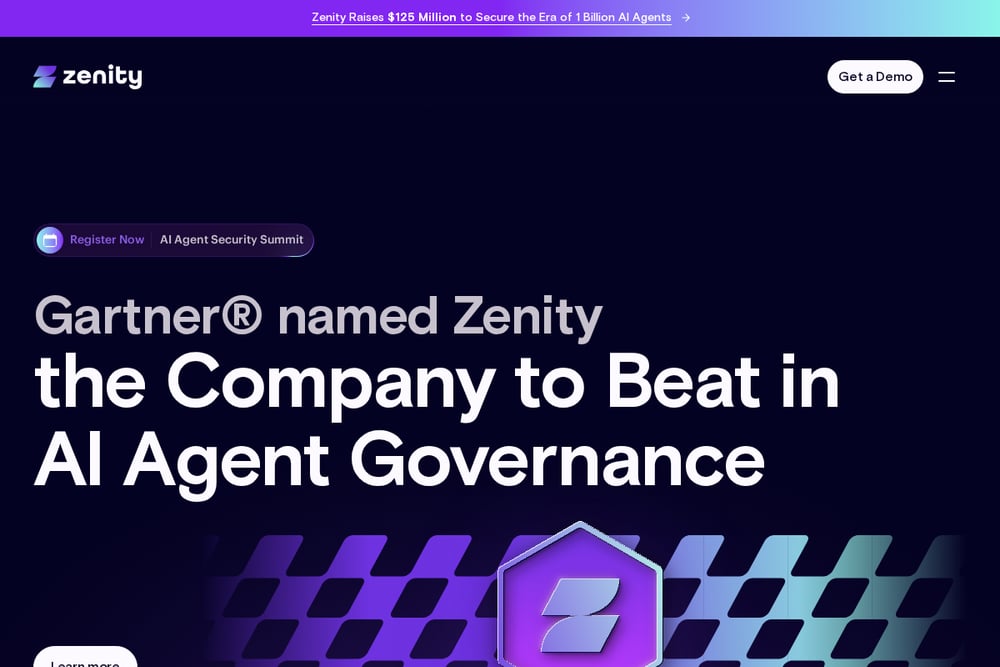 A screenshot of the Zenity website.
Zenity is a purpose-built AI agent security and governance platform that secures the entire decision-making process of agents. It surfaces exposure, steers actions, and closes gaps continuously, covering everything from agentic SaaS to coding agents. With its recent $125 million funding, Zenity is scaling to meet the demand for securing a billion agents. It excels at watching all layers of an agent's decision—what it can reach, who it's acting for, and what it's trying to do—in a single view. This makes it a strong choice for enterprises that need full coverage across multiple agent types. If you're looking for a cloud-native platform that can handle complex agent ecosystems, Zenity is a solid bet.
#2 Self-Hosted AI Security Gateway for Agents | TrustGate AI
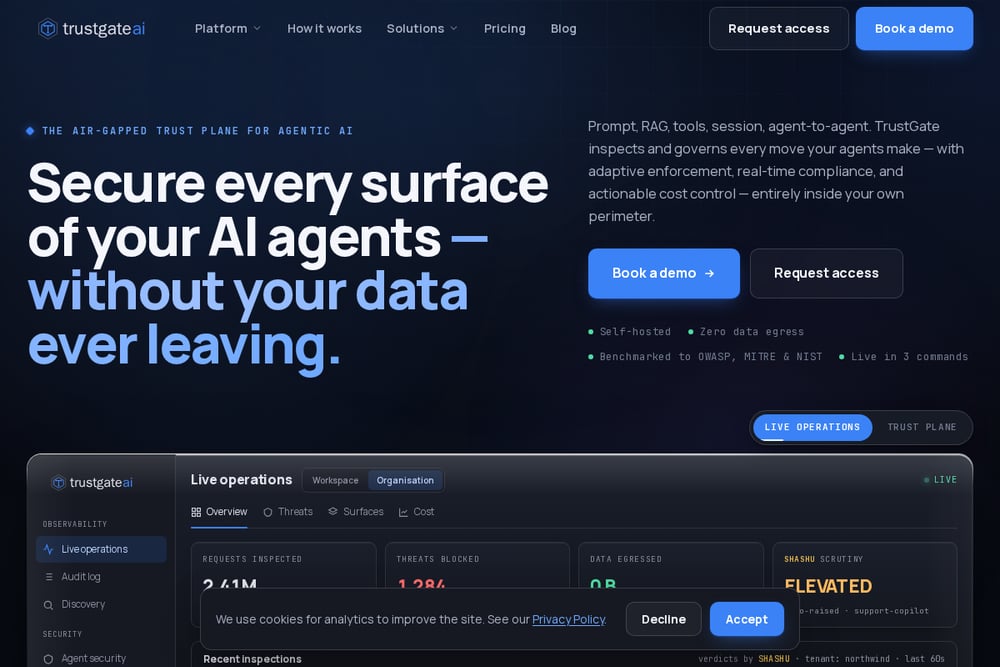 A screenshot of the TrustGate AI website.
TrustGate AI is a self-hosted security gateway that inspects and governs every surface of your AI agents—prompt, RAG, tools, session, and agent-to-agent—without your data ever leaving your environment. It's benchmarked to OWASP, MITRE, and NIST, making it a strong fit for regulated industries like finance, healthcare, and the public sector. The platform provides real-time compliance, crypto audit trails, and per-agent cost control, all within your own VPC. You can deploy it live in three commands, and it enforces zero data egress, which is a game-changer for air-gapped environments. If you need to keep sensitive data inside your perimeter while still securing your agents, TrustGate is built for you.
#3 Palo Alto Networks
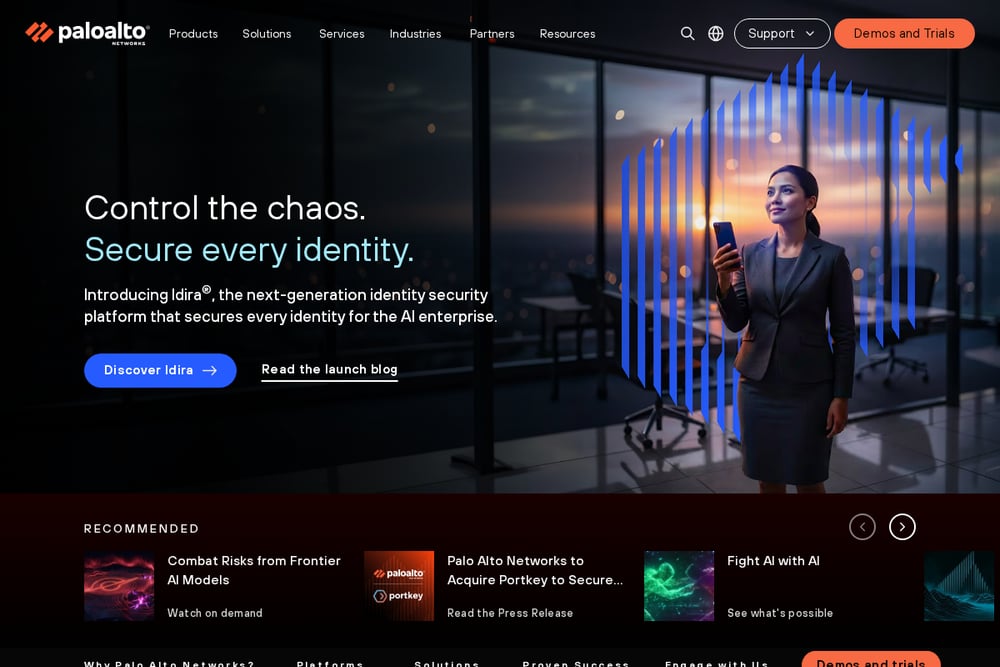 A screenshot of the Palo Alto Networks website.
Palo Alto Networks brings its enterprise security pedigree to agentic AI governance with a comprehensive guide and platform that covers the full agent lifecycle. Their approach emphasizes prevention before the attack, integrating AI security into their broader Prisma AIRS AI Gateway. They address top threats like shadow AI, data leakage, and destructive actions, and they provide a framework for implementing governance across the agent lifecycle. For organizations already invested in Palo Alto's ecosystem, this is a natural extension. It's a robust choice for enterprises that want a unified security posture across cloud, network, and AI.
#4 Sweet Security
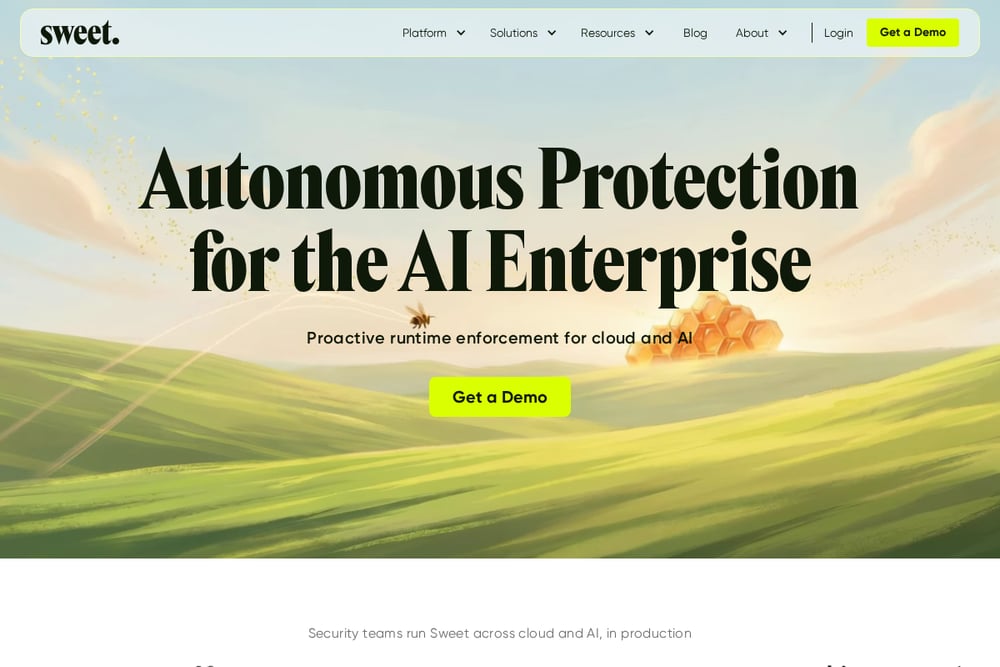 A screenshot of the Sweet Security website.
Sweet Security focuses on runtime behavioral monitoring for AI agents, providing governance that evaluates agent actions where they execute, not just inspecting prompts or model outputs. Their platform combines runtime visibility, policy enforcement, and identity context to keep agents within defined permissions and approval thresholds. This approach helps prevent runaway workflows and tool misuse, which are common pain points as agents gain more autonomy. Sweet Security is particularly strong for organizations that need to monitor agent behavior in real time and respond to anomalies quickly. If you're worried about what your agents are actually doing in production, Sweet Security gives you that visibility.
#5 Boomi
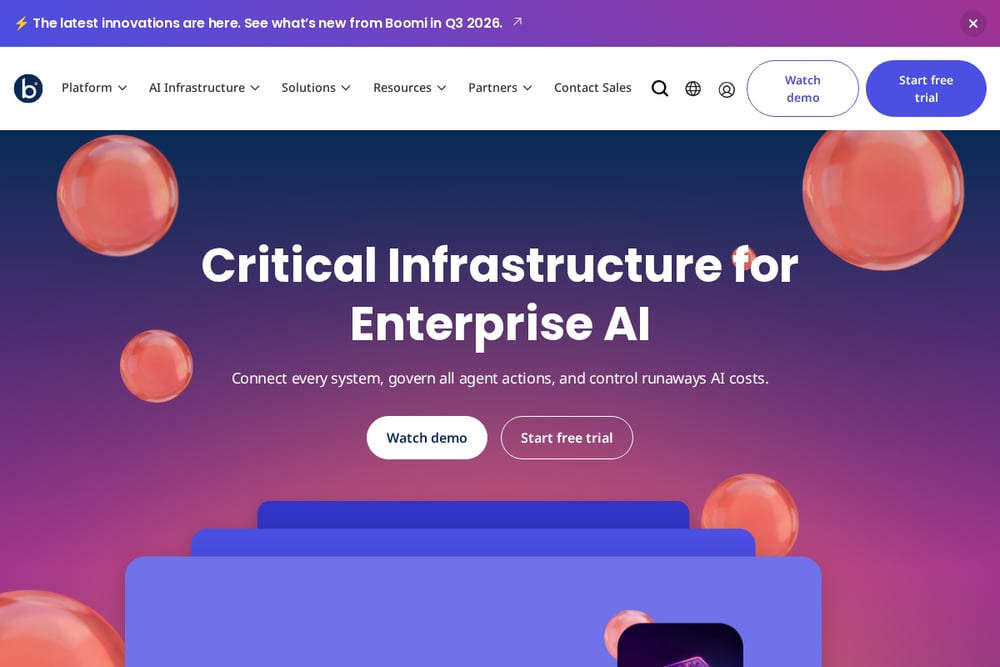 A screenshot of the Boomi website.
Boomi approaches AI agent governance from an integration and orchestration angle, embedding governance into the very workflows that agents execute. Their Agent Control Plane provides critical AI infrastructure for governing any agent, model, or data, and it integrates with over 1,000 enterprise applications. Boomi's strength lies in its ability to connect governance with data management and orchestration, making it a good fit for organizations that already use Boomi for integration. They also offer an AI Gateway to control every AI and MCP interaction, which is useful for standardizing access. If you're looking to govern agents as part of a broader integration strategy, Boomi is a practical choice.
How to Choose the Right AI Agent Security Platform
Start by asking yourself: where does your data need to live? If you're in a regulated industry with strict data residency requirements, a self-hosted solution like TrustGate AI is your best bet. If you're comfortable with a cloud-native approach and need to cover a wide variety of agent types, Zenity offers comprehensive coverage. Consider your existing security stack—if you're already deep in Palo Alto's ecosystem, their platform might integrate more smoothly. For real-time behavioral insights, Sweet Security is worth a look. And if your agents are tightly coupled with your integration workflows, Boomi's governance layer could be the missing piece. Don't forget to evaluate cost control features, as agent usage can spiral quickly. Finally, test the deployment process—you want something that goes live in hours, not months.
Automating Agent Security with TrustGate AI
TrustGate AI automates the entire security lifecycle for your agents. Once deployed in your VPC, it continuously inspects every prompt, RAG query, tool call, and session. The platform uses adaptive enforcement to block threats in real time, and it maintains a crypto audit trail for every action. You can set per-agent budgets and throttle usage automatically, preventing cost overruns. The dashboard gives you a live view of requests inspected, threats blocked, and data egressed—all with zero data leaving your perimeter. This means you can run agents with confidence, knowing that compliance is provable and security is self-healing.
The Bottom Line
Securing AI agents is not a one-size-fits-all problem. The five platforms above each bring a unique strength to the table, from TrustGate's self-hosted zero-egress model to Zenity's comprehensive coverage. As agentic AI becomes more embedded in business processes, the right governance platform will be a critical enabler—not just a safety net. Take the time to map your requirements, test a few options, and choose the one that fits your security posture and compliance needs. Your agents will thank you.