
Caring for an aging dog is a delicate balancing act. These five resources help you decide when to watch, when to act, and when to seek help.
The Growing Need for Objective Senior Pet Assessments
As dogs live longer, caregivers face tough calls about quality of life and urgent health changes. Traditional vet visits are reactive, but new tools aim to bring structure to daily observations. From clinical scales to digital trackers, the market is expanding to support pet parents with data-driven guidance. This roundup covers five distinct approaches, each with its own strengths and limitations.
How We Evaluated These Tools
We looked at each resource based on its practical usability, the depth of its assessment framework, and how clearly it communicates next steps. We also considered whether the tool is accessible to the average pet owner or geared toward veterinary professionals. Each entry excels in a specific area, from structured scoring systems to real-time monitoring.
Here’s a quick look at the five tools and what they offer.
| Provider | Best For |
|---|---|
| Lap of Love | Structured at-home quality-of-life scoring |
| Pawsure | Real-time urgency scoring and decision support |
| Caring Pathways | Holistic quality-of-life evaluation with supportive resources |
| AAHA | Evidence-based guidelines from a veterinary association |
| IVC Journal | Research-backed frailty assessment for aging dogs |
Detailed Look at Each Tool
#1 Lap of Love
 A screenshot of the Lap of Love website.
Lap of Love provides a comprehensive quality-of-life scale that helps you evaluate your senior pet’s comfort and happiness. Their blog post breaks down the assessment into key categories like mobility, eating, and hydration, making it easy to score your dog at home. They also offer a printable calendar to track daily changes, which is invaluable for spotting trends. This resource is backed by veterinary expertise and is widely used by pet owners facing end-of-life decisions. If you need a structured, paper-based approach, this is a solid starting point.
#2 Pawsure
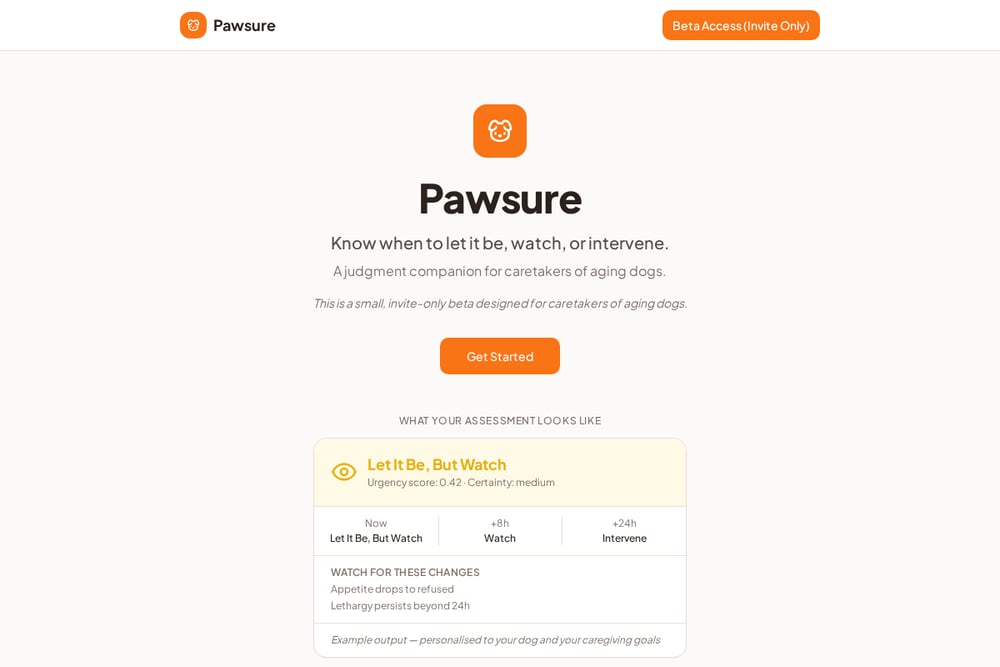 A screenshot of the Pawsure website.
Pawsure is an invite-only beta tool that acts as a judgment companion for caretakers of aging dogs. It provides an urgency score and a clear recommendation: let it be, watch, or intervene. The tool personalizes its output based on your dog’s specific health indicators and your caregiving goals. It aims to reduce unnecessary vet visits and stress while helping you avoid waiting too long when it matters. Although it doesn’t diagnose, it supports better decisions by giving you a structured way to interpret changes. This is a forward-thinking option for tech-savvy pet parents who want real-time guidance.
#3 Caring Pathways
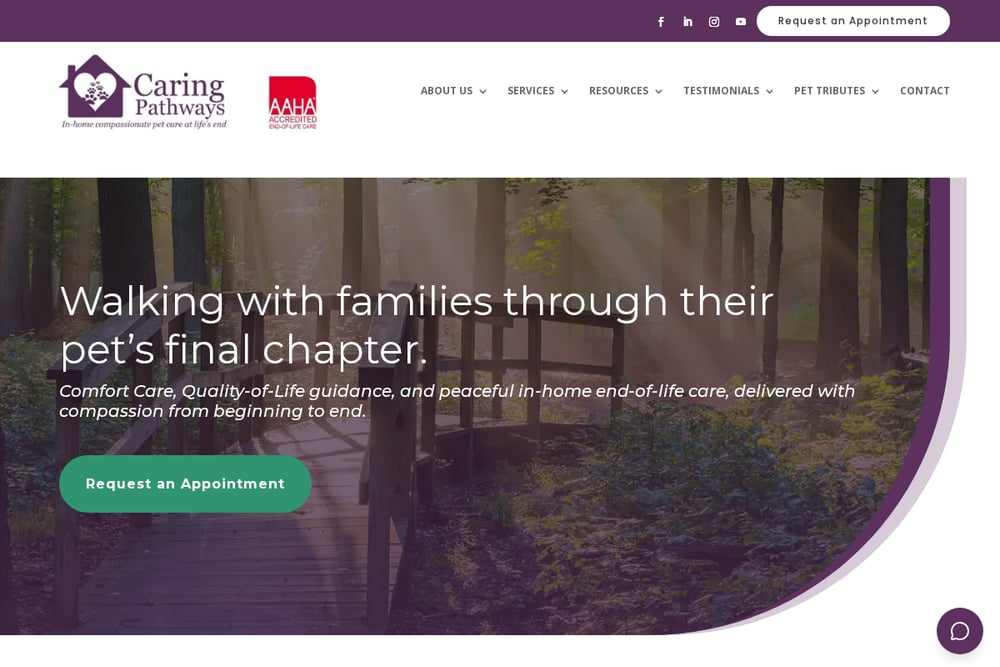 A screenshot of the Caring Pathways website.
Caring Pathways offers a Pathway to Care Assessment form that helps you evaluate your pet’s quality of life objectively. Their website provides a range of tools, including scales and articles, to guide you through the process. They emphasize compassionate support and practical resources, making it easier to have informed conversations with your vet. The assessment covers multiple dimensions of well-being, from physical comfort to emotional state. This is a great resource if you prefer a holistic, guided approach.
#4 AAHA
 A screenshot of the AAHA website.
The American Animal Hospital Association (AAHA) provides a professional-grade framework for assessing senior pet quality of life. Their guidelines are designed for veterinary practices but are accessible to pet owners seeking a rigorous standard. The assessment focuses on comfort, function, and overall well-being, helping you identify when additional support is needed. AAHA’s credibility ensures that the information is evidence-based and up-to-date. If you want a clinical perspective, this is a reliable source.
#5 IVC Journal
 A screenshot of the IVC Journal website.
IVC Journal highlights a frailty assessment tool developed by researchers at North Carolina State University. This tool specifically targets aging dogs and measures frailty through indicators like strength, weight, and activity levels. It’s a more research-oriented approach, ideal for those who want to understand the science behind aging. The journal article provides detailed insights into how the tool works and its potential applications. While it’s less consumer-friendly, it’s a valuable resource for staying informed on the latest developments.
How to Choose the Right Tool for Your Senior Dog
Start by considering your comfort with technology. If you prefer a simple checklist, Lap of Love or Caring Pathways offer printable forms. If you want real-time, personalized guidance, Pawsure’s beta might be worth requesting access to. For a clinical perspective, AAHA’s guidelines are a solid reference. And if you’re curious about the latest research, IVC Journal provides deep insights. Think about your dog’s specific needs and your own decision-making style.
Automating the Watchful Eye
Pawsure stands out by automating the assessment process. You input observations, and the tool calculates an urgency score and suggests a timeline for re-evaluation. This reduces the mental load of constantly second-guessing yourself. For a more manual approach, you can set reminders to fill out a quality-of-life scale daily. The key is to establish a routine that works for you and your dog.
Making the Call with Confidence
No tool can replace your veterinarian, but these resources can help you make more informed decisions between visits. Whether you choose a digital tracker like Pawsure or a traditional scale, the goal is the same: to give your aging dog the best possible quality of life. Use these tools to stay proactive, reduce stress, and know when it’s time to intervene.