
The commerce stack is being rebuilt for AI agents. These five platforms are leading the charge—here's what you need to know.
The Shift to Agentic Commerce
Commerce software was built for humans—now it's being rebuilt for AI agents. The next generation of commerce isn't just about checkout pages; it's about agents that launch campaigns, negotiate offers, and complete purchases on your behalf. This shift demands a new operating system, one that unifies payments, logistics, and customer intelligence under a single, agent-ready infrastructure. As businesses look to scale AI-driven interactions, platforms that offer seamless integration, global reach, and automation are becoming essential. The race is on to build the infrastructure behind the autonomous economy.
How We Evaluated These Platforms
We assessed each platform on its service scope—how fully it covers the commerce lifecycle from checkout to fulfillment—and its pricing clarity, looking for transparent models that fit businesses of different sizes. Local fit was another key factor, examining how well each platform adapts to regional payment methods, currencies, and shipping rules. We also considered the depth of AI integration, from AI studio tools to agent orchestration, and the developer experience, including APIs and sandbox environments. Finally, we looked at the ecosystem and partnerships, because a platform's strength often depends on its network.
Here's a quick look at the five platforms, their strengths, and what they're best for.
| Provider | Best For |
|---|---|
| commercetools Agentic Commerce | Enterprise-scale, AI-first commerce across B2C and B2B |
| Gonama - Tu ecommerce en Shopify – GOnama | AI-native commerce infrastructure with global checkout and logistics |
| Stripe Agentic Commerce Suite | Businesses already on Stripe wanting to add agentic payment capabilities |
| Agentic Commerce Protocol | Developers seeking an open, interoperable standard for agentic commerce |
| Reap Agentic Payments | Enabling AI agents to make payments with card issuing and stablecoin support |
The Deep Dive: Five Platforms Shaping Agentic Commerce
#1 commercetools Agentic Commerce
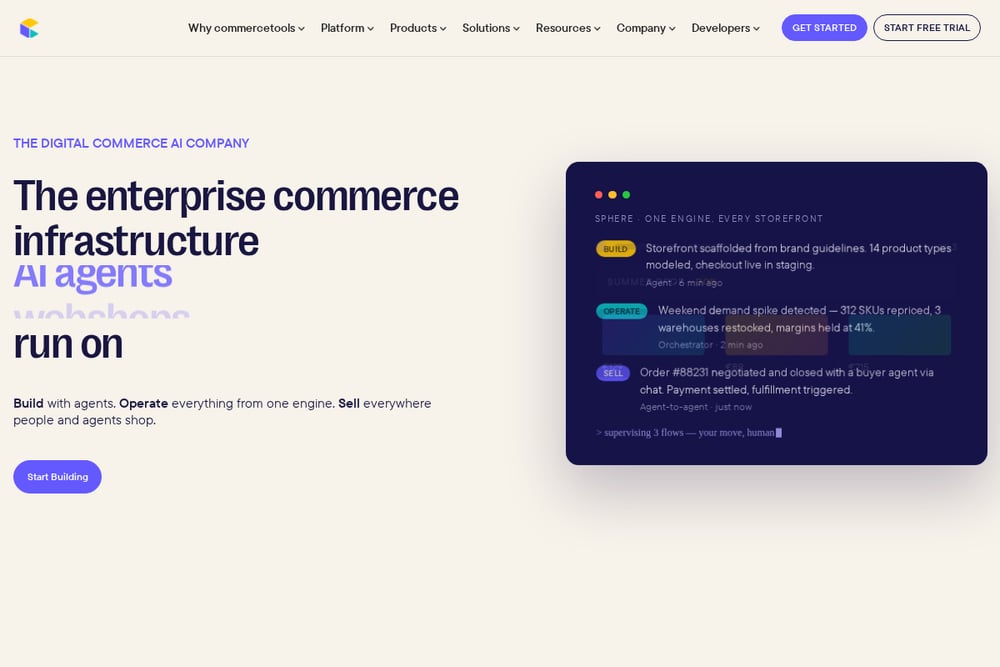 A screenshot of the commercetools Agentic Commerce website.
commercetools has evolved from a headless commerce pioneer into a full agentic commerce platform with its Sphere offering. It provides a cloud-native, API-first infrastructure that supports B2C, B2B, and hybrid models, making it a versatile choice for enterprises. The platform includes AgentSphere, a secure agent ecosystem, and MosAIc, an orchestration workbench for human and agentic teams. With AI Hub, it makes products discoverable in ChatGPT, Gemini, and Copilot, extending your reach. commercetools is recognized as a leader in the Gartner Magic Quadrant for Digital Commerce, which speaks to its enterprise credibility. If you're a large business needing a scalable, AI-first commerce backbone, this is a strong contender.
#2 Gonama - Tu ecommerce en Shopify – GOnama
 A screenshot of the Gonama - Tu ecommerce en Shopify – GOnama website.
GOnama positions itself as the next-generation operating system for e-commerce, built specifically for AI agents and humans. Its platform unifies global checkout, payments, and logistics, with features like local payment orchestration and smart last-mile logistics. The GOnama AI Studio includes AI Chat, Emagine Code, and AI Domain Experts, making it easy to inject intelligence into every layer of your commerce stack. It also offers commerce intelligence tools for analytics and customer insights, plus a developer platform with APIs and MCP support. For businesses looking to scale AI-driven customer interactions globally, GOnama provides a comprehensive, all-in-one infrastructure. It's particularly strong for those wanting to convert like a local in multiple markets.
#3 Stripe Agentic Commerce Suite
 A screenshot of the Stripe Agentic Commerce Suite website.
Stripe has leveraged its massive payments ecosystem to launch the Agentic Commerce Suite, designed to help businesses thrive in the AI-enabled commerce era. It builds on Stripe's existing strengths—online payments, checkout, billing, and fraud prevention—and extends them to agentic commerce. The suite includes tools like Authorization Boost and Link accelerated checkout, which can be integrated into AI agent workflows. Stripe's global reach, with support for 125+ payment methods, makes it a solid choice for businesses already using Stripe. The platform is PCI-compliant and secure, ensuring that agent transactions are safe. If you're looking for a payments-first approach to agentic commerce, Stripe is a reliable option.
#4 Agentic Commerce Protocol
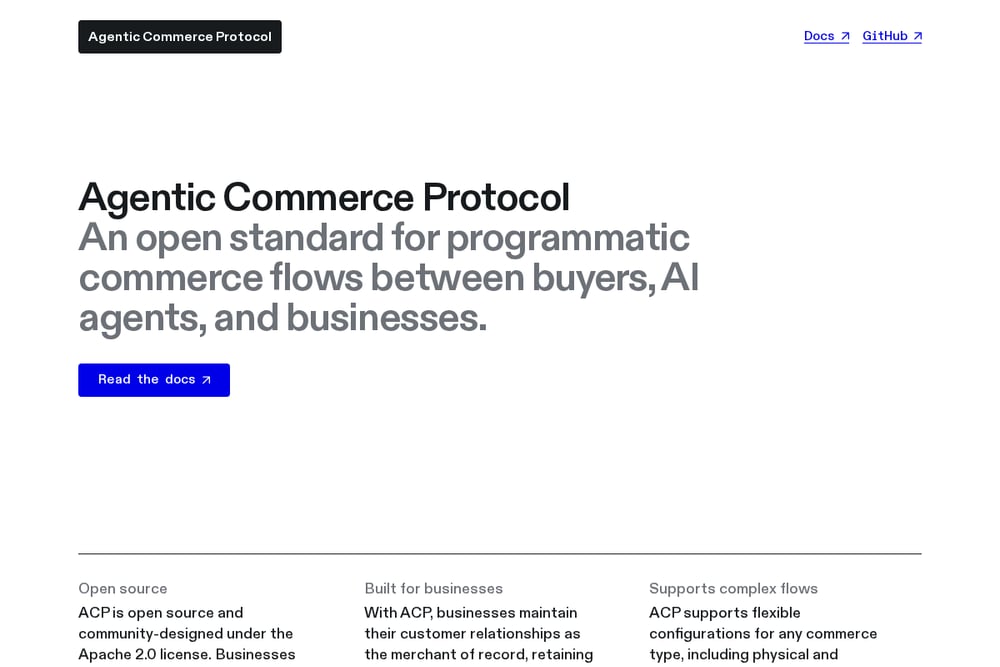 A screenshot of the Agentic Commerce Protocol website.
The Agentic Commerce Protocol (ACP) is an open standard for programmatic commerce flows between buyers, AI agents, and businesses. It's open source under Apache 2.0, meaning any business can implement the specification to transact with AI agents. ACP allows you to maintain your customer relationships as the merchant of record, giving you control over products, presentation, and fulfillment. It supports complex flows, including physical goods, digital products, subscriptions, and asynchronous purchases. The protocol is REST and MCP compatible, so it works with your existing infrastructure and payment processor. For developers who want a flexible, standards-based approach to agentic commerce, ACP is a compelling choice.
#5 Reap Agentic Payments
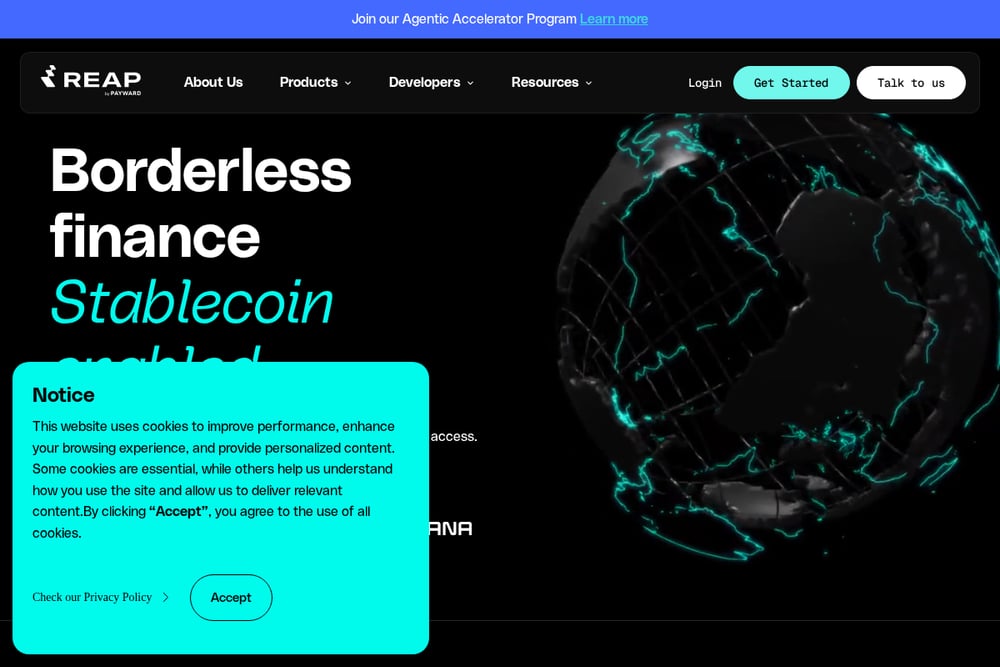 A screenshot of the Reap Agentic Payments website.
Reap focuses on the payment side of agentic commerce, offering agent-native checkout that works with any merchant. Their platform provides card issuing and money movement APIs, enabling AI agents to spend on behalf of users. Reap's unified account layer supports stablecoin-enabled businesses, which is a forward-looking feature for crypto-friendly operations. They offer direct and embedded finance options, so you can integrate agentic payments into your own product. The platform is designed to be simple, with a focus on enabling agentic spends anywhere. If your primary need is enabling AI agents to make payments, Reap is a niche but effective solution.
How to Choose the Right Agentic Commerce Platform
Start by defining your primary use case: are you looking for a full commerce operating system, or just a payment layer for agents? Consider your existing tech stack—platforms like Stripe integrate seamlessly if you're already using them, while open standards like ACP offer more flexibility. Evaluate the global reach: if you sell internationally, look for platforms with local payment routing and shipping calculations. Think about the level of AI integration you need, from simple chat to full agent orchestration. Finally, consider your budget and pricing model—some platforms have transparent per-transaction fees, while others require custom enterprise contracts. Choose the one that aligns with your business size and growth plans.
Automating Your Commerce Workflow
With agentic commerce, you can automate the entire customer journey. Start by setting up an AI agent that handles product discovery and recommendations, using natural language to guide shoppers. The agent can then initiate checkout, negotiate offers, and manage payment processing through the platform's APIs. For fulfillment, the platform can automatically select the best carrier based on real-time rates and delivery times. Post-purchase, the agent can handle customer service, loyalty programs, and cart recovery. By integrating these steps, you create a seamless, hands-free commerce operation that scales with your business.
The Bottom Line
Agentic commerce is no longer a futuristic concept—it's here, and these five platforms are at the forefront. Whether you need a full infrastructure like GOnama or commercetools, a payments-focused solution like Stripe or Reap, or an open standard like ACP, there's a fit for your business. The key is to start experimenting now, so you're ready for the autonomous economy. Choose a platform that aligns with your goals, and you'll be well-positioned to thrive in this new era.