SaaS teams test pricing pages, onboarding flows, and feature launches, and the tool you pick shapes how fast those tests ship. This list covers five platforms that approach experimentation from different angles. Some lean on AI to build variants, some bundle flags and analytics, and some keep things deliberately lightweight. None of them is presented as the best choice. The goal is to show what each one does so you can match it to how your team actually works.
How We Picked These Tools
These tools were picked because each one explicitly supports experimentation or A/B testing and describes itself in terms a SaaS website team would recognize: testing, feature flags, personalization, or conversion work. Each entry is backed by quotes from the company's own site. The order is a plain list, not a quality ranking.
| Provider | Best For |
|---|---|
| Optimizely | SaaS marketing teams wanting testing inside a wider experience platform |
| Statsig | SaaS product and data teams consolidating flags, tests, and analytics |
| Mida | Marketers who want fast, no-code A/B tests |
| Kameleoon | Teams wanting AI-assisted experiment ideation and variant building |
| Omniconvert | Teams tying experiments to revenue and customer segments |
The 5 Tools in Focus
#1 Optimizely
 A screenshot of the Optimizely website.
Optimizely describes itself as an AI platform for creating and optimizing digital experiences. Its Agentic Experimentation product lets teams continuously test, personalize, and optimize, then prove the impact. The company also offers an Agentic CMS for publishing and keeping a site performing, plus an Agent Platform for automating tasks. It suits marketing and product teams at SaaS companies that want testing folded into a broader experience platform rather than standing alone.
#2 Statsig
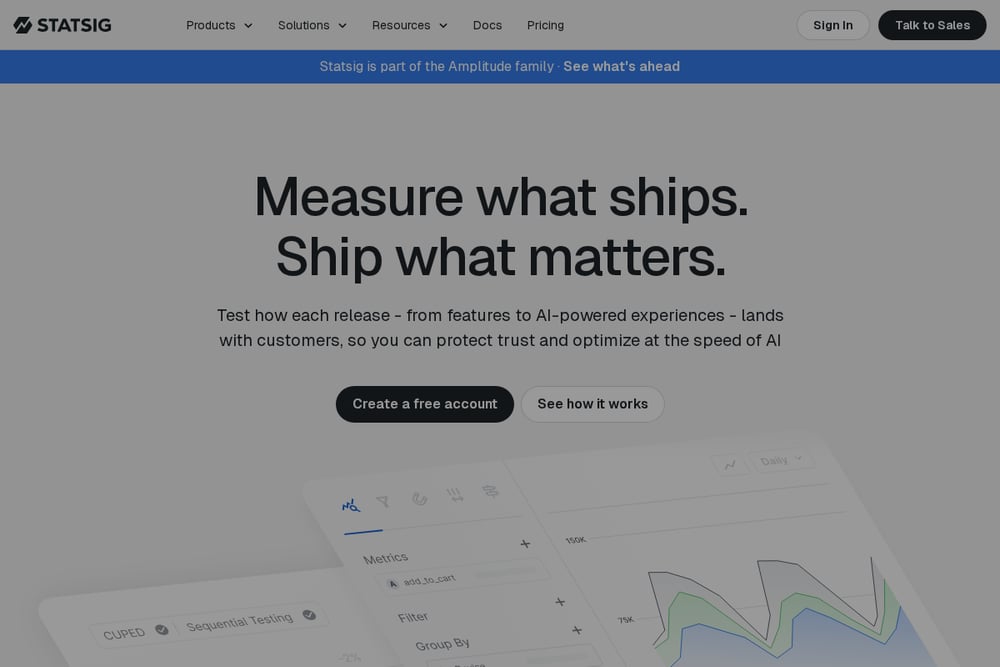 A screenshot of the Statsig website.
Statsig bundles experimentation, feature flags, product analytics, session replay, and more into a single platform. Its experimentation product is built to run sophisticated tests and compute results with advanced statistical treatments, and it can run in your warehouse. Feature flags are linked directly to product data, which helps teams connect releases to outcomes. It suits SaaS engineering, data, and product teams that want flags, experiments, and analytics in one place.
#3 Mida
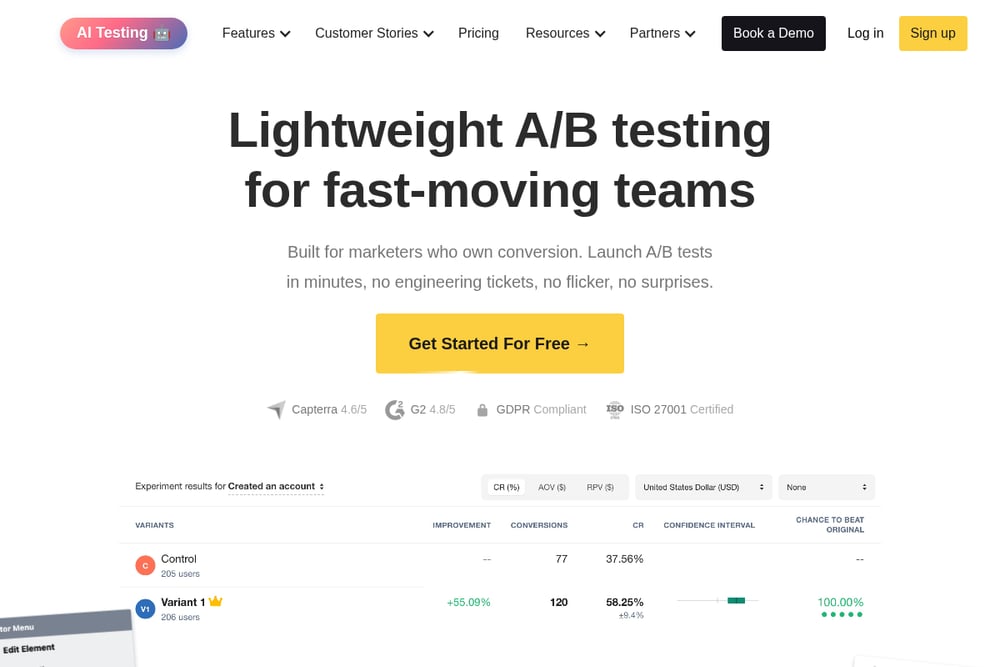 A screenshot of the Mida website.
Mida markets itself as lightweight A/B testing built for marketers who own conversion. The pitch is launching tests in minutes without engineering tickets, flicker, or surprises. It emphasizes a simple interface, quick setup, and a lightweight script, and reviewers on the site repeatedly mention ease of use and fast implementation. It suits marketing and CRO teams at smaller SaaS sites that want to run tests without leaning on developers.
#4 Kameleoon
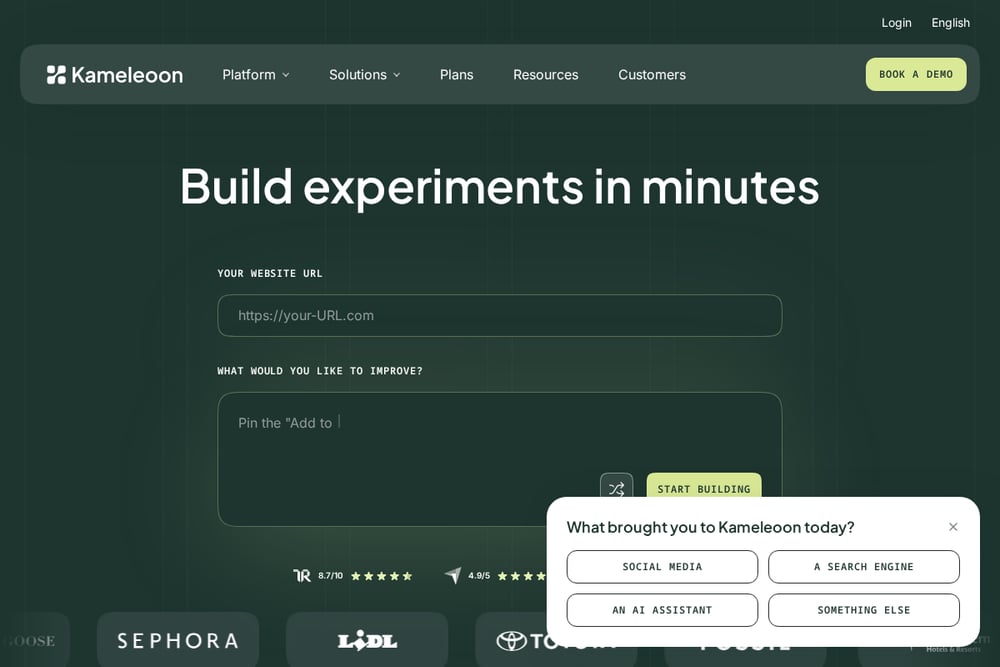 A screenshot of the Kameleoon website.
Kameleoon centers its platform on prompt-based experimentation through PBX, its AI. The AI scans a page for friction to build prioritized, prompt-ready experiments, and an agent generates test-ready variants for both front and back end. It also helps target audiences, assign traffic, and pick metrics, then analyzes results and suggests next steps. It suits SaaS teams that want AI assistance in generating and prioritizing experiment ideas.
#5 Omniconvert
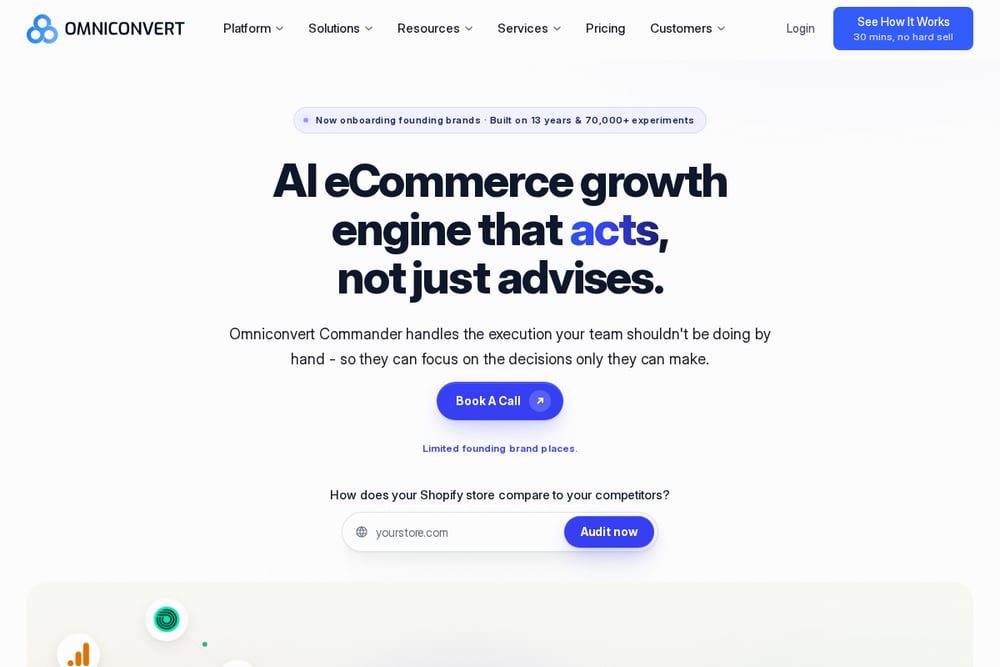 A screenshot of the Omniconvert website.
Omniconvert makes several products, including Omniconvert Explore for A/B testing and CRO. Explore lets teams run A/B and multivariate tests without developer dependency, with a no-code experiment builder and personalization by customer segment. The company frames its tools around ecommerce growth, with experiments prioritized by which segments will move profit most. It suits SaaS and ecommerce teams that want testing tied to revenue and customer intelligence.
Which One Should You Choose?
Start with who will run the tests. If marketers own conversion work and need speed, a lightweight tool with a no-code builder may fit. If engineering and data teams want flags, experiments, and analytics together, a consolidated platform makes more sense. Consider whether you want AI to suggest and build variants or whether you prefer to craft them yourself. Check how the tool fits your existing stack, since integrations shape how much work setup takes. Finally, think about whether you need testing alone or testing connected to personalization, surveys, or revenue data.
Final Thoughts
Each of these five tools approaches A/B testing for SaaS websites differently. Optimizely wraps testing in a broader experience platform, Statsig combines experiments with flags and analytics, Mida keeps things lightweight for marketers, Kameleoon leans on AI to generate and prioritize ideas, and Omniconvert ties experiments to revenue and customer segments. The right pick depends on your team's workflow, technical resources, and what you want testing connected to. Use the descriptions and quotes here as a starting point, then evaluate against your own needs.
Know a company that belongs on this list? Email us at editorial@peekwire.com.