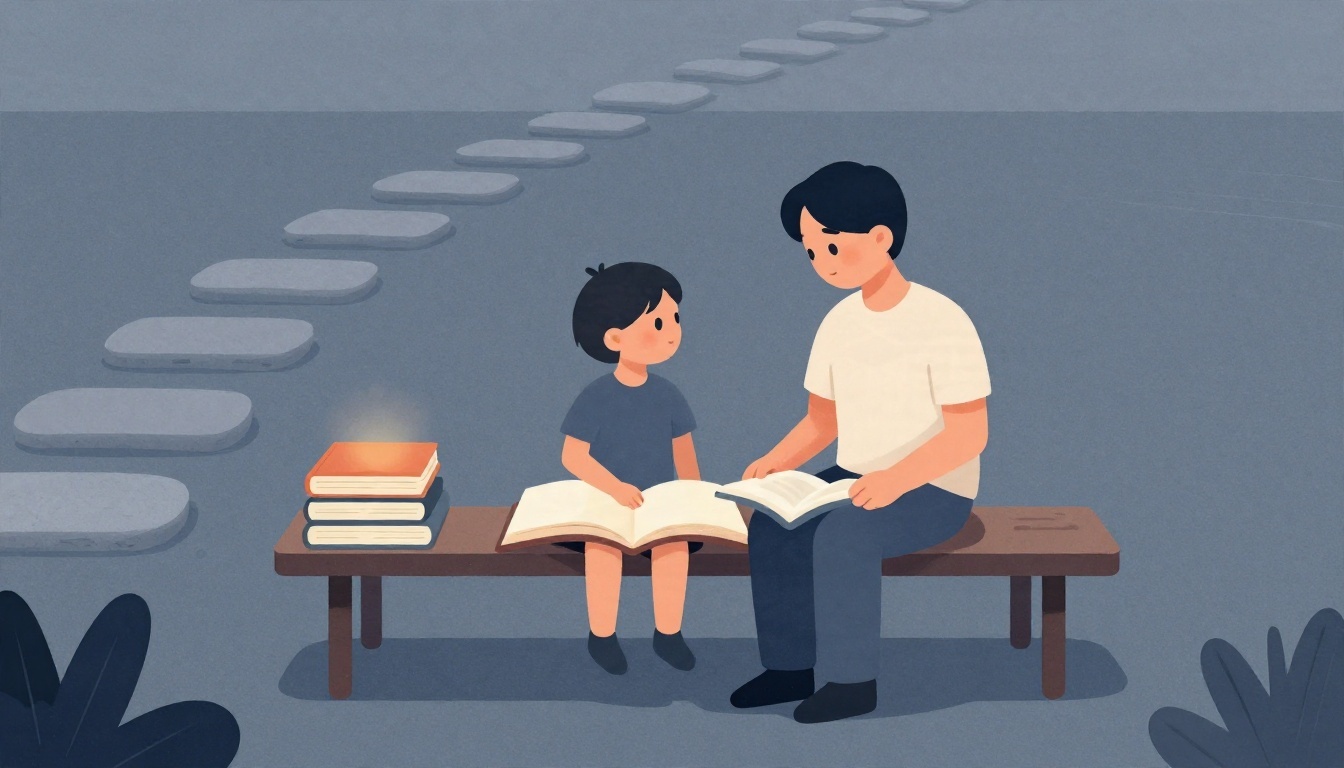
A Reading Tutor's Guide to Finding the Right Starting Point at Home
When a parent isn't sure where their child should start reading, the instinct is often to reach for a test. Karyn C. Potts, author of the Pulling Together Reading Series, who has spent about 20 years tutoring reading and teaching homeschoolers outside of the public schools, takes a different approach. She hands the child the free placement readers and has them read them in order. "The first one that feels hard shows you where to start," she says. Parents can also peek inside, since Lessons 1 and 2 of every book are free.
That low-pressure method is the through-line of her advice: let the child show you where they are, then meet them there.
What happens when a book is too hard
A book that's too difficult rarely produces quiet struggle. It produces guessing. "The child starts guessing from the first letter or the pictures (why there are no pictures in the readers), or they dig in their heels and say they feel 'dumb,'" Potts explains. "I know that feeling well. I was that kid."
Potts, who has dyslexia and auditory processing disorder herself, shares her story here: shop.pullingtogetherreading.com/my-story.
Her guidance for parents who see guessing or tears is direct: "back up to something they can read easily and let them win first. Confidence comes before speed."
More practice, or a different starting point?
The distinction matters, and Potts offers a clear way to tell them apart. "If they've learned the sounds but the words still come slowly, that's usually practice," she says. "Reread the same short story a second and third time and it gets smoother."
But if a child is missing the sounds the book is built on, or every page ends in frustration, it's time to back up. "Repeating a lesson isn't going backward," she notes. "It feels easier the second time, and that builds confidence."
When decoding works but comprehension doesn't
A child who can sound out the words but can't retell the story is normal early on. "They're working so hard on the words there's nothing left for the story," Potts says.
Her fix is a second pass. Let the child read the page once just to get the words, then read it again. Only after that second read should a parent ask an easy question they'll get right, like "Who was in the story?" or "What was your favorite part?" The goal is to "set them up to win."
A workable weekly routine with no teacher nearby
For families starting from scratch, Potts keeps the requirements minimal: the book, printed or on a tablet, a parent, and a child. Her routine has a few consistent parts:
- Keep lessons short and stop while it's still going well.
- Start each lesson with a quick warm-up of old sounds, then introduce one new thing.
- Reread stories the child already knows.
- Cheer the effort, not just the right answers.
- If tempers flare, close the book and try again later.
Parents who want to see what a lesson actually looks like can watch real sessions on the Pulling Together Reading YouTube channel, which Potts describes as "uncut and unedited, all my mistakes included."
The takeaway
The advice across all five questions points in one direction: pay attention to how the child feels while reading, not just whether the words are correct. Guessing, tears, and frustration are signals to adjust the material. Slow but accurate reading is a signal to practice more. And a child who reads the words without understanding may simply need a second pass through the same page.
For parents who want to try the placement approach themselves, the free readers are available at pullingtogetherreading.com, and the books are sold through the series shop. Potts also notes that every main book in the series is now under $30, and there are six free placement readers, one for each book in the series.
Readers who want broader context on how children learn to read can explore resources from Reading Rockets and the National Literacy Trust.