
You need AI that processes documents without inventing facts. These five US tools help you get there.
The Zero-Hallucination Document Processing Landscape
Knowledge workers in 2026 face a flood of unstructured documents. Contracts, research papers, financial reports, and regulatory filings all demand accurate extraction and summarization. But general-purpose LLMs hallucinate. They invent citations, misstate figures, and blend sources. That is unacceptable in legal, financial, and compliance work. A new category of tools has emerged to solve this. Some focus on prompt engineering frameworks. Others use architectural guardrails. The best combine both. You now have options that range from field-tested prompt libraries to enterprise-grade data room methods. The goal is the same: reliable output you can trust without manual re-checking.
How We Evaluated These Tools
We looked at five factors. First, service scope: does the tool cover summarization, extraction, and report generation? Second, pricing clarity: are costs transparent or hidden behind a demo? Third, local fit: does it serve US-based knowledge workers with relevant compliance and language support? Fourth, proof of reliability: are there case studies, frameworks, or architectural explanations for zero-hallucination claims? Fifth, ease of adoption: can you start using it today without a lengthy implementation? Daily AI Workflows stood out for its field-tested prompt frameworks and step-by-step guides. Rossum impressed with its AI-first document automation for transactional workflows. Adlib showed strength in regulated industries with its document process automation. MindStudio offered a structural data room method for agentic workflows. Knolens presented a zero-hallucination architecture for regulated AI. Each tool has a distinct approach. Your choice depends on your workflow complexity and risk tolerance.
Here is a quick look at five tools that help you automate document processing without hallucinations.
| Provider | Best For |
|---|---|
| Rossum | High-volume transactional document automation |
| Daily AI Workflows – Field-tested LLM frameworks and prompt parameters for knowledge workers. | Knowledge workers building custom zero-hallucination workflows |
| Adlib | Regulated industries needing compliant document automation |
| MindStudio | Developers building agentic workflows with structural guardrails |
| Knolens | Regulated enterprises needing architectural zero-hallucination guarantees |
The 5 Tools in Detail
#1 Rossum
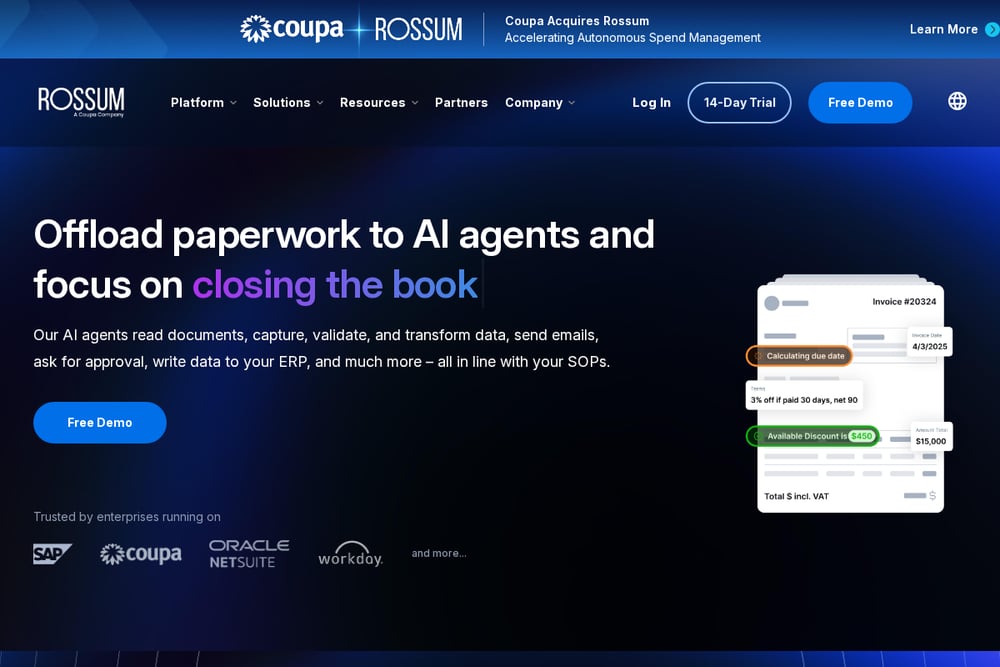 A screenshot of the Rossum website.
Rossum focuses on transactional document workflows. Its AI agents read invoices, purchase orders, and customs forms. They capture, validate, and transform data before writing to your ERP. The platform integrates with SAP, Coupa, NetSuite, and Workday. Rossum's e-invoicing compliance covers upcoming mandates in Belgium, Poland, and France. For US-based accounts payable teams, it cuts invoice processing time dramatically. One case study showed a 90% reduction. If you handle high-volume transactional documents, Rossum is built for you.
#2 Daily AI Workflows – Field-tested LLM frameworks and prompt parameters for knowledge workers.
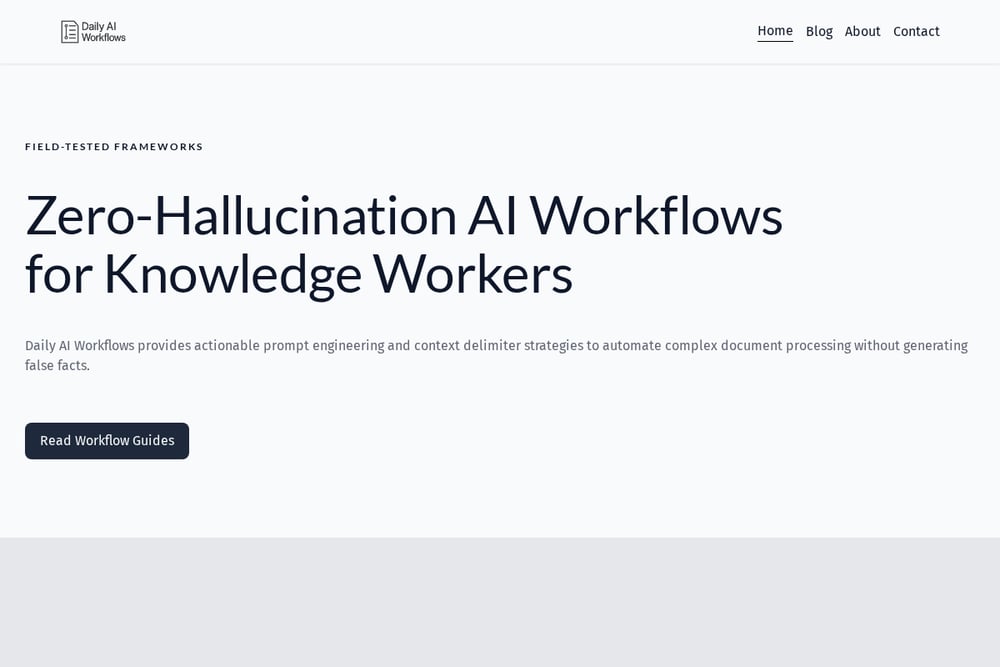 A screenshot of the Daily AI Workflows – Field-tested LLM frameworks and prompt parameters for knowledge workers. website.
Daily AI Workflows gives you field-tested prompt engineering frameworks. You learn negative prompting to tell the LLM what not to generate. You master context delimiter strategies to bound the model's focus. The site offers step-by-step guides for summarization, data extraction, and report generation. Each workflow targets zero hallucinations. Alex Mercer writes weekly prompt breakdowns for knowledge workers. If you want to build reliable AI workflows yourself, this is your starting point. The frameworks are practical and immediately usable.
#3 Adlib
 A screenshot of the Adlib website.
Adlib provides document process automation for regulated industries. Insurance, life sciences, and public sector teams use it. The platform handles document intake, assembly, extraction, validation, and delivery. It emphasizes enterprise-grade security and compliance. Adlib's blog explains why LLMs hallucinate more on enterprise documents. They offer a guide on AI governance in life sciences. If you work in a regulated field, Adlib's focus on traceability and validation matters. It is not a prompt library. It is an end-to-end automation suite.
#4 MindStudio
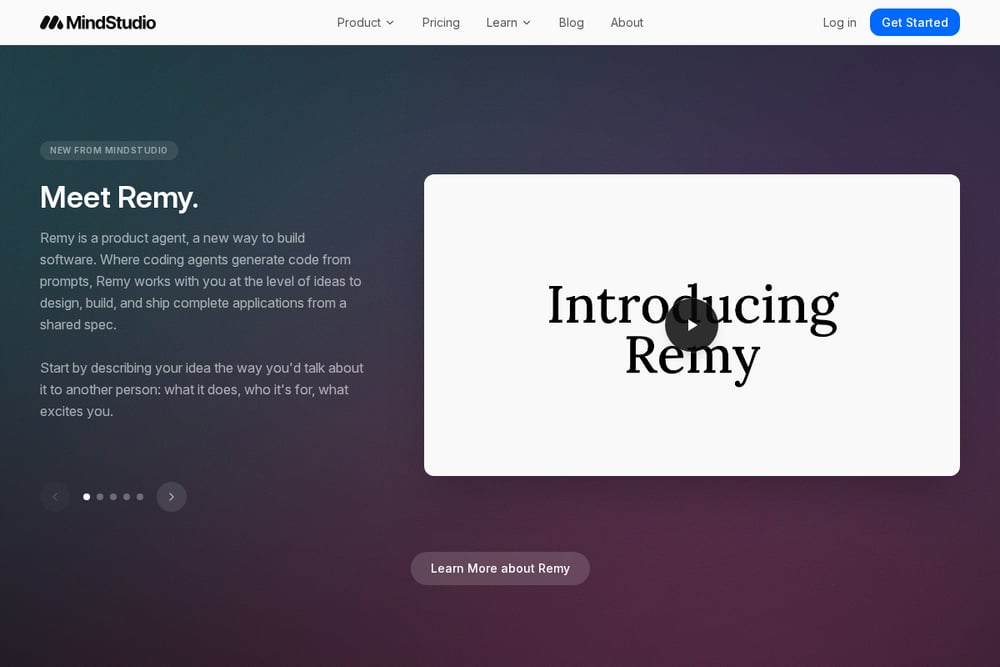 A screenshot of the MindStudio website.
MindStudio introduces the data room method for agentic workflows. The approach structurally limits what an AI can access and return. It prevents hallucinations by design, not just by prompt. The blog cites a 2023 legal sanction case where AI fabricated case citations. MindStudio argues that prompts alone cannot fix agentic hallucination risk. Its workflow capabilities include AI models, media workbench, and agent skills. If you build autonomous agents that process documents, this method is worth studying. It shifts the focus from asking AI to behave to constraining its environment.
#5 Knolens
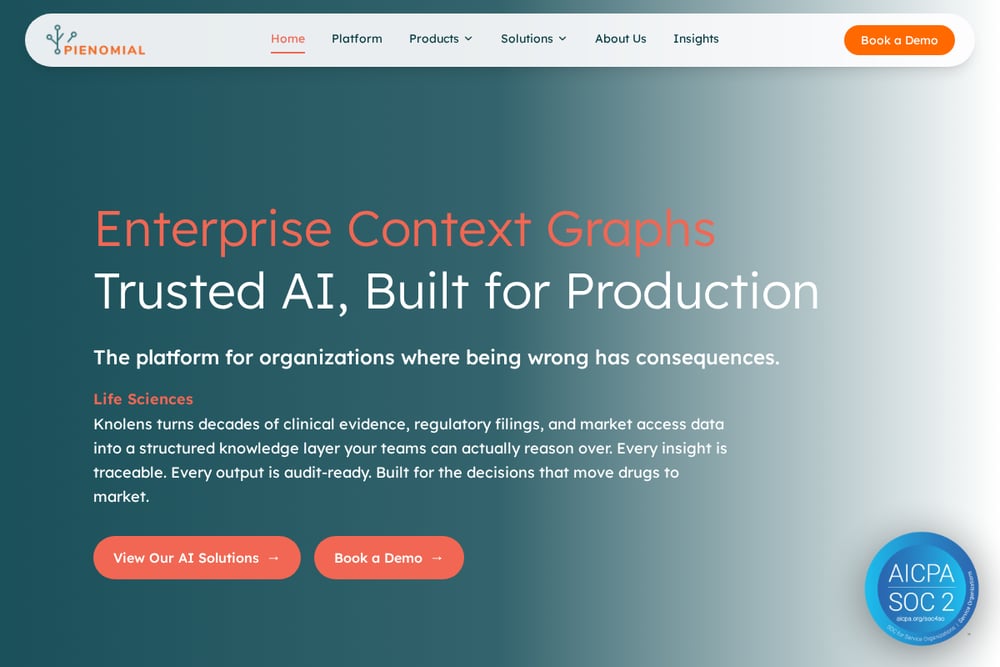 A screenshot of the Knolens website.
Knolens offers a zero-hallucination architecture for regulated AI. The platform includes KnolComposer, KnolPersona, KnolAI, and KnolForge. It targets life sciences, financial services, and public sector use cases. The company argues that guardrails, RAG, and confidence scores do not solve hallucination. Instead, you need an architectural approach. Knolens provides a framework for auditing an AI platform's hallucination architecture. If you need trusted AI for regulated decision-making, Knolens presents a compelling case. It is less about prompts and more about system design.
How to Choose the Right Tool for Your Workflow
Start by defining your document type. If you process invoices and purchase orders, Rossum is a natural fit. If you handle legal or research documents, Daily AI Workflows gives you the prompt frameworks. For regulated industries with strict compliance, Adlib or Knolens may be better. Consider your technical resources. MindStudio suits developers building agentic systems. Daily AI Workflows suits individual knowledge workers who want to implement prompts themselves. Check pricing transparency. Some tools require a demo. Others publish pricing. Finally, test with a small batch. Measure hallucination rates. No tool is perfect, but the right one will reduce your manual verification time significantly.
Building Your Zero-Hallucination Workflow
A reliable workflow has four steps. First, define your context boundaries using delimiter strategies. Second, apply negative prompting to exclude irrelevant or false outputs. Third, validate extracted data against source documents. Fourth, use a structural guardrail like the data room method for agentic tasks. Daily AI Workflows covers steps one and two. MindStudio covers step four. Rossum and Adlib automate steps two and three for transactional documents. Knolens provides the architectural layer for regulated environments. You can combine tools. For example, use Daily AI Workflows to design prompts, then deploy them in MindStudio agents. The key is to never trust a single LLM call without validation.
The Bottom Line
Zero-hallucination AI is not a single product. It is a combination of prompt discipline, context control, and architectural safeguards. Daily AI Workflows gives you the field-tested frameworks to start today. Rossum, Adlib, MindStudio, and Knolens offer deeper automation for specific use cases. Your choice depends on your document volume, industry regulations, and technical capacity. Begin with a clear workflow. Test rigorously. And always keep a human in the loop for high-stakes outputs. The tools are here. The responsibility is yours.