
Finding a camp that teaches real outdoor skills and safety certification is harder than it should be. Here are five standout programs that get kids off screens and into the wild.
The Youth Outdoor Education Landscape
Youth hunter education and wilderness camps have evolved far beyond basic firearm safety. Today's programs blend conservation principles, survival skills, and hands-on outdoor learning to build confidence and leadership. Parents increasingly seek experiences that offer tangible certifications, like hunter education cards, alongside traditional camp fun. The result is a growing niche of immersive day and overnight camps that treat the outdoors as a classroom. These programs vary widely in length, location, and focus, from weekend workshops to multi-week adventures. What unites them is a commitment to safety, mentorship, and a deep respect for nature.
How We Evaluated These Camps
We looked at program scope, including the range of skills taught and whether certifications are offered. Pricing transparency mattered, so we noted fees and scholarship availability. Local fit was key, considering property size, regional partnerships, and instructor credentials. We also weighed age ranges and session formats to see who each camp serves best. Finally, we checked for clear pathways from learning to real-world application, like earning a hunting license. Each camp on this list stood out in different ways, from multi-year progression to single-week intensives.
Here is a quick look at five camps that deliver serious outdoor education with a focus on safety and stewardship.
| Provider | Best For |
|---|---|
| Lake and Trails Youth Hunting Camp | Families seeking a multi-year, parent-involved hunting education |
| Machia Wilderness Camp – Learn – Apprentice – Teach | Vermont youth who want a hands-on day camp with hunter safety certification |
| Holiday Lake 4-H Educational Center | Virginia families wanting a weekend skills intensive with diverse course options |
| Camp Sprig — California Waterfowl | New hunters ages 10–16 in California seeking a short, certification-focused camp |
| Red Bank Outdoor Academy | California families looking for a long-running, safety-focused summer camp |
The Five Camps in Focus
#1 Lake and Trails Youth Hunting Camp
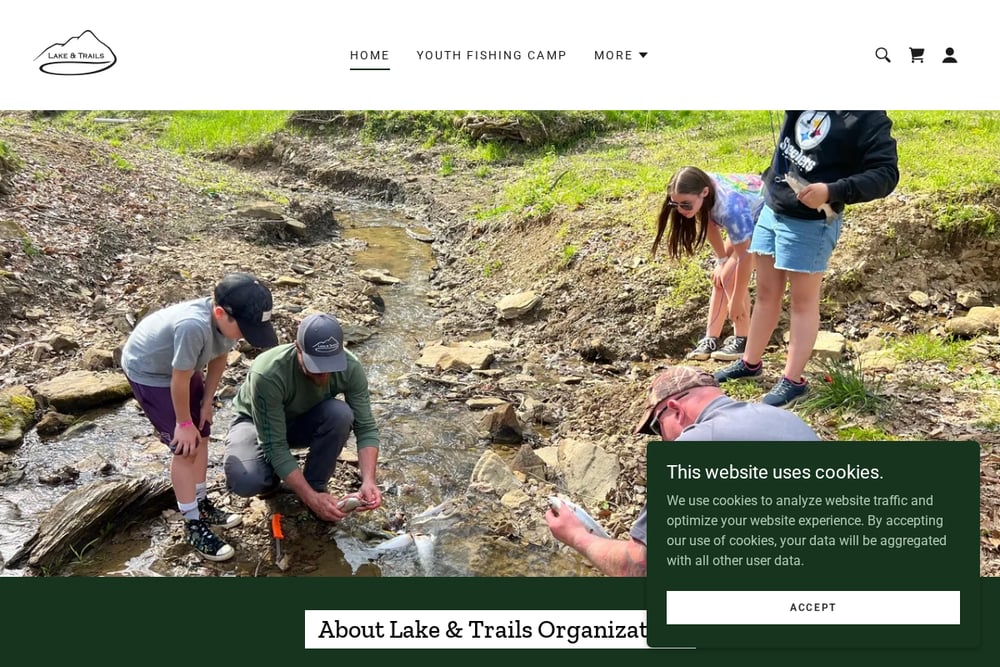 A screenshot of the Lake and Trails Youth Hunting Camp website.
Lake and Trails Youth Hunting Camp offers a four-year progression for youth ages 10 and older, making it ideal for families who want a long-term path. Held during the first weekend of October in Ohio, the camp combines range instruction with courses taught by certified instructors and Ohio Division of Wildlife Officers. Parents or guardians attend all classes alongside their youth, reinforcing a shared learning experience. Meals and dorm-style lodging are provided from Friday through Sunday, with check-in on Thursday evening. The program emphasizes ethical hunting practices and serious attendance, so campers get the most from every session. Registration opens in August via Eventbrite, and spots fill quickly.
#2 Machia Wilderness Camp – Learn – Apprentice – Teach
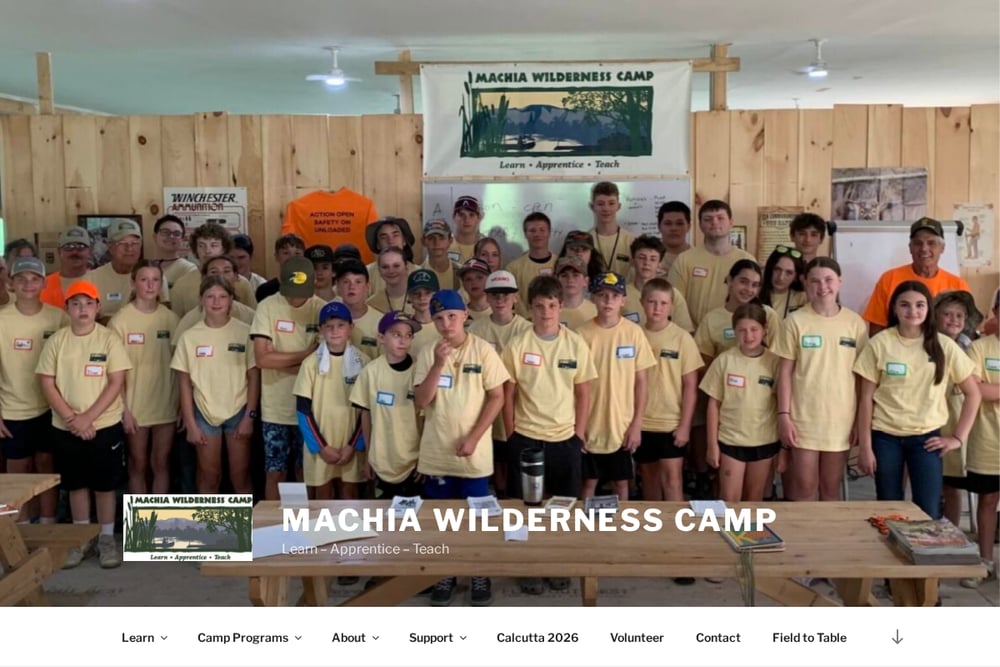 A screenshot of the Machia Wilderness Camp – Learn – Apprentice – Teach website.
Machia Wilderness Camp in Milton, Vermont, runs 5½-day day camp sessions for youth ages 11–18 on a 114-acre wilderness property. The curriculum, developed by Vermont Fish & Wildlife certified instructors, covers conservation, life skills, and the full Vermont Hunter Education Program. Campers can take the certification test at the end of the week to obtain a hunting license. Each participant receives a T-shirt, a hot homemade lunch, and healthy snacks, with a $200 camper fee and scholarships available. Activities range from archery and survival techniques to wildlife tracking and land stewardship. The camp's motto, Learn – Apprentice – Teach, reflects its focus on building responsible stewards of the land.
#3 Holiday Lake 4-H Educational Center
 A screenshot of the Holiday Lake 4-H Educational Center website.
Holiday Lake 4-H Educational Center hosts the Virginia Hunter Skills Weekend, a three-day workshop for ages 11 to adult. Held September 18–20, 2026, the program offers expert instruction in land navigation, predator hunting, archery, rifle, shotgun, and more. Youth under 18 must attend with a parent, and a Hunter Education class is recommended but not required. The cost covers meals from Friday dinner through Sunday lunch, lodging, and all instruction. With a wide range of class selections, from trapping basics to field-to-table skills, it suits both beginners and those looking to hone existing abilities. Registration fills fast, so an interest form and Facebook updates are the best ways to stay informed.
#4 Camp Sprig — California Waterfowl
 A screenshot of the Camp Sprig — California Waterfowl website.
Camp Sprig, run by California Waterfowl, offers beginner camps for new hunters ages 10–16 at Bird Haven Ranch in Butte County. The 2.5-day sessions include Hunter Education Certification and cover shotgun, rifle, and bow shooting, duck calling, waterfowl identification, and even fishing. Three sessions are scheduled for June and July 2026, with scholarships that can reduce registration by up to $200. The camp is designed to prepare kids for a lifetime of outdoor adventures in a supportive, active environment. Campers spend most of the day outside, learning from certified instructors. It's a great entry point for families new to hunting.
#5 Red Bank Outdoor Academy
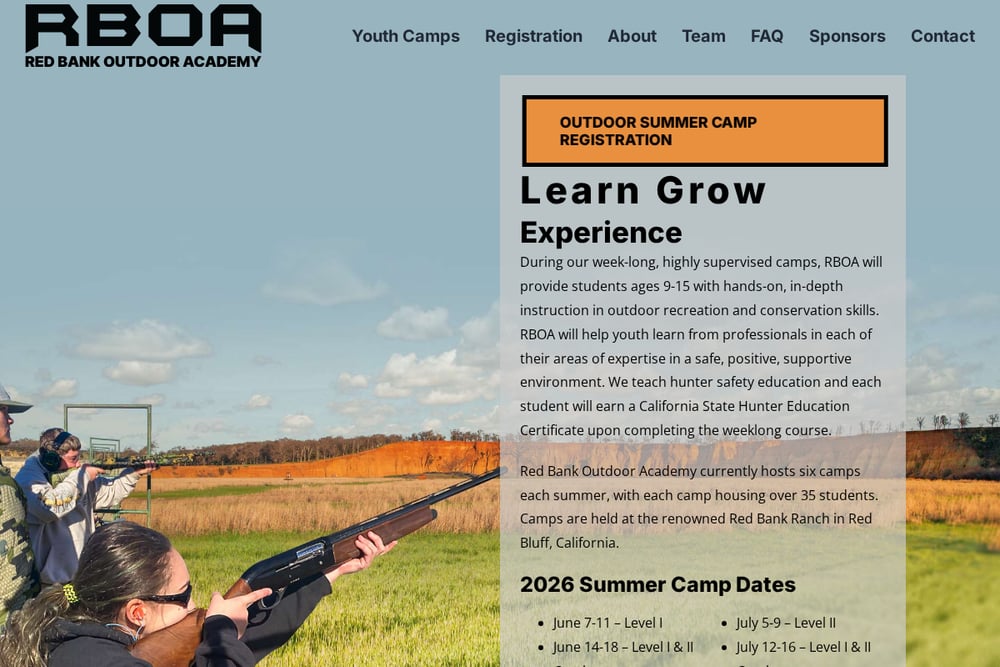 A screenshot of the Red Bank Outdoor Academy website.
Red Bank Outdoor Academy provides week-long summer camps for students ages 9–15 at the renowned Red Bank Ranch in Red Bluff, California. With 28 years of youth camp experience, RBOA offers Level I and Level II programs that include hands-on instruction in outdoor recreation and conservation. Each student earns a California State Hunter Education Certificate upon completing the weeklong course. The academy hosts six camps per summer, each with over 35 students, and maintains a perfect safety record. Instructors are professionals in their fields, ensuring a safe and supportive environment. It's a proven choice for families seeking a trusted, established program.
How to Choose the Right Camp
Start by deciding whether you want a day camp or an overnight experience. Consider your child's age and experience level, then check if the camp offers the certification you need. Look at the schedule and location to ensure it fits your family's logistics. Ask about instructor credentials and safety records. Finally, review costs and scholarship options, because many programs offer financial aid. The right camp will challenge your child while keeping them safe and engaged.
Automating Your Camp Search
You can streamline your research by setting up alerts for registration openings. Follow each camp's social media pages and join their email lists. Use a shared calendar to track application deadlines and required documents. Create a checklist of must-have features, like certification and scholarship availability, to compare programs quickly. A simple spreadsheet can help you weigh pros and cons side by side. This way, you won't miss a deadline or overlook a key detail.
The Bottom Line
Each of these five camps offers a unique path to outdoor education, from Vermont's day-camp model to California's overnight immersions. Your choice depends on your child's age, your location, and how much time you can commit. What matters most is finding a program that prioritizes safety, mentorship, and a genuine love for the outdoors. Any of these camps will give your child skills that last a lifetime.