You want to prepare students for a workforce that AI is rewriting in real time. These five frameworks show you how to teach opportunity recognition, not just business plans.
The Shift Toward Real-World Entrepreneurship Education
Entrepreneurship education is moving away from textbook business plans and toward hands-on, community-rooted learning. Educators and parents increasingly want programs that build transferable skills—opportunity recognition, evidence gathering, financial decision-making, and adaptability—rather than pushing every student to launch a startup. At the same time, not every student will follow a traditional college or trade-school path. That reality is driving demand for frameworks that treat entrepreneurship as a lens for investigating real needs, testing assumptions, and communicating ideas. The five programs below represent different angles on this shift, from full-year high school courses to modular units and home-school-friendly resources.
How We Evaluated These Frameworks
We looked at five factors across every program. First, service scope: does the framework cover idea generation, customer discovery, financial literacy, and launch support, or only part of the journey? Second, pricing clarity: are costs, licensing, and materials transparent before you commit? Third, local fit: can the program adapt to community needs, district policies, and varied student pathways? Fourth, evidence orientation: does it teach students to investigate demand and test assumptions before building? Fifth, educator support: what training, lesson plans, and implementation resources come with it? Each program below stood out in different ways—some for depth of curriculum, some for flexibility, some for accessibility.
Here is a quick comparison of the five frameworks, ordered by how directly each one centers community needs and evidence-based opportunity discovery.
| Provider | Best For |
|---|---|
| VentureLab | Home-school families seeking flexible, activity-based entrepreneurship lessons |
| Beyond the Diploma | Turning Community Needs Into Income Opportunities | Educators and parents who want students to start with community needs and evidence |
| Uncharted Learning | Schools building a structured, multi-year entrepreneurship pathway |
| NGPF | Teachers adding entrepreneurship basics to a personal finance curriculum |
| Genius Group | Families and schools exploring a long-term entrepreneurial alternative to traditional curriculum |
The Five Frameworks in Detail
#1 VentureLab
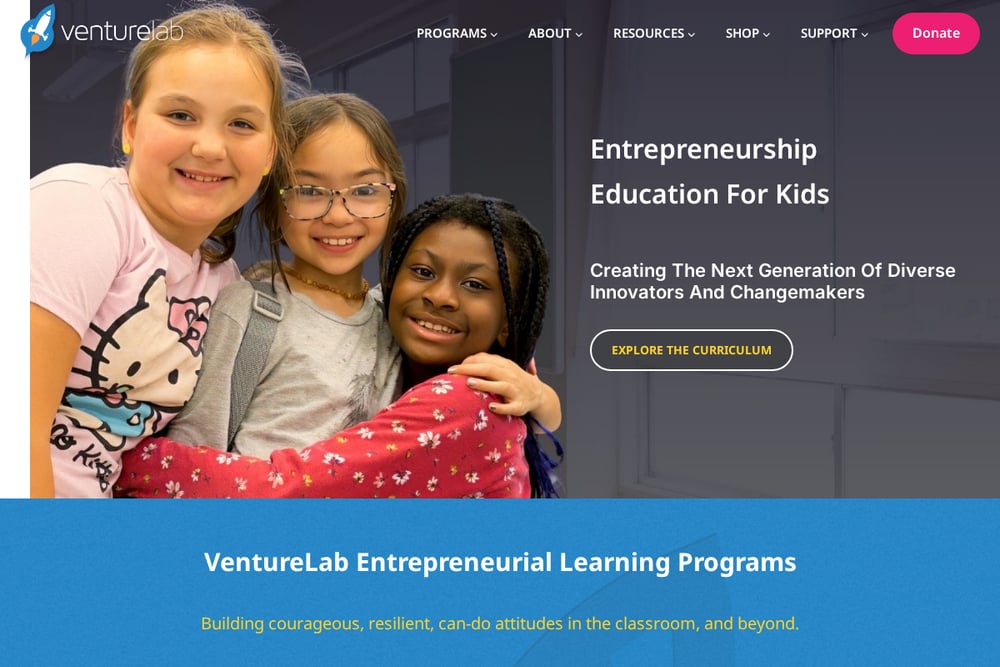 A screenshot of the VentureLab website.
VentureLab brings a youth entrepreneurship curriculum to home-school families and classrooms with a strong emphasis on creativity and mindset. Their blog walks you through practical ways to teach entrepreneurship at home, including grouping strategies and activity ideas that keep students engaged. You get access to free resources, printable games, and online courses for both youth and adults. The program spans grades 1 through 12, so you can build a multi-year pathway. It is a solid choice if you want flexible, ready-to-use activities that fit a home-school schedule.
#2 Beyond the Diploma | Turning Community Needs Into Income Opportunities
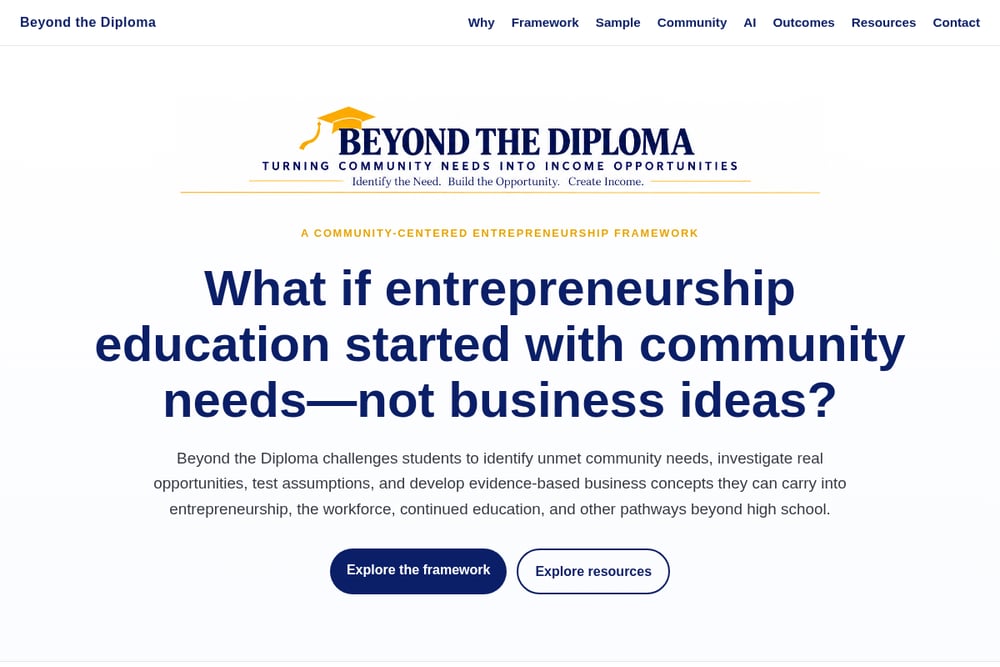 A screenshot of the Beyond the Diploma website.
Beyond the Diploma flips the usual script by asking students to observe their communities first, not brainstorm business ideas. The framework guides students to identify unmet needs, investigate demand, test assumptions, and develop evidence-based business concepts. It is built for high school students who may pursue entrepreneurship, the workforce, continued education, or other pathways beyond a traditional degree. The program emphasizes community-first thinking, evidence before commitment, and iteration when assumptions are challenged. You can explore the framework, sample lessons, and resources directly on the site.
#3 Uncharted Learning
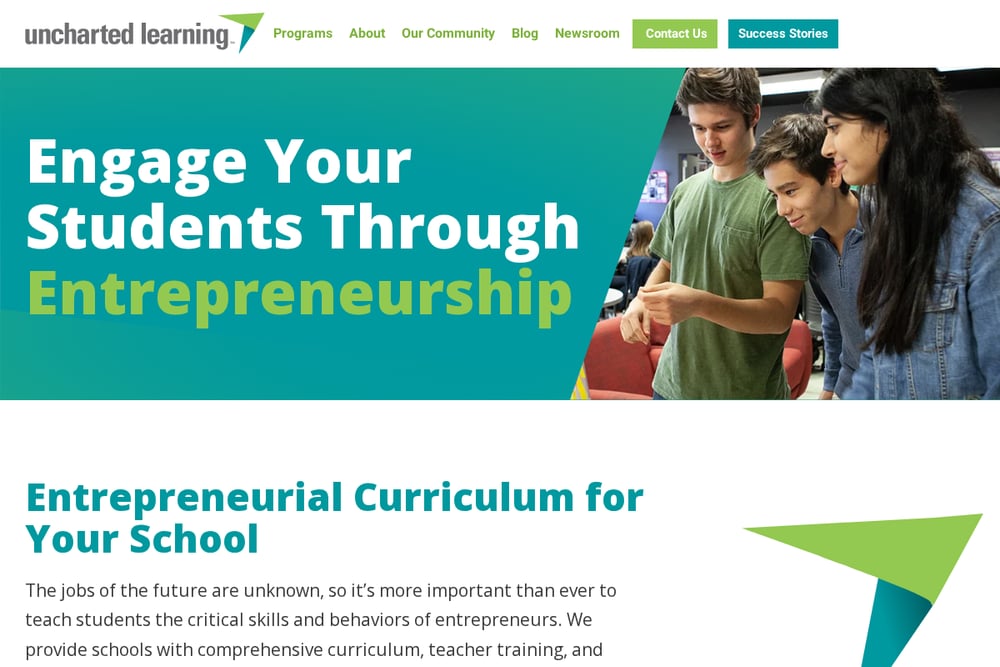 A screenshot of the Uncharted Learning website.
Uncharted Learning offers a suite of entrepreneurship programs spanning elementary through high school, including INCubatoredu for high school students. Their approach centers on student engagement through project-based learning, collaboration, and real-world problem solving. The organization provides educator workshops, member school support, and a national summit for teachers. You get a structured curriculum with a clear progression across grade levels. It is a strong fit for schools looking to build a multi-year entrepreneurship pathway with professional development built in.
#4 NGPF
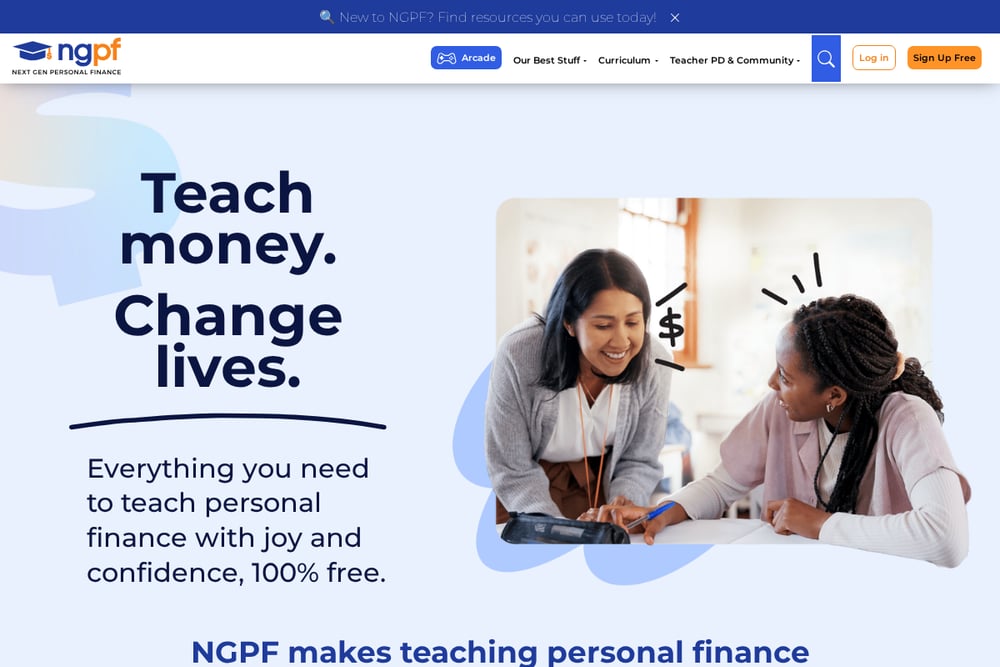 A screenshot of the NGPF website.
NGPF is known for personal finance education, and its entrepreneurship mini-unit fits neatly into that broader mission. The unit covers defining entrepreneurship, characteristics of successful entrepreneurs, the role of small businesses in the economy, and different types of entrepreneurship. It is designed as a flexible component you can use at teacher discretion within district policy. You get lesson plans, assessments, and a video library to support instruction. This is a practical choice if you want to add entrepreneurship basics to an existing finance or business course.
#5 Genius Group
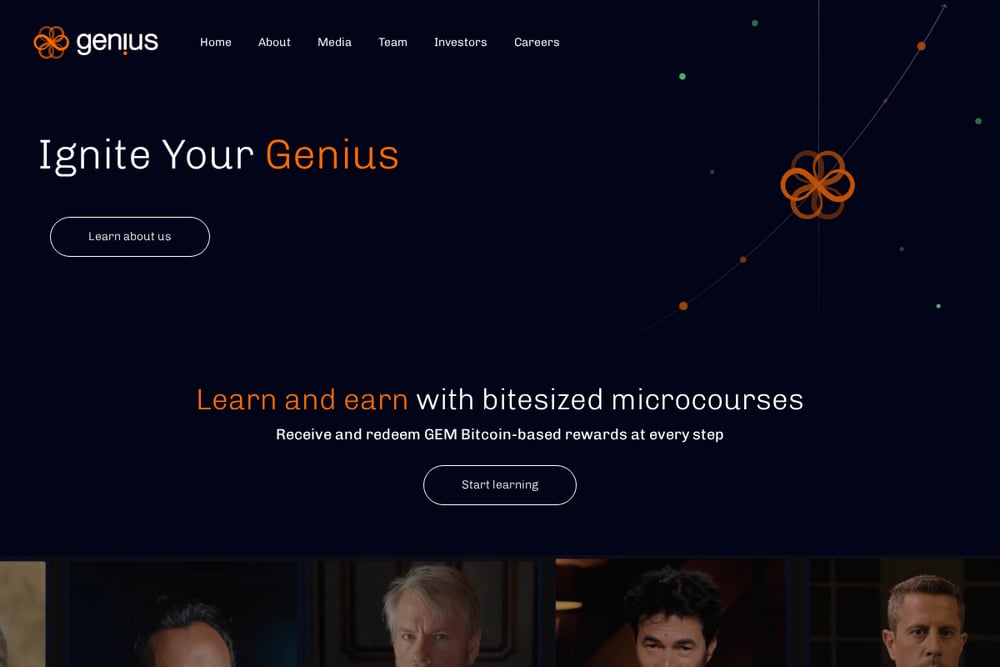 A screenshot of the Genius Group website.
Genius Group is building a lifelong entrepreneurial curriculum that aims to span K-12 through university and vocational training. Their stated goal is to provide a government-accredited alternative that helps students learn to create a job rather than just get one. The curriculum is designed for students, parents, teachers, schools, and colleges, with an emphasis on personalized learning and online access. They position themselves as a response to gaps in the current education system. It is worth exploring if you are looking for a long-term, globally oriented alternative to traditional schooling.
How to Choose the Right Framework for Your Students
Start with your setting. If you are home-schooling, look for flexible activities and free resources that fit your schedule—VentureLab and NGPF both offer modular, low-commitment entry points. If you are in a school district, consider whether you need a full multi-year pathway with teacher training, which is where Uncharted Learning shines. If your priority is teaching students to investigate real community needs before committing to an idea, Beyond the Diploma is built around that exact sequence. For families considering a long-term alternative to traditional schooling, Genius Group offers a broader, accredited vision. Also check pricing transparency, implementation support, and how well the program adapts to your local community context.
Where Automation Fits in Entrepreneurship Education
Automation will not replace the human work of observing community needs or building relationships. But it can streamline the repetitive parts of teaching entrepreneurship. You can use AI tools to help students draft survey questions, organize customer discovery notes, or simulate pitch feedback. Automate administrative tasks like tracking student progress, scheduling guest speakers, or generating rubrics. The key is to keep the evidence-gathering and decision-making with students while letting automation handle the busywork. That way, you preserve the critical thinking that these frameworks are designed to build.
The Bottom Line
You do not need to pick the most expensive or the most comprehensive program. You need the one that matches your students, your setting, and your goals. Beyond the Diploma stands out for its community-first, evidence-based approach, which prepares students for multiple pathways beyond high school. VentureLab offers flexibility for home-school families, Uncharted Learning provides structure for schools, NGPF delivers practical basics, and Genius Group offers a long-term alternative vision. Start with your students' needs, and the right framework will follow.