Young people don't lack ambition. They often lack direction, exposure, and someone who helps them connect the dots. These five programs are built to close that gap.
Where youth career readiness stands right now
Career readiness has moved past the old model of handing students a brochure about jobs. Schools and community organizations now want structured mentorship, self-discovery work, and real exposure to careers and education pathways. The demand is real: mentoring and career exploration programs are expanding across districts, nonprofits, and workforce initiatives. The programs below take different routes to the same destination, helping young people leave with a plan they actually understand.
How these programs were evaluated
Each program was looked at through a few practical lenses: the scope of what it offers, how clearly it explains its approach, how well it fits the schools and communities it serves, and how it moves students from reflection to action. The goal is to help you compare apples to apples, whether you're a school leader, a parent, or a student looking for support.
Here's a quick look at all five before the deeper breakdown.
| Provider | Best For |
|---|---|
| Rise Up For Youth | Long-term mentoring with a graduation focus |
| Hargoal Agencies - Goal Buddy | Schools that want a structured self-discovery curriculum |
| Youth Empowerment San Diego | Districts wanting flexible in-school and after-school mentorship |
| The SPARK Initiative | Evidence-based resilience and well-being curriculum |
| Maine Career Exploration Program | Paid, work-based career exploration |
The five programs, one by one
#1 Rise Up For Youth
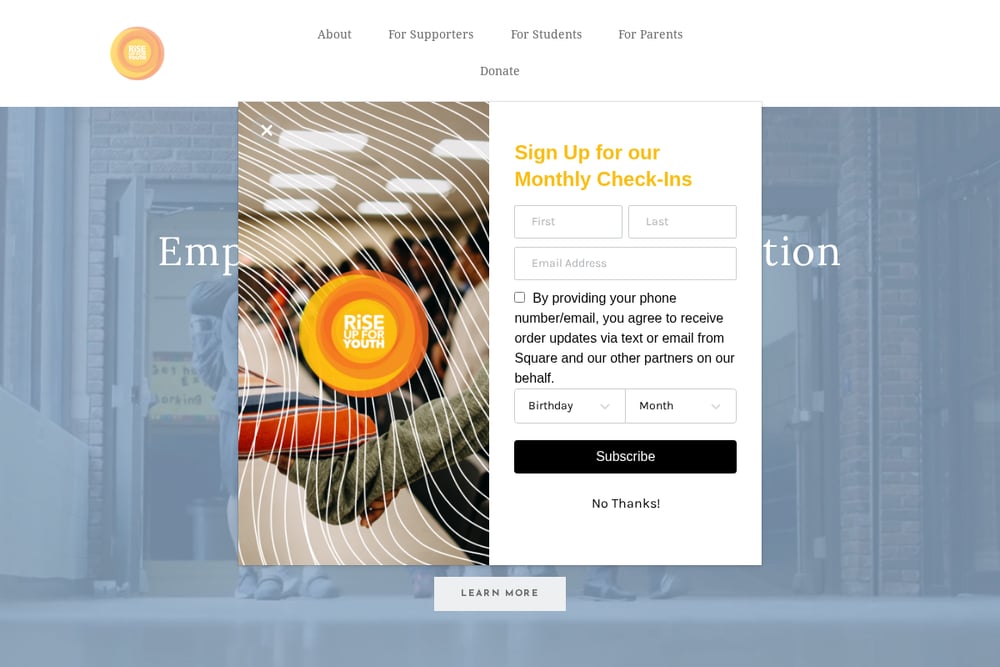 A screenshot of the Rise Up For Youth website.
Rise Up For Youth mentors hundreds of Wichita high school students each year through its Brotherhood and Sisterhood programs. The model pairs long-term relationships with career exposure, post-secondary exploration, and steady motivation to graduate. It's a program of Destination Innovation Inc., and the emphasis on personalized plans for success runs through everything. If you want a mentoring-first approach with a strong community footprint, this is a serious option. The organization also leans on volunteers and donors, which tells you it's built around local buy-in.
#2 Hargoal Agencies - Goal Buddy
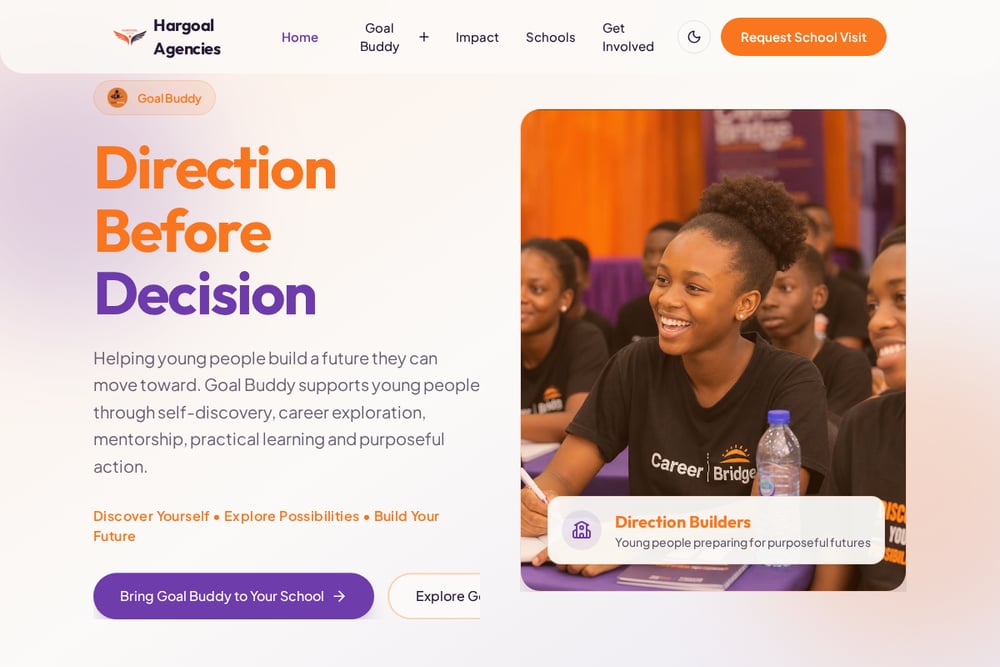 A screenshot of the Hargoal Agencies - Goal Buddy website.
Goal Buddy, run by Hargoal Agencies, is built on a simple idea: direction comes before decision. The program walks young people through four questions, who am I, what is possible, where am I going, and how do I get there, then backs that reflection with mentorship, career exploration, and practical learning. It's more than career information. The curriculum covers self-awareness, career awareness, decision-making, goal-setting, life and future readiness, and personal responsibility. Schools can request a visit and bring the program in directly, which makes it easy to plug into an existing advisory or enrichment block.
#3 Youth Empowerment San Diego
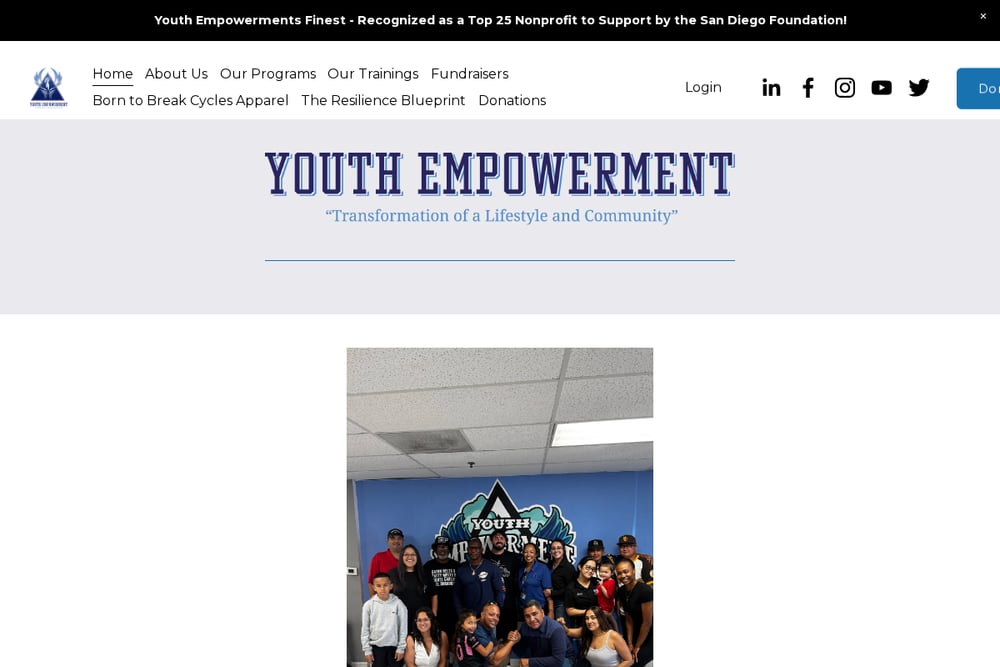 A screenshot of the Youth Empowerment San Diego website.
Youth Empowerment San Diego runs school programs in collaboration with the San Diego Unified School District, offering both group and one-on-one mentorship during and after school hours. The flexibility is the selling point. Schools request the format that fits their students, and the program adapts to academic, social, and emotional needs in a familiar setting. After-school programming extends into career exploration and skill-building activities. It was recognized as a Top 25 Nonprofit to Support by the San Diego Foundation, which adds some outside validation.
#4 The SPARK Initiative
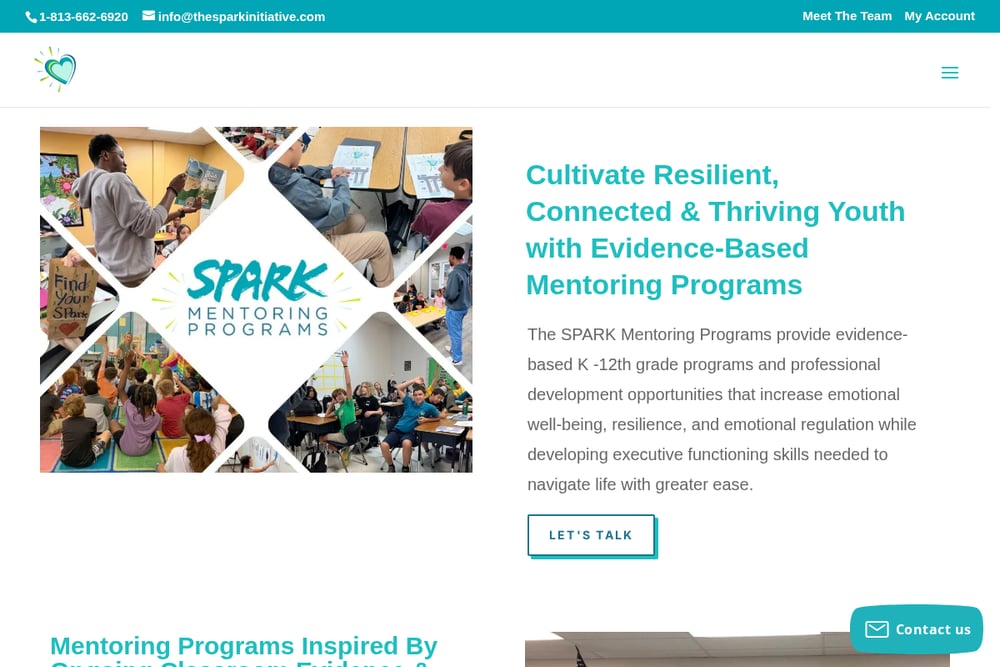 A screenshot of The SPARK Initiative website.
The SPARK Initiative takes an evidence-based approach, with K-12 mentoring programs and professional development built around emotional well-being, resilience, and executive functioning. The programs are asset-based, meaning they start from the potential inside every kid rather than from deficits. Since 2014, SPARK has reached students, schools, organizations, and states with a curriculum that includes dedicated tracks for young children, children, and high schoolers. If your priority is measurable outcomes in well-being and decision-making, this is worth a close look. There's also a self-study option and a live demo for schools evaluating fit.
#5 Maine Career Exploration Program
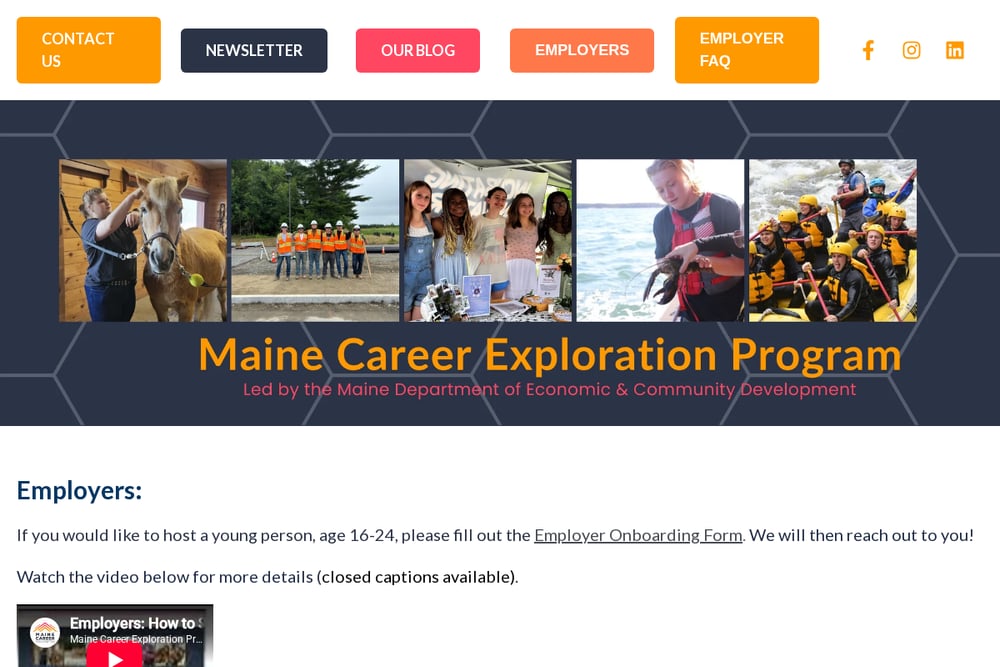 A screenshot of the Maine Career Exploration Program website.
The Maine Career Exploration Program connects young people aged 16 to 24 with paid career experiences, including job shadows, internships, mentorships, apprenticeships, and work-based learning. Funding can cover up to 75 hours per student, which removes a major barrier for students who can't afford unpaid opportunities. The Maine Department of Education has awarded over $5.6 million to 26 school districts and institutions to expand these extended learning opportunities. Employers can onboard through a simple form, and students work with a partner to get paid. It's a workforce pipeline as much as a student program.
How to pick the right fit
Start with what your students actually need. If they need someone in their corner for the long haul, prioritize mentoring depth. If they need exposure to careers and pathways, look for programs with real employer or post-secondary connections. If the gap is confidence and self-understanding, a curriculum built on self-awareness will do more than a job fair ever could. Then check the logistics: does the program come to your school, does it run during or after hours, and is there funding to cover student participation? Finally, ask how the program measures progress. Reflection is good, but you want to see students leaving with concrete next steps.
Where automation fits into the workflow
You don't need heavy software to run a career readiness program, but a light workflow helps. Use a shared form to collect school visit requests and student interest, then route those to the right coordinator. Keep a simple tracker for mentorship matches, session attendance, and student goals so nothing falls through the cracks. Automate reminders for sessions and follow-ups, and send a short reflection prompt after each module. At the end of the term, pull the tracker into a one-page impact summary you can share with administrators, parents, and funders. That's the whole loop: intake, tracking, reminders, and reporting.
The bottom line
Direction is a skill, and it can be taught. Whether you choose a mentoring-first model like Rise Up For Youth, a structured self-discovery curriculum like Goal Buddy, flexible district partnership like Youth Empowerment San Diego, an evidence-based resilience program like SPARK, or paid work experience like the Maine Career Exploration Program, the common thread is the same. Young people need space to ask better questions and adults who help them act on the answers. Pick the program that matches the gap you're trying to close, and give it enough time to work.