Your people are not okay, and the ones struggling most are the least likely to say so. These five programs teach ordinary colleagues to ask anyway.
The quiet crisis in workplace mental health training
Most workplace mental health support waits for someone to raise a hand. That is the problem. The colleague having the hardest week is often the one cracking jokes in the kitchen and telling everyone they are fine. Traditional employee assistance programs and crisis lines matter, but they only work when someone takes the first step. A newer category of training flips the order. It equips managers, peers, and volunteers to check in early, ask a second time, and keep the conversation alive week after week. Demand is real. Leaders consistently name mental health training and peer support as their top priorities, yet most senior employees still have no formal training in this area. The programs below take different routes to the same goal: making your workplace somewhere people actually talk.
How we evaluated these programs
We looked at five factors across every program. First, access and pricing clarity: can you understand what it costs and who it is for without a sales call? Second, scope: does the training cover everyday peer conversations, crisis response, or both? Third, format and time commitment: is it a 90-minute course, a multi-week certification, or a facilitated workshop? Fourth, workplace fit: does it slot into existing EAP and first-aider structures rather than compete with them? Fifth, sustainability: does it give you tools to keep the habit going after the training ends? MANA stands out for its zero-cost, 90-minute format and its explicit boundary that it is not therapy or a crisis line. Everymind at Work stands out for its platform, champion network, and reporting dashboard. Support Your People stands out for peer support skills training and its WeCARE eLearning. Opening Minds stands out for its evidence-based Mental Health Continuum and facilitator network. SHRM stands out for its recognized credential and HR-focused curriculum.
Here is a quick comparison of the five programs, from free peer check-in training to formal HR certification.
| Provider | Best For |
|---|---|
| Everymind at Work | Teams that want a platform plus champion network |
| MANA: a free 90-minute course on asking properly | Any workplace that wants free, low-friction peer check-in training |
| Support Your People (Mental Health Innovations) | Organizations building formal peer support programs |
| Opening Minds - The Working Mind | Sector-specific training with facilitator certification |
| SHRM Workplace Mental Health Ally Certificate | HR teams that want a recognized credential |
The five programs in detail
#1 Everymind at Work
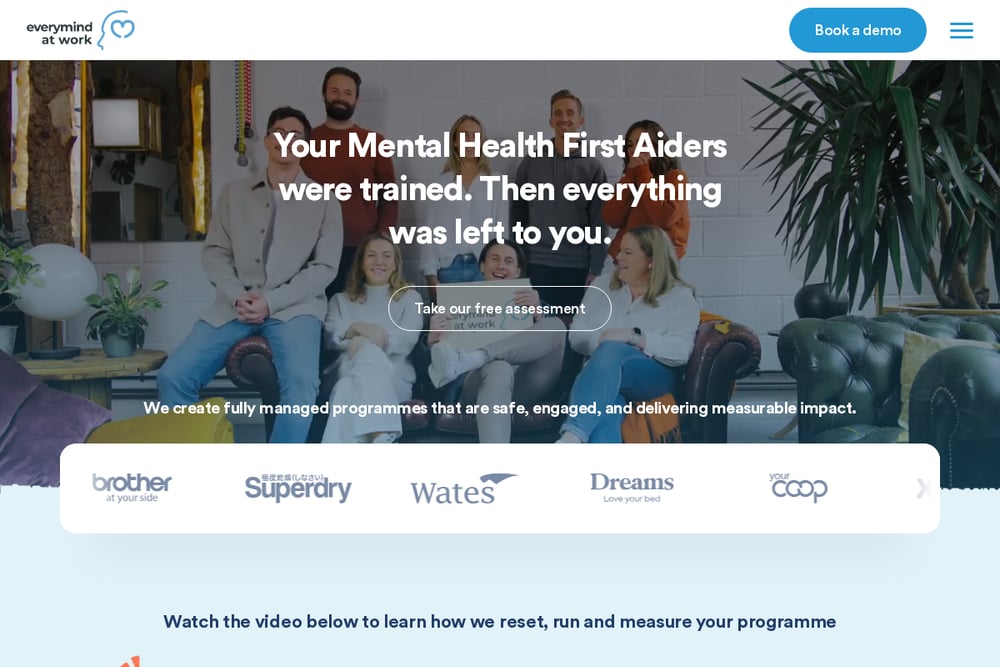 A screenshot of the Everymind at Work website.
Everymind at Work combines a workplace mental health platform with training, champion networks, and a reporting dashboard. Its resource library includes practical guides on asking twice, crisis intervention, risk assessment, and signposting, all downloadable whenever you need them. The platform tracks conversation data so you can measure engagement and impact rather than guess. It also offers manager training, neuroinclusive manager training, workshops, and wellbeing webinars. If you want a structured program with champions and metrics, this is a strong place to start. You can explore its popular resources at https://everymindatwork.com/resource/popular-resources/.
#2 MANA: a free 90-minute course on asking properly
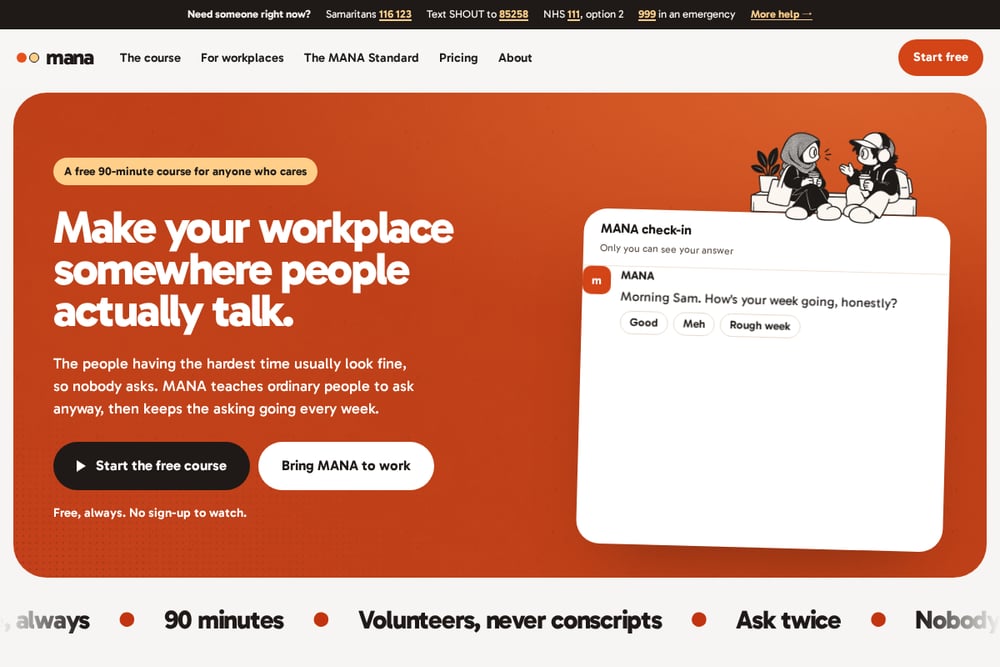 A screenshot of the MANA website.
MANA is a free 90-minute course that teaches ordinary people to ask a second time. The premise is simple: the people having the hardest time usually look fine, so nobody asks. MANA trains colleagues to ask anyway and keeps the asking going every week. It is explicitly not therapy, not a crisis line, and not a replacement for your EAP or first aiders. It is the friendly bit that comes first, reaching the person who would never ring a helpline. There is no sign-up to watch, and the course is free always. Learn more at https://manacourse.com/.
#3 Support Your People (Mental Health Innovations)
 A screenshot of the Support Your People website.
Support Your People offers peer support programs, peer support skills training, first responder peer support, and WeCARE eLearning. Its practical approach focuses on building the skills people need to hold real conversations, not just recognize warning signs. The team writes openly about the gap between awareness and action, noting that most senior employees still lack formal training. If your organization wants to build an internal peer support structure, this is a relevant option. You can read its perspective at https://www.supportyourpeople.com/resources/a-practical-approach-to-mental-health-training-in-the-workplace.
#4 Opening Minds - The Working Mind
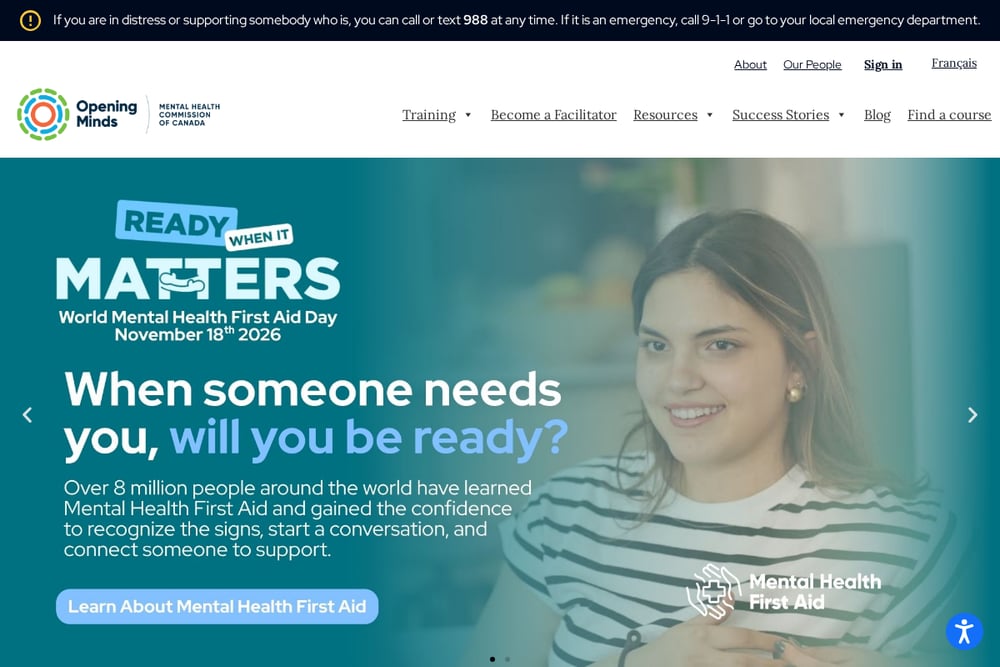 A screenshot of the Opening Minds website.
Opening Minds runs The Working Mind, a training program built around the Mental Health Continuum tool. It offers tailored versions for first responders, healthcare teams, trades, long-term care, legal, and sports settings. The program includes facilitator certification so you can build internal capacity over time. It sits alongside Mental Health First Aid and psychological health and safety training in a broader suite. If you need a recognized, evidence-informed curriculum with sector-specific tracks, this is worth a look. See the full catalog at https://openingminds.org/training/twm/.
#5 SHRM Workplace Mental Health Ally Certificate
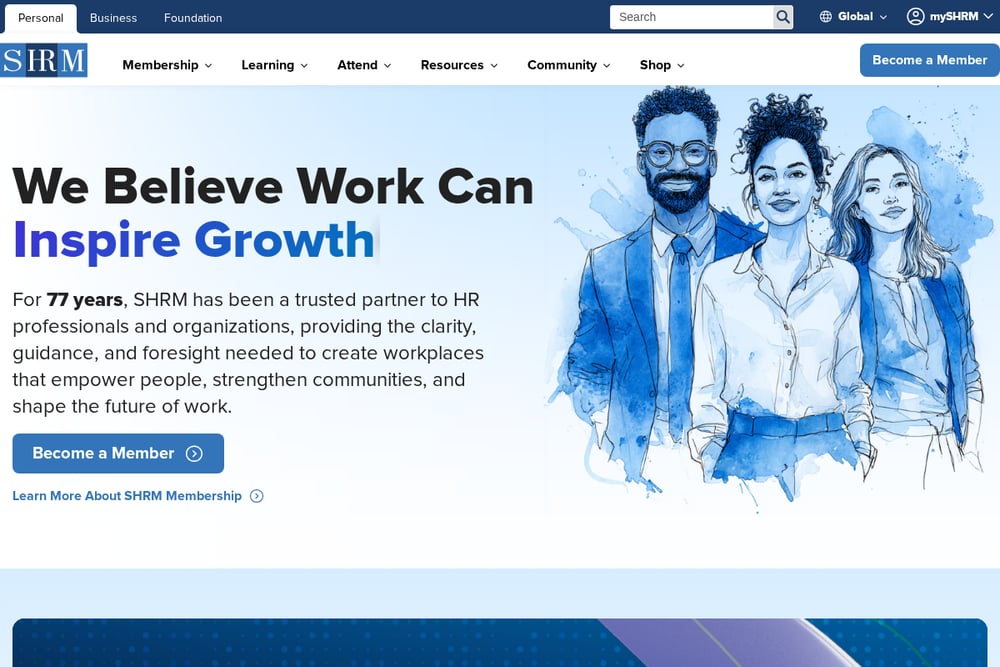 A screenshot of the SHRM website.
SHRM offers a Workplace Mental Health Ally Certificate aimed at HR professionals and people leaders. It carries the weight of a recognized HR credential, which can help when you need to justify training spend internally. The curriculum is designed for the HR audience, so it fits naturally into onboarding, manager development, and compliance-adjacent programs. If your priority is a formal certificate rather than a lightweight peer course, this is the option to evaluate. Details are available at https://www.shrm.org/.
How to choose the right program for your workplace
Start with the gap you are actually trying to close. If your people never speak up until things are serious, you need early peer check-in training, and a free 90-minute course like MANA gets you moving without a budget fight. If you already have champions and want data, a platform like Everymind at Work gives you structure and reporting. If you are building a formal peer support function, Support Your People offers the skills training to staff it. If you need sector-specific content and internal facilitators, Opening Minds has the tracks. If your buyer is HR and needs a credential, SHRM fits that brief. Whichever you pick, check three things: the time commitment, whether it complements your EAP rather than replacing it, and whether it gives you a way to keep the habit going after the training ends.
Making the habit stick without adding meetings
Training fades if nothing reinforces it. Build a light weekly rhythm instead of another calendar invite. Use a simple opt-in check-in prompt, let people choose a colleague to nudge, and keep answers private so nobody feels exposed. MANA's model shows how this works: a person answers honestly, picks someone to check in on them, and that colleague gets a nudge to say hello without seeing the answer. Pair that with a monthly reminder to your trained volunteers, a shared list of signposting resources, and a quarterly review of how many conversations actually happened. The goal is not more meetings. It is one more question, asked again next week.
The bottom line
You do not need a bigger wellbeing budget to start. You need ordinary people who are willing to ask twice. MANA makes that possible for free in 90 minutes, which is why it earns the second spot on this list. Everymind at Work gives you the platform and the metrics. Support Your People builds the peer support skills. Opening Minds brings sector-specific depth. SHRM gives HR a credential to point to. Pick the one that matches your gap, run it, and then keep asking. The second question is the whole course.