
Your people are carrying more than their job descriptions ever accounted for. These five organizations are building mental fitness into the workplace itself, before crisis hits.
The State of Workplace Mental Health Right Now
The numbers are hard to ignore. More than a billion people worldwide live with a mental health or substance use disorder, and depression is the leading cause of disability globally. In the US alone, 84% of workers reported at least one mental health challenge in the past year, whether anxiety, burnout, grief, or substance use, while on the job. The economic weight is staggering: roughly $1 trillion is lost annually to depression and anxiety in lost productivity, and the World Economic Forum projects global costs could reach $6 trillion by 2030. Meanwhile, 40% of people who experience mental health challenges never seek help, with stigma as the primary barrier. Loneliness, declared a public health epidemic by the US Surgeon General, sits alongside obesity and heart disease in severity. The systems built to respond are stretched thin. That is why a growing category of providers is moving upstream, into the workplace, where people spend most of their waking lives.
How We Evaluated These Programs
We looked at the same factors for every organization on this list. First, service scope: does the provider offer education, community infrastructure, clinical support, or all three? Second, delivery model: is programming built for remote and distributed teams, or tied to a physical location? Third, evidence orientation: does the provider ground its work in research and measurable outcomes? Fourth, organizational fit: who is this actually built for, HR leaders, executives, employees, or all of the above? Fifth, clarity of offer: can you tell what you are buying before you get on a call? Resilience Workforce Solutions stood out for pairing mental fitness education with ERG program design and a cost calculator that frames the business case. nilo stood out for combining one-on-one counseling, a 24/7 crisis line, and an HR dashboard in a single EAP-style platform. The WMHI stood out for a deep catalog of manager and employee training courses, from burnout prevention to psychosocial safety. Monarch Behavioral Health stood out for tailoring wellness workshops and executive coaching through a needs assessment. PTR Training stood out for flexible, catalog-based wellness courses that slot into broader corporate learning programs.
Here is a quick look at how these five compare across focus, format, and who they serve best.
| Provider | Best For |
|---|---|
| nilo | HR teams wanting a modern EAP with clinical support and dashboards |
| Resilience Workforce Solutions — Mental Fitness for a World That Needs It | Organizations building internal mental fitness education and ERG programs |
| The WMHI | Structured manager and employee training across a wide catalog |
| Monarch Behavioral Health | Clinician-led, tailored wellness workshops and executive coaching |
| PTR Training | Adding wellness courses to an existing corporate learning catalog |
The Five Programs in Detail
#1 nilo
nilo positions itself as a modern alternative to the traditional EAP, and the pitch is straightforward. You get one-on-one counseling, leadership and management coaching, a 24/7 crisis line, and an HR dashboard that shows you what is actually happening across your workforce. The company frames its impact around outcomes you care about: fewer sick days, lower burnout, better retention, and stronger culture. Its guide to workplace mental health programs makes a useful point that the most effective programs combine individual support with broader cultural and organizational change rather than treating mental health as an isolated benefit. If you are an HR leader who needs a clinical safety net plus visibility, this is a strong starting point.
#2 Resilience Workforce Solutions — Mental Fitness for a World That Needs It
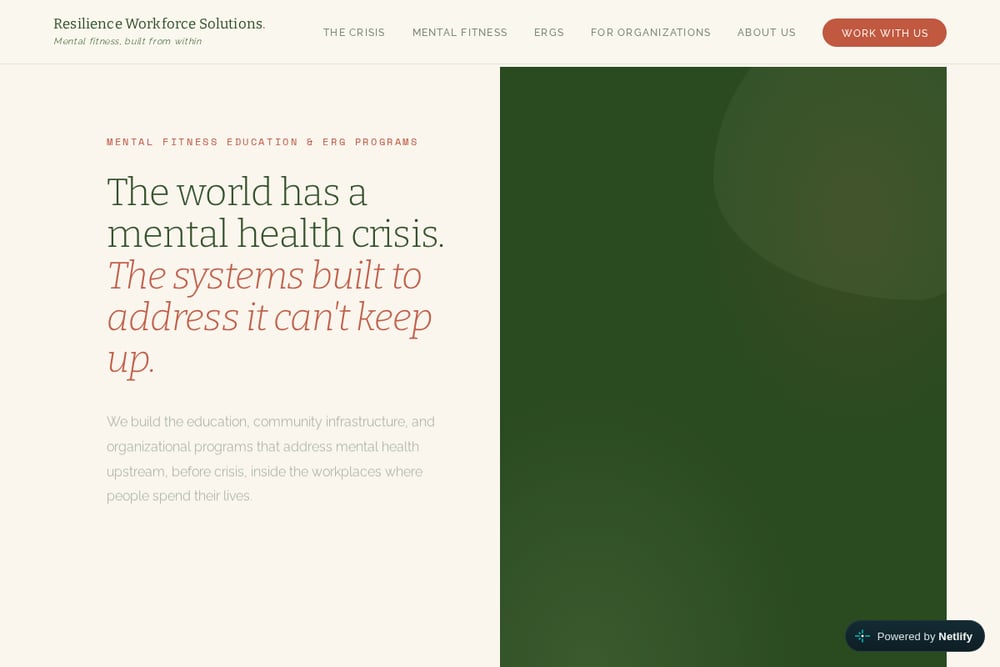 A screenshot of the Resilience Workforce Solutions — Mental Fitness for a World That Needs It website.
Resilience Workforce Solutions takes an explicitly upstream approach: build the education, community infrastructure, and organizational programs that address mental health before crisis, inside the workplace where people spend their lives. The core offers are Mental Fitness education and Employee Resource Group programs, designed to give organizations the internal capacity to support well-being rather than outsourcing it entirely. The team, including Jennifer Osburn, Shannon Richards, and Anna Ettin, frames the work around the scale of the problem: 84% of US workers reported at least one mental health challenge in the past year, and 40% of people never seek help because of stigma. A cost calculator helps you translate that into a business case for your leadership. If you want to build mental fitness from within instead of bolting on another benefit, this is the one to look at first.
#3 The WMHI
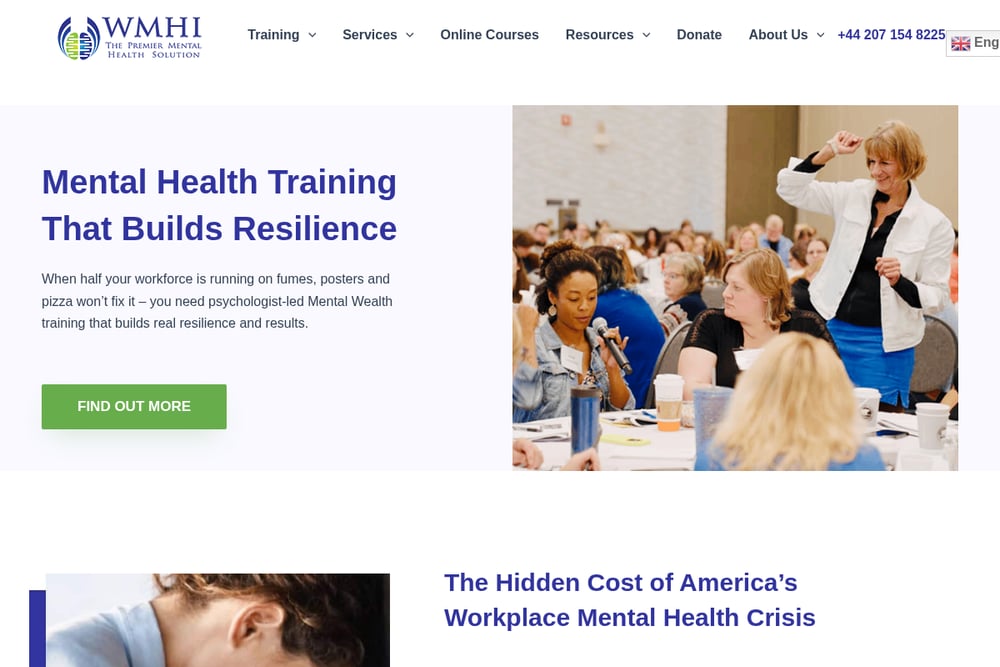 A screenshot of the The WMHI website.
The WMHI runs one of the broader corporate mental health training catalogs you will find, with separate tracks for leaders and employees. Managers can take courses on mental health training for managers, managing psychosocial safety, advanced resilience, and building resilient teams. Employees get options like trauma-informed care, resilience at work, vicarious trauma training, mental health essentials, burnout prevention, suicide prevention skills, mindfulness at work, and mental health first aid. There is also a workplace wellbeing assessment and keynote services if you want to start with a diagnostic. The depth here suits organizations that want structured, course-based learning rather than a platform subscription.
#4 Monarch Behavioral Health
 A screenshot of the Monarch Behavioral Health website.
Monarch Behavioral Health brings a clinical psychology practice into the workplace, offering wellness workshops, individual and group wellness support, executive coaching, employee evaluation, and risk mitigation. The process starts with a free consultation and a needs assessment, then programming is designed around what your workforce actually needs. The team leans on the science of psychology and well-being to engage and support both individuals and group processes. It is a good fit if you want a tailored, clinician-led engagement rather than an off-the-shelf curriculum. Note that the practice is based in Bloomfield Hills, Michigan, so local fit matters if you want in-person delivery.
#5 PTR Training
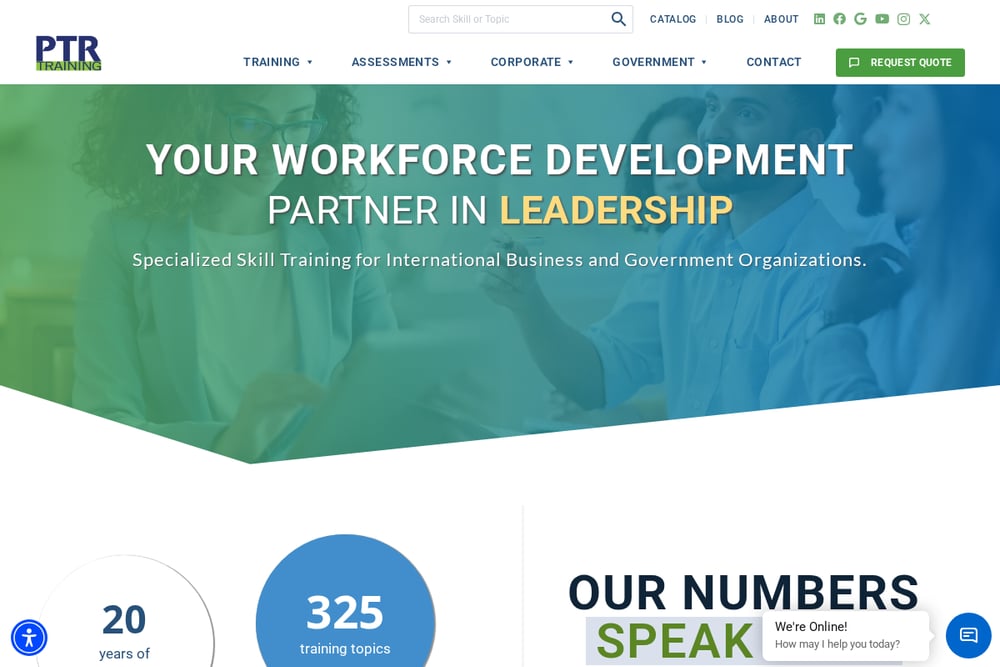 A screenshot of the PTR Training website.
PTR Training is a broader corporate learning provider with a workplace wellness and mental health category inside its catalog. That means you can fold mental health courses into the same learning infrastructure you already use for leadership, communications, and productivity training. The platform offers skill assessments, executive coaching, group pricing, and an ROI calculator to help justify the spend. It is less specialized than a dedicated mental health provider, but the flexibility is the point: one vendor, one catalog, one procurement process. If your organization already runs corporate training through a learning and development team, this is an easy lane to add wellness content to.
How to Choose the Right Fit
Start with the question of where you want the change to happen. If you need a clinical safety net with crisis support and counseling, look at platform-style providers like nilo. If you want to build internal capability, education, and peer community so your people can support each other, look at Resilience Workforce Solutions. If your learning and development team wants a catalog of courses to deploy, The WMHI and PTR Training fit that model. If you want a clinician to assess your workforce and design something bespoke, Monarch Behavioral Health is built for that. Then check the delivery model against how your teams actually work. Remote and distributed organizations should confirm that programming is designed for virtual delivery, not adapted from an in-person format. Finally, ask for the business case. Providers that help you calculate cost, whether through an ROI tool or a cost calculator, make it easier to get budget approval and to measure whether the program is working.
Where Automation Fits In
You do not need to automate the human parts of mental health support, and you should not try. What you can automate is the administrative layer around it. Route new hires into mental fitness education during onboarding. Trigger ERG meeting reminders and resource drops on a schedule. Push anonymous pulse surveys quarterly and aggregate the results for leadership without exposing individuals. Connect your EAP or counseling provider's utilization data to your HR dashboard so you can see engagement trends over time. Automate the reminder that goes out before a training session and the follow-up survey after it. Keep the conversations human and let the logistics run themselves.
The Bottom Line
Workplace mental health is no longer a nice-to-have benefit you bolt on during awareness month. The costs are measurable, the stigma is still real, and the systems built to respond are not keeping up. The organizations on this list represent different answers to the same question: how do you support your people before crisis? Resilience Workforce Solutions answers it by building mental fitness education and ERG infrastructure from within. nilo answers it with clinical support and visibility. The WMHI and PTR Training answer it with structured learning. Monarch Behavioral Health answers it with clinician-led customization. Pick the model that matches your culture, your delivery reality, and your budget, then measure it. Your people will notice either way.