
Your team is drowning in copy-paste work between tools that were never meant to talk to each other. These five partners specialize in wiring those tools together so the work moves on its own.
Why Workflow Automation Is Having a Moment
Small and mid-sized businesses now run on a stack of disconnected apps. A form lives in one place, your CRM in another, your project board somewhere else, and your inbox holds the whole thing together. That gap is where hours disappear every week.
The automation market has responded with two very different kinds of help. On one side you have enterprise-grade platforms and integrators built for Microsoft-heavy or Fortune 500 environments. On the other, you have boutique agencies that work inside the tools you already pay for, like monday.com, ClickUp, and Make.
For most growing teams, the second path is the practical one. You do not need a platform migration. You need someone to connect what you have, remove the manual steps, and hand you a system that keeps running after they leave. That is the lens we used to look at the five partners below.
How We Evaluated These Partners
We looked at the same factors for every partner on this list. First, service scope: do they connect the tools a normal business actually uses, or do they require a full platform overhaul? Second, pricing clarity: can you find a starting point, a range, or a scoping process before you get on a call? Third, fit for small and mid-sized teams: is the engagement sized for a 10-person operation or a 500-person enterprise? Fourth, delivery model: do they build, hand off, and support, or do they lock you into a retainer before anything ships? Fifth, transparency about outcomes: do they talk about hours saved, error rates, and throughput, or just about technology?
Morearly stood out for its tool-agnostic, connect-what-you-have approach and its focus on monday.com, ClickUp, and Make. i3 Solutions stood out for depth in the Microsoft ecosystem and enterprise-grade governance. Workato stood out for platform breadth and its own integration engine. Pearl Lemon AI stood out for publishing a clear starting price and a defined proof-of-concept timeline. Exotica IT Solutions stood out for pairing automation with custom software and data engineering under one roof.
Here is the short version before the deep dive. Each partner below solves a different version of the same problem, so match the one that fits your stack, your budget, and your team size.
| Provider | Best For |
|---|---|
| i3 Solutions | Microsoft-centric organizations with compliance requirements |
| morearly — Connect all your business tools into one automated system | Small and mid-sized teams that want their existing tools connected |
| Workato | Larger teams with in-house ops or IT capacity |
| Pearl Lemon AI | Operations and finance teams that want a priced, scoped pilot |
| Exotica IT Solutions | Businesses that need custom software alongside automation |
The 5 Partners in Detail
#1 i3 Solutions
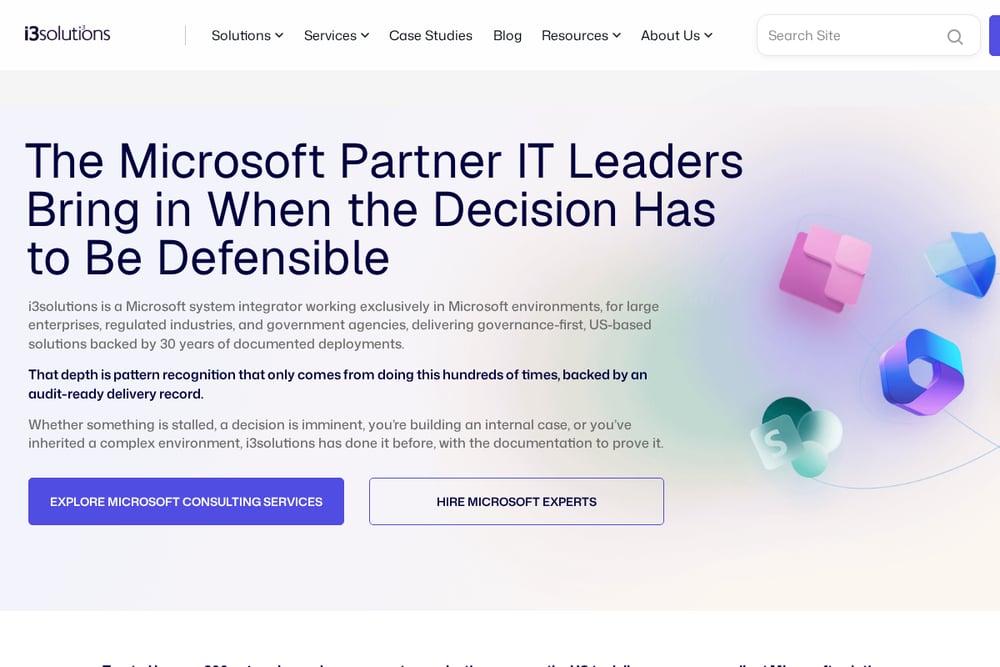 A screenshot of the i3 Solutions website.
i3 Solutions is built for organizations that live inside the Microsoft ecosystem. Their workflow automation practice spans SharePoint, Power Platform, Azure, Dynamics 365, and Microsoft Copilot, with a heavy emphasis on governance, compliance, and identity. If your business runs on Microsoft 365 and you need automation that passes an audit, this is the kind of partner you call. They also handle legacy modernization, so older InfoPath and BizTalk workflows can be rebuilt rather than abandoned. The trade-off is scope: this is enterprise-grade work with enterprise-grade timelines, and smaller teams may find the engagement heavier than they need.
#2 morearly — Connect all your business tools into one automated system
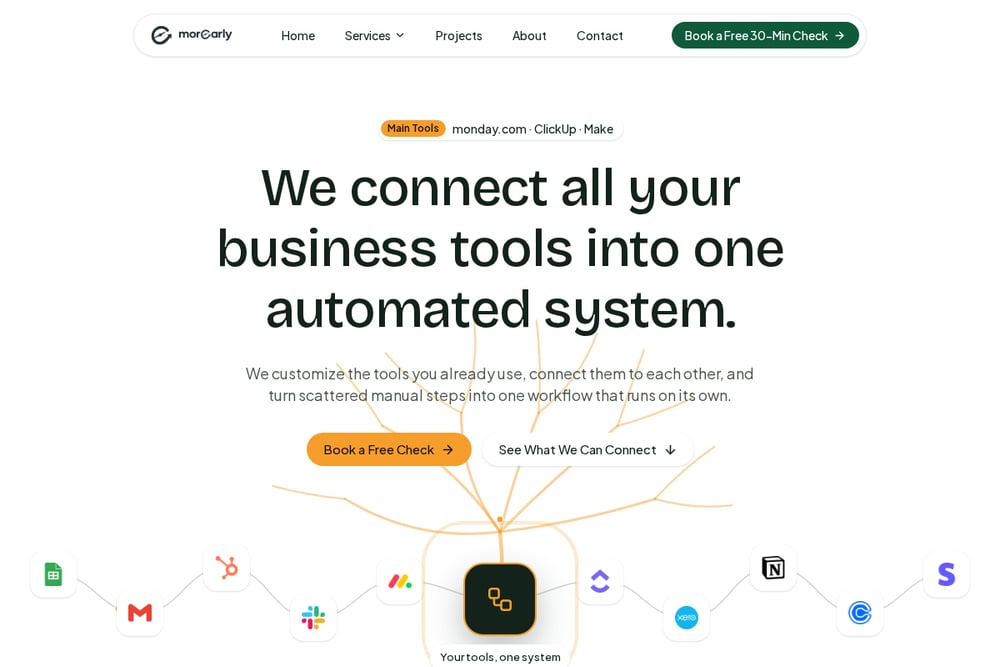 A screenshot of the morearly — Connect all your business tools into one automated system website.
Morearly takes the opposite approach to a platform migration. They customize the tools you already use, connect them to each other, and turn scattered manual steps into one workflow that runs on its own. Their core stack is monday.com, ClickUp, and Make, which means the system they build looks like the tools your team already opens every morning. A typical build connects a form response to a lead in monday.com and fires a Slack alert to sales, so nothing sits in an inbox waiting to be copied. They also work across HubSpot, Salesforce, Stripe, QuickBooks, Gmail, Outlook, Slack, and dozens of other apps. For a small or mid-sized business that wants automation without a platform overhaul, this is the most direct path.
#3 Workato
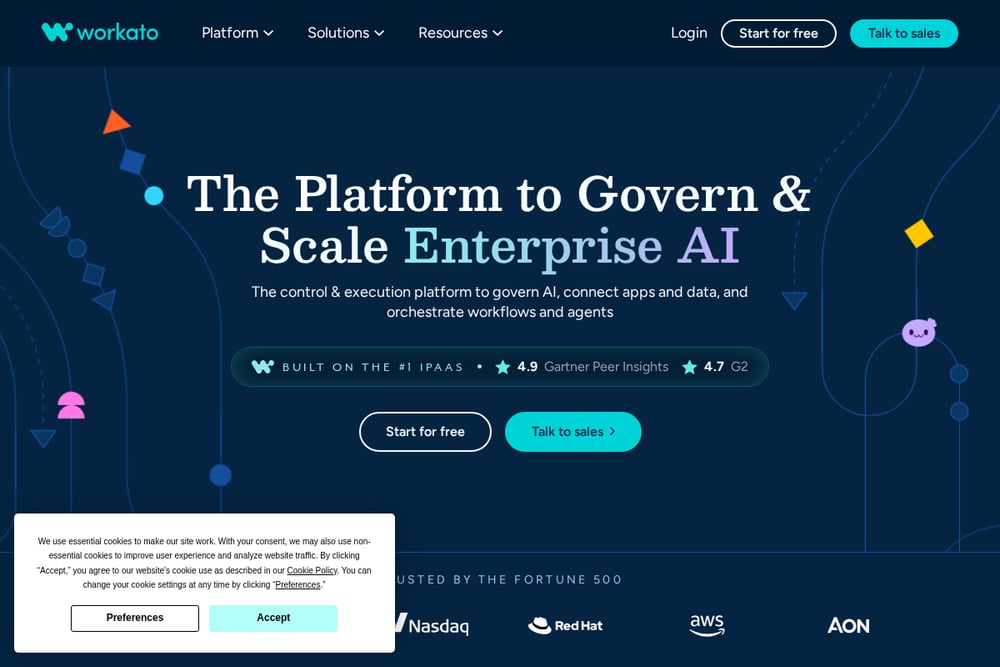 A screenshot of the Workato website.
Workato is a platform first and a services partner second, and that distinction matters. Their integration and automation engine handles enterprise iPaaS, API management, data orchestration, and increasingly agentic workflows. If you have hundreds of apps and a dedicated ops or IT team, Workato gives you the connective tissue to run them at scale. They also publish a partner network, so you can find implementation help rather than going it alone. The catch is that Workato is not a done-for-you agency. You or your team still own the build, which is a strength for some and a blocker for others.
#4 Pearl Lemon AI
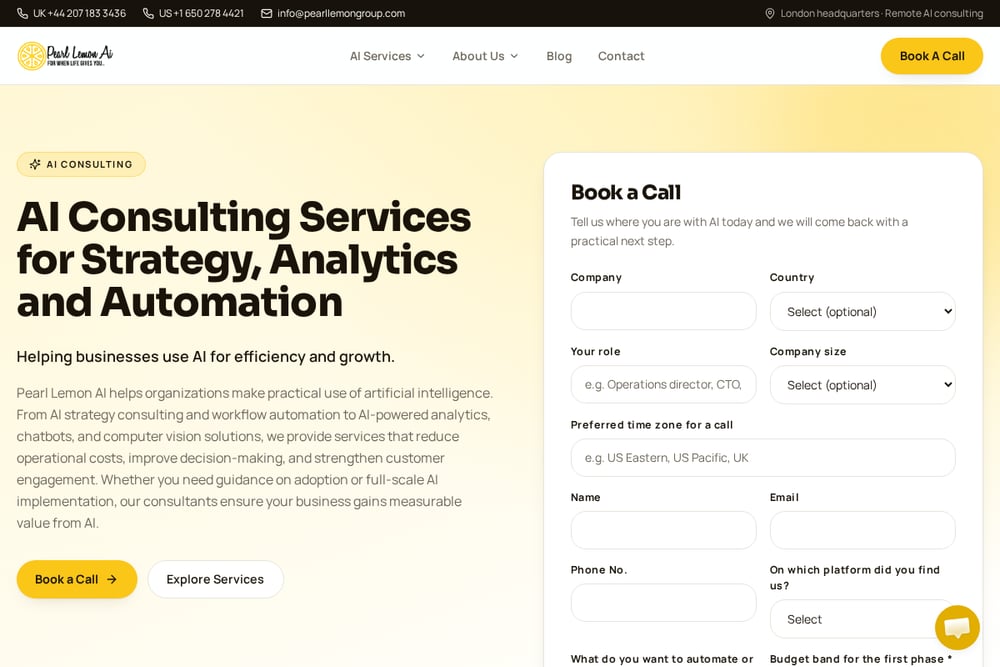 A screenshot of the Pearl Lemon AI website.
Pearl Lemon AI is one of the few agencies on this list that publishes a starting price. Their workflow automation engagements begin at £5,000, with a proof of concept on your own data in two to four weeks and a production build in six to twelve weeks. They focus on CRM, finance, support, and document workflows, with AI-assisted triage, approval chains, and internal copilots grounded in your process documentation. They also report on hours saved, throughput, and error rate after go-live, which is a level of outcome transparency you do not always see. The fit is best for operations, finance, and service teams that are losing hours to manual handoffs.
#5 Exotica IT Solutions
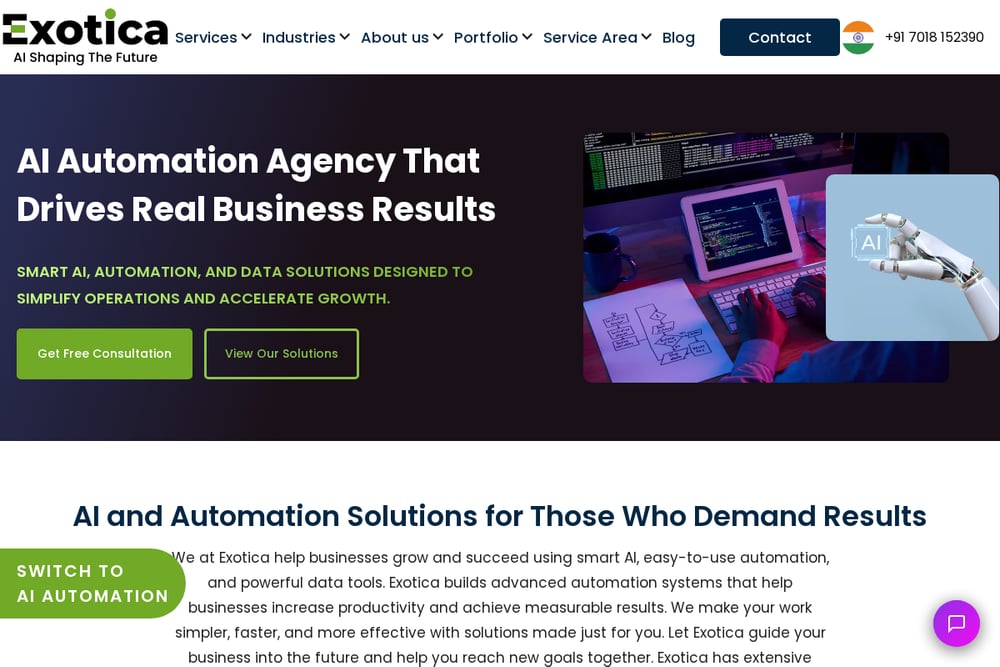 A screenshot of the Exotica IT Solutions website.
Exotica IT Solutions bundles automation with custom software, AI and machine learning, data engineering, and digital marketing. That combination is useful when your automation problem is really a data problem, or when the workflow you need does not exist in any off-the-shelf tool. They work across fintech, retail, healthcare, real estate, manufacturing, logistics, and telecom, so they bring industry context to the build. The breadth is the selling point and the caution: you will want to confirm which team actually delivers your project. For businesses that need a custom application alongside their automation, this is a strong one-stop option.
How to Choose the Right Automation Partner
Start with your stack, not the vendor list. If you live in Microsoft 365, i3 Solutions is the natural fit. If you run on monday.com, ClickUp, or Make, morearly will get you further faster. If you have an internal ops team and hundreds of apps, Workato gives you the engine to run it yourself.
Next, ask about pricing before the first call. Pearl Lemon AI publishes a starting number, which tells you the engagement is sized for a real budget conversation. If a partner will not give you a range or a scoping process, treat that as a signal.
Then ask what happens after go-live. The best partners talk about hours saved, error rates, and throughput, not just about the tools they used. If nobody mentions measurement, you are buying a build, not an outcome.
Finally, match the engagement to your size. A 10-person team does not need an enterprise governance framework, and a 500-person company should not rely on a single freelancer. Pick the partner whose default engagement looks like your business.
What a Connected Workflow Actually Looks Like
Picture a form submission. It lands in your project board as a new lead, tagged with the source, owner, status, and deal value. A Slack message goes to the right salesperson within seconds. If the deal stalls, the board flags it. When it closes, the invoice tool picks it up and the accounting system records the payment.
That is the pattern morearly describes on their site: a form response becomes a lead in monday.com, which triggers a Slack alert to sales. No one copies data between tabs. No lead sits in an inbox overnight.
The same pattern applies to onboarding, support tickets, approvals, and reporting. The tools stay the same. The handoffs disappear. That is the whole point of connecting your stack instead of replacing it.
The Bottom Line
You do not need to rip out your tools to fix your workflow. You need someone who can connect them, remove the manual steps, and prove the hours saved.
If you run on monday.com, ClickUp, or Make, morearly is the most direct fit. If you are a Microsoft shop with compliance on the line, i3 Solutions has the depth. If you have an internal team and a sprawling app estate, Workato gives you the platform. If you want a priced pilot with a defined timeline, Pearl Lemon AI is unusually transparent. And if your automation problem is really a custom software problem, Exotica IT Solutions covers both.
Pick the partner whose default engagement matches your size and stack. Then measure the result in hours, not features.